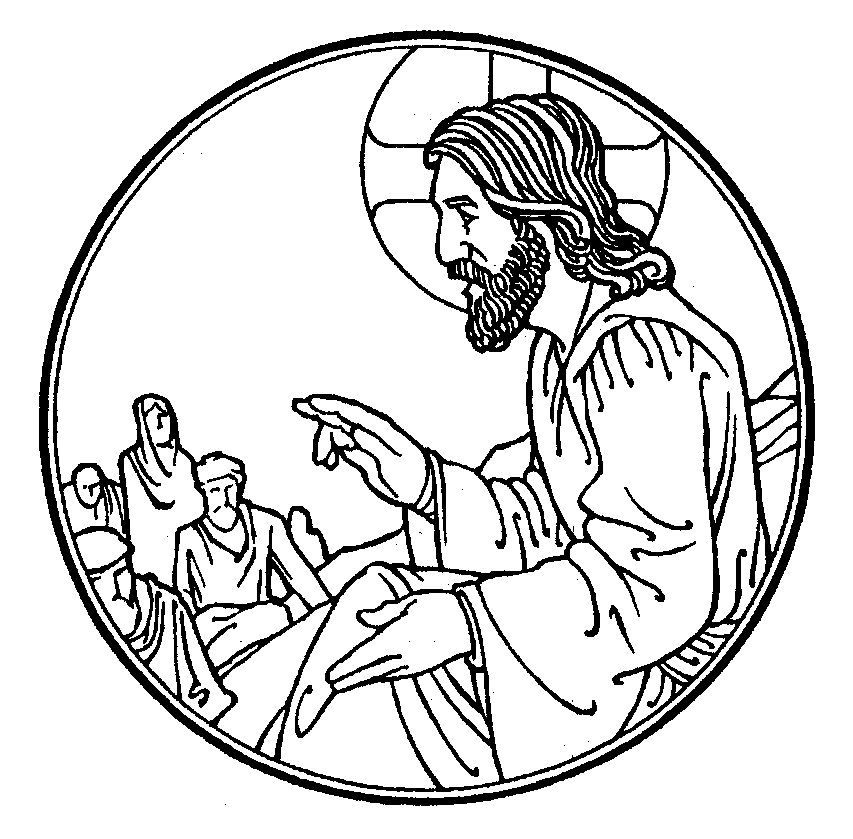
Today’s lessons are all about the mercy of God. I know it is very easy to focus only upon the part about not judging. Sadly, that’s about all the world today tends to hear. It is one quotation from Scripture that is so often repeated out of context even those who have never heard other Scripture are able cite “Don’t judge”. What’s truly sad is that the way this little line is so often cited is wrong. Jesus was not saying “Don’t ever judge anyone”! The phrase “Judge not” can only be rightly understood because of the previous line: “Be merciful, even as your Father is merciful.” That’s the whole key to understanding and making sense of this text; or of the Christian faith, for that matter. “Be merciful, even as your Father is merciful.”
Today’s Old Testament lesson is an example of what this mercy looks like in practice. If you thought your family had problems, look at Joseph’s! His brothers had sold him into slavery because they were so jealous and hateful. But years later they needed help that only Joseph could provide. God had brought Joseph to a position of power in Egypt. When his brothers first arrived: Joseph had his change for vengeance: to get even. But he didn’t. He eventually revealed himself to his brothers and had them bring their father Jacob and all their family and animals to live in the fertile Delta of Egypt. At the time of the OT text today, however, Jacob, their father, had died. His brothers feared that Joseph’s mercy was only temporary for the sake of their father. And honestly, they should have been scared after all they did to him.
Yet, Joseph doesn’t do what they expected him to do. He doesn’t do what we would probably do. Joseph shows mercy to these very undeserving men. And it was not because of their “made up” deathbed message from Jacob.
He said: “Do not fear, for am I in the place of God? As for you, you meant evil against me, but God meant it for good, to bring it about that many people should be kept alive, as they are today. So do not fear; I will provide for you and your little ones.”
So why does Joseph show mercy to such undeserving wicked people? Why does Joseph not give them what they so justly deserve? Because Joseph knew his own standing before his God and Father. Joseph knew his own reality; his own sin; his own evil nature and deeds. He knew what he justly deserved, yet His heavenly Father was merciful to him: not because he deserved mercy or because he had suffered at the hands of his brothers; but he received mercy from God solely because of who his heavenly Father is. If God showed Joseph mercy, then Joseph knew that he had no business putting himself in the place of God and not show that same mercy to his sinful brothers. After all, God was sending the Messiah to make atonement for their sins too.
Now, Joseph doesn’t let the evil of his brothers go unnoticed. He loves his brothers enough to speak the truth. “What you did was evil, and you meant it for evil. You can try and dress it up or excuse it all you want. It was evil, and that’s exactly what you meant it for when you did it. However, our God and Father permitted this evil to happen so that He could work good and provide for many people today, which He has.”
How’s that for faith?! Joseph has no intention of bringing about justly-deserved retribution because Joseph recognizes God’s good and merciful hand in these events…even in/through his own suffering. “Do not fear. I am not in the place of God.”
What about us? What do we deserve from God? When we speak against each other? When we refuse to forgive or be merciful to our neighbor? When we create issues because of jealousy and then justify ourselves? When we hold others more accountable and judge them for the same sins that we are guilty of? We deserve God’s vengeance and judgment.
But what does He do? He sent His only-begotten Son to perfectly fulfill the Law in our place—the perfect Law of God that we cannot and do not fulfill—suffering our justly-deserved punishment and death on the cross. He sent His only-begotten Son die and to be resurrected on the third day in order to gain eternal life for us. He was merciful to us; merciful to us through Christ and because of Christ.
“Be merciful, just as your Father is merciful.” This same mercy that God has so unconditionally shown to us must be reflected in our lives. Yes, I said “MUST.” I know that sounds very law-oriented, but it’s not. I’m not saying that you must to do your part in order to be saved. No! But to not show mercy is to not be of the Father or the Son or the Holy Spirit. To refuse to show mercy, to refuse to forgive, is not Christian. When the world sees you or hears you, they should see and hear Christ. Do they? As a redeemed child of God—a child of mercy—when someone does wrong against us, our will and desire MUST be to forgive them, and if possible, restore a good relationship between them and us. This does NOT mean that we shouldn’t call sin “sin.”
We MUST treat others with kindness, humility, love and mercy (just like the Father treats us), as we must also declare the Truth of God’s Word. That’s true love…the love of the Father which seeks repentance in order to show forgiveness.
This proclamation and confession of God’s holy Truth—full Law and full Gospel—is all part of Christian love. It’s love in action; God’s love in action, in us and through us to each other and to our neighbor. I know our culture disagrees, but it is our God-given baptismal responsibility to in humility confront others with their sins, not to condemn them and send them to hell, but to call them to repentance and salvation. If your friend is heading towards a cliff, in love, do you let them fall or do you call out so they change course? If you see a child wandering towards a busy street, what would love do? To not do or say anything? We don’t want to seem to judge, do we? We are called to call a sin a sin! Judge the sin! Love warns of the danger! Well…the same goes for when a loved one or even a complete stranger whom Christ loved enough to die for walks in sin. Love says to that person, “You are in danger. Turn around. Return to the Way of the Lord.”
We must not be hypocritical in these cases. The Lord says, “First remove the log from your own eye, and then you will see clearly to remove the speck that is in your brother’s eye. The blind can’t lead the blind.” The meaning is clear. We should not apply to others expectations that we do not apply to ourselves. How often, though, we’re quick to drop the righteous hammer of God’s wrath upon someone for committing the very same sins we continue to trespass in.
This doesn’t mean that you should say nothing if you’ve ever committed the same sins. That’s also not what our Lord is saying here. If you have made the same errors, but have repented in faith to Christ, you are forgiven. Now it is good that you don’t want people to make the same errors that you did. You and I don’t want them to have to experience the trials and tribulations we have had to experience as a result of our selfish and stupid sins.
But that’s the difference. It’s one thing to condemn sin that we are still willfully doing. It’s quite another thing to speak from experience; to speak as one who knows the darkness of that particular sin and the joy of God’s rich and undeserved mercy.
“Be merciful, just as your heavenly Father is merciful”…to you. Focus on God’s mercy and love to you. Focus on Christ crucified and raised. This is the very full revelation of God’s mercy and love for you; God’s mercy and love for you in the flesh. It was for the sake of mercy that Jesus came and received evil so that God would turn it to your good and to the good of sinful evil people whom God calls, gathers, enlightens, by His mercy giving them His righteousness and molding them by His goodness. You have been baptized into this mercy and grace and you have received the Holy Spirit and faith. You have repented and received absolution for the sake of God’s mercy in Christ. And so that you may be comforted and strengthened as believers, He continues to provide His mercy for you, His little Ones, in the Supper of Christ’s body and blood. All so that in God’s truth we as a congregation can in His mercy live in harmony with one another.
Let us go forth and live in His mercy, peace, and love overcoming the evils of this world with His good. In Jesus Christ’s name. AMEN
Pr. Aaron Kangas