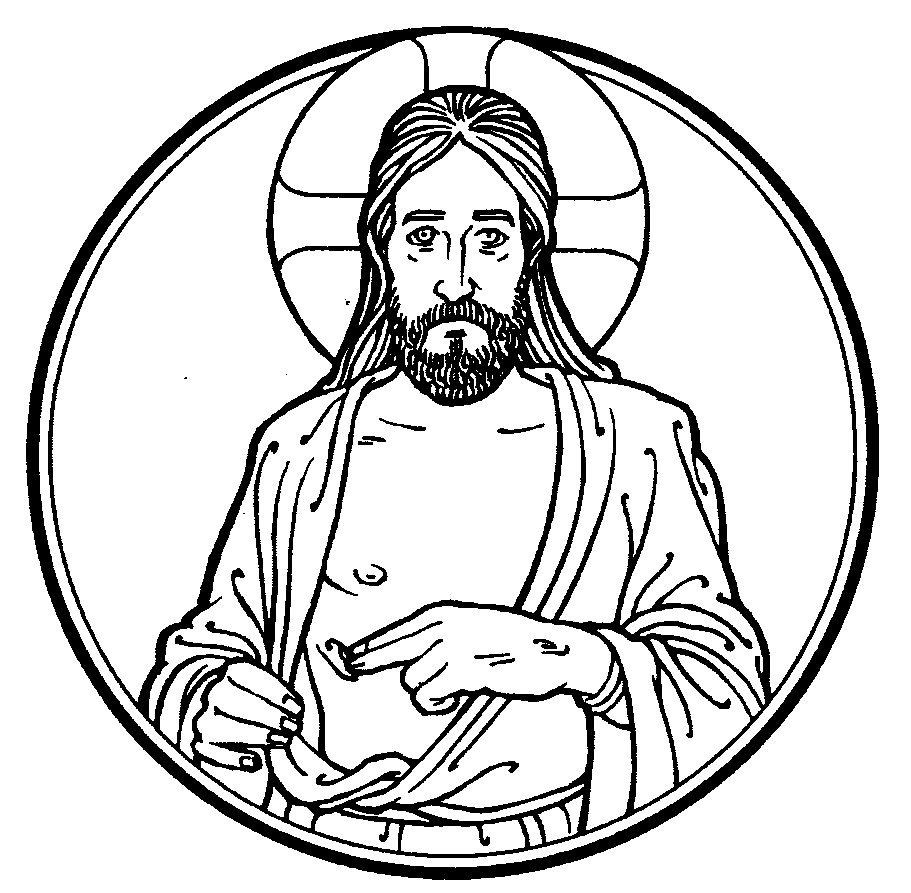
The second Sunday of Easter is annual “Pick on Thomas Day.” There are people in this world who have never even picked up a Bible, but they have heard about “Doubting Thomas.” This label is somewhat inaccurate and, in many ways, unfair: unfair that he is singled out as if nobody else doubted.
In the resurrection account from St. Luke, chapter 24, the women had told the disciples about the angels and Jesus’ appearance, “but these words seemed to them an idle tale, and they did not believe them.” (Luke 24:11) They … meaning the 11 disciples … did not believe their witness. The disciples were not just doubtful; … they did not believe. They were unbelievers.
Thomas was not among the disciples during that first appearance of Jesus in our text today from John’s Gospel. After Jesus’ first appearance to the disciples, when confronted with the others’ witness he did say, “Unless I see in his hands the mark of the nails, and place my finger into the mark of the nails, and place my hand into his side, I will never believe.” See how inaccurate the phrase doubting Thomas is, Thomas was not a doubter, but an unbelieving sceptic as well. They had all been unbelievers. So … how come Thomas is the one who got singled out with the label “Doubting Thomas”? We don’t speak of Pagan Peter, Unbelieving James, Matthew the Infidel? The fact is: not a single one of the disciples believed the report of Christ’s resurrection until they saw Jesus in the flesh. The entire crew failed miserably: they fled, when Jesus was arrested, they didn’t believe the eye witnesses of Christ’s resurrection, and that first night after the tomb was found empty, where were the 10? Afraid for their lives, in a locked room, not remembering anything Jesus said.
In the midst of their fear and unbelief, into the locked room, Jesus comes and stands among them. He who was crucified and dead is no longer so. He is alive. The witness of the women and the Emmaus disciples (about whom we will hear next week) were proven true!
He had every right to scold them vigorously. “Why did you not believe?” Jesus had every right to condemn them but He did not. Jesus came and stood among them in the midst of their failings, their grief, fear and unbelief and brought them peace and forgiveness, comfort, and mercy, and the first words from His mouth to their ears was His loving message “Peace be with you.” When he had said this, He showed them His hands and His side. Jesus not only gave them His peace, but He even invited them to check out the wounds of the crucifixion in His hands and side which was pierced to make peace. Peace with Jesus and Peace with the Father.
Now as if that were not amazing enough, Jesus showed the profound working of God’s grace in the fact that He chooses to use humble and fallible instruments to deliver this word of forgiveness in the office of the Ministry. Jesus said to them again, “Peace be with you. As the Father has sent me, even so I am sending you.” Jesus Himself is “an apostle” because an apostle is a “sent one.” He was the appointed Apostle from God the Father. He was sent from the Father specifically to save the spiritually dead, hopeless, and helpless people as a mission of mercy. To establish peace and reconciliation between God and mankind by His earning forgiveness in His perfect sacrificial death and resurrection and then giving this forgiveness to those who have sinned and failed but repent and believe.
So He who was sent by the Father appoints this group of weak men as apostles … as “sent ones.” These men who just a split second before were unbelievers, or at least misbelievers. They are appointed and sent from God the Son with His authority: as Jesus gave them the special authority to admonish and call sinners to repentance and announce forgiveness and peace to those who do repent. He breathed on them and said to them, “Receive the Holy Spirit. If you forgive the sins of any, they are forgiven them; if you withhold forgiveness from any, it is withheld.”
Jesus had just endured the cross, and the wrath of His Father for all sin so that forgiveness of that sin could be given. Now, He has taken that dearly won forgiveness of sins and placed it in the hands of this group of sinners and appointed them to the ministry of reconciliation, to the Office of the Keys and distribution and announcement of that forgiveness.
Jesus has given His forgiveness to the Church, and the Small Catechism covers the way in which this authority to forgive sins is lived out in the Church when it discusses the Office of the Keys.
What is the Office of the Keys? The answer: The Office of the Keys is that special authority which Christ has given to His church on earth to forgive the sins of repentant sinners, but to withhold forgiveness from the unrepentant as long as they do not repent.
The catechism then cites this passage from today’s Gospel lesson: The Lord Jesus breathed on His disciples and said, ‘Receive the Holy Spirit. If you forgive anyone his sins, they are forgiven; if you do not forgive them, they are not forgiven’ (John 20:22-23).
What do you believe according to these words? I believe that when the called ministers of Christ deal with us by His divine command, in particular when they exclude openly unrepentant sinners from the Christian congregation and absolve those who repent of their sins and want to do better, this is just as valid and certain, even in heaven, as if Christ our dear Lord dealt with us Himself.
We exercised this authority and have received the Words of Christ earlier in the service when you confessed your sin, your failings, your weakness, and the fact that you don’t deserve forgiveness, but for the sake of Jesus Christ God’s people plead mercy. And so you heard me say, “Upon this your confession, I, by virtue of my office, as a called and ordained servant of the Word, announce the grace of God unto all of you, and in the stead and by the command of my Lord Jesus Christ I forgive you all your sins in the name of the Father and of the Son and of the Holy Spirit.”
These words of forgiveness and peace are so precious and so valuable that even if the rest of the service is a total bust … the sermon dull … the hymns hard to sing …no matter what goes wrong in the rest of the service, it is worth it to come and confess and hear those words of forgiveness and peace in Jesus Christ and receive what those words promise. For in those words of forgiveness, Jesus comes and stands among us, and we receive the very forgiveness that Jesus gave to those underachieving disciples on the very day that He rose from the dead.
There is great comfort for us in today’s Gospel reading. All of us mess up. We all fail regularly in love for our neighbor, in faithfulness to God in thought word and deed. We have doubted and disbelieved. Just as Jesus came to those disciples with His peace and forgiveness, He also comes to you today. Be no more disbelieving but believe. Your crucified and risen Jesus comes to you this day, comes and stands among you to announce His victory over your sin, over your past failings, conquering your doubt and your fear including the last and greatest enemy of death. As Jesus said to John in the book of Revelation He says to you and me. “I am the Alpha and the Omega, fear not, I am the first and the last, the living one, I died and behold I am alive forevermore, and I have the keys of Death and Hades.”
The keys of death and Hades is the forgiveness that Jesus earned on the cross for you. Today’s Gospel teaches that heaven is opened to you when the office of the keys is proclaimed, when you hear the words of absolution from me, your pastor. Whenever you hear the preaching of the Gospel of Christ crucified for the forgiveness of sins. Whenever you remember the promise of God to you in waters of Holy Baptism. Whenever you receive the body and blood of Christ in the bread and wine in the Sacrament of the Altar there Jesus is among us. Whenever and wherever God is using these humble instruments: pastors, preaching, water, spirit, absoluting, bread and body, wine and blood, people confessing, there Jesus brings His love and forgiveness delivering the peace which He has won for us. There He shows the instruments of our salvation. There we behold the wounds in His hands and his side, from which poured His blood and water, the instruments of Your salvation, your forgiveness. Water and blood. The Water fills the fount, the blood fills the cup. Both poured out for you, covering you, and filling you with His grace and mercy. The speaking of the Absolution and preaching of His Word is Christ’s breathing out His Spirit. Do not disbelieve, but believe that Jesus comes and stands among us in all these ways to bring peace and forgiveness to you to open the kingdom of heaven to you. This is the way that His peace, comes to you. Peace between you and God, peace with your brothers and sisters, Peace in your mind and heart, peace which the world cannot give. Peace which comes from the joy of His crucified and resurrected presence to you that you may no longer fear, but believe. You haven’t seen Jesus in the same way as the disciples, you haven’t touched His wounds with your fingers in the same way, but you have and do in a sacramental and mysterious way. Jesus still comes and stands among us when He His Word is preached and His sacraments celebrated in truth and purity. You have seen Him, you will see Him, so that you may believe that Jesus is the Christ, and by believing you may have life eternal in His name. Amen.
Pr. Aaron Kangas