Author Archives: goodshepherdyucaipa@gmail.com

Need for Greed?

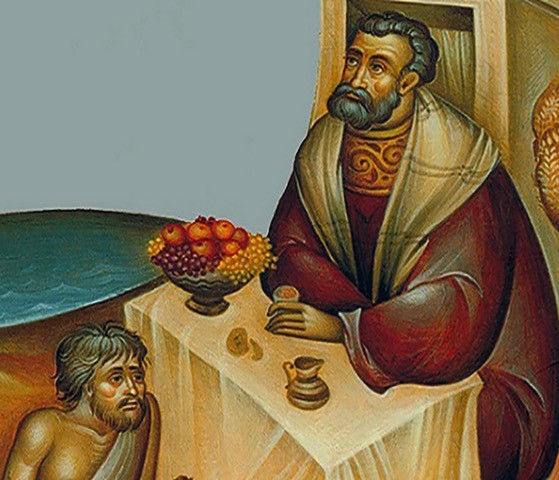
Rich Man and Lazarus

Sermon for the First Sunday after Trinity: June 6, 2021 jj
Rev’d Mark B. Stirdivant, Good Shepherd Lutheran Church, Yucaipa, California
✝ sdg ✝

Do you have a need for greed? Over the years there’ve been a number of game shows that used greed as a motivation. Whether it’s “So You Want To Be A Millionaire” or “Deal or No Deal,” even “Jeopardy!” and “The Price is Right,” the winner is the one who successfully executes the right strategy to take the most money home. In a sense these shows are pretty close to real life, because what happens there happens every day to you and me. In our day greed is no longer considered a vice. Instead, greed is now seen as a virtue worthy of praise. Why else would you throw good money after bad in pursuit of those things you think you have to have? Though we may try to curb the urge, the truth of the matter is that we often find it almost impossible to live without the newest toys and gadgets that catch our eye.

Behind this need for greed, dear Christian, is a lack of respect for God’s gifts. Although God has blessed each of us with all we need to sustain this body and life – not always by giving us what we want, but what we need – there are still times when we find themselves in the predicament of having “too much month at the end of the money.” Look at the loan industry, which is flourishing because people are willing to mortgage their future for a fleeting taste of the here and now. We think have to have the best to be the best. But when it comes to giving back to God, we are seldom as lavish with Him as He with us. God will simply have to wait until next week.

But greed works in other ways, too. It’s possible for a person to save so much money that soon they begin worshiping their savings portfolio rather than using it to love their neighbor. But to keep ourselves looking good, rather than calling it greed, we call it having “common sense” instead. Like the rich man, our clothes are turning purple and our tables are full. We are the rich man – refusing to listen to the Law as it tries to wake us up to God’s way of seeing things. For many of us, greed has become good, not evil – a way of life – and we love the way we live.

But we’re in good company. Did Abraham not try to help God fulfill the Promise He had given him – that his house would not be barren, and that his wife, Sarah would have a child in her old age? When God didn’t deliver the son He had promised in what Abraham considered a timely manner, he went and slept with Sarah’s maid, Hagar, who then gave birth to a son named Ishmael. Abraham’s greed—even greed for what the Lord already promised him—that impatient greed got the best of him. But did God give up on Abraham and look for another to be His heir? No. God still kept His Promise. Abraham believed that promise, and the Lord credited it to him for righteousness. He counted that faith as though Abraham was perfect.

Abraham’s problem was that he wouldn’t listen to or immediately believe God’s Word. And that was the rich man’s problem, as well. This unnamed rich man walked by Lazarus’ place at the gate of his house every day. Perhaps he even had a passing acquaintance with him. But it’s obvious he didn’t care about him. He had more important things to be concerned with. But when death came to them both, there is where we find the surprise. The rich man ended up in hell, while Lazarus was carried to Abraham’s bosom – that is, to heaven.

Yet even in hell the rich man in his greed was playing his greed game– still looking to make a deal. “Send Lazarus,” he pleaded, “so that he may dip the tip of his finger in water and cool my tongue. Send him to my father’s house, for I have five brothers, that he may testify to them, lest they also come to this place of torment. If he goes to them from the dead, they will repent.” And how does Abraham respond? He tells the rich man that if his brothers refuse to hear Moses and the prophets, then neither will they be persuaded even if one should rise from the dead.”

Ouch! That must have stung. But it’s true. When you pay no attention to the Law and the prophets, neither will you pay any attention to Christ – even when He rises from the dead. The Law and the prophets, you see, their purpose is to prepare you to receive Jesus and His teaching. Saint John writes that if someone says, “I love God,” and hates his brother, he’s a liar – for if he doesn’t love his brother whom he’s seen, how can he love God whom he hasn’t seen? You and I, we need to repent and give up our greed. We must turn away from wanting to help God only on our terms. We have to return to Christ so that His love might abide in us, and so that we might love Him even as He loves us. And this is how God loves us: He sent His only-begotten Son into the flesh, so that whosoever believes in Him would not perish, but have everlasting life. God created this world because it’s His nature to love. And the Father sent Jesus into this world as an expression of that love – because God doesn’t want those whom He created to die and be forever separated from Him. Rather than passing us by every day as the rich man did Lazarus, God had pity on us, picked us up from the pit, took us out of it, and set us free.

Now, God counts our faith in all this – that is, our faith in Him – as righteousness. And to accomplish this He has placed our greed – indeed, all of our sin – upon Jesus, the sinless Lamb of God. God, you see, unlike us, is not greedy when He sacrifices His very best, His own dear Son. But here is where God is greedy. The Bible uses the word jealous. God is greedy in this sense: He wants to save you all on His own. He doesn’t want, seek, or need, your help. By saving you all on His own, He demonstrates the true meaning of love, and promises to abide in those who abide in Him. This He accomplishes by means of Holy Baptism, where water connected with the Word pulls you out of this world of sin and death into the endless life of the world to come. Forgiveness of sins and eternal life are now yours as a free gift, as through the faith of Jesus, God saves you from the death and hell we all rightly deserve.

God also abides with you in another way – through the Sacrament of the Altar, where you receive with your own mouth the true body and blood of our Savior, in, with, and under simple bread and wine. Though you’ve been wearied by the devil, the world, and your old sinful flesh, you will soon be eating and drinking at that Banquet Table which is God’s gift to make you whole again in Christ. Because God abides in you, you are now empowered to proclaim His love for others through your various vocations. Your life, hidden in Christ, becomes a light-filled sermon preached to the world. Though still weak, you no longer feel that “need for greed” because of Jesus. The richness you have in Christ is what moves you to show His love to others. Trusting in Him who saves us from our greed and gives us His love in return, you’ve been freed to love your neighbor even as God loves you. Greed is dead. Love is alive. Believe it for Jesus’ sake.

In the Name of the Father and of the ✝ Son and of the Holy Spirit.

Green Altar Parament

Readings:
Gen. 15:1–6 the stars…So shall your descendants be
Psalm 33:12–22 the eye of the LORD is on those who fear Him
1 John 4:16–21 perfect love casts out fear
Luke 16:19–31 They have Moses and the prophets

Born from Above

Trinity
Trinity

Sermon for the Festival of the Holy Trinity: May 30, 2021 jj
Rev’d Mark B. Stirdivant, Good Shepherd Lutheran Church, Yucaipa, California
✝ sdg ✝

Throughout the Old Testament, God set before men like Isaiah, Jeremiah and the other prophets, an incredibly difficult, uncomfortable task. They were not called upon to explain the sublime doctrine of the Trinity, but what they were given to do was prophesy – prophesy concerning Israel’s impending destruction at the hands of her enemies. It’s a message of judgment, so it should come as no surprise to learn that these men suffered continual rejection in their quest to be faithful to God’s call.

On one occasion, for instance, Jeremiah was beaten by the chief officer of the Temple and placed in stocks so people could ridicule him as they passed by on their way to their false, hypocritical “worship.” At one time Jeremiah became so despondent on account of his God-given task that he complained of ever having been born. He wrote: Cursed be the day I was born! May the day my mother bore me not be blessed! Cursed be the man who brought my father the news, who made him very glad, saying, “A child is born to you – a son!” May that man be like the towns the Lord overthrew without pity. May he hear wailing in the morning, a battle cry at noon. For he did not kill me in the womb, with my mother as my grave, her womb enlarged forever. Why did I ever come out of the womb to see trouble and sorrow and to end my days in shame? (Jeremiah 20:14-18)

In similar fashion, the holy man Job also suffered. However, unlike Jeremiah, he didn’t suffer at the hands of God’s people who rejected his preaching. Instead, Job suffered afflictions of body and soul which God permitted Satan to inflict upon him. He lost seven sons and three daughters in one catastrophic event. All his flocks of camels and sheep were stolen right out from under his nose. Satan was even permitted afflict him “with painful sores from the soles of his feet to the top of his head.” So in his forsakenness, the famously patient Job also reached the point where he despaired of his birth, and said: May the day of my birth perish, and the night it was said, ‘A boy is born!’ May that day turn to darkness; may God above not care about it; may no light shine upon it. Why didn’t I perish at birth, and die as I came from the womb? Or why was I not hidden in the ground like a stillborn child, like an infant who never saw the light of day? There the wicked cease from turmoil and there the weary are at rest. (Job 3:3-6)

Yet the regrets of one’s birth are not confined only to the prophets. All who enter into this life and reject the faith God desires to give us all – who willfully live in conscious opposition to the Lord’s Christ – will likewise also regret their birth someday. Recall, for instance, what Jesus said of Judas Iscariot, who betrayed the Lord of Life to His death. He said: “The Son of Man is to go, just as it is written of Him; but woe to that man by whom the Son of Man is betrayed! It would have been better for that man if he had never been born!” (Mark 14:21)

Consider how some people, even today, regret having ever been born because of the course their life may have taken – because of regrettable actions they have done or because of regrettable punishments they may have suffered at the hands of evil men. Due to terrible things that happened to them, both Jeremiah and Job wished they had never been born. And, it would have been better for Judas not to have been born – not because of what he suffered, but because of what he willfully undertook – even though if he had not betrayed our Lord, someone else would have stepped up and taken his place.

But, you may be thinking that Jeremiah, Job and Judas are extreme examples. Maybe so. Is it not true, though, that each of us – sinners all – at one time or another are inclined to look back on our lives with a deep sense of regret? Is it not true that many addictive people rue the day they first gave in to temptation? Is it not true that many lament the sufferings they’ve experienced at various times in their life, not all of which they outwardly seem to have deserved? Is it not true that many would love to go back in time, do things differently, right the wrongs they may have committed, and perhaps maybe avoid some of the pain in their life?

What causes you remorse? Is it the way you may have been treated, the way you’ve treated others – or is it both? Is there something in your life that makes you desire a return to your birth, a chance to start over – fresh, spotless and new? If so, dear Christian, today’s Gospel is what you need to hear. It’s the story of Nicodemus, who came to Jesus at night under cover of darkness, with a hunger to know and understand the source of the great miracles Jesus had performed. But our Lord Christ had no desire to discuss the topic Nicodemus wanted to talk about. He didn’t want to get tangled up in explaining the three persons and the single essence of God. Rather, Jesus engaged him in another subject, more to the point: “I tell you the truth,” He said to him, “no one can see the kingdom of God unless he is born again” – born from above – “begotten of the Father” as we read in John chapter 1– “born not of natural descent, nor of human decision, nor a husband’s will, but born of God.”

Jesus wasn’t speaking to Nicodemus about the possibility that he could return to his mother’s womb – as if that were even feasible – but He did speak with him about a return to the fresh, clean innocence of an Eden-like birth – about a birth of water and the Spirit that restores regrettable, regretting sinners to an unceasing, child-like innocence – an innocence that has no “stain or wrinkle nor any other blemish” – an innocence which only God, and no one else, can give. Jesus spoke to Nicodemus about Baptism – his Baptism, your Baptism.

Nicodemus, you see, was more than just a “teacher of Israel,” as Jesus called him. He was also, perhaps more importantly, a battle-wearied sinner – a Word-of-God-speaker who had no idea what He was to speak – a truth-searcher who realized he had run out of places to search for the truth. So he came to Jesus at night and said to Him: “Rabbi, we know You are a teacher who has come from God.”

Here in this Gospel, Jesus taught the teacher, just as He teaches you and me. He teaches us that you can, indeed, return to your birth and start afresh. He teaches that new birth has already come to you as a gift from above – in a birth of water and Spirit that washes away all sins and regrets with their attendant remorse and shame.

As Paul reminds us in Romans 8, there is now no condemnation for the people of God – for you and for me. There is, instead, the continually flowing water of Baptism – a washing of water and the Holy Spirit – that repeatedly blots out all your transgressions, washes away all your iniquities, and cleanses you from all sin. There is no guilt that any longer need weigh heavily upon your heart, for the blood of Jesus has cleansed and purified you.

You need never regret your birth, for our heavenly Father, the Father of our Lord Jesus Christ, has given you a new birth – a birth from above. And so, with Nicodemus, Jesus declares to you this day: “I tell you the truth, no one can see the kingdom of God unless he is born again” – born from above says the Greek – you too are “begotten of the Father” – even incorporated into the Holy Trinity Himself, since you are unified with the ascended Christ.

This is the birth that the Holy Trinity has given to you; it’s by the will of the Father, through the death and resurrection of God’s Son, and by means of the Holy Spirit’s gifts. “If anyone is in Christ, he is a new creation,” and he has been given new birth. After speaking of your new birth, Jesus goes on to speak about the certainty of your forgiveness and salvation with these words: “For God so loved the world that He gave His one and only Son, that whosoever believes in Him shall not perish but have eternal life. For God did not send His Son into the world to condemn the world, but to save the world through Him.”

Here’s where believing in the Holy Trinity makes a difference for you as a Christian: The Father sends the Son. The Son is lifted up on the cross for the salvation of the world, so that all who look upon Him in faith may be saved. Then finally, the Holy Spirit pours out His grace into your heart and mind, so that having been born anew, you may now and always live in the new life Christ has won for us all. By this faith, children of flesh are made to be children of God, heirs of the kingdom of heaven, and possessors of eternal life. This is the lesson of today’s Festival and its Holy Gospel reading. May our dear, merciful God and Lord graciously nurture and sustain you in it, for the sake of His Son, and for the building up of His kingdom.

In the Name of the Father and of the ✝ Son and of the Holy Spirit.

White Parament
White Parament

Readings:
Is. 6:1–7 Holy, holy, holy is the Lord of hosts.
Psalm 29 The voice of the LORD is over the waters
Rom. 11:33–36 Oh, the depth of the riches
John 3:1–17 unless one is born of water and the Spirit, he cannot enter the kingdom of God.

Peace

Sermon for the Day of Pentecost: May 23, 2021 jj
Rev’d Mark B. Stirdivant, Good Shepherd Lutheran Church, Yucaipa, California
✝ sdg ✝

Pentecost
Pentecost

The ancient people of Shinar seem to be so different from us. They were all descended from Noah’s family and they had already started repopulating the earth after the devastating Flood. We find it hard to imagine, especially here in a state that today has over 200 different languages currently being used, that everyone always and exclusively spoke only one language. We don’t know what that’s like, everyone understanding exactly what everyone else is saying. In the city of Babel long ago, those people had great potential to do great things, since they were united in one very real, very advantageous way.

And yet, those same people had a great many fears, just like you have today. They feared that one day they might become scattered and helpless, like sheep without a shepherd. They feared that they would not make a name for themselves, that their reputation wouldn’t amount to anything at all. If the residents of Shinar didn’t act decisively and quickly, then irreversible disaster would most certainly strike. They were convinced, not by some warning from God, as if He had come down from heaven and told them—Hey, you guys, you nomads need to get your act together now and build up your city. Or, why haven’t you started on your tower yet? No, they had managed to convince themselves through their fear that they had made up in their own minds instead.

How soon they forgot that the Lord was their Shepherd, that He was the one who rescued them from the destructive waves of the Flood. That He had preserved them as His people and He gave them the gift of unity with one another and the gift of one, single, perfectly understandable language. They already had peace with God, a name and reputation that was all that they needed, but through their fear they chose instead to make a new name for themselves, a name that they created on their own with accomplishments they thought would salve their fears and give them the kind of peace they craved.

As we just read, that idea didn’t work out for the people of Shinar too well. They proceeded with their city of Babel, employing their new brickmaking technology, and they started raising up the tower that they had hoped would scrape the heavens.

The Lord came down to see, but He already knew. His people had rejected Him. God wasn’t jealous over bricks or an impressive city or even a tower. He wanted their hearts all to Himself, but they had chosen to follow their fears instead. He wanted their fear, love and trust to be centered in Him. Why? He created them, and rescued them from the waters of the Great Flood, and united them in one community and language, so He had the right to judge them for their wayward faith. The people of Babel would have to suffer the vengeance of God.

And the Lord didn’t have to do much at Babel. Very little effort would be necessary. He simply let their sin, and the chaos that it naturally produces, take over these people. They sincerely desired to proceed in their plans with God totally out of the picture. Often God answers the sinful intents of people by allowing them to feel the effects without His gracious interference. In many cases, there is no worse punishment possible! That is the frightening thing for you, isn’t it? You want something so bad, you can’t imagine life without it. You don’t think you’re going to get it, until you do, and you wish you had never even thought about it. That’s when you finally figure it out that whatever you desired actually became for you your god, just like the citizens of Babel made their own god out of building that tower. Out of their disdain for the Lord and their high praise of themselves, God mixed up their languages and scattered them—the result that they had feared the most. Their tower crumbled into the dust, and their bodies, like that of Adam their father, would soon follow suit and also turn back to dust. This is one teaching you gain from this: You inevitably see that there is always something that is missing in your hunt for things, fame, identity, power, popularity, the good life, or maybe just simply surviving one day to the next. What is missing? In a word: peace is what’s missing.

And Jesus offers you peace, not the fake peace that the world cherishes and bombards you with like annoying commercials, phone sales calls or Internet pop-up ads. Jesus is here and today giving you a Pentecost gift when He simply says: Peace I leave with you, My peace I give to you. Not as the world gives do I give to you. Let not your hearts be troubled, neither let them be afraid. The peace comes not as some light-hearted feeling that makes you tingle inside. The peace of Jesus is actually His gift of the Holy Spirit. This is something real, and truly powerful. Note what the gift of the Holy Spirit does to those frightened, bewildered apostles in the upper room on the first Pentecost Day: He fills them with joy, gives them boldness to preach in the face of certain resistance, and certainly not the least spectacular, He gives them the gift of speaking in many other languages.

Do you see now the great fulfillment that took place? The confusion and scattering due to a multiplicity of languages long ago at Babel has now at Pentecost in the city of Jerusalem been undone. Notice, though, that the reversal is not accomplished by wiping out all those diverse tongues and creating one language again. Instead, He accomplishes the reversal of Shinar’s curse by preaching the Gospel in the mouths of His first pastors in many different languages—not unrecognizable, babbling tongues—the specific languages of the very people who were visiting Jerusalem at that same time! The judgment of God handed down so long ago in Genesis 11 was finally turned on its head in Acts 2. And all of this was thanks to the coming of the Holy Spirit at Pentecost, as Jesus promised. It was just the beginning of God’s mighty work of salvation in this sin-cursed world.

God is at work also here in faraway Yucaipa, where the Word of God has since Pentecost been spread all over the world. You are not too different at all from the ancient people of Shinar. You have fears hanging on to you today. You are tempted from time to time that something else besides God your Creator and Savior needs to fulfill your life, salve your fears and give you complete peace. They were saved from the cataclysmic Great Flood of Noah; you were saved through the Great Flood of your Baptism into Christ, washed clean in the forgiveness that Jesus paid for with His blood when He died on the cross.

Out of love for you, the Lord may have allowed you for a time to feel the painful tinge of the harm that your sins can do. But He didn’t condemn you, then or now. He was always with you, even when you didn’t feel His presence, or even when you might have felt disdain for Him. He wasn’t pleased that you decided for a while on another god in search of peace, to make a name for yourself, or to save you from that one disaster you most want to avoid. Yet your Shepherd still desired to gather you in with all of His scattered sheep. He created you, He saved you, and even today on Pentecost 2021 our Lord is uniting you His dispersed people. The gift of the Holy Spirit is a gift of a new name, a refreshed reputation of being the not perfect, but forgiven children of God, gathered here in this humble place. You have received a unity and a common language, the language of faith in Jesus Christ for the forgiveness of sins, for the resurrection of your bodies on the Last Day, and the life that will be everlasting.

Jesus Himself had said the Holy Spirit is your Comforter, the Helper. Why would your Lord give you a comforter if He did not know that you will be needing comfort? He says let not your heart be troubled. Then that must mean He must know that you constantly face fears and uncertainties and temptations to sin. You who could never have helped yourself any day of your life, be assured that Jesus has not left you as orphans. His Holy Spirit helps you as you struggle in this time known as the Christian’s life on earth: a time of trouble, hardship, and evil, but because of your Savior Jesus Christ it is a life full of true Holy Spirit-filled joy. You have His Word and His promise that you are forgiven. The blessed eternal inheritance has been yours ever since the water of Baptism placed the Holy Spirit into your heart.

On this Day of Pentecost, your prideful, crumbling, self-centered Babel heart is rebuilt and re-centered in God your heavenly Father, thanks to the death of Jesus Christ for the forgiveness of your sins. You have the heavenly peace of God that goes beyond your own understanding. His gift of the Holy Spirit comes to you only one way—from His Word. From the Word you hear and read, from the Word with which you are washed, the Word you eat, the Word you drink. And the renewal of your life, the renewal of the world, the renewal of the Church, leave that up to Him. Let not your heart be troubled.

God has indeed given us great potential, not for our own accomplishments, but for His Word to sound forth in our lives as His Church. Put your trust not in the promises or personalities of men, nor in gimmicks or sales pitches, nor any fabulous tower-building projects to preserve the Church, for those are sure to crumble sooner or later. Jesus doesn’t care about our buildings or bank accounts—He wants your heart all to Himself. So, secure your trust squarely on Jesus Christ by the help of your Comforter, the Holy Spirit. It is a promise on which your Lord always comes through; He will never fail. Come, O Holy Spirit, and lead us every day to Jesus.

In the Name of the Father and of the ✝ Son and of the Holy Spirit.

Red Parament
Red Parament

Readings:
Gen. 11:1–9 the whole earth had one language
Psalm 143 Hear my prayer, O LORD, give ear to my supplications!
Acts 2:1–21 We hear them speaking in our own languages the wonderful works of God
John 14:23–31 My peace I give to you, not as the world gives

The Reign of Christ

Ascension
Ascension

Sermon for the Seventh Sunday of Easter; Ascension: May 16, 2021 jj
Rev’d Mark B. Stirdivant, Good Shepherd Lutheran Church, Yucaipa, California
✝ sdg ✝

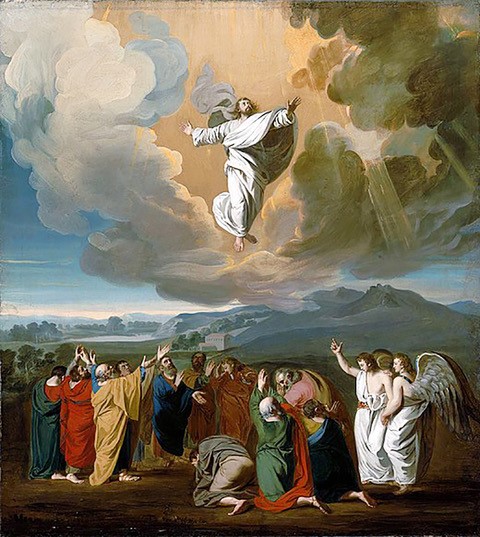
The Creeds of our Church confess the Biblical truth we just read in the last chapter of Mark that forty days after Christ’s Easter conquest over death and hell, He ascended to the right hand of God, the Father. Now, the “right hand” of the Father is actually everywhere, say our Confessions; it’s the position of power and authority over all things. And from this position of power and authority, He has and ever will reign and rule as King of kings and Lord of lords. This is very comforting for us. We belong to this powerful, exalted Christ, and He made us a promise. Yet we also need to be clear about what kind of power and authority that Jesus has. With His ascension He retains as the Son of God in resurrected human flesh everything that He willingly set aside when He arrived that first Christmas. So on this day when we celebrate our Lord’s ascension into glory, it would be right and good to draw from Holy Scripture exactly how the secular or left-hand kingdom of God’s reign is related to his Spiritual or right-hand realm, and also how those two must remain distinct.

When most people think of Jesus ruling His kingdom on earth, they don’t think much farther than a place like this. Sure, the Lord can live and reign under this roof, on Sunday mornings. But ask a Christian cake decorator that has recently been through a horrific lawsuit, whether they can enjoy the freedom of religion on other days of the week in their everyday lives at work. These days the world is saying to the Almighty God, we don’t want you to reign over us. Sure, we’ll give You control of our “faith life” so to speak, but we want our so-called “real life” to ourselves. It is impossible to limit God’s influence to one particular realm. It’s not as though you were here right now to fulfill some obligation to Christ, and then when you went on your way, that time left over belonged to you to do with however you please. No, the kingdom and rule of the Ascended Lord Jesus Christ controls even our everyday, secular life, for God lies hidden even in your neighbor whom He has placed in your path to serve just as though you were serving Him.

Whether it was the pious monks and nuns of the Middle Ages, or the well-meaning preachers of personal relationships and promise-keeping in our time, godly people have often felt that their spiritual lives had to be obviously apparent and different from this world, or else they will not reach true holiness. Finding spiritual gifts was quite the rage for a while, and to be sure, people should always exercise their unique ways of serving God, but certain other talents were pushed aside as though they were not “spiritual” enough. If it wasn’t termed a “ministry” of some sort, then it wouldn’t help build God’s kingdom. And if everything became a “ministry” then what would happen to the true, Biblical Ministry of preaching the Word and forgiveness of sins? The truth is that Jesus is ruler in the Church but also He rules in the mundane, everyday secular world. He may be hidden in the imperfect, self-serving government and other sinful neighbors, but living and working as a believing Christian in regular daily life is also considered godly service, even if it isn’t specifically called a “ministry!”

But there’s another serious error – namely, when the secular and spiritual are blended so completely there’s no longer any distinction left regarding the way Christ rules each of these domains. Even though they are not separated, the secular and spiritual do have a valid distinction from each other. It’s a distinction that’s just as much needed as the difference between Law and Gospel, even though both are God’s holy and necessary Word.

Since we live in a world where Christ reigns over all things ever since His Ascension – the question we ought to be asking then, isn’t whether or not Christ is reigning, but rather: “How far into our own lives is this reign of Jesus? What difference does it make to me?” I don’t like it when a family member of mine decides to move in with someone of the opposite sex when they should be getting married first. But I don’t want to upset them or lose them, and they are the exception—they can make sure that it doesn’t ruin their relationship. And so little by little, God’s rule over us is kept farther and farther at arm’s length. We learn in Ephesians that Christ’s rule and reign extends over all things. It was permanently established by the Father when He “seated Him at His right hand… far above all rule and authority and power and dominion.” He alone is King of kings and Lord of lords—the One to whom all must give answer on Judgment Day.

But, even though He rules over all things, in every realm He carries out that rule through different “means” – and in many very different ways. His rule in the left-hand secular realm, for instance, is normally carried out through governments, as St. Paul teaches in Romans: “Let every person be in subjection to the governing authorities. For there is no authority except what God established….” And in Colossians, saying: “By Him all things were created, both in the heavens and on earth, visible and invisible…” He rules the world with power and the law, while He rules the Church by grace announced freely in the Gospel.

Through government God wields the sword of justice so that order might abound, for governments are ministers of God for our own good—and the government doesn’t bear the sword in vain. When it rains, when it’s dry, when the sun rises in the morning and sets in the evening, and when flowers bloom and leaves sprout it’s all because of His power, which was awarded back to Jesus upon His Ascension. And yes, good governments rise and corrupt governments fall, as well as everything in between, because Christ is sitting on His throne and reigning!

He governs His Church by His grace – the grace He purchased and won for us on the cross – and upon which His Father stamped His seal of approval by raising Him from the dead and returning Him to His exalted throne. Men and women of every nation and tribe come to faith, and His children follow Him and desire to do His will because of this accomplished salvation mission. Your holy status has been achieved not as a result of your works, but because of Christ’s works for your sake. At the end of life, His elderly saints – at a ripe old age – and His young lambs- some of whose lives are swept away all too soon – when they die, they enjoy the glory of being in His presence because of Jesus.

And those who labor, struggle, and face the trials and tribulations of life, are able to do so only because of the abundance of His grace. This grace is what causes Christ to rule His Church with tenderness, kindness, and compassion – those same qualities He demands of men to love and serve their wife and family. But more important, Jesus so abundantly demonstrated that love perfectly when He gave up His life for us all. His means of handing out forgiveness is not found in laws and governments, or even special church programs, but only in Gospel Word and Sacraments. That’s what we’re here to do as a church.

Through means of His Word He reveals Himself. Jesus reminded His disciples how “all things written about Me in the Law of Moses and the Prophets and the Psalms must be fulfilled.” And how—so that His followers might see this— “He opened their minds to understand the Scriptures.” Then in the same way, Paul prays that the eyes of our hearts might be enlightened to know the hope of Christ’s calling—the riches of the glory of His inheritance of forgiveness—and the surpassing greatness of His power toward all who believe.

Every time you gather to hear God’s Word, Christ is ruling His Church and showering forgiven saints with His grace. Here is where God desires His forgiveness to be proclaimed and the promise of eternal life extended. Here is where hope is bestowed upon all who call on the name of the Lord. And each of these blessings are given by means of His Word. But there’s more! By means of simple bread and wine in Holy Communion – and by means of water in Holy Baptism – God continually showers His people with countless blessings – all for our strength and benefit – and all so that we might be ruled by His grace. You and I, dear friends, we must seek Christ not only while He can still be found, but also where He wants to found.

Recall the angels’ directions to the shepherds: “And this shall be a sign unto you. You shall find the Babe wrapped in swaddling-clothes, lying in a manger.” Martin Luther says in one of his Christmas sermons: “Word and Sacrament are the manger and the swaddling-clothes into which it has pleased Christ to lay Himself.” And while such lowliness might seem far too worldly to our fallen human reason, the fact is that our Lord will be found nowhere else. Dear children of God, you and I, we cannot set up boundaries regarding the rule and reign of Christ that don’t already exist in God’s Word. And, by the same token, neither can we mix up His reign in our day to day life or else we lose sight of that grace which He bestows upon His Church and Her people.

The reign of Christ “fills all in all” for He alone is the Lord—and not just over His Church, but over everything. The world He rules with power—bringing forth justice and order; and the Church He rules with grace—as He gives Himself to those who are His own with a rule that’s gentle, and brings the unspeakable gifts of forgiveness, life and eternal salvation. This is the rule of Christ in the hearts of His children—may it always be so in your life.

In the Name of the Father and of the ✝ Son and of the Holy Spirit.

White Parament
White Parament

The Lord’s Prayer

Serpent On Pole
Serpent On Pole

Sermon for the Sixth Sunday of Easter; Rogate: May 9, 2021 jj
Rev’d Mark B. Stirdivant, Good Shepherd Lutheran Church, Yucaipa, California
✝ sdg ✝

Jesus had already taught His disciples the Lord’s Prayer, the greatest, most holy words that human beings can say back to God. They had asked Him, with some urgency it had seemed, “Lord, teach us to pray, as John taught his disciples.” And so the Lord gave them a truly blessed privilege, the privilege to call upon God your own Father in prayer. Remember how the catechism puts it when it explains the words Our Father who art in heaven: With these words God tenderly invites us to believe that He is our true Father and we are His true children, so that with all boldness and confidence we may ask Him as dear children ask their dear father. What a treasure this prayer must have been to them! So precious that their ears might have tingled once they heard the Lord’s Prayer. You would think that they would have prayed this prayer constantly, knowing that the Son of God Himself told them, “When you pray, say, ‘Our Father…'” and so forth.

Would you believe that they didn’t even bother? After He taught the disciples the prayer, the Lord’s Prayer, just like they asked Him, none of those eleven men had yet uttered a word of it, even up to the hours before Jesus would begin His Passion and suffering. “Until now,” He says, “you have asked nothing in my name.” He had to repeat to them His invitation to pray, almost pleading to them with the words, “Ask, and you will receive, that your joy may be full.” Why did they hesitate to pray? Why did it take Jesus until the eve of Good Friday to convince them they have this blessed access to God the Father?

Perhaps, but only maybe, they have an excuse. And that would be that these men were with Jesus constantly, talking to God in the flesh, hearing His gracious words of life and forgiveness. True, the Lord told them ask anything in my name it you shall receive it, but they truly had all they could possibly dream of, walking with Christ from place to place. Plus, it was not yet clear to these disciples how Jesus would bring their prayers to the heavenly Father. It would not be based on the specific words they would say, nor on anything good that they did, and not even based on the fact that they are the Lord’s own students. Instead, the Father would hear their prayers based on the death of the Son for their sake. Remember, Jesus was talking about His death when He told His followers, “A little while and you will not see me,” and mentioned His resurrection when He said, “And again a little while, and you will see me.” They already had the privilege of praying to the Father, it was just a matter of time before they will experience the need to pray, and here Jesus invites and even pleads with them to pray.

Where does that leave you? You don’t have the same excuse that the disciples had. You already have the need to pray, whether you choose to feel that need or not. It’s like what Luther would say to someone who didn’t feel the need to have the Lord’s Supper: touch your body, do you feel something? Then you have flesh and blood. Believe the terrifying things that God’s Word says about your sinful flesh, the human nature, and you’ll come every week to Holy Communion. Look around you, see anything? Then you are in the world, and if you really believe what the Bible says about the sinful world and its ruler, the devil, who wishes to attack you constantly, you would be much more serious about prayer than you are most days.

All of you who remember being confirmed: the temptation is unbelievable for you to deny the confession of faith you [had] just made. That’s the devil working. It’s what he wants. You are tempted to think you’re “done,” that there’s nothing more. I know. The same thoughts ran through my head at that time, too. But the Lord has a whole life of prayer left ahead of you. When He washed your sins away in Baptism, He breathed His Holy Spirit into you, the Spirit that cries out “Abba, Father!” in prayer.

But you have often resisted that urge to pray. You have put it off. You have thought that most things in your life are not that important yet. You have worried about what other people might think about you if you were regularly involved in a life of prayer. You have heard your pastor say that you don’t earn God’s blessing through prayer, and so you draw the false conclusion that prayer is not important. Most often when you’ve prayed, you have set terms, limits, demands upon your heavenly Father. You have been upset with Him for not coming through for you in the way you imagined. All the while you have ignored or otherwise failed to see His true blessings right in front of you the whole time. Perhaps you may have prayed for something while at the same time you remained confident that it would never happen.

But when Jesus invites you to pray like He does today, He sets aside all your sins that have occurred in the category of prayer. He not only forgives you for doubting Him, but He also gives you the sure foundation of His promise to hold on tight. That foundation was laid when Christ the Cornerstone was nailed to the cross. The words He said while He was crucified were His prayers made for your sake. Though you might have wasted words or said things you wished were taken back, Jesus made every word of His count so that your sins would be forgiven and you would be considered for time and eternity to be a precious child of God. Because of this, God is eager to hear your prayer, just as He plants within your heart the eager desire to pray.

God the Son assures you that the Father Himself loves you. Believe what He says. Your name is written in the Book of life, not by your decision for Him, but by His grace toward you. Ask God in confident prayer, and you will receive, that your joy may be full at the last Day. In the meantime, confess with your fellow Lutherans that you believe the true Christian faith with all your heart. Recall the promise God helped you to make that you would give up everything else, even your own life, rather than deny anything that the Scriptures or the Small Catechism says. And armed with that confident faith that only the Holy Spirit can give, you are bold to approach Almighty God on a regular basis and in Jesus’ name you are privileged to call Him “Our Father who art in heaven…”

In the Name of the Father and of the ✝ Son and of the Holy Spirit.

White Parament
White Parament

Sermon – The Comforter

High Priestly Prayer

Sermon for the Fifth Sunday of Easter: May 2, 2021 jj
Rev’d Mark B. Stirdivant, Good Shepherd Lutheran Church, Yucaipa, California
✝ sdg ✝

The Gospel of John, chapter 16 is full of comfort for fearful disciples on the verge of a transition. Jesus had been with His twelve followers for about three years. He had spoken about His death and that He would rise from the dead, but each time He brought it up, the disciples didn’t understand. Jesus was aware of that. Before He would go to the Father, the Son of God clothed in human flesh would first have to go to the cross. “But I will come again, and your sorrow will turn to joy.”

And joyful the disciples were in the few weeks that followed the first Easter Day. The Lord encouraged them more and more each time He appeared. Then another transition will come. Jesus will ascend to the Father. The Son, still clothed with human flesh, but now risen from the dead and glorified, will from that moment onward sit at the right hand of God the Father Almighty. Where is the right hand of God? The right hand of God is everywhere, for the power and strength of God is everywhere, and Jesus is One with the Father. That is not what is turning the joyful disciples back to fear and sorrow.

They have fear and sorrow because they will not see Jesus any longer. A transition is soon to happen. Their Teacher will depart. They will be alone. They will have to face the raging evil of this world without His help. How can He leave us now? We’re finally starting to get it when He teaches us these things! Now He’s going to leave? We can’t do this without Jesus.

The disciples are right about one thing. They can’t do this without Jesus. They are sinners. They cannot deceive themselves by thinking that they are free from the weaknesses that hinder their service to God. They need forgiveness, a release from the weight of their sins. The Ten Commandments reveal that they have disobeyed God in their thoughts, words and actions. They need the blood of Jesus, His life that He gave for them on the cross, to give them their life, to give them their strength in this time of transition and for the rest of their future. They think that on the day when Jesus ascends to the Father, that’s when they will lose everything that Jesus gave them. In John chapter 16, Jesus comforts these fearful disciples that instead, they will gain even more help than when He was with them the past three years.

Jesus promised His disciples, and He promises you as well, the gift of the Holy Spirit. The name that Jesus gives the Holy Spirit is the Greek word Paraclete, which means Helper, Comforter, Cheerer, Exhorter. The Holy Spirit is One with Jesus and with the Father, and together they are the Holy Trinity. We will not see Jesus, but He will still be with us. His peace, His comfort and His joy will not depart from us, His Church.

The Holy Spirit is the guarantee that Jesus’ promise to be with us will always come true. When Jesus goes away to the right hand of the Father, He’s not leaving you, dear disciple. Instead, He’s drawing nearer to you than you will ever know. It is to your advantage that Jesus goes away and sends the Helper, the Holy Spirit, and in this way, Jesus will be with you always, even to the end of the age.

And Jesus Himself tells you what the Holy Spirit does: He will convict. At first, ‘convict’ doesn’t sound like much help. Convict sounds like bad news for us sinners. But Jesus says the Holy Spirit will convict. In order to convict, He will need to examine evidence and then render a verdict. Upon whom? Jesus says the Holy Spirit will convict the world.

He will convict the world of three things: sin, righteousness, and judgment, and this only when the words of God, as preserved and written down without error in the Bible, when these words are proclaimed in the mouth of God’s called servants for the whole world to hear. That’s where these disciples come in, and every pastor from their time onward who will preach the Word of Jesus Christ, crucified and risen for the forgiveness of sins. The disciples will not be alone; rather, the Holy Spirit will do His work of convicting the world through the Word of Jesus they will preach.

First, the Holy Spirit will convict the world of sin. He reminds the world of sin not because you can do anything about it. The world needs to be told: what you value as good and right is actually an abomination to God. O World, what is fair and equitable and loving in your eyes is actually evil, twisted and shameful. No two ways about it. We shake our heads at the perversions that are running out of control all around us. In fact, the Holy Spirit reminds us, we need to rid ourselves of this very evil that also lurks inside us, not just out there.

Through the Word of God, the Holy Spirit speaks the Law to you to make you realize you have broken it and that for your punishment you are to be separated from heaven forever. The Holy Spirit must accuse you to death from God’s Law. Because you have not kept the Commandments perfectly, because you have offended God with your thoughts, words and actions, the Holy Spirit must accuse you of your sin against His Holy Word, but it doesn’t end there.

Secondly, He convicts of righteousness. The Holy Spirit announces the judge’s verdict—but, contrary to what your mind would expect—the verdict upon you is innocent. This is not because God changed His mind or decided to overlook your death sentence. No! It’s because your death sentence has already been served in your place. Righteousness is defined as absolute perfection in God’s sight—it’s something you did not have and only Jesus had. The righteousness of Jesus came in two forms: He led a perfect life and followed each and every commandment completely, and He suffered the full punishment even though He didn’t deserve any of it. Both of those produce an overwhelming benefit that the Bible calls righteousness. And the Father credits that righteousness, that perfection of Jesus, to your eternal account and the dividends, namely forgiveness and life together with God, are yours as His gift. The world will of course reject this gift of righteousness and constantly oppose the Gospel and the Church, in one way or another. Yet we fear not, because we have Jesus our Savior and His promised Helper, the Holy Spirit.

Finally, there’s the conviction of judgment. The devil, the ruler of this world, stands judged, says Jesus. He has been robbed of all his power over you, and he has no future except weeping and gnashing teeth. If one should refuse God’s gift of free forgiveness and hope instead to do enough good deeds to save oneself, then the judgment is hell. But for you who believe in Christ and hold fast to Him, the judgment is Heaven, resurrection of the body, life everlasting. And the Holy Spirit speaks of these three things: sin, righteousness, and judgment, when He proclaims to you Jesus, only Jesus.

This Jesus He brings right to you and places Him into your ears. The Holy Spirit takes the Body and Blood of Christ that was shed long ago and far away and feeds Him to you in your own mouth. And this Holy Spirit that convicts of sin, righteousness and judgment, the Spirit who proceeds from the Father and the Son, He brings your prayers before the Father. Because you are baptized in the name of the Father, Son and Holy Spirit, and because Jesus has ascended to the Father’s right hand, God hears your prayer in any situation, in any trouble, doubt, or blessing that you may experience.

By the Power of the Holy Spirit, you hear Jesus spoken, out of the perfect Word of God, and into your ears today, and you hold fast to Christ your bridegroom. Your heart is fixed where true joys are found. For He has cleansed you and made you His beautiful bride, without spot or wrinkle. Through all your life’s transitions and changes, He made His constant vow to you that He will not forsake you—and to seal that vow, He gave the gift of the Holy Spirit. And His greatest promise to lead you to eternal life forever in union with God will come to fulfillment thanks to, you guessed it, thanks to the work of the Holy Spirit. Sing for joy to the Lord! Your sorrow has been removed with forgiveness. You will never be alone. Jesus will return in visible form for you soon. Until that day, He has given you the Helper, the Holy Spirit. May you be and reman full of His comfort.

In the Name of the Father and of the ✝ Son and of the Holy Spirit.

White Parament
White Parament

Readings:
Is. 12:1–6 with joy you will draw water from the wells of salvation
Psalm 66:1–8 They went through the river on foot
James 1:16–21 every perfect gift is from above
John 16:5–15 He will convict the world of sin, and of righteousness, and of judgment

Sermon – St. Mark

Eagles Wings
Eagles Wings
St. Mark – Sermon by Pr. Stirdivant

Sermon for the Fourth Sunday of Easter, St. Mark’s Day: April 25, 2021 jj
Rev’d Mark B. Stirdivant, Good Shepherd Lutheran Church, Yucaipa, California
✝ sdg ✝

Scandinavians can at times think of their holidays in some odd ways. There’s a Swedish Christmas carol that isn’t meant to make any sense, but it sure gives you something to sing while you’re dancing around that Christmas tree! Yep, pretty weird. Anyway, as I’m told, the translation of the song goes something like this: “Now it’s Christmas again, now it’s Christmas again! And Christmas it shall be ’till Easter. So, it’s Easter again, so it’s Easter again, and Easter it shall be ’till Christmas!”

Stanza two: “Now it’s Christmas again, now it’s Christmas again, and Christmas it shall be ’till Easter. No that isn’t right, no that isn’t right, for in the meantime there is Lent.” Must be those cold and dark Arctic-Circle winters.

As much as you want to stay on the “high” of a great holiday like Christmas or Easter, it never fails that the “low” comes around sooner than you’d like. There is no such thing as floating in ecstatic pleasure and merriment from one holiday to the next, despite what those “rich and famous” reality shows try to show you. The real reality is that there’s hard work, arguments, lack of interest, and even death and grief mixed in between our celebration times. In just the same way a cold, wintry Lent throws off your Christmas party-train heading for the warmth of Easter. Now being joyful like on Easter Day is great, however, the Church simply cannot sustain herself on a diet of constant revivals, emotional euphoria, and nonstop happy feelings. There are of course churches who try that; it’s one way to give people with itching ears what they want to hear. But eventually the ministers who employ this tactic either start losing touch with their people or they move on to other “markets” like the Music Man and stir up the fervor in some new victims.

And here we are, right in the middle of the glorious Easter Season, a blessed time in celebration of new life, and the Church calendar throws in a day commemorating the death, the martyrdom, of St. Mark, the Divinely-inspired writer of the Second Gospel. Easter white comes off for a week, blood red goes on. Today in the midst of our proud Alleluias and bold confession of faith that is founded on the fact of the empty tomb, we remember a man who at least at one time in his life, seems to be frightened, perhaps immature and confused.

From the looks of it, Mark, who had the Hebrew name John, was a close associate or maybe student under Peter. He may have been quite young during the time of Jesus’ visible ministry, and church history often claims that since Mark’s Passion account has the Bible’s only reference to a young man who was grabbed by the soldiers in the garden of Gethsemane and then pulled away and fled naked, that therefore this individual was Mark. For certain we read in Acts that Mark had volunteered to go with Paul on one of his missionary journeys, but all of the sudden, and for an unexplained reason, he deserted Paul and Barnabas in a region of southern Turkey called Pamphylia. Because of that, Paul decided against taking Mark along on his next trip; he did not want a deserter involved in the ministry of the Word. [Acts 15:37-40] Our reading from St. Paul in 2 Timothy, a letter that he probably dictated in a Roman dungeon, mere months or possibly weeks away from his execution, reveals that somewhere in between, Paul and Mark reconciled again. By the grace of God and the power of the Holy Spirit alone, Mark’s fearful and doubtful attitude evidently changed to make him an asset as Paul himself says to Timothy: “Get Mark and bring him with you, for he is very useful to me for ministry.”

As little as we know about this Evangelist, his life is nevertheless a case study for you. He may not at all times have given a good example of a bold witness to Jesus. He may have been plagued with fears of the future, doubts concerning his fitness for the work that God gave him to do, remorse over his shameful and cowardly break with no less than the Apostle Paul. You may get upset about a traffic ticket or a bad grade haunting you later on in the future, but just imagine if your indiscretions were recorded in the Bible! Talk about a permanent record! If anyone could have been a New Testament case for depression, a man near the top of the list would be John Mark.

What about you? Have you felt guilt over something you did that just seems too terrible or too great to forgive? Have you been attacked by the devil’s direct onslaught of shame and accusation, or his sneaky, indirect approach of temptation and doubt that cripple you later on? Perhaps you have angrily parted company with a friend or a relative. Might have been a blow-up over a Facebook post. You are separated from each other in actual distance or in your attitude, but it doesn’t matter. It would be next to impossible to set things right with them again. The love you once had for this individual would be harder to rekindle than to light a candle underwater.

God sent you a man named Mark to tell you exactly what you need. “The gospel of Jesus Christ, the Son of God.” It is what he wrote as the Holy Spirit enabled him: not just a collection of facts and history about a notable character, but the gospel, the Good News that gives into your ear and heart the Jesus that this Book proclaims. This gospel is the antidote for the poison of your sinful, doubting heart, it is the treasure of forgiveness that reconciles you to God and your loved one. This gospel is Jesus Christ Himself coming to you, entering into your mouth and cleansing your soul and body to be His precious and chosen possession. It’s Jesus saying to you that even though you will weep and lament in sorrow, your sorrow will soon turn to joy. He can guarantee that, and He does guarantee that-because your joy after sorrow depends on His going to the Father and His returning to you in order to take you home. Those are absolute certainties, and not empty promises. The Evangelist Saint Mark was moved by the Holy Spirit to assure you of that very thing.

This gospel is not just a friendly pick-me-up story that gives you merely a new perspective on your problems. The gospel of Jesus Christ, the Son of God is your lifeblood as a Christian, your very breath of life. This gospel is such a valuable thing for you because Jesus filled it with His breath, the breath that He let go as He died on the cross for your sake. The Gospel of Mark records the Easter story with special emphasis on the fear and trembling of those who discovered the empty tomb, only to announce that Christ Himself made them bold to stand up against the enemies of the Church. For it is that gospel that strengthened John Mark to put away his fears and suffer the ultimate price of death for the sake of His Savior. It is the same gospel that strengthens you too, in body and soul.

Sure you will have difficult times. You will have sorrow. Of course some of the worst things you can possibly think of will still happen to you and your family. Often you will not be able to bounce back right away after you’ve been crushed to the ground. There are times when it will look bleak, like it couldn’t get any worse, like you’ve been deserted completely in all this mess. I know, because I’ve felt that too. But even when it seems like you have nothing to hold on to, remember that you have the gospel of Jesus Christ, the Son of God. You have His promise: A little while, and I will see you again. That is the only reason why Paul can say with confidence just before his life is cut short in martyrdom: “I have fought the good fight, I have finished the race, I have kept the faith. Henceforth there is laid up for me the crown of righteousness, which the Lord, the righteous judge, will award to me on that Day.” And “The Lord will rescue me from every evil deed and bring me safely into his heavenly kingdom.” Dearly beloved, this same confidence is also yours this day, and it will preserve in you your Easter joy all year round, at least as the Swedish song says, to get you to Christmas!

In the Name of the Father and of the ✝ Son and of the Holy Spirit.

Red Parament
Red Parament

Readings
(Jubilate)
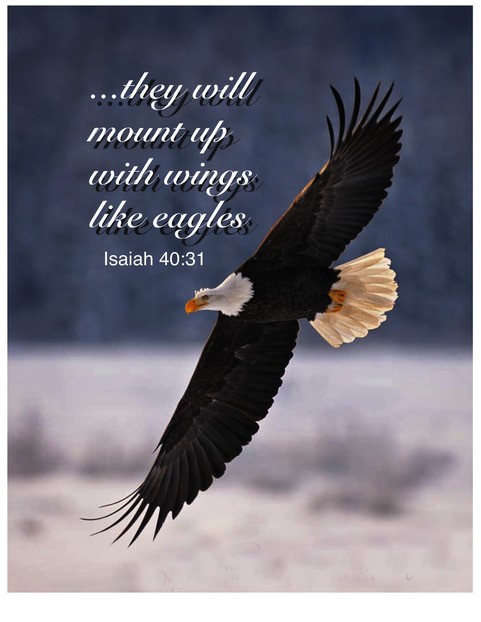
Is. 40:25–31 They shall mount up with wings like eagles
or Lam. 3:22–33 Through the LORD’s mercies we are not consumed.
Psalm 147:1–11 The LORD takes pleasure in those who fear Him
1 Peter 2:11–20 having your conduct honorable among the Gentiles
or 1 John 3:1–3 Behold what manner of love
John 16:16–22 I will see you again and your heart will rejoice
or
St. Mark, Evangelist
Is. 52:7–10 How beautiful upon the mountains
Psalm 146 Do not put your trust in princes
2 Tim. 4:5–18 I have fought the good fight
Mark 16:14–20 Go into all the world and preach the Gospel

The Good Shepherd

Good Shepherd
Good Shepherd

Sermon for the Third Sunday of Easter, Good Shepherd Sunday: April 18, 2021 jj
Rev’d Mark B. Stirdivant, Good Shepherd Lutheran Church, Yucaipa, California
✝ sdg ✝

Sheep are prone to scatter, and our gracious Lord Jesus, the Good Shepherd, is in the business of gathering them back together again. We did not have an ideal Easter season last year, to be sure. The Shepherd’s flock was scattered each to their respective homes, and if they were lucky, they could catch a mere glimpse on their screens and phones of the sheep pen that they were forced to abandon for the sake of their health. It was a trade off nobody ever wanted to face, and the fallout is still hurting us, if we are going to be perfectly honest.

It is easy to think that we’ve never had it this bad, and if you stay glued to 24 hour news, you might become fully convinced of that. But our Good Shepherd has had a lot more perspective on this sort of thing than any of us have, and He’s really good at His work of gathering His scattered Church, pandemic or not. It would have been hard to imagine the days of the prophet Ezekiel. At that time, God’s sheep were forced away from their promised land into exile. The Babylonian Empire removed the great majority of the population, and once they destroyed the Jerusalem Temple, many people thought that God had lost His ability to protect them or even listen to them. Some devout young people, though, like Daniel, made sure that they looked out toward Jerusalem whenever they prayed, because that was the place where they heard, in a manner of speaking, the voice of the Good Shepherd as He remained firm in His promises of rescue and return to the home He had prepared for them. The distance and the separation could not quiet that voice as He called out to His scattered sheep with sounds of assurance and forgiveness. I myself will seek out my flock from among the nations and gather them, and feed them with good pasture. They will lie down with peaceful contentment, for I will provide for their every need, says the Lord.

In about six hundred years’ time, Ezekiel’s prediction would come true. God Himself would enter the world He had made in order to be the Shepherd who would lay down His life for the sheep. He put on a human body not only so He would teach and guide us in the right way, but His human flesh soaked up all our wrongdoings, hurts, diseases and fears, then hanged them with Him on the staff of the cross. That would be how He fulfilled His promise to gather the scattered and make for Himself a flock that would become known as the Christian Church. He is the overseer of our souls because He wanted for us not to receive what we deserved, but He preferred to trade His glory and greatness for our disgrace and dejection.

We would not have been saved if we had a God who wasn’t a Good Shepherd. That is to say, if it was only to teach us more rules for living or to give us a hint on how we could save ourselves, we sheep would still have been scattered and lost. But as it happened, our Good Shepherd laid down His life for us. And what He laid down freely, of His own accord, He had the power to take up again. And take it up, He did in glorious victory on the third day following His death.

It is fitting for us each year to celebrate Good Shepherd Sunday during the season of Easter. When Jesus rose from the dead, He triumphantly fulfilled His promise to shepherd His people. He did it for the people who were scattered away from Israel in the days of Ezekiel, He did it for those who witnessed His teaching, His miracles, death and resurrection, and He did it for you, who were as yet not of His fold, but now you have been brought together into one flock, one shepherd. Last Sunday we heard about forgiveness that streams forth from the wounds of the crucified, yet also risen Jesus. This Sunday we hear what power that resurrection-fueled forgiveness has for the Church, what benefit it brings to us for what we’re going through today, for what our friends and loved ones are going through.

We were scattered. We were strayed like sheep, following whatever we convinced ourselves was better for us. But our Good Shepherd never lost sight of us. His voice never was quieted, even among the dizzying din of pandemic and rumor. Jesus keeps calling us to Himself, to recall what is most important for us as members of His flock. Saint Peter comforted his suffering parishioners that their suffering was not in vain. They were participating in something Jesus Himself went through for our sake. When we suffer as Christians, we walk in Christ’s steps. You don’t have to make believe you’re carrying the cross, feeling your Savior’s pain. What matters is that He feels your pain and He endured it with boundless love for you, with an undying desire for you to be part of Him forever.

Shout for joy in the Lord Jesus your Good Shepherd, for He has gathered you back together to Himself. The earth is full of the steadfast love of the Lord, and that steadfast love is your rescue from the sins and the hurts that weigh you down today. Whoever has hurt you, whomever you have hurt—all hurt and wrong has been paid in the suffering bloodshed of Christ the crucified, and canceled in His rising from the dead. He prepared a place for you with that cross and empty tomb. Someday He will come and take you to your true home in heaven, then after your resurrection you will enjoy the new and perfect creation. This is how you know that your Shepherd Jesus cares for you, and is not at all like a hired hand who flees from the wolf. Now you have that same love and care for your fellow sheep, members of the united flock of the Christian Church, as well as your neighbors who do not yet know the love of their Shepherd for themselves. You can love them with Jesus’ love, forgive them with His forgiveness, and call to them with His voice of reconciliation.

Our time of separation may have been hard on us in many new ways. Lord only knows if we have learned anything valuable from the ordeal. What we should always have impressed upon our hearts and minds is that our merciful Lord came to us Himself to shepherd us and lay down His life for us. And we should never forget that He lives for us and has assured us that we shall live also. He has remained firm in His promises to us, just has He has for His sheep of every time and place. Nothing can get in the way of our Shepherd’s voice of forgiveness and peace. Yea though we walk through the very valley of the shadow of death, we will fear no evil. We won’t always have it as easy as we’d like in this life, yet we can still be confident that surely goodness and mercy will follow us every day, for we now dwell in our Good Shepherd’s house, and we will dwell therein forever.

In the Name of the Father and of the ✝ Son and of the Holy Spirit.

Readings:
Ezek. 34:11–16 I Myself will search for My sheep
Psalm 23 The LORD is my Shepherd
1 Peter 2:21–25 you were like sheep going astray
John 10:11–16 I am the good shepherd

White Parament
White Parament

Easter Season

Sermon for the Second Sunday of Easter: April 11, 2021 jj
Rev’d Mark B. Stirdivant, Good Shepherd Lutheran Church, Yucaipa, California
✝ sdg ✝

Many Fish
Many Fish

Easter makes sense of just about everything else that we celebrate in the Church Year. We don’t celebrate disjointed holidays and string them together like a fruit-cereal necklace, as if you happen to take one away and eat it, you still have the other loops on the string. No, instead, the Church Year is carefully constructed by a very knowledgeable and pious church heritage that has gone on for centuries. It tells a story that is vitally important to our faith in Jesus, our Christian life in this world, and our hope of the life of the world to come. Having just finished the seasons of Christmas, Epiphany and Lent – where we heard about how God sent His Son to be born of a Virgin so that He could suffer and die for the sin of the world – and now as we have begun the season of Easter –we rejoice in the resurrection of our Lord Jesus. All that He did for us comes into clear focus for our faith. It was the same for the disciples: John said that he and the other disciples didn’t understand the things Jesus said and did until after He was glorified, meaning His death and resurrection.

The Easter season does mark a significant shift in the story we hear every year. Jesus fulfilled His salvation mission on the cross and when He rose from the dead. As we move further into the season of Easter and on into Pentecost we’ll take a closer look not only how God saves us, but also how He lifts us up in our faith, how He strengthens us, and how He enables us to go on living in this sinful world after receiving a foretaste of the glories that await us in heaven. Our God, you see, isn’t only a God who worked in the past and has made promises for our future. He’s also active in your life now, and in the lives of all His people as they go about their day to day activities.

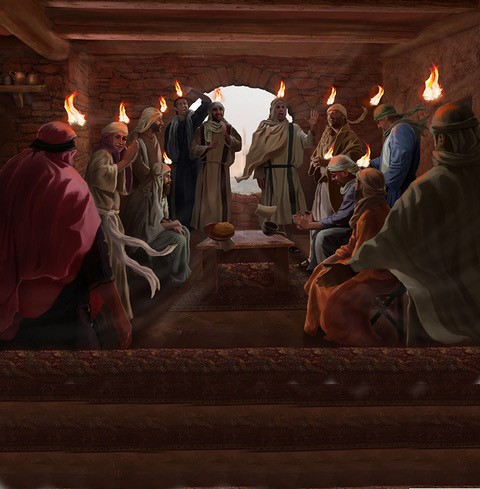
Consider the Gospel for today. It begins on the first Easter Sunday evening. Only three days earlier Jesus had been crucified, died, and was buried. The Disciples had only just recently heard the stories of His resurrection, which made them even more dazed and afraid. Having locked themselves away in a room for fear of what the Jews might do to them if they were caught together, the followers of Jesus made sure no one would be able to sneak in and catch them unawares. No doubt they were fearful of the Jews’ reaction to the news of Jesus’ resurrection, but they might also have been fearful about what Jesus might say to them for deserting Him during the hours before His death.

Then, all of a sudden, there He was – standing in their midst. Although He appeared miraculously, He didn’t seem to be a ghost. He had a real human body and that body didn’t look as if as if it had just spent three days in a tomb. He wasn’t angry or distressed. They must have wondered to themselves what He was going to say or do –how He was going to react. Yet, the first words out of His mouth were the forgiving, freeing words: “Peace be with you!” Then He showed them the wounds on His hands and in His side. This was no ghost or a spirit– He was real – just like the peace He offered. His words weren’t empty or meaningless, but they bestowed on them the peace which He had just purchased on Calvary’s cross. And the most amazing thing was that this peace was now being given freely to them – the very ones who had betrayed and abandoned Him only three days earlier!

Jesus came among them to strengthen them and to reinforce their faith. He appeared in their midst to assure them that in His flesh He had indeed risen from the dead. He was there to plant the seeds of ministry in their hearts. He wanted them to go out and carry His peace and forgiveness to everyone. He was sending them on a mission – to go out into the farthest corners of the world and declare this peace to all – to call all mankind to believe in this One who died on the cross for the salvation of sinners.

Next, our Savior breathed on them the Holy Spirit. There they were, downtrodden, dejected, not knowing what to do or how to do it – and then He spoke. He gave them power to move forward with boldness. Through the proclamation of His Word, people’s sins would be forgiven. All they had to do was proclaim this message. But Thomas wasn’t with the others that night. We don’t know why he wasn’t there, but we do know that because he wasn’t there he continued to doubt – and this even after the others told him the Good News of Christ’s resurrection. He made it clear that he refused to believe, that the fear and slowness of heart that afflicted the other disciples still had their clutches on his soul. His spiritual colleagues already had the personal contact with Jesus. They were ready for ministry in His holy Name, because at the very beginning, the Holy Spirit would spread the Church through these appointed eyewitnesses. Thomas knew that he would be disqualified as an apostle if he had missed his opportunity to see the Lord Jesus like the others did. How terrible would that feeling have been for him?

Thankfully, the other disciples managed to convince Thomas to be in the room with them the next Sunday to meet Jesus. They knew only the Lord could help him. They wanted Thomas to be united with them in proclaiming the glorious Easter message of forgiveness, life and salvation! You may think of it as a similar feeling that you get when you think of those you know and care about, those whom you hope and pray would someday join with you in the services of God’s house to meet with our risen Savior and receive His gifts. Maybe their faith is struggling right now. Perhaps they find it hard to believe. You know that only the Lord Jesus can help them.

For Thomas, He appeared in the room once again, despite the locked doors and the fearful hearts, and said as the Greek literally translated says: “May you cease to be unbelieving from this time forward. Instead, be constantly believing.” And Thomas, the doubter – when he saw and felt for himself the peace that God purchased for him in the wounds of His Savior – he was convinced. Devastated at the state of his faith, he cried out, “My Lord and my God!” God had stepped back into Thomas’ life and rekindled the flame of faith.

What an amazing God we have! Those who are down are lifted up. Those who are despondent are given that peace which passes understanding. Those who are crushed are made whole. Those who are blind are made to see. Those who are sinful are made righteous. When God comes into a person’s life, even though his heart is locked up in fear of the unknown, He changes that person from a sinner in danger of His wrath, into a beloved saint and an heir of everlasting life. He changes that person from the status of faithless enemy to the standing of a trusting child. What a tremendous God we have!

My dear Friends, at one time God also came into your life. Just as He came to the disciples, He also came to you. When you least expected it, there He was – in His Word, in His Bath of Baptism, and in His Supper – in His Church and in the mouth of His servant – showing you those wounds which earned you His peace. When you wanted least of all to believe, He enabled you to confess Him as God and Lord. When you scarcely wanted to serve Him, He placed you willingly into His service. And He’s still calling to you today – right now – calling you to hear His words of comfort and reconciliation– and to rejoice in the Gift of life He brings.

You do not have the same calling as the Apostle Thomas, yet you do have a holy calling, and the specific blessing from the mouth of Jesus: Blessed are you who have not seen and have believed. You confess and declare with joy the praises of Him who called you out of darkness into His marvelous light. You pray for the opportunity to bring those loved ones on your mind and heart to have contact here with the wounded, yet risen Lord Jesus, since Easter makes sense of what those wounds really did for you and for them and for the whole world. You can invite them to come, see and hear what you’ve seen and heard – even as the other Apostles invited Thomas. You may not be trained or qualified to be an evangelist – to be sure, the prospect of speaking to others about your faith might be rather frightening– but all God has ever asked is that you tell someone else what you already know to be true. After all, “Jesus did many other miraculous signs in the presence of His disciples, which are not recorded in this Book, but these things are written that” you “might believe Jesus is the Christ, the Son of God, and by believing you may have life in His name.”

It’s a fearful task you face when you open your mouth to speak the Truth of God to someone who needs to hear it. Will they reject you for saying what you know you need to say? Will they laugh with scorn at your gullibility for believing something so amazing as this Gospel of Grace which saves us, or will they turn their back – thinking you’re a fool? It doesn’t matter, for this is really God’s work, and when God gives us something to do, He also gives us the words and power to do it. So do it we will – sometimes fearfully, sometimes joyfully, sometimes even against our unwilling sinful nature – but always with the knowledge that the Holy Spirit is at work in us, causing us to do and say that which would otherwise be impossible. For although such things are impossible with us, with Jesus, our Lord and our God, nothing shall be impossible, and His Easter victory will make sense of anything you may not fully understand.

In the Name of the Father and of the ✝ Son and of the Holy Spirit.

White Parament
White Parament

Readings:
Ezek. 37:1–14 the valley; and it was full of bones
Psalm 33 For He spoke, and it was done
1 John 5:4–10 this is the victory that overcomes the world – our faith
John 20:19–31 unless I see in His hands the print of the nails

The Love Story That Cannot Be Outdone

Empty Tomb
Empty Tomb

Sermon for Easter Day: April 4, 2021 jj
Rev’d Mark B. Stirdivant, Good Shepherd Lutheran Church, Yucaipa, California
✝ sdg ✝

Christ is Risen! He is risen indeed! Alleluia!
Great love stories can often be sad stories. I’ll admit it. Back in the days of TV Guide and even more recently when you would scroll through the channels I tended to move right along if I had happened to catch a movie showing that had a sad, love story. Call them “chick flicks” if you want, and I’m not necessarily looking for sports or some other “guy” movie, it’s just that Hollywood seems to believe that utter pain and the finality of death is as deep as the emotion of love can ever go. You love someone with the ultimate love, then one or both lovers die, end scene, roll the credits, don’t forget to toss your empty soda cup and your wadded-up crying tissues into the trash on your way out. Shakespeare thought the same way in his tragedies—it’s no spoiler alert to tell you that, for most of them, Macbeth, Hamlet, Romeo and Juliet, in the end, everybody’s dead.

Anyone who witnessed Jesus’ death on Good Friday, such as Mary Magdalene, Jesus’ mother Mary (now John’s mother Mary), or that awestruck centurion looking up with new eyes at God’s Son, that person would have supposed they had at that moment just seen the utmost demonstration of the Lord’s love. How could you not come to a conclusion like that? After all that the Jews did, then the Romans, then you and I, what we all did to the Messiah, one would think we have reached rock bottom of the greatest love that ever existed. In comparison to the great ocean of God’s love exhibited on Calvary’s cross, our greatest human love could only be a faint spark; or, in terms of the movies, the intensity of feeling you get from The Notebook, or Titanic, would be a mere paper cut on your finger.

You wouldn’t be too far off, of course. Yes, you would find the ultimate depths of God’s love for the world depicted in all the events that led up to, and included, Good Friday. All of Scripture, New Testament and Old, sets us up for that holy death to be it for our bondage to sin. Jesus Christ the Crucified paid the greatest price and set you free. By His stripes, you have been healed. Greater love has no one than this, that one lays down his life for his friends. Jesus did that. He had the greatest love for you; He redeemed you from the death that you and your sins had deserved. No other love story on earth can come close to excelling it.

Yet we dare not overlook one important detail: this greatest love story in world history is not finished there. Good Friday, great as it is, and full of forgiveness of your sins it most certainly is, cannot however, and must not be the event that ends the scene and rolls the credits and ends the movie, so to speak. There must be an Easter. St. Paul knew that and said as much. We don’t have an Easter just to make us feel better after the sad tragedy of Good Friday. We have an Easter because that’s what happened. All the memorable, longest-running love stories of the world end on the note of “…and they lived happily ever after,” precisely because they have borrowed something from the way God’s love story truly ends. For it’s not a made-up story, it’s what really happened, and that’s what makes it such a good story. The Son of God who loved you so much to die, in this story, in this movie, if you will, He doesn’t stay dead! We cannot help but rejoice! Christ is Risen! He is Risen Indeed! Alleluia!

The contrast, the emotional differences, cannot be more striking. Where the depths of love as pictured in death practically empty you out emotionally and even physically, the heights of elation over new life, of reconciliation, of unity achieved with God, of victory over death and Satan, both of whom, along with sin itself has been vanquished, that ecstasy cannot be copied. No drug or chemical, or vaccine can produce it. No amount of money can purchase it. No government can establish it in their unending quest for utopia. Only Jesus achieved it. Only the Risen Jesus hands it out, which He does with the words: Peace be with you.

We’ll talk about that in particular next Sunday—you wouldn’t want to miss it! What needs to be expanded upon here today is how do we deal with the one thing that can get in the way of believing that greatest love story ever. The one obstacle to you, the one thing keeping you from making the Easter story come true in your world, or in the world of someone you may know is, to sum it up in one word: fear. You may think that fear isn’t something that affects you day to day, but be aware that fear can take many forms, and at times, you won’t always feel afraid, and yet fear is still on the attack. Fear can describe any thought of doubt in our mind towards God. It can be simple as being occupied with what-ifs: What if my job won’t support me or my family? What if the bully online won’t quit harassing me? What if I am ridiculed as a hater and lose my business if I have to stand up for what I believe in? What if my doctor gives me bad news the next time I visit? President Franklin Roosevelt famously said we have nothing to fear but fear itself, but that leaves us with another question— where do we turn when fear itself becomes the problem?

We could hear the triumphant angel’s simple announcement: fear not! This heavenly being is pictured in the Gospel as a young man sitting down on the right side, dressed in a white robe. His mouth holds nothing else but what God the Father commanded him to say: “You seek Jesus of Nazareth, who was crucified—get it, WAS crucified— He has risen, He is not here. Go to Galilee and you will see Him again.” The great love story has been completed. Fear is removed simply because the angel repeated his message.

The same message is meant for you today, as well. Those disciples were filled with fear at first, but perfect love casts out fear, even those different kinds of fear that afflict you today. Will the Christian faith become more and more illegal? Probably will. Will you continue to face illnesses, dangers and worries? Yes—but the fear that they try to produce in you will be swallowed up in the ocean of love that is Jesus’ death and resurrection. The forgiveness that was paid and signed in the Blood of Christ on Good Friday is this day showered generously on you with the fear-dispelling words of your called and ordained servants of the Word.

Believe it, and that perfect love of God for you will fill you up. Nothing more is needed to bring you life, peace, forgiveness of your sins. It’s all yours, instantly! It doesn’t matter what you’ve done, what your history has been, or even if your track record of faithfulness to Him and His Commandments has not been something to be proud of—fear not! Your Savior stood in for you, then you automatically stand in for Him everywhere you go, loving your neighbor in grateful praise, not expecting a single thing in return. Because of Jesus and all that He did and accomplished, your life is different. You were forgiven first, pronounced by God Himself free and clear, then you were changed and molded to what our Lord has created you to be. His love has set you free! The love story that cannot be outdone has entered your life and become your story of salvation.

And when the day comes when your heavenly Father has determined you are to be called home to Him, fear not! An angel will not sit down but will instead carry your soul away from this earth to be with Jesus. In blissful Paradise you will await that still more glorious day when your Easter will come to its full completion—that is, when like Jesus on that first Easter, your body will raise up from the tomb and you will be glorified beyond our current ability to comprehend. Like Job said long ago, though my body is destroyed, yet my own eyes will see My Redeemer, who lives! No one can take that wonderful future away from you. Not even fear itself has that power. That obstacle has been forever removed.

This is the love story that no movie or earthly storyteller can reproduce—nothing in this world will get anywhere close. This love story goes far beyond the depths of death. No grief or sadness can ever drown it out. What suffering you will have to go through till that time, can’t even compare to the joy that is already yours on this Blessed Easter festival, for the rest of your life, and into all eternity.

Christ is Risen! He is Risen Indeed! Alleluia!

In the Name of the Father and of the ✝ Son and of the Holy Spirit.

White Parament
White Parament