Author Archives: goodshepherdyucaipa@gmail.com

Walking on Water

Notes

The Lord be with you! I will bless the LORD at all times; his praise shall continually be in my mouth.

This is the Tenth Sunday after Pentecost, and as the Gospel reading leads the way, the theme of the day revolves around God’s forgiveness and help as our one and only rescue from every evil of body and soul. The Collect of the Day, which we pray early on in the Divine Service right after the Gloria in Excelsis, helps us focus our attention on this theme as we are about to listen to the readings that follow.

Let us pray:
Almighty and most merciful God, preserve us from all harm and danger that we, being ready in both body and soul, may cheerfully accomplish what You want done; through Jesus Christ, Your Son, our Lord, who lives and reigns with You and the Holy Spirit, one God, now and forever.
Amen.

Job 38:4–18
Who has ever been in more time of harm and danger than Job? We tend to think of him as an exceedingly patient man, but Job complained greatly under his heavy load that God had permitted him to suffer. Then if his physical afflictions weren’t enough, he had three friends preach at him about how his sins and shortcomings brought all this calamity as a judgment against him. Sounding out like a clear fog horn cutting through the midst of this legalistic, self-righteous storm is the Lord’s sole claim to be the One powerful to save. He is the One who created, continues to sustain, and promises to renew all of the universe. He will come through on His promises to His own people as well.

Romans 10:5-17
The key word “saved” is mentioned three times in this passage from Romans, and it provides an excellent link to today’s Gospel reading about Peter who was saved from the waves of the sea. In a masterful logical progression, Saint Paul works backwards from the effect worked in us (salvation) through the means (hearing the Word) to the cause (God’s unfailing promise). How can it happen that one calls on God’s name and is saved? First they must have faith to do that, so how can they obtain faith? They must have God give it to them through His Word and in Baptism and in the Body and Blood of Christ. How will they access Word and Sacraments? By themselves individually? No, from the called and sent ministers of the Word who preach that Word and hand out God’s gifts according to His gracious command.

Matthew 14:22-33
Jesus, who walked on the water during the violent storm, assured His frightened disciples, “Take heart; it is I.” That last phrase is literally written “I am,” referring back to the Divine Name Yahweh, the self-existing One who is, who was and who is to come, Revelation 1:8. His sovereign mastery over the seas demonstrates not how powerful He is to dazzle you with wonder over His majesty, but to comfort you with the assurance that He uses His almighty power to save you from death itself.

In his baptism liturgy, Martin Luther refers to this story to apply our Lord’s staggering saving power to the person about to be baptized, conquering the power of the devil who has just been evicted. The pastor looks at the child, but addresses the evil spirit: “I adjure thee, thou unclean spirit,… that thou come out of and depart from this servant of God, for He commands thee, thou miserable one, he who walked upon the sea and stretched forth His hand to sinking Peter.” The Spirit of God floated above the waters of creation and brought the universe forth out of nothing. Jesus walked upon the waters of sin’s chaos in our lives and He stretched forth His hand to pull us “sinking Peters” into the saving boat of His Holy Christian Church, the congregation of those who are baptized in His name.

Here’s Hymn 557, stanza 4:

    My heart’s delight, / My crown most bright,
      O Christ, my joy forever.
    Not wealth nor pride / Nor fortune’s tide
      Our bonds of love shall sever.
    You are my Lord; / Your precious Word
    Shall guide my way / And help me stay
      Forever in Your presence.

In the name of the Father, and of the Son, and of the Holy Spirit, Amen.

Pr. Stirdivant

Walking On Water

Walking On Water

Sermon for the Tenth Sunday after Pentecost: August 9, 2020 jj
Rev’d Mark B. Stirdivant, at Trinity Lutheran Church, Kearney, Missouri
✝ sdg ✝

In Nomine Iesu.

Personal preference doesn’t do well in eternal matters. It will always get you into trouble. Preference belongs to the sinful, fallen world. It is what drove Adam and Eve to rebel against God. Advertisers make it their number one job to figure out what you want, and then make sure you use your power of choice to buy what they’re selling you. When you rely on your own choice, you are in control. God who laid the foundations of the earth, setting boundaries for the seas, and He who has been commanding the morning to dawn every day since creation—He’s been dethroned and you have just taken over. Your dreams and goals and desires appear front-and-center, and everything else fades to the background. Why is the customer always right? Because personal preference and choice rules the day in this world. But once choice and decision enters the realm of the church, then disaster is poised to strike, and the venom is nearly impossible to remove.

For Choice is an idol, it is a false god that threatens to push you away from the one true God who offers you His gifts through Jesus Christ His only Son. Choice is powerful. It can cover up the death of a person who some doctor says is too young, too old or too sick to live, and so that human being is OK to kill or to assist in suicide, because Choice demanded it. Sinful human nature, hungry for the power of preference, has decided it is better to people of the world to lose a few million lives, whether infant, elderly or in between, than to give up the right to choose what you want to do with the body that God has created and given you. The perversion of marrying someone of the same sex is defended these days based on someone asserting what they have been taught is their right—I can love whom I choose to love and no one can tell me I can’t. The idol of choice is not just out there in the cruel world. It has already infected the church, too. You can see it when you come across a preacher or a Christian songwriter who emphasizes how important it is for you to make your decision for Jesus. Being a Christian, as it is often portrayed, should be your preference, and no one can make that decision for you. And many are led astray from what the Bible clearly teaches on salvation because when you are worshiping the idol of choice, you are really worshiping yourself.

As it is with every idol and false god, you become enticed by what looks good. You follow your preference because you know it will give good results for you. Some of the most ancient idols known to archaeology are gods that were thought to provide fertility for people and crops. Eve chose to eat the fruit from the forbidden tree because she saw that the fruit was pleasing to the eye and she desired to gain wisdom (Genesis 3). Another way to put it is that she was afraid that God was keeping away from her a wisdom that she needed. Either way, she and her negligent husband Adam exercised their preference based on what they saw, and they did not obey the Word of God that they heard. If you’ve ever read the book of Judges, you would have seen a refrain that is said repetitively about the multiple rises and falls of the nation of Israel before the time of King David. Whenever the people disobeyed God and fell away, the historical record says: everyone did that which was right in his own eyes.

The false god of choice and preference takes what you see or experience and makes it drown out the Word of God that you hear. Because of that, it quickly attacks the very foundation that keeps the Church standing and causes Christians to sink into doubt and despair. Preference converts faithful hearers, and receivers of God’s gifts into demanding stockholders. It changes preachers of the Word into chief executives who must meet the bottom line or else they’re replaced. People don’t come, or they stay away, so the reasoning goes, because the church doesn’t meet their preferences. They can find something else that they would rather do. Sadly, churches change today not because they want to be true to the Gospel, but rather they want to compete for the choice of an untapped market of warm bodies. Try us out, world! We’ll make it worth your while!

In no place does the Bible ever encourage you to follow your personal preference. But there might be no better biblical story that destroys that idea completely than the story of Peter walking on the water to Jesus, then sinking, and then getting rescued by His outstretched hand. I cannot say for sure because the Bible doesn’t address it, but I’m pretty confident to assume that before this particular night, Peter never did have the inner desire to walk on water. I’d be surprised if the thought had ever before crossed his mind. Peter simply would not be waiting with bated breath for the opportunity to try doing it. The decision to walk on water did not appear to be the better choice based on what Peter saw. It would seem silly for him to walk on water toward a ghost if all he wanted to do was prove how brave he was and earn the bragging rights among his friends. The thing that makes the difference here in this biblical account is not Peter’s choice, but the Word that Jesus spoke.

Peter and the other disciples were being deceived by what their eyes saw. Because of the huge storm, a boat trip that usually only took a few hours was lasting long into the night, so long that the Roman guards changed shifts four times at their posts, which is what the “fourth watch” means. What those in the boat saw were the waves and wind pushing them back. They saw that they didn’t have Jesus to calm this storm for them. They saw that they were alone. But then as if it couldn’t get any worse, something was coming closer to them, something that brought them even more fear. Sure, you know now that it was Jesus, but the way those disciples saw Him, based only on what their eyes were telling them, it was a ghost, that is, an evil spirit perhaps impersonating someone else. It required hearing the Word of God to calm down the fear that was produced by what they saw. “Take courage. It is I. (Literally, He said, “I AM,” which is the Holy Name of God.) Don’t be afraid.” That was a powerful Word. That is what turned the tide for these frightened disciples. What they heard immediately changed for them what they saw. Those words from the lips of Jesus were what inspired courageous faith in the heart of Peter. Based on what Jesus said, and not on his natural, sinful, personal choice, Peter then requested to hear yet one more powerful Word from the Lord: he wanted to hear the word, “Come.” And that Word, not the determination of Peter, was all that was needed to enable his feet for a brief moment to stand on top of the water just like Jesus. What he heard with his ears was taking the proper precedence over what he saw with his eyes.

But not for long. Because his eyes were going to take over again. He would be deceived by what he saw. He would be quickly distracted from the Word of Jesus. His preference was to doubt the Lord, and as choice always does, it got him into trouble. As Jesus said, Peter had little faith, but that little faith cried out to the only one who could save his life. As this disciple found himself in the depths of death, he had nowhere to hold, except the outstretched hand of the Son of God. When He who formed the heavens and the earth in six days has you in His firm grasp, I’d imagine you would feel safe and secure, too. Wouldn’t it be nice to have that now, with what you might be going through?

Well, that’s what you’re receiving here right now. You have heard the powerful Word of God. You have tasted His real, true Body and Blood that He offers to you like an outstretched hand. For Jesus is not just simply a powerful weather man or water-walker. He has wiped out your sin as well. Though you have sunk into the depths of rebellion against God, your Savior is right there to pull you up. He has taken away your idolatry to choice, and He made that sin nail Him to the cross to die for you. As He is risen from the dead, just as surely are you forgiven from following your preference. As you are moved by the gift of the Holy Spirit, you now make the new choice to give up on Choice and give up on your sinful self. You are empowered by what you hear, and not by what you see. By the way, reading sign language and the written Word of Scripture is also considered “hearing.” And what do you hear? “Take courage! He who is the I AM is here for you! Don’t be afraid anymore. Your sins and poor choices will not drown you.”

Be glad that you worship the Lord simply by hearing this powerful Word, and not by your doing something different that might momentarily please your personal preference. Come to the Divine Service as a refuge for your soul, as a fountain of rich and lavish gifts that you could never choose for yourself, and not as you would go to a concert or theme park or coffee shop. Hear with your ears what your eyes cannot yet see, that is, the true heavenly picture of worship as you are joining angels, archangels and all the company of heaven including the blessed saints who have passed away before you.

By the time you leave this place or those at home turn off your screen, you will probably have been distracted from the Word of Christ by something else that seems better right now to your eye. But let your little faith rest assured that Jesus is right there walking upon Baptismal water combined with the Word to rescue you just as He did sinking Peter. Though you may fear from time to time for your family to stay together, for the utter dilapidation of our society and freedoms, or for the boat of the Church that seems to be on the verge of sinking, take courage; don’t be afraid. He who is the I AM still speaks through His powerful Word. Miracles still happen, and if you aren’t walking on water, then you’ll be assured to know that, even better, your merciful Lord Jesus is already with you in the boat.

In the Name of the Father, and of the ✝ Son, and of the Holy Spirit.

Readings:
Job 38:4–18 Where were you when I laid the foundations of the earth?
Psalm 18:1–16 In my distress I called upon the LORD
Rom. 10:5–17 faith comes by hearing, and hearing by the word of God
Matt. 14:22–33 the boat was now in the middle of the sea
Lacking Nothing – Having Everything!

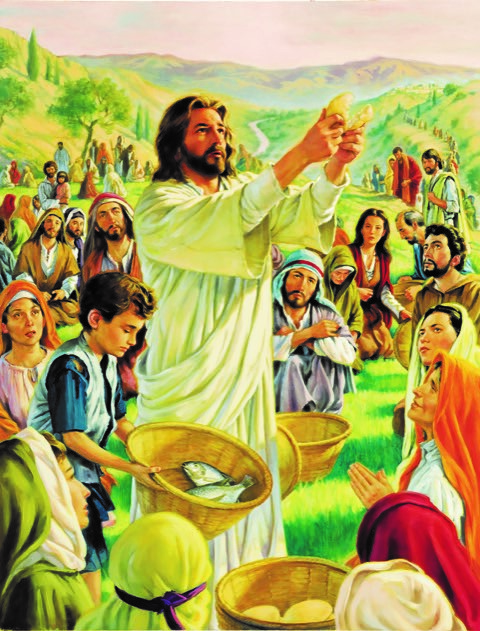
Loaves And Fishes

Loaves And Fishes


Matthew 14:13-21
Trinity Lutheran – Kearney, Missouri
August 2, 2020 – Ninth Sunday After Pentecost
✝ ✝ ✝ ✝ ✝ ✝ ✝

In the name of the Father, and of ✝ the Son, and of the Holy Spirit. Amen. In last week’s Epistle lesson St. Paul laid out a couple of situations all of us are quite familiar with – namely, tribulation with its accompanying distress. These two words graphically describe the inner struggles and trials you and I often find ourselves having to endure, because sadly, living in this fallen world as fallen sinners, we’ve all managed to gain for ourselves more than our fair share of these emotions. Now, in this morning’s Gospel text, we see how this tribulation and distress are oftentimes played out. Here we find multitudes of people who had been following after Jesus and experiencing the tribulation and distress of “going without” – specifically “going without” food and having nowhere to get any. So the people were hungry. The people were in dire need – even as you and I might be during such times as when we find ourselves lacking in financial resources, physical health, or emotional well-being.

In a way then, what we see in this crowd are the same things we see in ourselves. Do you not suffer personal anxiety during those times when you feel you might be “doing without?” And isn’t having to “do without” what prompts each of us to ask, “Why?” “Why do I have to endure this tribulation?” “Why must I simply ‘make do?'” “Why can’t the Lord send down a miracle like the one in today’s Gospel?” “I don’t want much. All I want is to live peaceably and comfortably. All I want is just enough so that I don’t have to be in constant pain, endure persistent anxiety, or scrimp from week to week.” Is that asking too much? Well, may I suggest that it’s not a case of not asking too much, but rather of not asking enough!

Why should you stop with asking God for material gain, or relief from mental or physical anguish? Why not just go all the way and ask God to give you a perfect life? I mean, after all, was it not our Lord Jesus Himself who once said: “Ask for anything in My name … and you shall receive it?” Well, here in this text, God is allowing you to catch a shortened glimpse of what a transcendent, perfect, everlasting life will look like, but you and I, we’re too busy fretting about how we might be able to have a better life here in this world. While God wants you to look at your tribulations and troubles from a heavenly perspective, we would usually prefer beginning with the bad, and then allowing it to influence the way we see the good.

There are some important lessons to be learned here in this text, but the most important thing we can take away is that we somehow must begin to recognize that on our own – without Christ – we have nothing of value to offer God. Just look at the multitude here in this reading who had been following after Jesus. They had nothing – and I don’t mean simply in terms of food. I mean they had nothing in and of themselves which would cause God to love them. They were just like us. Do you remember why Jesus was out there in the wilderness in the first place? It was because He had just received news that his dear friend and cousin, John the Baptist, had been beheaded by King Herod – a horrible thing to consider. But, lest we find ourselves sitting in judgment of this ghastly act, we instead have to remember that according to Holy Scripture you and I are also murderers – for it was our Lord Christ Himself who said that hating someone is the same as murder in God’s sight – just like failing to help and befriend a neighbor in bodily need. So, like King Herod, each of us sinners are murderers too. There’s nothing in us that would invoke God’s love or cause Him to treat us with anything but righteous contempt.

So like us, the crowd which had pursued Jesus as He retreated into the wilderness also had no redeeming qualities. Yet we’re told that Christ’s heart went out to them, and He was moved with compassion for them. Hence, without reason, without logic, and without any just cause, our Lord Jesus determined to fed them much as someone might feed a stray, starving animal. And more than that, He went beyond this loving gesture to the point that He was even willing to sacrifice His own life on the cross for them, for us, and indeed, for the entire world of sinners.

Here we are, sinners who are caught up with greedily amassing the table-scraps of temporal things for ourselves and our loved ones, while God’s only desire is to bless you with a virtual banquet. Here we are, busily trying to lay our hands on the five loaves of bread and two fish, even though Christ has already secured for us that heavenly food which will satisfy our greatest need – food which will bestow on us everlasting life – the meal of His very own body and blood given and shed for us sinners to eat and to drink for the forgiveness of our sins and the strengthening of our faith.

And that’s precisely what the words of today’s Gospel imply. Did you notice anything familiar here in this Feeding of the Five Thousand? Well, first, the people reclined. Then, Jesus took the bread, gave thanks, broke it, and gave it to His disciples. Does that sound familiar? It ought to. It can’t be an accident that these are the very same Words Jesus used when instituting the Lord’s Supper on the night He was betrayed. And did you notice what happened after all the people had eaten? There were twelve baskets left over. I don’t think that it can be a coincidence that there were twelve tribes of Israel, twelve Patriarchs, and finally twelve Apostles – twelve men and followers of Jesus, the first pastors, who would carry on the office of Christ and distribute His gifts to His people and Church – just as the pastors of Christ’s Church have continued doing right up until the present day in the stead and by the command of their Lord.

In Christ, dear friends, you have already been given everything you need – the forgiveness of sins, spiritual life, salvation, and the promise of an eternal home in heaven. Nothing is lacking in your life. Nothing can supersede or replace what God has already given you in Christ Jesus through His Word, His Spirit, and through His Church. That’s why St. Paul wrote in last Sunday’s Epistle that even in the midst of tribulation, distress and persecution, you are more than conquerors through Him Who loved us! But, why do we have to go through tribulations? Why do we have to put up with heartache? Why doesn’t God simply give us deliverance from the pain of this world? Well, according to Scripture, it is precisely because you are God’s elect, chosen for eternal life, that He allows these things to happen.

Certainly, we’re all familiar with the words of St. Paul where he spoke of all things working together for good to those who love God and are called according to His purpose. Well, you’ve been called to faith, dear Christian, so that you might partake of eternal salvation. And the “things which work together for good,” are what was described in last week’s Epistle reading: “tribulation, distress, persecution, famine, nakedness, peril, and sword.” God allows His chosen ones to experience such things. Why? Because in the midst of it all you have no other choice but to place your faith in God alone for all things. In our own limited wisdom and understanding you could never fathom how any of this could possibly be for your good or benefit. Hence you simply have to take God at His Word and believe His promise.

Does that mean we have a God who is indifferent or uncompassionate toward us? Not at all! We have a God of such great love and compassion that He was willing to give up His own Son for the guilt of our sin – and all so that He might grant us the full assurance, that already in this life – through the Gospel-Word-and-Sacrament ministry of His Church, that nothing – “neither death, nor life, nor angels, nor principalities, nor powers, nor things present, nor things to come, nor height, nor depth, nor any other created thing, shall be able to separate you from the love of God which is in Christ Jesus our Lord.”

I suspect most people are enamored with this morning’s Gospel text because it’s so easy to see their own life pictured here – lost in and swallowed up by the life of Jesus Christ. By faith, His life belongs to you just as much as you belong to Him. In Him, as Paul reminds us, you live, and move, and have your being. So, if your life is in Jesus, what then are you lacking? You lack nothing. And what do you have to be anxious or worry about? To be sure, you have no reason to be anxious about anything. And what do you have to look forward to? Absolutely everything good – everything in Jesus – both now and forevermore – and all for His sake – and in His most Holy name. Amen.

And now that peace of God, which passes all understanding, will keep your hearts and minds in that one true faith in Christ Jesus, unto life everlasting. Amen.

Pr. Drew Newman

Bulletin:
https://s3.amazonaws.com/mychurchwebsite/c1922/bulletin_8-2-2020.pdf

The Treasure and the Pearl

Notes

The Lord be with you!
Oh give thanks to the LORD; call upon his name; make known his deeds among the peoples!

This is the Eighth Sunday after Pentecost, and the Catechism teaches us what it means to call upon God’s Name: from the 2nd Commandment- we call upon God’s name in every trouble, pray, praise and give thanks; and from the Lord’s Prayer, the petition Hallowed be Thy name means we should teach and lead holy lives according to the Word of God. For what should we ask? This Sunday’s Collect of the Day gives us the place to start.

Let us pray:
Almighty and everlasting God, give us an increase of faith, hope, and love, that, receiving what You have promised, we may love what You have commanded; through Jesus Christ, Your Son, our Lord, who lives and reigns with You and the Holy Spirit, one God, now and forever. Amen.

Deuteronomy 7:6–9
Self-esteem is a fine thing, however there’s something much more important and valuable to our eternal existence… I’ve heard it called “God-esteem”. Israel as a Bible-times nation could not point to its own personal accomplishments or its large population as a reason for its prosperity and blessings. They could only reflect on the fact that God chose them by grace as His own precious possession. He desired to lavish His undeserved love on Israel to make them a light for the nations, and the cradle for the world’s Christ and Savior. That same undeserved favor now for the sake of Jesus applies to us, His Church, the new Israel and the Lord’s treasured possession forever.

Romans 8:28–39
God is for us! There is no if! Paul wrote If God is for us as a way to make his rhetorical argument have a stronger impact on our hearts and minds. Who can be against us? Absolutely nothing can get in the way and separate us from the love of God in Christ Jesus our Lord, who died for us and even more, was raised and has ascended to intercede for us constantly in heaven. Take comfort! God is for you! No one can bring any charge against you, even though as a sinner you stood condemned under God’s law. You have been chosen, elected, predestined, all things work together for your good. You are justified and everything you suffer now shall be ultimately conquered. How do you know this? You know that God is for you.

Matthew 13: 44–52
Three short parables conclude Jesus’ teaching in Matthew 13. The buried treasure, the pearl of great value, and the large catch of fish all illustrate on one hand the extent of the work that Jesus did in order to save us, and on the other hand, the great joy that the Holy Spirit has placed in our hearts over being saved. Once we realize, thanks to the help we received from our Old Testament reading, that we are that treasure, that valuable pearl that Jesus went and gave up all He had in order to buy us back to Himself, we likewise think nothing of the fading joys of this present world, and look forward with Christian anticipation of the future revealing of that treasure that we already possess as God’s children.

Based on this week’s Epistle reading, here’s Hymn 746, stanza 2:
  There’s nothing that can sever / From this great love of God;
  No want, no pain whatever, / No famine, peril, flood.
  Though thousand foes surround me, / For slaughter mark His sheep,
  They never shall confound me, / The vict’ry I shall reap.

In the name of the Father, and of the Son, and of the Holy Spirit, Amen.

Pr. Stirdivant

Follow Me

Follow Me


Sermon for the Eighth Sunday after Pentecost: July 26, 2020 jj
Rev’d Mark B. Stirdivant, Good Shepherd Lutheran Church, Yucaipa, California
✝ sdg ✝

“Seek ye first the kingdom of God,” Jesus says. “Search for it, don’t give up. The kingdom of heaven is like a treasure or a pearl so valuable that you would sooner part with everything you have on this earth rather than to be without it.” Does He really mean what He’s saying? After all we’ve been taught about “we are saved not by works which we have done,” is our Lord saying that it is now all up to us and our decision? You know Christians of other denominations who sing songs like, “I have decided to follow Jesus.” They call would-be believers up to the front in order to pray with the ministers to show everyone else how they have made that life-changing decision in their life. Are they correct in teaching this way? It would seem like it at first glance, given what Jesus is saying in the first two parables of the treasure and the pearl of great value. It seems like we are to be like the man who found the buried treasure and then go give up all we have just so we can possess it. It appears our Lord wants us to be a spiritual pearl expert who goes to the oyster beds on the coast and actually pick and choose the way we believe.

That actually sounds like what a lot of Christians think they’re doing. People are proud of their choices—judging from just a few seconds looking through their social media sites. And they see themselves as spiritual commercial consumers, saying things like, “My religion is my own personal choice, and so I can shop around for the faith that I feel is right for me, the faith that will affirm my lifestyle, no matter what the Bible may actually say.” If you don’t like the Biblical teaching that you hear at Good Shepherd, you could just try another church until you find whatever you want to hear. Sadly, it won’t take you long to find it these days. To American eyes the churches that are the most successful are the ones who accommodate their consumers, cutting out everything that sounds intolerant or unloving, and changing their official teachings to get the most possible members, and financial supporters. Hey, it works for the politicians, right? The church would seem to be better run as a business as if it were geared to satisfy the needs and desires of its shareholders. So much for what can be gained from the two parables about the buried treasure and the valuable pearl.

And then there is the third parable. Flying in the face of all those who boast about their own personal choice of belief is the last parable on the kingdom of heaven that is recorded in Matthew chapter 13. It says the kingdom of heaven is like scooping up a bunch of fish in a big net and then the good ones will be sorted out from the bad in the end. What kind of personal choice is that? For one thing, no fish decides to swim into a net and get tangled together with who knows what. Even if a fish itself were to have a choice, it would try to swim away from a net so that it wouldn’t get caught. If it were up to sinful man to decide his own road, he would overwhelmingly choose the wide, paved freeway that leads to destruction, rather than the bumpy, narrow side-street that leads to eternal life. Left on your own without Christ your Savior, that would be the decision you would make, for the way of this world promises to be much easier and much more rewarding. It promises success to those who work the hardest and make the best decisions, and guide their own destiny. Follow your own heart and desire what you want. God will change to fit what you want Him to be. I’ll tell you now, that’s not going to end well.

You have heard rightly and some of you even may have learned it by heart, that a Christian must believe this instead, which we just confessed together from the Catechism, “I cannot by my own reason or strength believe in Jesus Christ, my Lord, or come to Him.” There is nothing within our sinful human nature that desires God or that would make that all-important decision to follow Jesus. It began with Adam and Eve in the Garden of Eden. They made a choice, not to remain with the Lord, who created them, sustained them and gave them life. Instead they chose to rebel against Him and go their own separate way. Like fish with a heads-up warning, they decided to avoid the net that would scoop them up. The curse of personal decision continued with Adam and Eve’s son Cain, who also made a choice: this time it was the choice he made to kill his brother Abel and forever be a wanderer in the earth. Such was what quickly became of our newly-created world once human beings started making the decisions for themselves, and consistently deciding against God. Or what about the nation of Israel? God’s own people planted in the Holy Land with His own mighty hand. Every generation of Israel’s history had witnessed a true miracle that the Lord performed for His people. Yet they continued to decide for themselves, and they followed after other gods, and gave up their rights as God’s children. You are the heirs of this long line of failed searches for personal salvation, of choosing that which you think is right for you. You, like every other sinful human being, are buried, rotten and decaying in trespasses and sins, in need for someone to dig you up and save you.

You are not the one in the parable who looks for the treasure or the valuable pearl, giving up all you have in order to purchase eternal life, as it were, from God. But it is my privilege to tell you that all of this has been done for you. For it was Jesus who sought you out and found you and rejoiced! In His great joy He willfully gave up all He had—all His power and glory—and set it aside. The Son of God allowed Himself to be carried for nine months in the womb of a virgin. He was willing to live in near poverty for most of His life. He chose to bear the burden of your sin and shame and take it with Him all the way to suffer God’s punishment, as we hear in the book of Hebrews that He, “who for the joy that was set before Him endured the cross, despising the shame.” By the overwhelming grace of your Savior Jesus, you are that pearl of great price in the eyes of God the Father. You are the treasure for which Jesus paid the price, not with gold or silver, but with His holy, precious blood and His innocent suffering and death.

What God said to the Old Testament Israelites who wandered around in the wilderness in our first reading also applies to you, the new Israel, the adopted sons of the kingdom. He says: “You are a people holy to the Lord, your God. The Lord your God has chosen you to be a people for His treasured possession, out of all the peoples who are on the face of the earth. It was not because you were more in number than any other people that the Lord set His love on you and chose you, … but it is because the Lord loves you and is keeping the oath that He swore to your fathers.” So it was not because of anything good that lay within you, or because you made the right choice to be God’s child, that gave you any value to be desired. Simply stated, the Lord loves you, as He always had, and He wanted you enough to give up His own life for you. Christ the bridegroom eagerly desires communion with His bride, the Church, a Holy Communion that takes place every time we meet.

The day when Jesus found you was the day you entered into His kingdom through the waters of Holy Baptism. On that day all the host of heaven rejoiced at the treasure for which He went and sold all He had. In that same life-renewing water God gave you His Holy Spirit and Christ came to dwell within you. This is the Spirit within us that cries out to the Father as dear children would ask their dear father. This is the Spirit of Christ Himself who searched for you as for buried treasure. And now, with Christ living within you, He tells you to search for the treasure that He has already found for you. “Taste and see that the Lord is good.” And nothing will be able to separate you from the love of God in Christ Jesus our Lord.

Seek after something that has already been found? Yes, that’s right! Jesus said, “Blessed are those who hunger and thirst for righteousness, for they shall be filled.” He wants you to follow Him in seeking the treasure of the kingdom of heaven. He bids you to search, not because it’s all up to you or so that you get into heaven by anything you have done—He has already done that—rather, He wishes for you to come to a fuller knowledge and experience of Him, which is truly a precious treasure. You who have been born again in the waters of Baptism and faithful to God’s Word are no longer ignorant of where this treasure can be found, because Christ Himself has given you where to look.

Look no further than the preaching of His Holy Word, for the words you hear in this place are words that come from the mouth of God Himself. Do not search for anything else besides the Holy Sacrament of Christ’s Body and Blood, for these precious pearls are the great price that our Lord paid for you. These treasures are found here buried in, with, and under the common things of bread and wine, given for you to eat and drink your Risen Lord and Savior. And finally, your quest is fulfilled in your brother and sister in Christ. Because He gave up His life for them, they are your treasures as well. Love your spouse, your children, parents and neighbors with the same love our Lord has for you, because you have been found and bought back from sin and death. With them you will one day be gathered like fish in the net and finally be brought to the kingdom of heaven, that you may live forever in the presence of the Almighty God, and serve Him in everlasting righteousness, innocence and blessedness. This is most certainly true.

In the Name of the Father and of the ✝ Son and of the Holy Spirit.

Green Altar Parament

Green Altar Parament


Readings:
Deut.7:6–9 a people for Himself, a special treasure
Psalm 125 Those who trust in the LORD are like Mount Zion
Rom. 8:28–39 If God is for us, who can be against us?
Matt. 13:44–52 a hidden treasure … pearl of great price …

Weeds and Wheat

The Lord be with you!

Give ear, O LORD, to my prayer; listen to my plea for grace.

This is the Seventh Sunday after Pentecost, and the Introit that begins with those words continues with this mysterious phrase:
  [Lord,] you have delivered my soul from the depths of Sheol.
What’s that Hebrew word, Sheol? It speaks of the region far below the surface of the earth, which in the worldview of the Hebrew Scriptures, was characterized as the farthest place away from God’s shining face and merciful presence of His blessing. Yet Psalm 139 (verse 8) counters that with this comfort: Even if I make my bed in Sheol, you [O God,] are there. This hellish depth may threaten God’s judgment, but we have nothing to fear because our soul has been delivered from that punishment forever. Let us pray Sunday’s Collect of the Day:
O God, so rule and govern our hearts and minds by Your Holy Spirit that, ever mindful of Your final judgment, we may be stirred up to holiness of living here and dwell with You in perfect joy hereafter; through Jesus Christ, Your Son, our Lord, who lives and reigns with You and the Holy Spirit, one God, now and forever. Amen.

Isaiah 44:6–8
The King takes His throne and asserts His sole authority, sovereignty and absolute power. He defiantly asks for anyone who dares to equate themselves to Him, please step forward and show yourself! Yet His purpose in making His bold stand is not to command mere obeisance and destroy all His enemies. He specifically states that His purpose is to remove all fear from those who put their ultimate trust in Him. There is none who is for us but the Rock who is like no other!

Romans 8:18–27
It is a profound mystery indeed that Christ’s death on the Cross and His subsequent resurrection not only saved us from our sins, but that all-important event has also freed the entire creation of God from its bondage. We love the creation that our Father has given us, from beautiful scenery to daily bread to the animals who are most dear to us. We want something better for them than the pain and suffering of this fallen world. They themselves yearn with us for the Creation to be renewed and restored. Animals may not be classified identically with us as inheritors of the Spirit’s firstfruits, but they do, along with us, look forward earnestly, with groaning, to the new creation that awaits us following the resurrection of the dead and the beginning of that life which is to come.

Matthew 13:24–30, 36–43
Once again, Jesus tells a parable to the crowds, then later takes the disciples aside to explain to them its meaning. Both wheat and weeds grow in the same field, the field of the world. The Church and the unbelieving world are often intertwined, to the effect that uprooting that which is harmful before the appointed time would do too much damage to the souls for whom Christ died. God is longsuffering and patient in abiding the weeds that are in His precious field. He always has the wheat in mind. He will never do anything that will uproot what He planted in your heart through your Baptism into His name.

This is how our gracious God rules and governs our hearts and minds by His Holy Spirit. He has no equal and He demands retribution for all sin, yet that retribution was willingly taken for us by our Savior Jesus Christ. This atonement achieved not only our salvation but that of all creation that had been subjected to sin’s curse. And although we who believe are mixed in together in this sinful world with those who reject this magnificent grace, we are promised from our Good Shepherd’s own lips that we will not be swept away to Sheol in judgment, but rather will be stirred up to holiness and joyful expectation of the reward He has earned for our sakes.

Here’s Hymn 584, stanza 2:
May the Spirit’s pow’r unceasing / Bring to life the hidden grain,
Daily in our hearts increasing, / Bearing fruit that shall remain.
So in Scripture, song, and story / Savior, may Your voice be heard.
Till our eyes behold Your glory / Give us ears to hear Your Word.

In the name of the Father, and of the Son, and of the Holy Spirit, Amen.

Pr. Stirdivant

Wheat And Tares

Wheat And Tares


Sermon for the Seventh Sunday after Pentecost: July 19, 2020 jj
Rev’d Mark B. Stirdivant, Good Shepherd Lutheran Church, Yucaipa, California
✝ sdg ✝

It is not a particularly comforting thing to be a member of the Christian church. Martin Luther would often plead with his hearers to pray for any baby that was just baptized. Why? Simply because that new child of God, even though it was just rescued from eternal death and damnation through the saving flood, nevertheless one born of water and the Spirit has just become the bitter enemy of the Prince of Darkness. And since the devil puts out his fiercest energy against those who are most resistant to him, the church can be properly identified as the Evil One’s battlefield of choice.

It would have been frightening enough only to have to look out for the full-frontal assault of Satan. But today, Jesus doesn’t speak of that. There’s a different tactic that’s much more sinister—even for the devil. A terrorist plot, if you will, to destroy the church from the inside. And although the image of a battlefield would indeed seem appropriate to describe the devil’s outward attacks, Jesus chooses the image of a sower and his field to reveal to you what Satan does gradually and undercover in this world that we live in.
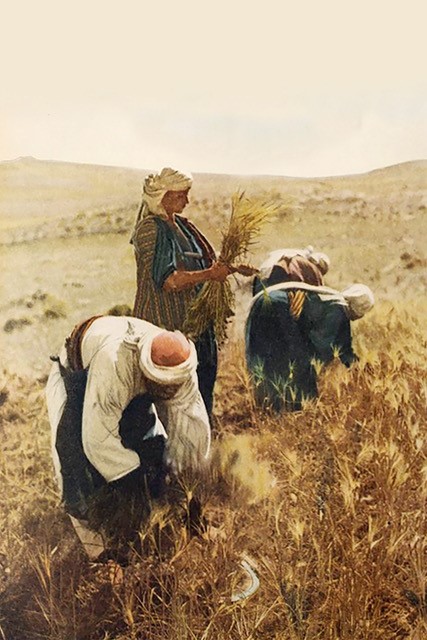
For as Jesus explains on His own, He is the sower of good seed. Not necessarily morally good, but good in that it will yield wheat instead of weeds. The wheat does not grow by itself. In the first sower parable, the seed was the Word. Here Jesus says it means the sons of the kingdom, that is, those who will receive eternal life because of God’s grace and forgiveness. You do not plant yourself in the Christian Church, nor did any of your decisions bring you eternal life; God has lovingly brought you to this time and place, using other faithful Christian people among your family and friends. The Word is sown when you hear it and are baptized, then God waters it and makes it grow through more preaching of the Word and receiving Holy Communion. The Church, especially the worship service, is the place and time in which God does all of this work on your heart.

And then the enemy does his sowing. And he’s nothing but an evil, nasty copy-cat. He can’t go to his own field; there’s no such thing. All that the devil can do is destroy what God has already made, and that is exactly what he does. Notice, however, the shrewdness of Satan. He bides his time, waiting for the right moment. He doesn’t march right out in broad daylight and plant the weeds of his evil sons among the wheat. No, he waits for everyone to be sleeping. He does his dirty deed at night. When God’s people are not watchful, when they are stuck in the good-ol’ days when times were better, when everyone could gather indoors with nothing to worry about, then that’s the time when the devil perceives the guard to be down. That’s the opportunity he takes to sow the weeds.

And they aren’t necessarily ugly weeds. At least not at first. At the very beginning, these darnel weeds, or tares, look just like wheat when they spring up. Only the experienced eye can tell the difference at a glance. The difference becomes much greater toward the end at harvest time. The wheat becomes useful, healthy food, while the darnel heads prove to be toxic and dangerous. So, likewise, the sons of the Evil One that are among you in this world are not necessarily the obvious ones: you know, the rebellious kind of crowd that makes the news in the latest riots. Actually, the weeds that look like wheat are different: they’re pretty good, decent people. They are often loving, considerate, all the stuff that you’d expect to come from a Christian. They might even go to church, but the whole time instead of listening to the Word of God, they’re nodding along with what the pastor preaches against all those “other sinners out there, not me.” They’re the ones who like to take a comforting Gospel doctrine like Sanctification, and twist it into a chance to demonstrate their moral superiority in following the Law. On the other end of it, evil weeds disguised as wheat would just as likely take the blessed truth of salvation by God’s grace without works and then use it to justify their own evil, self-indulgent lifestyle, saying, “Christ died for my sins, so I’m going to have some fun,” of course when no one else in the church is watching. Such are the weeds that Satan has planted among you in this world, and even a church with purely orthodox teaching and worship can still have a mixed field of weeds and wheat. In fact, that almost guarantees it.

And so if you aren’t offended by the hypocrites that you see around you (including that hypocrite who looks back at you in the mirror, I might add), then you hear this parable of Jesus and plead for balance. Since God wants wheat and weeds to grow together until harvest, why should we insist on all those doctrinal details and instead do more of the stuff that brings more people in and makes the church some more money? People don’t come back if you tell them that the good stuff they do doesn’t count anything toward their salvation. Why try to point out errors that good Christian denominations teach, when under God’s will as this parable says, we are allowed to co-exist in this world? The pastors and laymen who push that the Bible is the only truth, and the ones who maintain that certain practices in the church either teach the truth well or distract from it, they’re the ones causing all this trouble and unrest today. Why can’t we have peace and prosperity like we used to have?

I guess you could say that all of these things are ultimately God’s fault: He’s the one who says like the sower, let both grow together until the harvest. The weeds, as harmful as they are even right now, should not be uprooted. No violent cleansing or mass excommunications of false believers will be tolerated in the sight of your heavenly Father. The church must never get into the business of purging itself. If it does, then it is playing right into the hands of the Enemy. Why can’t we get rid of those who oppose the truth? Why doesn’t God tell His servants to rip out the darnel weeds in the field?

Why? Because He is concerned for the wheat. He could bring His awesome judgment to bear anytime He pleases, but He doesn’t. He wants your salvation to remain intact. The Lord Jesus who paid for your forgiveness—indeed who set the whole world free from sin by His suffering, the shedding of His Blood, and His death on the cross—He knows that you are weak. He is fully aware that, although you are His precious wheat, you still do many weed-like deeds. He wants to spare you from being uprooted when the terror of judgment is unleashed. The darnel weeds have an unfair advantage. Their roots are stronger and they’re more spread-out. If you pull them up, those roots will latch on to the wheat and rip it out too. Your heavenly Father does not want that to happen even to one wheat plant—even one true Christian scooped away as collateral damage, or friendly fire, is too much. The prophet once asked: “But who may abide the day of His coming?” and if Judgment Day were to come any sooner than it’s supposed to, the answer would have been a deafening silence. So until then, weeds and wheat wait together until the harvest, and then they are separated.

I must hasten to add at this point, that when God advises you to let the wheat and weeds grow together, that He does not say to His servants, “Go sow more weeds in the field to make it fair and balanced.” The Lord of the Church does not want false teaching to be promoted, any more than He would want you to let your guard down. God wants the wheat to prevail by casting more of His pure, good seed into the field—by the survival of solid, truthful preaching, along with worship practices that support it—but not by getting rid of the bad that’s already there. If you must excommunicate, do it not to get rid of somebody, do it to give a firm but loving reminder that to refuse to repent is to put their soul in danger. It’s always done carefully, as a last resort, and always with the hope that the excommunicated person will be reinstated.

So with the devil mounting both a head-on attack and an undercover subterfuge, what’s the Christian to do? How can you know for certain whether you’re a weed or wheat? Even though Jesus doesn’t use this particular parable to answer that question out right, consider how calm the farmer is in the story. God does not like that there are false Christians mixed in and among His true children, but He’s not overly excited about it. His wrath against the devil and his sort is holding off until the end, but the sons of the kingdom are going to make it. The seal of God’s promise was made sure for you when Jesus rose victoriously from the dead. That meant that His blood price for your soul was all that was needed to save you from death. Rather than worry about the weeds that may be around you, stick with that which made you wheat in the first place: pay attention to the Word of God that is planted within you as you hear it. Pray, using that same Word of God to speak back to Him, recalling His promises toward you. This way, you are prepared against both tactics of the devil. Though for now, it may not be all that comforting to be a member of the Christian church, to be wheat among the weeds, remember that the harvest is coming. Because of Jesus, your one and only Savior, you will look forward not only to escaping the gnashing of teeth, but you will also enjoy the gift of heaven that you have the opportunity to taste right here at this altar.

In the Name of the Father and of the ✝ Son and of the Holy Spirit.

Green Altar Parament

Green Altar Parament


Readings:
Is. 44:6–8 I am the first and I am the Last
Psalm 119:57–64 I am a companion of all who fear You
Rom. 8:18–27 we know that the whole creation groans and labors
Matt. 13:24–30, 36–43 good seed…tares

The Sower

Notes

The Lord be with you!
The Lord is merciful and gracious, slow to anger and abounding in steadfast love.

This is the Sixth Sunday after Pentecost and the theme of the day relates to the sowing of seed and the harvest, whether that Biblical image refers to God’s gracious providence of daily bread, or most importantly to the bestowing of saving faith in the hearts of His dear children. We don’t deserve either blessing on account of our sins and rejection of our heavenly Father, but His mercy has allowed His Word to do its mighty work on our hearts and produce the bountiful harvest of saved souls in His Church. For that Word to proceed into our hearts from the written Bible’s page, we ask God to do just that in this Sunday’s Collect of the Day.

Let us pray:
Blessed Lord, since You have caused all Holy Scriptures to be written for our learning, grant that we may so hear them, read, mark, learn, and inwardly digest them that we may embrace and ever hold fast the blessed hope of everlasting life; through Jesus Christ, Your Son, our Lord, who lives and reigns with You and the Holy Spirit, one God, now and forever. Amen.

Isaiah 55:10–13
Jesus the Messiah, Son of God went forth like rain and snow from the Father to the sin-wrecked creation and watered the dry, dead souls in it with His Word. He did not return to the Father on Ascension Day empty handed, but He had accomplished the mission for which He was sent. He achieved the forgiveness of our sins and gained us His Church as a bountiful harvest of souls, far beyond number, and made a name of great renown, a name by which we shall be saved now and forever!

Romans 8:12–17
All who believe in Jesus share in His inheritance as the Son of God, which is why the Bible calls all of us, whether male or female, “sons of God” so as to say we are all “little Christs,” a term Martin Luther had often used. Sons of God are led by the Spirit of God and the Spirit gives a voice of praise to our lips that we couldn’t have uttered were it not for the Spirit. We cry “Abba Father” when we have died to the works of the flesh which themselves had promised nothing but death. Now with that death behind us, there is ahead for us only life and adoption and freedom, even though briefly in our earthly life there may be suffering. Fear not, for your suffering is endured together with Christ, so that later His final glory will likewise be shared with you.

Matthew 13:1–9, 18–23
The Gospel reading is split up because the Lord’s parable of the sower and His subsequent explanation of its meaning are separated in the Evangelist Matthew’s recorded account. In between is an all-important change in audience and an ever-valuable key to understanding all of the parables that Jesus speaks in all four Gospels. Verses 10-17 are too important to skip, so it would be very helpful for you to read it also as you reflect on this Sunday’s readings. The crowds heard the parable itself, and then the disciples came to Jesus in private to obtain from Him the meaning and purpose of His teaching with parables. Many will not understand the kingdom of heaven that Christ came to bring, but blessed are you who hear these Words of Jesus, for He has produced faith in you to understand them and trust in Him.

The various soils in the parable itself give witness to the many obstacles that the devil, the world, and our sinful nature inside us try to use to block the miraculous work of God’s Word on our hearts. But the Lord has assured us that He has prepared our hearts to be good soil, so that His Word will sprout and grow in us to produce a rich harvest. Thanks be to God, that He has accomplished this harvest of salvation for His Church and gave us the ability to hear His Word, read, mark, learn and inwardly digest it!

Here’s Hymn 577, stanza 4:
So when the precious seed is sown,
Life-giving grace bestow
That all whose souls the truth receive
Its saving pow’r may know.

In the name of the Father, and of the Son, and of the Holy Spirit, Amen.

Pr. Stirdivant

Sower

Sower


Sermon for the Sixth Sunday after Pentecost: July 12, 2020 jj
Rev’d Mark B. Stirdivant, Good Shepherd Lutheran Church, Yucaipa, California
✝ sdg ✝

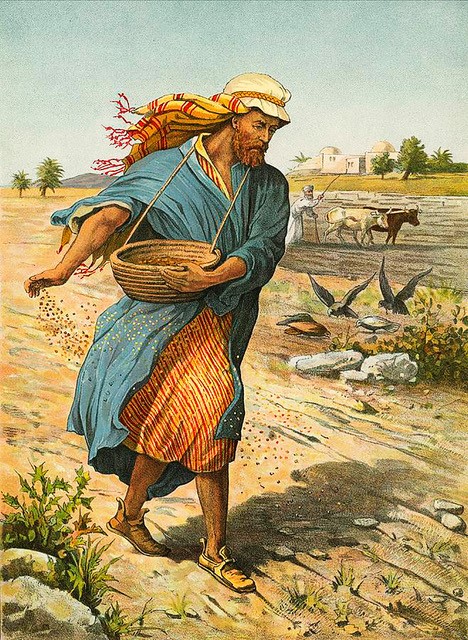
What can you do about your dirt? Let me explain what I mean by that question… Here we have one of the few parables where Jesus Himself explains exactly what the story means, both for His disciples and for you, who are His people of this day and age. As Matthew informs us, our Lord begins His teaching session by getting into a boat, a very common thing in a fishing village on the Sea of Galilee, then He pulls out away from shore a little bit, and lets the natural reflective properties of the lake’s water surface magnify His Words to the crowds who had gathered to hear Him. Just imagine a congregation assembled on the shore of a mountain or hillside lake, and you’ve got one of nature’s ready-made amphitheaters, complete with amplification, and this parable in all of its details is the feature of the program. There’s the Sower, who is Jesus, of course. The seed is the Word of God, the hot sun and rocky soil is persecution and shallow growth of the Word, the hungry birds are the devil’s efforts to mislead our understanding, the thorns are the choking deceitfulness of riches and the anxieties we face in this world. If you have heard or studied this parable before, you probably have made yourself quite familiar with as much of its meaning as I’ve mentioned so far.

But then we get to the soil—notice how Jesus’ careful explanation of His own parable makes no distinction about what happens in the good soil! Why is it that one patch of otherwise fertile dirt yields thirty fold, and another area brings forth as much as a hundred times as much? His disciples questioned Him about all the other details in the parable; why would they not press Him also about what this part means? It makes you wonder as you apply this parable to your life as a Christian—what can you do about your dirt? That is, not only are you careful to watch for the big stuff—the persecution, the devil, the worldly cares—so that you take root in fertile soil, but it seems like you should also take note of the fruits that your life bears: be it thirty, sixty or a hundred fold. Wouldn’t you want to be as productive as possible? Isn’t that what God would want for you?

And that is where frustration can enter in. You measure up the difference with other Christians and you start wondering about your soil. You may not have seen anxiety make total shipwreck of your faith, you may not be embroiled in the fires of persecution, and you may not even be tempted to fall into sin on a regular basis. But even so, even if you don’t find yourself planted in rocky soil, you’re not plucked up by the bird’s beak, and the sun hasn’t scorched you, still you find something that’s not quite right. You may not get this feeling all of the time, but it’s more often than you would like. You ask, why can’t I be a bit more diligent in Bible reading and prayer? Why am I complacent about making just a minimum effort at the Christian life? I have my chances to tell a neighbor about the saving Gospel of Jesus Christ, but I too often avoid them and walk the other way. I already know that it is very important to hold to God’s true and pure Word, but there are days when that true and pure Word doesn’t seem to have a hold on me. What’s going wrong?

Many Christian denominations claim to have the answer to that frustration. Commit to the Lord! Make Him your number one priority! Be a disciple, and not merely a member! And it sounds like they have a point. The Law that they are using is in fact the Law that tells you your Christian life has fallen short, has lost its luster, and you are squarely to blame. You have potential, so they say, to yield a hundred fold, that is, be totally on fire for the Lord, be constant in prayer, and outdo one another in showing honor, as Paul says in Romans, but instead you bring forth a fraction of your fruits of faith. Churches should be doing more. Pastors should be more energetic about getting the Word out. Children should be paying more attention to the worship service and the sermon. And as far as the Law of God says these accusatory things, it is most certainly justified in doing so. It’s all true.

There’s one thing missing, though. There is a reason why Jesus does not explain the differences between the yield of thirty, sixty and a hundred fold in the parable of the Sower. The answer lies in the Gospel of forgiveness. With the Gospel, there is no how-to, no formula or recipe for you to follow to get the results you’re after. When it comes to forgiveness, there’s nothing to do, because it has all been done. The Sower Himself grants the yield. The differences between you and other Christians are His matter, not yours. He spread His costly seed indiscriminately, casting it all over the place. He is superabundant in His grace, freely and willingly paying the high cost of your salvation. He endured the pain of the cross, because it was the eternal punishment that was meant for you because of your sins.

But your sins are remembered no more. Your frustrations are removed, because you fix your eyes of faith not on yourself and your performance, as it were, but you fix your eyes on Jesus, the author and perfecter of your faith. Through the waters of your Baptism, you have already been brought out from death to life. Your Savior has shut the roaring mouths of the Law’s accusations. You are not going to be saved through trying harder. Your dirt is not going to improve its yield because of anything you do. Instead, it will be Christ and His Word of forgiveness to you, His Body and Blood in the Lord’s Supper that will strengthen you, the buried treasure of Scripture that will fertilize your soil for the yield of the fruits of faith that your heavenly Father has had in mind for you from the beginning of time.

When you think of it, there’s nothing for you to do, really, except take yourself out of it all. You are planted as a seedling in your particular area of dirt, remember, so the true work belongs to Jesus working in you. When the Law’s accusations come your way, instead of assuming you can meet them and put a bigger effort into your Christian life, I’d suggest that you admit instead that the Law is right, say that you are a sinner, and bring that confession of repentance to the cross, talk to your pastor for personal absolution and counsel from God’s Word. Leave the results, that is, the yield, whether it’s thirty, sixty, or a hundred fold, as a matter of Christ’s concern and not yours. He has your dirt under His control. Now that you are forgiven and purified by His cleansing blood, He will join Himself to you so that it becomes Jesus who tells others about Himself through you. Jesus and His Words will lead you to pray and work for God’s kingdom in your particular vocation. As Saint Paul wrote, it is not I but Christ who lives in me. All I need to do is get my sinful self out of the way through repentance. This is not an excuse for me to sin more and work against the Lord—that’s what weeds do, and since Christ is the Sower, He did not plant you as a weed. His Word has taken hold of you, and your Lord will not lose His grip, no matter what happens in your life. With His good seed doing the work, He will produce your crop, and at harvest time, He has promised to gather you to Himself in heaven forever more.

The next few weeks in this portion of the Pentecost season, our Divine Service’s Gospel reading will proceed through the rest of the parables that are collected in Matthew, chapter 13. Our Lord Jesus Christ has more of His Word of the kingdom and of the salvation that was meant for you. He is not going to give you mere words of instruction, or demands to serve Him, or a complex of guilt because you have failed Him. He is going to plant the seed of His Word into you, and to make of you the disciple that He has already called you to be. He urges you to get into the boat of the Christian church. In fact, you are right now sitting in what is called the nave of the church building—so you are in the boat with Jesus! And just as the water’s surface magnified His voice at one time on the Sea of Galilee, so today let the remembrance of the water of your Baptism magnify the Word you hear, reminding you that Christ came to be your Lord too, the one who has redeemed you by His Blood. With Him working in you through the Holy Spirit, your frustrations are removed, your sins forgiven, your reconciliation complete. The Lord has sowed the seed. He will also bring you and your works to full completion when you behold God’s face, shining in all glory and blessing upon you.

In the Name of the Father and of the ✝ Son and of the Holy Spirit.

Green Altar Parament

Green Altar Parament


Readings:
Is. 55:10–13 It shall not return to Me void
Psalm 65:1–13 You crown the year with your goodness
Rom. 8:12–17 The Spirit Himself bears witness with our spirit that we are children of God.
Matt. 13:1–9, 18–23 Behold, a sower went out to sow

Come to me all ye who are weary

Notes

The Lord be with you!
He who dwells in the shelter of the Most High will abide in the shadow of the Almighty.

This is the Fifth Sunday after Pentecost and a weekend on which we especially give thanks to God for the special blessing of this good land and the country that we love. Our Introit this Sunday is taken from key verses in Psalm 91. This psalm assures us of God’s ever-present mercy during every change that weighs us down in this world tainted with sin. A perfect tie-in with this Sunday’s Collect of the Day.
Let us pray:
Gracious God, our heavenly Father, Your mercy attends us all our days. Be our strength and support amid the wearisome changes of this world, and at life’s end grant us Your promised rest and the full joys of Your salvation; through Jesus Christ, Your Son, our Lord, who lives and reigns with You and the Holy Spirit, one God, now and forever.
Amen.

Zechariah 9:9-12
Daughter of Zion is a title that evokes defeat, judgment, and the anger of God’s wrath against His people’s faithlessness. Zechariah, a prophet who appears late in Old Testament history, long after King David, the Divided Kingdom and even after the Babylonian Exile, uses the term Daughter of Zion to promise mercy renewed. The Messiah comes to lift up the humiliated head of the Daughter of Zion, and He is known Himself by the humble donkey that He rides, a sign that came to fulfillment on Palm Sunday.

Romans 7:14-25
The holy Apostle Saint Paul bares his very soul in this admission of the lingering presence of the sinful flesh inside him. Wretched man that I am, he says, not wretched man that I was! I am of the flesh, I am sold under sin, and I don’t understand the evil works that I hate, yet I still do. Nevertheless, the grace of God through Christ’s redemption has saved wretched sinners like Saint Paul, like you and like me. Thanks be to God! He has delivered us from this body of death.

Matthew 11:25-30
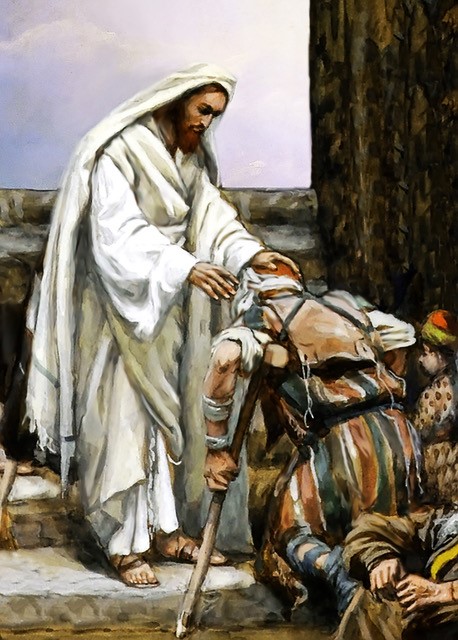
Jesus can say, Come to me all ye who are weary and heavy laden, because only He has the authority to give rest, that is, true peace in the enjoyment of God, the very purpose of the Sabbath. Jesus received this authority from before the beginning of time from the Everlasting Father, since He is the Son of God. He also received authority to bestow this rest when He was baptized in the Jordan River and anointed with the Holy Spirit. He has chosen to reveal the Father and lavish all His eternal benefits on those who trust in Him for the forgiveness of sins. That is what it is to bear the light yoke and easy burden of Christ: believe with all your heart, soul and mind that He has paid the full price for you.

Here’s Hymn 684, stanza 1:
“Come unto Me, ye weary, / And I will give you rest.”
O blessèd voice of Jesus, / Which comes to hearts oppressed!
It tells of benediction, / Of pardon, grace, and peace,
Of joy that hath no ending, / Of love that cannot cease.

In the name of the Father, and of the Son, and of the Holy Spirit, Amen.

Pr. Stirdivant

At The Cross

At The Cross

True Peace

Notes

The Lord be with you!
I will sing of the steadfast love of the LORD, forever!

This is the Fourth Sunday after Pentecost and that phrase, I will sing of the steadfast love of the Lord, is heard in our Introit.
That’s the psalm verses that we sing antiphonally, or back and forth, immediately after the preparatory confession and absolution. Now the Divine Service proper has begun, and these opening words help us begin to grasp the theme of the particular Sunday. The Introit also includes the curious phrase: Blessed are those who know the festal shout.
What is a festal shout? It is the opposite of a cry of mourning, and it is a communal praise response to the abundant mercy and grace of God who has come among us to bring His precious gifts for us. We praise Him gladly! We don’t consider it a chore to be in church! It fulfills the third Commandment when we don’t “despise preaching and His Word, but gladly hear and learn it,” as we say in the Catechism and repeat this week in the Collect for this Sunday. Let us pray:

Almighty God, by the working of Your Holy Spirit, grant that we may gladly hear Your Word proclaimed among us and follow its directing; through Jesus Christ, our Lord, who lives and reigns with You and the Holy Spirit, one God, now and forever.
Amen.

Jeremiah 28:5-9
God teaches His people to trust in His Word, even over the human word of the prophet He has sent. Mankind is prone to error, but the Word preserved for us in Holy Scripture is never wrong. The words of prophets who prophesy peace need to be tested, and if what they say actually takes place, then God has given a clear testimony that that prophet is a true spokesman for God. This came to its greatest fulfillment when Jesus came and died on the cross and rose from the dead, as the Creed confesses, “according to the Scriptures.”

Romans 7:1-13
When a woman’s husband dies, she is freed by the earthly contractual law to the late husband and is free if she should choose to marry another. Paul uses this case as an analogy to what has died in our previous condition, that of a born sinner, and what has been reborn in our new condition, that of baptized believer. It wasn’t God’s law that died or terminated when we believed in God’s grace. Instead, it was sin and the condemnation that we had earned because of our sin that has died, and we are free from its bonds in order to be united to Christ, the church’s true Bridegroom. Our sin hangs on to our flesh in such a way that we are constantly prone to sins of weakness, but we can be certain and confident that Christ has set us free from the wretched condemnation that our consciences feel. Though still miserable sinners, thanks to our Savior we are at the same time joyful saints!

Matthew 10:34-42
Jesus continues His extended speech on the cost of following Him. For three weeks we have seen how directly opposed this sinful world is to Jesus and those who are born of water and the Spirit in baptism into His eternal kingdom. It’s strange to hear Him, the Prince of Peace, say flatly, I have not come to bring peace, but a sword! The sword is the price of peace, just like we remind ourselves on days like Veterans Day: freedom isn’t free. It costs a great sacrifice, and there was no greater sacrifice than Christ’s own holy body given up in bloody death for our atonement, the payment necessary for forgiveness to take place. Even though the cost of following Jesus is great and can feel very steep to us at times, we have assurance of a reward—the reward not of our work or our believing, but the reward earned in our place by our Good Shepherd.

Here’s Hymn 685, stanza 2:
Let us suffer here with Jesus / And with patience bear our cross.
Joy will follow all our sadness; / Where He is, there is no loss.
Though today we sow no laughter, / We shall reap celestial joy;
All discomforts that annoy / Shall give way to mirth hereafter.
Jesus, here I share Your woe; / Help me there Your joy to know.

In the name of the Father, and of the Son, and of the Holy Spirit, Amen.

Carrying the Cross

Carrying the Cross

Sermon for the Fourth Sunday after Pentecost: June 28, 2020 jj
Rev’d Mark B. Stirdivant, Good Shepherd Lutheran Church, Yucaipa, California
✝ sdg ✝

Listen to Jesus Christ, the Prince of Peace, as He says: “Do not suppose I have come to bring peace to the earth.” Someone forgot to tell that to the multitude of the heavenly host of angels when Jesus was born. It looks like they might have been mistaken when they announced to the shepherds in the field, “Glory to God in the highest, and peace on earth, goodwill to men.” Instead of that, you heard it right out of Jesus’ mouth in today’s reading, He said as clear as day that peace on earth just isn’t His thing.

Are you upset? Are you disappointed that you were led to understand that believing in Jesus was going to change your life for the better? Maybe at one time you were convinced that since God loves you, He wants you to be happy. That your family would be free of conflict. That your job would be secure and more than adequate. That your plans for education or retirement would be well-financed. That people would give you the respect you deserve. You tend to follow the desire of most American Christians who long for a God who believes in you, who takes you for who you are and blesses your life. You want your church-going experience to improve your attitude and outlook; you know, make you look on the bright side of everything. Develop a deep relationship with God and grow closer with other people who feel the same way you do. You are led to believe that these things are the best of what Jesus can offer to our hurt and broken world.

So Jesus simply is not helping His cause at all when He claims that He’s the cause of division and strife in this world. When your Lord claims not to bring peace but a sword, it appears to set back the success of the Christian Church and puts it farther from its goal of reaching out. Jesus, are you sure you want to identify yourself with the violent protesters we see on TV? If you are worldly-wise, you know already that it’s best to “choose your battles.” Don’t go out and ruin your prospects by nit-picking over details. Someone should tell Jesus what a grave mistake He’s making. Someone should rush the latest survey results straight to the Son of God so that He stops all this talk about tearing up homes and families. People want peace! It’s a very appealing and popular message. They’ll pay handsomely for it, and they’ll even come to Church to get it. Leave well enough alone. You’ve got plenty of the Bible that you can use to say what you want, and then just ignore the rest of the Bible that seems to contradict it.

But suppose for a moment that Jesus is not making a mistake. Let’s just say for the sake of argument that He isn’t the bad guy, and that all this division, violence and strife He’s causing is really for your good. If that is true, then the peace of God is different from the kind of peace that you have in mind. If a family is at peace, without any contention or division, and yet at the same time does not have Jesus, then whatever peace that family does have is false and misleading. God is not blessing them, rather, the devil is deceiving them. And he may be deceiving you. It’s easy to fall for. It’s easy to have false peace. It’s tempting to make false peace as if it were the kind of peace that Jesus was sent from heaven to win for the world. But Jesus simply won’t let you do that. There’s too much at stake. Your eternal salvation is more important to Him than your temporary comfort in a pleasant state of false peace. Your heavenly destination takes greater precedent than your worldly success. “I did not come to bring peace, but a sword.”

And boy, can that sword hurt. It stings with the rejection and dirty looks that you may get because of your faith. Ask anyone from the Sudan or any veteran who’s done a tour in the Middle East how bloody the sword of persecution can be. And yet the Christians suffering in these areas are perhaps the ones with the strongest faith in the world today. In your own family, perhaps it may come up that a couple is living together without the protection and Divine blessing of marriage. You thought they were raised better than that, but you hold your tongue because you don’t want to start a fight. It’s not my place, so you reason with yourself, while the whole time God’s command as well as His promise of blessing remains ignored and despised. Your kids resist coming with you to church. It gets harder and harder to make it happen like it did when they were small. So you relent and give in to them for the sake of peace at home and rationalize that the Church isn’t giving them what they like anyway.

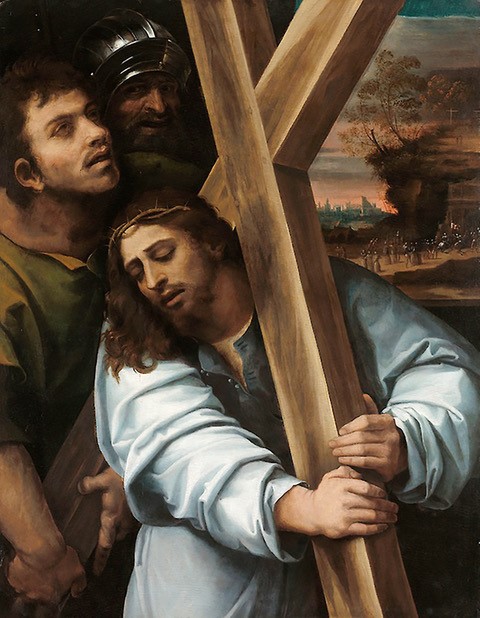
If that’s the peace you want, then you aren’t going to get it from Jesus. For the peace of God, the peace that passes all understanding, is a peace that hurts like the sword. It hurts you because it also hurt your Lord. It cut into His hands and feet, bleeding with every blow of the hammer to those spikes on the cross. The peace of God ripped open His side with the centurion’s spear, so that the cleansing flood would wash away your sins and offenses. This peace divides the church because after all it was a group of church leaders and teachers that pushed for the passion of the Christ in the first place. This peace even divides you within yourself, as St. Paul describes of his own Christian life in the Epistle: “What I want to do, I do not do, but what I hate, that’s what I do.” The victorious life on this side of heaven doesn’t always look so victorious!

For though you have often rejected God and His peace in favor of your own, though you have done wrong against your neighbor and your family, you have the promise of God’s true peace because the blood of Jesus paid the price for you to get it. The Prince of Peace doesn’t promise you the success and creature comforts that false peace offers to you, but He does guarantee suffering now, and glory later in heaven. This isn’t to say that if you aren’t going through strife and struggle right at the moment, that you should go out of your way to pick a fight. No, like any good soldier, always be prepared to fight, but stay true to your orders laid out in God’s Word, remain faithful to Him in whatever your vocation is, and let your Almighty General Jesus choose the battles.

Give thanks that your Lord and Savior came to bring you not the worldly peace you want, but the heavenly peace that you need. Realize that it is for your good that the worship of the church is not merely entertaining and attention-grabbing, but instead it is a solid deliverer of the precious, divine gift of forgiveness. Be grateful that you have not empty success at home, school, work or church, but rather the painful sword and cross to bear in your life. For although Jesus has destroyed the false peace that you had at one time come to love and cherish, He replaces it with the real peace that the world cannot give, a peace that is sealed with this promise from the Prince of Peace: “Whoever loses his life for my sake will find it.” Dear children of God, you have already in your baptism lost your life for the sake of Christ. Welcome to true peace.

In the Name of the Father and of the ✝ Son and of the Holy Spirit.

Green Altar Parament

Green Altar Parament


Readings:
Jer. 28:5–9 The prophets who have been before me and before you of old prophesied…
Psalm 119:153–160 Revive me according to your word
Rom. 7:1–13 sin, taking opportunity by the commandment, produced in me all manner of evil desire
Matt. 10:34–42 he who loses his life for my sake will find it

Everyone who acknowledges Me before men

Notes

The Lord be with you!
In God I trust, I shall not be afraid; What shall man do to me?
Happy Father’s Day! In addition to giving us our earthly fathers, God has been to us a tender Father, source of life and our true protector unto everlasting life!

This is also the Third Sunday after Pentecost and in our three-year lectionary series, we are moving through both the theologically rich Epistle to the Romans and the extensive teachings of Jesus recorded by the Evangelist Matthew. These books follow a certain order, whether it’s a logical progression of thought or a context that helps teach the faith as it follows the historical life of our Lord. Either way, we gain a benefit this year from going straight through these important New Testament books.

Let us pray the Collect for this Sunday:
O God, because Your abiding presence always goes with us, keep us aware of Your daily mercies that we may live secure and content in Your eternal love; through Jesus Christ, our Lord, who lives and reigns with You and the Holy Spirit, one God, now and forever.
Amen.

Jeremiah 20:7–13
You may recall the account of the patriarch Jacob wrestling with a strange man in the middle of the night. He later realized that he was wrestling with God, looking at Him straight in the face, and yet Jacob was not destroyed for being an unclean sinner. Jeremiah, several centuries later, also wrestles with God in words: “Lord, you have deceived me! You have prevailed over me for you are stronger than I.” Jeremiah wants to keep quiet about God’s words, but they burn within him like an unquenchable fire that forces him to speak the truth. But the words are no longer violence and destruction, but words of hope for God’s weary people.

Romans 6:12–23
Freedom and slavery are very common themes in the Bible, and in our strange times today, those terms can be clouded or even grossly misunderstood. Sin has an unmerciful dominion over mankind and the fallen world. We were born under its thumb, with no hope of escape by our own reason or strength. Our slavery to impurity only led to more and more sin and lawlessness. Christ our Lord appeared, and willingly offered Himself to death on the Cross in order to secure our liberty. Now that we are free, it would simply not do to offer to place ourselves back on the block to be sold into slavery again to the master we have just escaped! Instead, our slavery is of an entirely new kind- to serve God and our neighbor for the sake of the righteousness that Jesus earned for us and has given us. This is the slavery that leads to holiness and, ultimately, our eternal life.

Matthew 10: 21–33
Persecution is a given for all who follow Jesus. Animosity against the Gospel will even threaten the closest earthly bonds of the family. What an encouraging message for Father’s Day, right? But with the sobering reality comes the truly uplifting promises from Christ’s lips: the one who endures to the end will be saved. Do not fear those who can kill the body but cannot kill the soul. Those who acknowledge me before men, I will also acknowledge before my Father. These are the higher realities with which we are blessed, and no earthly, temporary persecution can ever stamp them out.

With constant distractions, fears and worldly idols, we fall prey to the temptation to doubt that God’s abiding presence always goes with us in our sojourn through this life. Christ’s free gift of forgiveness and everlasting life through His Word, Baptism and His Body and Blood keeps us aware of His daily mercies that He has kept in store for us, so that in Him we live secure and content in God’s eternal love.

Here’s Hymn 863, stanza 1:
Our Father, by whose name All fatherhood is known,
Who dost in love proclaim Each family Thine own,
Bless Thou all parents, guarding well, With constant love as sentinel,
The homes in which Thy people dwell.

In the name of the Father, and of the Son, and of the Holy Spirit, Amen.

Daddy Reading

Daddy Reading

Sermon for the Third Sunday after Pentecost: June 21, 2020 jj
Rev’d Mark B. Stirdivant, Good Shepherd Lutheran Church, Yucaipa, California
✝ sdg ✝

“Brother will deliver brother over to death, and the father his child, and children will rise against parents and have them put to death, and you will be hated by all for my name’s sake.” Come on, Jesus! It’s Father’s Day! Where are your words of appreciation? Don’t we have enough of the Violence and Destruction that even Jeremiah complained about 2600 years ago? No, sin and the curse of this world are still up to the same old playbook. Now they do it on 24 hour news channels and you can see its full evil display on your own handheld screens loaded with Twitter and Facebook. Violence and destruction even engulf whole portions of modern cities and the police are made out to be the bad guys even when they’re doing good. For about three months, we were fighting the microscopic coronavirus with staying home, “we’re all in this together” and helping one another in heartfelt ways. Now the last three weeks all that love and camaraderie seem to melted away. All the more we need Jesus to talk about this persecution that comes our way from our evil world. All the more we need the words we heard from Jesus today in our Gospel: “Everyone who acknowledges Me before men, I also will acknowledge before My Father who is in heaven, but whoever denies Me before men, I also will deny before My Father who is in heaven.”

Think of our Lutheran Fathers—this week we have the 490th anniversary of the Augsburg Confession, June 25, 1530—those bold laymen knew on that important day that now was the time for them to acknowledge Jesus Christ and His true message of forgiveness in front of the most powerful man in the land, the Holy Roman Emperor. If they were to shrink back at that time, then they would be turning their back on their Lord, and that was not going to happen; their eternal salvation meant too much to them to put it at risk. Satan and his angry mob were ready to do their worst, and most of them felt it very much.

They also heard the very comforting word of Jesus: Have no fear of them. That means, those things the world throws at you to scare you—don’t allow them to steer you off course even one degree. Be bold! Be courageous! It will not be popular at times to believe in Jesus—so what? You have Him at your side; You have His strength bolstering your heart; there’s nothing else that could be better. The hairs of your head are all numbered, which means that God’s careful watch and loving concern cover every last detail of your life, how much more will He be concerned over the greater, more significant problems you will have to face!

As easy as this is to say and to believe, especially since you are sitting here and listening to it as a very familiar statement you might’ve heard many times, it is immensely challenging to keep reminding yourself about this truth. What happens to you when you get rocked with difficulty? What happens when the temptations of this world lure you away from what our Lord has clearly said? Do you fear that you will not have enough of what you are told that you need? Life will certainly be much easier for you if you were to say: you live the way you want, I will live the way I want. Later on, God will sort all this stuff out. Keep me out of it. I’ll just worry about myself.

Think about this: No matter what political party you like, I’m certain there has been a time or two when you have thought, or perhaps even shouted to the TV at one of our elected representatives in government, saying something like this: Just do the right thing! Stop worrying about where this is going to get you in the polls or the next election! Forget about pleasing the people who had nothing to do with electing you! I’m tired of these men and women of principles throwing those values out the window once they get elected to office!

You may think yourself the last person to get affected by politics, but I must point out to you—those things that drive you crazy about politicians—that same thing’s inside your own human nature too. You have acted as if you and your needs and desires were more important than what God has given you. You have used the free forgiveness of your sins to mean that you can keep on doing those sins that give you the satisfaction you crave. I can keep living like this, just as long as I keep asking for forgiveness, it’s okay. Or your moments of worry and anxiety, however momentary that they were, still they shook up your total reliance on Jesus your Savior and you let fear of men cancel out your love for Him. A mere moment where you might feel uncomfortable in this life seemed worse to you than an eternity without the Lord your Life giver. You know that whenever you did, thought, or spoke that way, you sinned against God in thought, word, or deed. Just like that frustrating politician, you deserve a shakeup of your senses in which God’s Law shouts at you: Do the right thing!

But fear not, nor fret! When you could not do the right thing out of fear of this world, Jesus did, and He did it all for you. He gave you the calm and patient assurance that spoke deep to your soul: you are of more value to Him than many sparrows. He has rescued you from the utter Divine wrath that had every right to destroy your soul and body in hell. Jesus suffered that destruction for you when He was on the cross dying for you. As we read today in Romans, you are not slaves to sin and fear anymore. You are slaves of righteousness, meaning you now have the freedom to love God perfectly because Jesus, who is in you, He already loves God perfectly. By the free gift that your Savior earned for you, you have eternal life and it will be your highest joy to give yourself in love for the good of your neighbor.

You will find that you have no love for the world and its empty promises. There is no longer a tug at your heart to try to please the people and things that try to be your God, but are nothing like Him. Yes, it will still be tough in these last days before Jesus returns at the End of the world. Brother will hand over brother into death, and father his child, children will rise up against parents and put them to death. Even the closest earthly relationships will try to get in the way of you and Jesus, but evil will not win this victory over you.

Instead, you have delivered one another, including children and parents, into a different kind of death. You are all killed in your sinful nature through Baptism! Sin doesn’t reign in your mortal bodies, because it was crucified with Christ. Parents, you have brought your children to the font to drown the sinner in them and they have been brought back to life as fellow believers. Brothers and sisters in Christ, here in the sight of God and one another, we have through confession of our sins handed our sinful selves into destruction, so that Christ our Lord will then make us a mighty Church, bold with the same faith that they had in Germany with Father Martin Luther at the lead over 500 years ago. It means too much to you to think otherwise.

As it was true with our Lutheran forefathers of long ago, Christ will also acknowledge you before the Father who is in heaven. Why? Because you believe the Gospel Word that has forgiven you all your sins. When you say Amen to that forgiveness, when you trust that all Divine gifts are yours as an inheritance, you are also confessing that Jesus is your Lord, and nothing else evil that happens to you in this world measures up in any way or form to what good lies in store for you. Now is the time to be brave and bold! In Christ you will do the right thing without regard for the hatred of the world, because Christ did the right thing—the saving thing for you that would secure your everlasting life.

In the Name of the Father and of the ✝ Son and of the Holy Spirit.

Green Altar Parament

Green Altar Parament


Readings:
Jer. 20:7–13 His word was in my heart like a burning fire
Psalm 91:1–16 You shall not be afraid of the terror by night
Rom. 6:12–23 do not let sin reign in your mortal body … the wages of sin is death
Matt. 10:5a, 21–33 you will be hated by all for My name’s sake

It’s the Word.

Notes

The Lord be with you! Let all the peoples praise you, O God!

The Second Sunday after Pentecost is the debut of an extended series of green Sundays—green paraments on the altar and pulpit, and the pastor wears the green stole. Green gives evidence of growth and life, and it depicts the Church in her activity of living and growing from God’s Word, breathing in forgiveness and breathing out prayer. From now until the end of the Church Year, the Sunday readings are determined by when that particular Sunday falls in a seven-day period that is given a “Proper” number. Because the date of Easter varies each year, the number of Sundays after Pentecost also vary. You can find the readings for this Sunday listed under “Proper 6” on roman numeral page xv in the front of our hymnal.

Let us pray the Collect for this Sunday:
Almighty, eternal God, in the Word of Your apostles and prophets You have proclaimed to us Your saving will.
Grant us faith to believe Your promises that we may receive eternal salvation;
through Jesus Christ, our Lord, who lives and reigns with You and the Holy Spirit, one God, now and forever.
Amen.

Exodus 19:2-8
This chapter of Exodus, the Second Book of Moses, marks the arrival of the escaped Israelites to Mount Sinai, the holy place from which God gave them the Ten Commandments and the other laws that set them apart as a holy nation. It almost goes by without comment, but there’s a striking phrase that describes the whole multitude. All the children of Israel “shall be to Me a kingdom of priests.” It is striking because there will only be certain men of a certain age in a certain tribe who will be Israel’s priests, and yet God regards all of the people, young and old, men and women, as priests. This points to their role in the Old Testament as a precursor to Jesus Christ, who is the perfect representative of the holy nation of Israel, and He is the Great High Priest for the whole world.

Romans 5:6-15
Paul puts together the story of God’s love like a masterful chain. Christ’s death for us ungodly sinners is the revealing of His love. That death and the blood that God in human flesh shed for the world is what justifies us, that is, it declares us innocent like a judge would declare an accused person free from all blame. That justification achieves a permanent reconciliation with the Father, and that reconciliation has brought us an abundance of life that has drowned out the death that Adam’s sin brought to all mankind. Death no longer reigns, but life abounds!

Matthew 9:35—10:8
Jesus had compassion on the multitudes who followed Him because they were like sheep without a shepherd. He demonstrated that He is their Good Shepherd because He healed them, taught them about the kingdom that has come in Him, and proclaimed His saving will: that He would lay down His life for their sake. This gave Jesus authority to share with His twelve disciples and He sent them out with the same authority to preach and to heal in His name. This divine authority continues in the Church to this day for the forgiveness of our sins and our eternal salvation. Pastors exercise this authority in their vocation for the good of all the congregation, and every baptized Christian exercises the authority to forgive sins in their own personal callings in life. We don’t pray in the Lord’s Prayer “as we forgive those” for nothing! We all hand out the same forgiveness that we receive every day!

Here’s Hymn 856, stanza 3:
O Christ, who led the Twelve / Among the desolate
And broke as bread of life for all / Your love compassionate:
Lead us along the ways / Where hope has nearly died
And help us climb the lonely hills / Where love is crucified.

In the name of the Father, and of the Son, and of the Holy Spirit, Amen.

Pr. Stirdivant

The Healing

The Healing

Sermon for the Second Sunday after Pentecost: June 14, 2020 jj
Rev’d Mark B. Stirdivant, Good Shepherd Lutheran Church, Yucaipa, California
✝ sdg ✝

Jesus could have taught the message of His kingdom in so many other ways. What if He sent out legions of angels to declare it to multitudes? He could’ve used a loudspeaker from heaven for all to hear at the same time. He could just sit in the temple and summon all nations to come to Himself. He could do whatever He wants: He’s the Son of God. But instead, we see Him picking twelve men to go and tell.

They go, and they know two things at this early time in their education: they’ve been given a Word, and they’ve been sent. There’s no making up the message as they go along, but they proclaim the message that has been generously given to them. They don’t perform wonders and healings out of their own magic hat of powers. Instead, they’re going to work wonders because Jesus has given them the power to do so. They’re not even going out on their own, but they’re going because they’ve been sent. Freely all this has been given to them. Now they may go and give the Gospel out to others for free.

Imagine the crowds that gather around them. They gather in order to see the Savior, but here they get the understudies instead. Perhaps some leave disappointed or disgusted before the disciples open their mouths. Perhaps they feel like Jesus has let them down by not coming personally, or because the student is never better than the master. Those are typical human reactions, but humans are typically wrong with God’s things. The Lord is not unfaithful. This is His way. This is His order. Jews first, Gentiles soon to come. When the disciples heal the sick, the sick are healed. When they cleanse the lepers, the lepers are cleansed. They raise the dead; the dead are raised. They cast out demons; demons flee.

Why? Because it’s not the disciples doing it. Thaddaeus isn’t saying to the sick, “In the name of Thaddaeus, be healed.” Bartholomew isn’t saying, “In the name of Bart, come out of them.” Demons aren’t afraid of Bartholomew. But they are afraid of Jesus, and the disciples speak in Jesus’ name. He’s sent them; and by His Word, He is there with them. When they preach, “The Kingdom of Heaven is at hand,” it’s true because the King is there by His authority and Word. And, when the disciples tell the people that their sins are forgiven, their sins are forgiven. Not because the disciples are forgiving them, but because really, Jesus is. That’s what He sent them to do. That’s what He gave them to do. Freely they have received. Now they freely give.

One of the favorite Sunday School and Vacation Bible School stories to tell is the one about the prophet Balaam in Numbers 22. As you may recall, the unbelieving King Balak sent the prophet Balaam to curse the people of Israel. However, as Balaam rides his donkey toward the people, God opens the mouth of his donkey and the donkey talks. The donkey rebukes the prophet Balaam, and Balaam blesses God’s people instead of cursing them. Pastors like to say this:

“If God can speak through Balaam’s donkey, then He can speak through me, too.”

Beyond the laugh, there’s an important point. In His wisdom, with a world full of lost and wandering sheep, God has chosen to spread His kingdom in a most curious way: He wants sinful human beings to speak His Word. He calls pastors in the Holy Ministry to preach that Word publicly, on behalf of His Church; and pastors can be quite a strange bunch. Despite the quirks and personality failings, however, the Lord still uses them as His instruments. Not just them, though: every Christian, tempted though they may be by sin and weakness, every believer has the privilege of telling that Word about Jesus to others. That is how the kingdom of God spreads.

Why is that? It is not the people. It’s the Word. The Lord Jesus Christ, the Word made flesh, is present by His Word: the kingdom of heaven is at hand because our King is at hand. The same Savior who went to the cross to die for the sins of the world, now comes in His Word to give that forgiveness to individual people—to you and me and all who will hear. Jesus is present where His Word is. Add that Word to water, and He’s there in Baptism. Add that Word to bread and wine, and He’s present in His Supper.

It’s the Word that’s powerful—not the person speaking it. It’s the same Word with the same power that heals the sick, cleanses the leper and casts out demons in the Lord’s time. By that Word, Jesus comes to give forgiveness and faith and life, to turn wandering sinners into the people of His pasture, the sheep of His hand. It’s that simple.

Can the people who are sent get into trouble and stand in the way of God’s Word? Of course, they can; even though the Lord is faithful, sinners are sometimes not. Sometimes though, people place their hope in the preacher’s great charisma. If his style is engaging and holds interest, then that must make the Word powerful. If he is less interesting or has a bad day, then the Word maybe isn’t so powerful. If this is true, that means that God is only as faithful and powerful as the sinful man who is preaching the sermon. It means that God’s power varies based upon how much sleep the pastor got the night before. This is an extremely seductive temptation in our culture and society, because image is emphasized so much. People judge books by covers, and companies spend millions of dollars to make sure that their products have the right packaging and an exciting ad campaign.

We are easily tempted to judge the quality of anything by how well it holds our attention. Old Adam inside you and me makes sure that we judge the power of God’s Word on the same criteria. Pastors suffer this temptation, too; they can believe that their personality or style make the Word more effective. It’s simply not true. So repent and rejoice! The Word’s power is not bound by the personality of the speaker. Where the Word is, Jesus is. Where Jesus is, there is forgiveness and life.

Some may fall for the opinion that only pastors have the ability to share God’s Word. Sure, only a pastor is given God’s holy orders to preach in a setting like this, for the benefit of God’s congregation in the Divine Service, but the misconception is that if a layman shares the Word with someone in their daily life, it’s just information but nothing more, like a recipe or a news broadcast. It tells about salvation, but it doesn’t save the person hearing the good news. But if this were true, then God would have made a mistake when He told us to forgive those who trespass against us! No, you give forgiveness with the same power that the pastor has been given.

In fact, Christians meet and spend time daily with all sorts of people whom the pastor will never meet, and each believer has the joy of telling of the hope they have in Christ. Sadly, many believers balk at the thought of doing so. “I don’t know what to say,” is one excuse, well, why not? With Bibles to read and sermons to hear and classes to attend, what prevents you from not knowing? Simply tell other people about Jesus—about His ministry and miracles, His death on the cross and resurrection; about forgiveness and the hope of eternal life. “Oh, but I’m not a very good speaker.” Neither were Moses or Paul, and I suspect that Balaam’s donkey wasn’t usually eloquent either; yet God used each of them. “People won’t listen to me.” Careful, now; because that’s like saying that the power of the Word depends on you, not on Christ. I can assure you that people don’t always listen to pastors more than anyone else. Once again, it’s the Word—not the person who speaks it. “I don’t like talking to strangers.” That’s okay. Talk about Jesus to each other. To your kids. Your grandkids and other family members. A good friend who’s curious about your faith. The Lord will provide opportunities.

That’s how the Lord spreads His kingdom on earth: He sends out His Word. He gives His people, you and me, the privilege of telling it to others. He gives us the honor, despite our sins and weaknesses, of being His instruments to tell others of Jesus; and He promises that His Word will not return to Him void, but will accomplish what He sends it forth to do, whether or not there’s a huge crowd coming to hear it. Where people do listen to us and rejoice with us, that’s when we give thanks and glory to God. Where people reject the Gospel we proclaim, we remember that people rejected Jesus, too, and we give thanks that He counts us worthy to suffer for His name’s sake.

But as you speak His Word, rejoice most of all in this: Jesus first speaks that Word to you. Freely you have received; only then do you freely give. Your salvation this day is not based upon how well you evangelize, how many people you tell about Jesus, or how well you tell the great story. God’s gifts are already yours because Jesus has already died on the cross to save you. By the mouths of people in your life—parents, pastors, friends, and others—the Lord has told you of forgiveness; and whenever you’ve heard that Word, He has given it to you. He could have done it any way He wanted; this is what He wants.

So it is this day, as we gather here. It has all been about God’s saving Word. As the Gospel is spoken, it speaks and delivers forgiveness. So on this day you rejoice: you have not just heard about forgiveness today. You have not just been told you have to go and spread the kingdom by telling others. But most importantly, by that Word that you have heard today, you have been made a part of that kingdom, you have been healed by Jesus the merciful Savior, you have been forgiven of all of your sins.

In the Name of the Father and of the ✝ Son and of the Holy Spirit.

Green Altar Parament

Green Altar Parament


Readings:
Ex. 19:2–8 on eagles’ wings…a special treasure to Me…a kingdom of priests
Psalm 100 Enter His gates with thanksgiving
Rom. 5:6–15 while we were still sinners, Christ died for us.
Matt. 9:35—10:20 pray to the Lord of the harvest…it will be given to you in that hour

The Holy Trinity

Good Shepherd

Good Shepherd


The Lord be with you!
Blessed be the Holy Trinity and the Undivided Unity!

The Festival of the Holy Trinity begins the extended season after Pentecost. It features the color white on our church paraments and pastor’s stole, because the only way we could know the Holy Trinity is through knowing Jesus Christ. His pure life and sinless sacrificial death are represented in white at Christmas and Easter, so also on this festival day of Holy Trinity.
Another tradition on this day is the substitution of the Athanasian Creed into the Divine Service liturgy. This Creed has been officially accepted as the doctrine of the whole Church, because it accurately and carefully teaches the doctrine of Holy Scripture. God has revealed to us His Name, and His Name is Father, Son, and Holy Spirit.

Let us pray the Collect for Holy Trinity:
Almighty and everlasting God, You have given us grace to acknowledge the glory of the eternal Trinity by the confession of a true faith and to worship the Unity in the power of the Divine Majesty. Keep us steadfast in this faith and defend us from all adversities; for You, O Father, Son, and Holy Spirit, live and reign, one God, now and forever.
Amen.

Genesis 1:1—2:4
Is there one God or three? The Bible answers this question many times, but the most dramatic story featuring the Holy Trinity, one God in Three Persons, is the Creation account. The creative love and desire of the Eternal Father is expressed in spoken Words by the Eternal Son, with the Eternal Spirit of God, that is, the Holy Spirit, hovering, swooping over the chaotic waters at the crucial moment of “Let there be Light!” Then, after each day of creation is documented into history, we hear the conversation that the persons of the Holy Trinity have with one another: “Let us make man in our image…” All mankind, created good and in the image of God, now after sin once again restored to that image in the forgiveness of Jesus Christ, is God’s intended self-expression. Did you see talk about race in this reading? I didn’t either! It has no bearing or difference on God’s plan for all people. Race shouldn’t make any difference for us in the Church either!

Acts 2:22-36
This is Peter’s Pentecost Day address continued. The crowd may have known Jesus as a great Man attested by miracles, wonders and signs. But now, with the event that they could not deny happened—the miraculous arrival of the Holy Spirit with His own wonders and signs, they have no conclusion to make, other than that same Jesus is Son of God, who was crucified, is now raised and glorified to the right hand of the Father. Once again, Scripture speaks explicitly about the Holy Trinity!

Matthew 28:16-20
This is the last chapter of Matthew, where our Catechism reminds us is the words of Jesus that command, that is, give us the gift of, the Sacrament of Holy Baptism. Matthew did not name all three names of the Trinity anywhere in his Gospel book until this point, when all was fulfilled and Jesus completed the work for which He was sent by the Father to earth from heaven. And how is the Trinity named? Together with the gift of Baptism. That’s how we know the Trinity, through the confidence that we are baptized, forgiven, and included into God’s family, the Church.

The doctrine of the Holy Trinity can often sound esoteric and theoretical. We have to suspend our human reason and accept upon the Bible’s say-so that there are three Persons, that is, three distinct entities, but only One God, one essence and not three. How is this? We can only say that it is this way, that’s all. We have so much going on in our world today, is it even worth-while to speak about this subject when we have other pressing matters for the Church to address? In fact, the Holy Trinity is the perfect answer to coronavirus, senseless violence and anything else that grabs our attention. God the Holy Trinity does not stand way above us but constantly helps, forgives and reassures us as we face the sin that is in us, and that is all around us.
Thanks be to God the Holy Trinity!

Here’s Hymn 953, stanza 2:
We all believe in Jesus Christ, / Son of God and Mary’s son,
Who descended from His throne / And for us salvation won;
By whose cross and death are we / Rescued from all misery.

In the name of the Holy Trinity, the Father, the Son, and the Holy Spirit, Amen.

Pr. Stirdivant

Sermon for the Festival of the Holy Trinity: June 7, 2020 jj
Rev’d Mark B. Stirdivant, Good Shepherd Lutheran Church, Yucaipa, California
✝ sdg ✝

Could you say that the year 2020 has been up to this point “spiritual”? What is it to be “spiritual” anyway? We could have enough emotion or energy or drive that motivates us to do whatever we determine to be healthy and beneficial and noble. “Spiritual” people may possess some mystical force or feeling that allows them to rise above adversity, to do the most with what they have, to reach the pinnacle of their capabilities. Recently we’ve found anything but “spiritual” in our lives, certainly not in the news. Most decidedly, spiritual things have been sorely lacking in our world of the past several months.

This word “spiritual”-the world uses it because it desperately wants to say that something pious, something religious, something godly and other-worldly lies behind the motives and goals and intent of a certain person or organization or idea or cause. Spiritual has to do with spirit. And there are two kinds of spirit. The human spirit, which leads you to believe that every good you do and every evil you overcome is because of your own inner strength and willpower and innate goodness. “Everyone has a spark of goodness. Everyone deep down is a good person. Seek the good that lies within every human heart.” That is what the human spirit says, and that is what it sincerely believes. And that is what lies behind the talk you hear so much about, not to leave out self-esteem, self-worth, self-interest, self-motivation.

For at its core, the human spirit is self-centered. It’s about whatever makes you feel good, and whatever you think makes you better. And with the utter meltdown of human society that we’ve had to experience lately, the human spirit very glaringly fails to meet its lofty goals. The human spirit looks at Matthew 28, the appointed Gospel for today, and sees marching orders for a Christian to follow so he can demonstrate to others how committed to “Growing and Going in the Gospel” he really is.

But diametrically opposed to the human spirit is the other spirit-the Spirit of God. The Spirit of God does not draw you into yourself and does not urge you to seek the good that lies within you. Because Paul said in Romans, “For I know that in me-that is, in my flesh-lives no good thing.” For even if my human spirit strongly wills and desires to do true and honest good, I can never achieve or accomplish this on my own strength and never to the degree that I would desire. For in the end, “the good that I want to do, I do not do; but the evil I want not to do-that is what I keep on doing.” (Rom 7) For this reason, the Spirit of God opposes your human spirit and works mightily to discipline it.

The Spirit of God does not want you turning into yourself; and the Spirit does not use your desires to motivate and drive you. He knows that our troubled world of sin is not only out there, causing chaos and violence on the streets, but it’s also in us, in you, in the human spirit. Instead, the Spirit of God turns you away from yourself to God. And not just to any god or anything that can sound godly, but to God crucified-the God who unites Himself so intimately with you so that He becomes the very sin that lives out of your every thought, word and deed.

This is the only God who is able to save you from your selfish human spirit, the only God who can save you from coronavirus, from evil people in government authority, from rioters, even save you from yourself. Only this God can overcome doubts even in those first eleven disciples who worshiped Jesus on the mountain peak. For this is the God who suffers your sin in His body; the God-in-flesh whose self-sacrifice appeases the Father’s desire for your blood as punishment; the God who willingly dies the death you must die; the God who endures your sickness and hell, your self-doubts and sinful lusts, your despair and grief-every evil that your evil human spirit papers over with its high-sounding words. The Spirit of God draws you in through your Baptism into God crucified. He calls you to look to Him in time of need and in the hour that God has appointed. Call on Him and He will deliver you, even from yourself.

The Spirit of God urges you to fix your eyes on God crucified even when things are going well-so that you credit and glorify not your spirit but this Holy Spirit. For it is this Holy Spirit who opens your ears to hear and take to heart and hold to the God in your flesh and sacrificed on the cross you must bear. And yet, in doing all this, the Spirit does not promote Himself. For unlike your spirit, this Spirit does not exist for the sake of Himself, to be noticed or applauded or celebrated. The Spirit of God, the Third Person of the Holy Trinity, exists only to draw and lead and take and carry you to the Son of Man who is crucified. This leading and carrying that the Spirit of God does-it is not transporting you back in time to lock in on a past significant historical event. This leading and carrying that the Holy Spirit does-it is to bring the God crucified to you, into your heart and mind, into your flesh and blood, into your skin and bones.

Consider this: we say “Father, Son and Holy Spirit,” but we experience God in the reverse direction. For it is the Holy Spirit who immerses us in Christ Jesus so that we have access to the Father. It is the Spirit who cleanses us in the blood of Christ so that we are reconciled to our Creator. And it is the Spirit who breathes back into us the Life that is Christ Jesus so that we live in God our Father.

The Spirit’s desire is to take out the hard-hearted stony heart of your human spirit, and to replace it with the fleshy spirit of Christ. The fleshy Spirit does not float around in the sky or move on the ever-changing winds of emotions or speak in visions or voices or events that no one sees. The fleshy Spirit is fleshy because He deals with flesh- He serves your flesh and blood that has been planted and buried in the flesh of the crucified God, and His crucified flesh and blood is planted into your flesh and blood. In this way, you live in Christ just as He resides and lives in and through you. All because the Spirit of God opens our ears so that we hear and see that we are bathed in the blood of the crucified God, and feed, thankfully, once again feed on His true and actual Body and Blood.

Perhaps now you understand more of what lies within the command that Jesus gave to those eleven disciples in the so-called “Great Commission:” Go and make disciples, baptizing and teaching them. But this is more about what God does and continues to do in His Church rather than your personal statement of mission. Being baptized has nothing to do with getting caught up in the moment, or getting your head on straight, or making a fuller commitment, or determining to match your spirit with God’s Spirit. And being born of water and the Holy Spirit does not mean having a different type of spirit to focus on when your spirits are down or when you need to rise to the occasion. Jesus put it very well in John 3: that which is born of flesh is flesh. Which means that whatever comes from yourself, your self-interest, your self-desires, your self-willpower is still of the selfish human spirit. But that which is born of the Spirit (capital S) is the Spirit. He breathes into you the breath of Life-the Life God died to present and offer and give to you. It is this Spirit of God who calls you back to Christ, the God who was crucified, so that, gathered together with all the Faithful, you might feed on Him.

For this is the Triune God at work in the Sacrament of Holy Baptism. There the Father begets you anew. There the Son cleanses you from all sin and delivers you from every death. All because there, in the waters of Holy Baptism, the Holy Spirit gives and delivers you into your Lord’s very own Body so that you also become true sons of God and are born of God. He is your only peace in all time of adversity and prosperity, during life and in death, when things go well and when things get scary. And He is yours in baptism by the Holy Spirit, a baptism that is remembered constantly in the forgiveness of sins that punctuates your daily life and vocation.

And because of this Baptism by the Spirit of the Triune God, we can now say and sing with St. Patrick and Christians of every age:
I bind unto myself today
The strong Name of the Trinity
By invocation of the same
The Three in One and One in Three.

To this Holy Trinity alone belongs all glory, honor, worship and praise, now and forever.

In the Name of the Father and of the ✝ Son and of the Holy Spirit.

White Parament

White Parament


Readings:
Gen. 1:1—2:4a In the beginning, God created
Psalm 8 When I consider your heavens, the work of Your fingers
Acts 2:14a, 22–36 This Jesus God raised up, of which we are all witnesses.
Matt. 28:16–20 baptizing them in the name of the Father and of the Son and of the Holy Spirit