Author Archives: goodshepherdyucaipa@gmail.com

The Law, Undiminished

Ten Commandments
Ten Commandments

Today’s appointed texts are united in their concern for God’s Law and righteousness. The Old Testament reading is the giving of the 10 commandments, St. Paul in Romans 6, says “we cannot continue in sin so that grace may abound. If we have died to sin how can we still live in it?” Then the Gospel lesson is from Christ’s Sermon on the Mount. He said that He came not to abolish the Law. In fact, He said, “whoever relaxes one of the least of these commandments and teaches others to do the same will be called least in the kingdom of heaven. That “unless your righteousness exceeds that of the scribes and Pharisees, you will never enter the kingdom of heaven.” That murder is not just the act of killing, but “That everyone who is angry with his brother will be liable to judgment.” The Greek isn’t judgement but Gehenna, or the place of judgment, in other words: what we would call: Hell. Hell and its fire is also the sentence for a heated word and insult, for impatience and grudges. Ultimately when you sin against your brother or sister, or are unwilling to forgive them: you are sinning against God.

Yet we live in a culture that pooh-poohs this threat. Our culture has fully embraced the full evil of our sinful impulses. Civility and decorum are out of step with the “put everyone on blast” mindset. If somebody irritates us, it seems to be ok to “let them have it,” online or in person. Therefore, we give them a piece of our mind, with both barrels even. We don’t couch our words, nor do we try to understand the other person’s perspective. Whether it is important or not, we feel that there is no reason to “hold back”. This attitude is wrong. Because even if we are in the right, even if it’s important, no especially, if it is important, there should be a spirit of love and gentleness, wanting the other person’s good in approaching our brother or sister.

But we get caught up in our selfish emotions; we try to justify ourselves and defend ourselves by attacking the other. When someone has wronged us, perhaps we do seem to forgive, but then harbor resentment while keeping score, hoping to get even.

Then consider when we have done something wrong and are guilty of a sin, how our impulse is to react even should someone reproach us even in the most loving and well-meaning manner. The spirit of this age and our sinful nature refuses to be reproached. Refuses to admit a sin. Our pride will not allow it. Perhaps, we feel somewhat guilty for our sins, but who is anyone else to point it out? Therefore, we may adopt a “who am I to judge (because I don’t want to be judged)?” Because we are afraid that someone will point out our sins, we relax one point of the Law here or there for them or us. “That teaching isn’t so important, is it? Why do we have to follow that? The culture has changed. It will make people feel bad or uncomfortable.” Then another, then another. Soon none of God’s Law is worthy of being kept in our minds, except maybe our self made “law” of “mind your own business… but then again maybe I will mind yours too”.

The Law of God is not meant to be comfortable, yet Scripture describes it as good and wise. The Law of the Lord is perfect, reviving the soul. The precepts of the Lord are right; rejoicing the heart; the commandment of the Lord is pure, enlightening the eyes.”

How is that so? Well, even as the Law with God’s “Thou shalt, and Thou shalt nots”, it does what God has set its purpose to do. The Law should instill fear of punishment for breaking the Law: that breaking the Law has consequences that which we sometimes call the first use of the Law. Because of that same use: the threat, it leads us to the second use which we often refer to as the mirror. This shows us as we are. That we are sinners. We have not kept the Law in thought, word, or deed. We have not loved God with our whole heart and we have not loved our neighbor as ourselves and so we recognize that we deserve God’s wrath and just punishment.

This leads to repentance: repentance which is hope for forgiveness. Not the “I’m sorry if I offended you” or I’m sorry with a shrug. This is a “I have no excuse, Oh Lord. I have failed you, I have failed everyone who is my neighbor: my wife, my husband, my parents, my children, brother, sister, boyfriend, girlfriend, fellow congregation member, boss, employee, the person I cut off on the highway or raged against. No excuse.”

We do deserve the fire of hell, and repentance is admitting it before the Lord, but repentance already includes faith. With repentance, as I said, there is hope. Hope outside ourselves. There is hope because Christ did not come to remove the Law but to fulfill the Law. He came to fulfill the Law and showed what love for our brother and sister consists of: sacrifice, forgiveness, and truth, patience, kindness, and understanding. Jesus said “unless your righteousness exceeds that of the scribes and Pharisees, you will never enter the kingdom of heaven.”

This righteousness is not of yourself or me or by trying to fulfill the Law out of fear or pride. This righteousness that exceeds all others is the righteousness of Jesus Christ. He who fulfilled the Law perfectly for sinful men and women. He took that sin to the cross to receive in Himself the fire of God’s judgement and wrath upon His most holy and perfect flesh. This is the power of the Law, to awaken within us, the realization of the power, the wisdom, the mercy of God, and the greatness of our sin and our need for a Savior which has now been fulfilled and revealed in the Gospel, the Good News gift of God’s triumph over our sin in the sacrificial death of Jesus Christ, God’s own Son.

Faith sees this. Faith awakens to it and responds to it in joy. For in faith we see that by the righteousness of Jesus Christ, we are saved and forgiven of our sins. We come to the understanding and knowledge that this righteousness has been given and worked into us as a free gift. That as you were baptized you were baptized into Jesus Christ: into His death, buried with Him, your sins have now been put to death. Buried with Him. Now you have had faith placed and planted into your hearts which is the start of the resurrection which you receive now in Christ Jesus and is your hope for eternity. You are marked by the blood shed at His cross. Marked for salvation. Marked for the resurrection from the dead. Death, and sin, no longer has dominion, that is, it no longer has rule over you! By faith you are dead to sin. So, don’t go back to your sins. Don’t become a slave again to them. Don’t become numb to them. Don’t excuse yourself.

Also, don’t think that you can never or will never sin again. Or that life here will now be easier for the sake of Christ. There is no such promise.

But this is the beauty now of the Law seen through the cross. The Law is now that which the Holy Spirit continues to teach into our hearts, minds, and lives by His Word of Wisdom in Scripture, as we now long to study it, hear it, read, mark, learn, and inwardly digest it. Through it the Holy Spirit feeds us and makes us wise. He instructs and guides our every deed so that the fruit of faith is lived out. That we live in repentance, hope and joy. When we sin, we fear not God’s wrath directly, but that we have abused His Grace. Then by the Word of God we hunger to receive the strengthening of faith and forgiveness of sins in the very Word made flesh in the bread and wine. By faith, we begin to understand that there is no “small doctrine”. But all of God’s teachings and Laws are for our good as it leads us again to repentance and faith: to the love of God shown at the cross, so that we, in turn, can love our neighbor.

You have sinned against God, but you have been reconciled to God the Father by the Son, Jesus Christ. If you have been forgiven, then faith compels you to be reconciled to your brother or sister. If you refuse, where is your faith? If you say a nasty word, but do not repent of it: where is the fruit of faith? No let us ever be aware of our thoughts, words, and actions, and when we fail: repent again. Praying and asking for the mind of Christ. Repent to the ones you have wronged. Be open to correction. There is yet time but no time to waste.

Then remembering the cross, hearing His absolution, God’s promise to us at our baptism, we move forward together: brothers and sisters in Christ. Exhorting, encouraging, humbling ourselves, doing all things in love and the peace and calm that only the Holy Spirit can give in God’s grace. We live this life of hope forgiven of our sin, united in the newness of life in salvation that Christ has won for us at the cross. Fellow believers reconciled together in the righteousness that surpasses the righteousness of any Scribe or Pharisee: the righteousness of Christ.

A we sang in our introit: the precepts of the Lord are right, rejoicing the heart; the commandment of the Lord is pure, enlightening the eyes; the fear of the Lord is clean, enduring forever. You are now clean in Christ, you have heard the Truth of His Word, you are righteous for Christ’s sake. Be encouraged and rejoice. These words of God are sweeter than honey, more desirable than gold. And they are yours by God’s grace through faith in Jesus Christ your Rock and your Redeemer. Amen.

Pr. Aaron Kangas
Unfathomable

Fishers Of Men
Fishers Of Men

These are true statements: From our epistle lesson today; “The foolishness of God is wiser than men, and the weakness of God is stronger than men.” Or from Isaiah, Job, and elsewhere from St. Paul: “who has known the mind of the Lord, or who has been His counselor?”

Even though mankind glories in his own wisdom. Whether it be in so-called scientific breakthroughs, or social upheaval and change where everyone is clamoring to “be on the right side of history”, or people glory in the triumph of monuments and heroic accomplishments.

For example, this past week was the anniversary of the launch of Apollo 11 mission to the moon and 56 years ago this very evening at 7:56 local time, Neil Armstrong took his first step upon the surface of the moon. Yet, as awesome an accomplishment as that was, and as we may ponder the enormous effort it took to put together after years of experimentation, training, teams of military and civilians working together, as awesome as all that was: it is good to remember to ask: who made the moon in the first place? Who established it in the sky, who set it at an ideal distance from earth? Or the sun, or all the stars, and continues to make them travel a very predictable path? Who created the myriad numbers of galaxies? Let us marvel at Him. For indeed going to the moon was truly only a small step in the grand scope of the universe.

There is order and form in creation, not chaos as a whole. Yet within it, is evidence of the “foolishness of God” that defies even “science” and its limited hypotheses. In nature, we can look at the bumble bees and see that scientifically, aerodynamically, they have no business being able to fly… yet they do.

God made the duck-billed platypus which defies even the reason of the evolutionists. As it has properties of both a bird and a mammal, and it even has a venomous spur. Why? Why did God create them to become what they are? Why did He create those stars and innumerable planets and galaxies? Why did He create so many varieties of sea creatures, plants, and animals on this small planet?

So that we can marvel at His creativity, for one thing. To show that our God does not always do what we humans expect Him to do. To show that what we think is wise or practical is not always truly wise nor practical: that what we think is God’s foolishness is more wise than the wisdom of any man or woman of any age, and His knowledge, creativity, and power go well beyond our comprehension and His grace abounds even beyond our need.

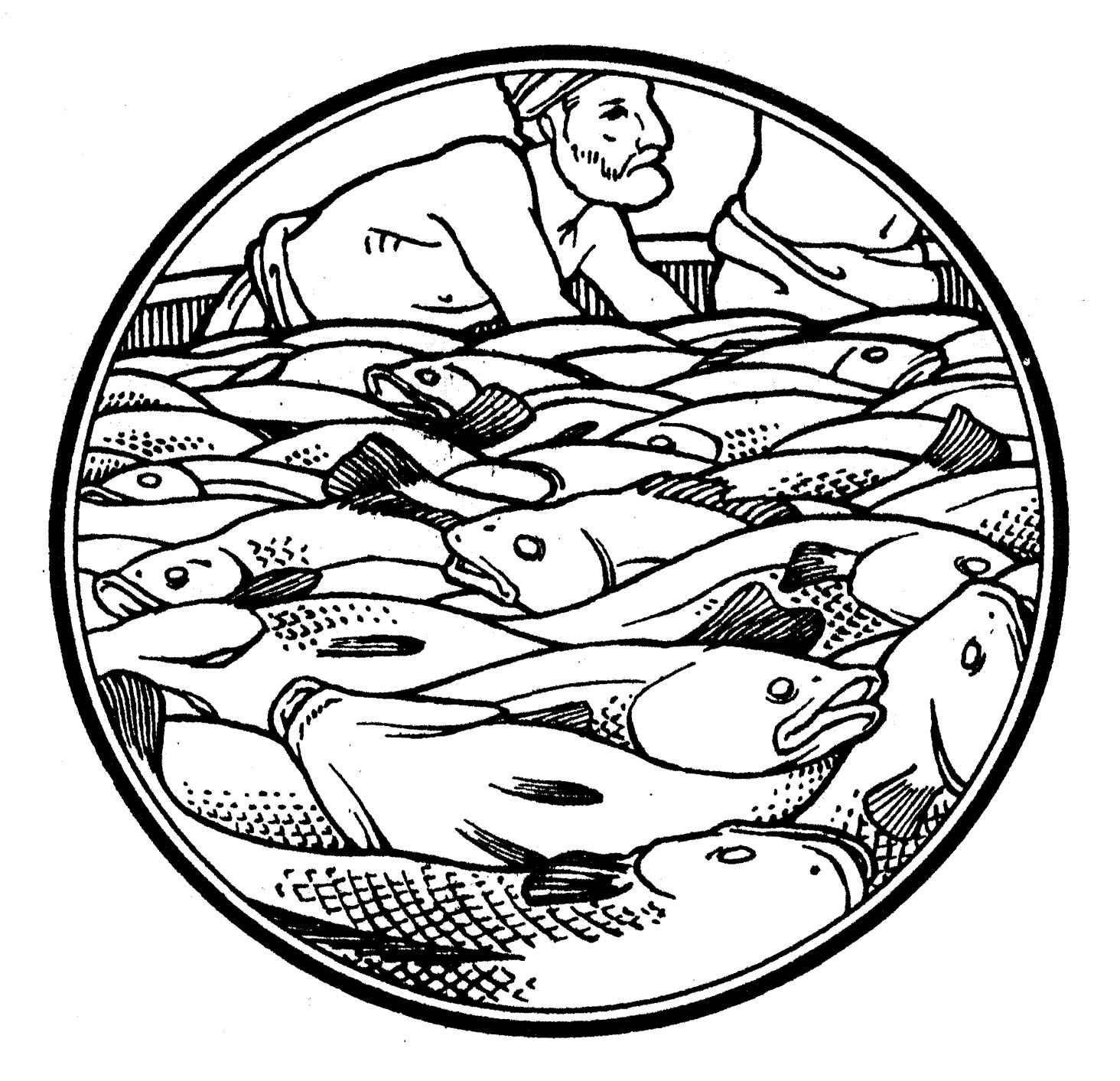
We heard it at work in our Gospel lesson this morning. Simon and the other fisherman had been out all night and hadn’t caught any fish, yet after preaching, Jesus told them to “go out and let down their nets for a catch.”

This seemed like utter nonsense to Peter: wrong time of day, wrong part of the Lake, we already tried that…whatever. Simon gives his weak protest, but He does it anyway. Why does he?

Maybe he thought: let’s just humor him and let him see for himself, or maybe he did it because he wanted to show Jesus what a good disciple he could be, or perhaps, he had faith in Jesus. After all, Jesus had just gotten done teaching the people while in the boat with the fishermen.

Whatever the case, it seemed like foolishness, and yet, what happened? A catch of fish so large, so massive, that it was more than the nets could bear, the nets were breaking, the boats filled, and the boats began to sink under the weight of fish.

Then Simon fell down and said: “Depart from me, for I am a sinful man, O Lord.”
“The foolishness of God is wiser than men.” Jesus could have said, “told you so”. He does chastise the disciples for unbelief later in His ministry, but not here. Instead He comforted them and said: “Do not be afraid”.

Have you ever thought: “if only I could be God for a moment, I would do this or that?” Then again maybe after that thought, you realized what you just said and follow up with, “maybe it’s a good thing I am not God”.
Yes, it is a good thing that God is not like you or me. If He were, He would constantly be changing His mind based on His mood. Or He would just not care what anyone does or what happens to anyone else because He would be too busy enjoying Himself. Or He would burn with His wrath and destroy everybody, again, and again.
That’s quite often how we live our lives. That is why the cross is such a stumbling block, a scandal to the Jews, and foolishness to the Gentiles.

To the Jews, meaning to those like the Pharisees or anyone who thinks that they can be justified before God by their works of the Law, the cross is a scandal. No, God, but I should be saved by my works. If God sent His Son to die for sin, that isn’t fair because I don’t have any sin, or at least I don’t have as many sins as that person or that person, and so on. Or surely, “I can contribute something”, we think, or “I can take credit for something”.
No, the reality is that according to the Law, we have all sinned. We are all like fish stuck in the sea, unwilling and unable to get into the boat of the Church unless we are compelled and lifted up by an outside force. What we deserve according to the Law is damnation and destruction. But God lowers Himself to where we are, and gives up Himself at the cross. Dying for our sin, to save sinners who are unworthy according to the Law to be saved.

To the Greeks or all those who would live by the philosophies of this world, the cross doesn’t make any sense for that very reason. Why would God, if He were God, want to be a human, and why does He care so much, doesn’t He have something better to do than suffer and die? Or if He did die for my sin, and He is “loving” why not do whatever I want and never be changed?
These thoughts betray the fact that we cannot, no human can fathom, can understand the great love of God. He desires not our eternal destruction by fire and brimstone, but He also desires not our mortal destruction by selfish wastefulness, by bitterness, wrath, apathy, and anarchy in this life.

When we fully understand the greatness of God in His awesome power: When we truly survey the wondrous cross: When we truly gaze upon Jesus Christ dying upon the cross for us, that God would love us so much, we truly scarce can take it in. And we declare our unworthiness with Simon, but in hope we cling to the cross repentant and sorrowful. And so repent, and fall on your knees before Christ.
But Jesus then answers that hope, stills your fear and says “Do not be afraid”. Even if you cannot fully understand it, Jesus Christ died for your sins. Though you may think that you are unworthy or unable to be changed and forgiven, through the Ministry of His Word and Sacraments your weakness is replaced with His strength: the foolishness of your sin and mine is replaced with the Wisdom of His Word. The Holy Spirit uses His Word this day even as He did at your baptism as a net, to draw you out, to bring you into the boat of the Church and give you life by faith in Him. He forgives your sins. Do not be afraid.

Instead, glory in His cross. Receive the gifts which come from His cross this day in His body and blood. This is Christ coming and giving you the power of God and the wisdom of God in Himself under the forms of bread and wine. This is God doing the unthinkable, that which defies reason but can only be received rightly by faith for forgiveness and life.

Then by His Grace you are awestruck as Peter was. As you grow in faith and amazement at the gift of His grace at the mystery of God joining Himself to human flesh to save you and me, sinners, you will desire to study His Word and receive more and more His gifts. By His Holy Spirit, you realize more and more His love for you and your neighbor. And then you do not give up on casting out the Word and speaking to your neighbor, loving them, serving them. You do not know what God is working in them through you or in you. In life you may not understand what God has in store for you or is doing right now. But in everything and at every time, in joy or sorrow, trial or need remember that we cannot know the mind of God or how He is working. Know, however, that He desires your good and your salvation. That He can and will use you in your weakness and in His strength. Turn then in prayer and faith, use every opportunity as an opportunity to grow in Christ. Come to the cross again, receive from Him forgiveness of sins, life, and salvation as He comes to you in His Word and His body and blood. You are never left forsaken. His still small voice thunders from the cross, “Father, forgive them”. And now to you: Do not be afraid. Your Father has designed for your salvation, He has caught you by His grace in Christ Jesus, and He will hold you and keep you for eternal life by the unbreakable net of His proclaimed Word of Jesus Christ crucified and raised for you. Amen.

Pr. Aaron Kangas

Be Merciful

Sermon On The Plain
Sermon On The Plain

Today’s lessons are all about the mercy of God. I know it is very easy to focus only upon the part about not judging. Sadly, that’s about all the world today tends to hear. It is one quotation from Scripture that is so often repeated out of context even those who have never heard other Scripture are able cite “Don’t judge”. What’s truly sad is that the way this little line is so often cited is wrong. Jesus was not saying “Don’t ever judge anyone”! The phrase “Judge not” can only be rightly understood because of the previous line: “Be merciful, even as your Father is merciful.” That’s the whole key to understanding and making sense of this text; or of the Christian faith, for that matter. “Be merciful, even as your Father is merciful.”

Today’s Old Testament lesson is an example of what this mercy looks like in practice. If you thought your family had problems, look at Joseph’s! His brothers had sold him into slavery because they were so jealous and hateful. But years later they needed help that only Joseph could provide. God had brought Joseph to a position of power in Egypt. When his brothers first arrived: Joseph had his change for vengeance: to get even. But he didn’t. He eventually revealed himself to his brothers and had them bring their father Jacob and all their family and animals to live in the fertile Delta of Egypt. At the time of the OT text today, however, Jacob, their father, had died. His brothers feared that Joseph’s mercy was only temporary for the sake of their father. And honestly, they should have been scared after all they did to him.

Yet, Joseph doesn’t do what they expected him to do. He doesn’t do what we would probably do. Joseph shows mercy to these very undeserving men. And it was not because of their “made up” deathbed message from Jacob.

He said: “Do not fear, for am I in the place of God? As for you, you meant evil against me, but God meant it for good, to bring it about that many people should be kept alive, as they are today. So do not fear; I will provide for you and your little ones.”

So why does Joseph show mercy to such undeserving wicked people? Why does Joseph not give them what they so justly deserve? Because Joseph knew his own standing before his God and Father. Joseph knew his own reality; his own sin; his own evil nature and deeds. He knew what he justly deserved, yet His heavenly Father was merciful to him: not because he deserved mercy or because he had suffered at the hands of his brothers; but he received mercy from God solely because of who his heavenly Father is. If God showed Joseph mercy, then Joseph knew that he had no business putting himself in the place of God and not show that same mercy to his sinful brothers. After all, God was sending the Messiah to make atonement for their sins too. 

Now, Joseph doesn’t let the evil of his brothers go unnoticed. He loves his brothers enough to speak the truth. “What you did was evil, and you meant it for evil. You can try and dress it up or excuse it all you want. It was evil, and that’s exactly what you meant it for when you did it. However, our God and Father permitted this evil to happen so that He could work good and provide for many people today, which He has.”

How’s that for faith?! Joseph has no intention of bringing about justly-deserved retribution because Joseph recognizes God’s good and merciful hand in these events…even in/through his own suffering. “Do not fear. I am not in the place of God.”

What about us? What do we deserve from God? When we speak against each other? When we refuse to forgive or be merciful to our neighbor? When we create issues because of jealousy and then justify ourselves? When we hold others more accountable and judge them for the same sins that we are guilty of? We deserve God’s vengeance and judgment.

But what does He do? He sent His only-begotten Son to perfectly fulfill the Law in our place—the perfect Law of God that we cannot and do not fulfill—suffering our justly-deserved punishment and death on the cross. He sent His only-begotten Son die and to be resurrected on the third day in order to gain eternal life for us. He was merciful to us; merciful to us through Christ and because of Christ. 

“Be merciful, just as your Father is merciful.” This same mercy that God has so unconditionally shown to us must be reflected in our lives. Yes, I said “MUST.” I know that sounds very law-oriented, but it’s not. I’m not saying that you must to do your part in order to be saved. No! But to not show mercy is to not be of the Father or the Son or the Holy Spirit. To refuse to show mercy, to refuse to forgive, is not Christian. When the world sees you or hears you, they should see and hear Christ. Do they? As a redeemed child of God—a child of mercy—when someone does wrong against us, our will and desire MUST be to forgive them, and if possible, restore a good relationship between them and us. This does NOT mean that we shouldn’t call sin “sin.”

We MUST treat others with kindness, humility, love and mercy (just like the Father treats us), as we must also declare the Truth of God’s Word. That’s true love…the love of the Father which seeks repentance in order to show forgiveness.

This proclamation and confession of God’s holy Truth—full Law and full Gospel—is all part of Christian love. It’s love in action; God’s love in action, in us and through us to each other and to our neighbor. I know our culture disagrees, but it is our God-given baptismal responsibility to in humility confront others with their sins, not to condemn them and send them to hell, but to call them to repentance and salvation. If your friend is heading towards a cliff, in love, do you let them fall or do you call out so they change course? If you see a child wandering towards a busy street, what would love do? To not do or say anything? We don’t want to seem to judge, do we? We are called to call a sin a sin! Judge the sin! Love warns of the danger! Well…the same goes for when a loved one or even a complete stranger whom Christ loved enough to die for walks in sin. Love says to that person, “You are in danger. Turn around. Return to the Way of the Lord.”

We must not be hypocritical in these cases. The Lord says, “First remove the log from your own eye, and then you will see clearly to remove the speck that is in your brother’s eye. The blind can’t lead the blind.” The meaning is clear. We should not apply to others expectations that we do not apply to ourselves. How often, though, we’re quick to drop the righteous hammer of God’s wrath upon someone for committing the very same sins we continue to trespass in. 

This doesn’t mean that you should say nothing if you’ve ever committed the same sins. That’s also not what our Lord is saying here. If you have made the same errors, but have repented in faith to Christ, you are forgiven. Now it is good that you don’t want people to make the same errors that you did. You and I don’t want them to have to experience the trials and tribulations we have had to experience as a result of our selfish and stupid sins.

But that’s the difference. It’s one thing to condemn sin that we are still willfully doing. It’s quite another thing to speak from experience; to speak as one who knows the darkness of that particular sin and the joy of God’s rich and undeserved mercy.

“Be merciful, just as your heavenly Father is merciful”…to you. Focus on God’s mercy and love to you. Focus on Christ crucified and raised. This is the very full revelation of God’s mercy and love for you; God’s mercy and love for you in the flesh. It was for the sake of mercy that Jesus came and received evil so that God would turn it to your good and to the good of sinful evil people whom God calls, gathers, enlightens, by His mercy giving them His righteousness and molding them by His goodness. You have been baptized into this mercy and grace and you have received the Holy Spirit and faith. You have repented and received absolution for the sake of God’s mercy in Christ. And so that you may be comforted and strengthened as believers, He continues to provide His mercy for you, His little Ones, in the Supper of Christ’s body and blood. All so that in God’s truth we as a congregation can in His mercy live in harmony with one another.

Let us go forth and live in His mercy, peace, and love overcoming the evils of this world with His good. In Jesus Christ’s name. AMEN

Pr. Aaron Kangas

Lost and Found

Lost Sheep
Lost Sheep

In this morning’s Gospel we heard 2 of 3 parables that Jesus told in Luke 15. Between the first and second parable, Jesus said something very interesting. He said: “there will be more joy in heaven over one sinner who repents than over ninety-nine righteous persons who need no repentance.”

99 to 1. 99 righteous persons versus 1 sinner who repents. A very interesting ratio. Are there so many righteous people as opposed to “sinners”? What did Jesus mean? In the first parable it may seem easy enough to classify the sheep as either lost, meaning they are sinners and outside the flock, on the one hand, or they are found and already members of the flock. Quite often this parable is explained to say that the 99 sheep represent people who are members of the church already and the 1 person is a person who has left the church and so we need to reach out to them. Not a bad idea, but that is not really what Jesus is saying here. That is not really His point at all.

The point that Jesus is making is that there are NO righteous people. The context of His parables is that He is talking to the Scribes and Pharisees. They had been grumbling that Jesus would allow known sinners and tax collectors into His midst, to let them touch Him, that He would heal them, preach to them, and yes even eat with them, in public even!

If fact, this was not even the first time that the Scribes and Pharisees had sneered at Jesus for doing this. Back in Luke 5 when they had grumbled, Jesus had said: “Those who are well have no need of a physician, but those who are sick. I have not come to call the righteous but sinners to repentance.” The point being that the Pharisees and Scribes saw themselves as NOT sinners. They were righteous and not in need of repentance. They were keepers of the Law. Overachievers, in fact, because they had added their own regulations and Laws to the Laws of the Old Testament.

Luke 15 is a section of the Gospels that clearly speaks of the need for repentance. Therefore, when Jesus said: “there will be more joy in heaven over one sinner who repents than over ninety-nine righteous persons who need no repentance.” He didn’t mean that there are 99 righteous people that God doesn’t care about or celebrate because they are righteous already. This was Jesus telling the Pharisees that they could not please God with their works because there are no people who can make themselves righteous according to the Law. None are righteous, no, not one. Except, of course, the parable teller and the one being criticized, Jesus, Himself.

Sinners are in this context not just those “who fall short of the demands of the Law”. That is indeed everybody. No, the sinner over which God and the angels in heaven rejoice over are those sinners who recognize that they are sinners and in need. They cannot help themselves. They are lost. The sheep is lost. The coin is lost. Notice, the Shepherd has to come to where the lost sheep is. The woman of the house has to search where the coin has fallen. But are all the parables in Luke 15 talking about the same repentance? No, each parable tells a different aspect and preaches a further Truth from God about how repentance happens, and how God is working to make that happen so that people can be saved!

The first parable, the parable of the lost sheep is talking about the Good Shepherd, Jesus Christ who is the seeker, finder, and the worker of repentance in people’s hearts. He is the Savior and Good Shepherd who comes from heaven into the world to rescue that which was lost. Jesus Christ desires people’s salvation and He goes to them, finds them, and lifts them upon His shoulders and bares them home. Just as He bares the sin of the world, the anxieties, sufferings, and punishment of all, and especially of those who believe. Taking the sin to the cross to die in our stead. To fight the Satanic lion. But Jesus does not take people against their will who reject Him, but saves those who do not resist the work of the Spirit.

How does His salvation get to us? How do we get saved exactly? How does God overcome the hardness of our hearts? Well the second parable more or less explains that. The woman of the house represents the working of God’s Word, the source of wisdom, who lights a candle in the darkness. This is the light of God’s Word. It is the Truth of God’s Law and His Gospel that shines into the darkness to cause that dark ignorance to scatter. The Holy Spirit uses His Word and Sacraments to preach Jesus Christ crucified and raised for the sins of the world. In this preaching and by this light, the Holy Spirit sweeps clean the guilt, the ignorance, the enmity and hate towards God and humanity that otherwise resides in the bosom of each man and woman. Therefore, the Holy Spirit uses the light and His sweeping to regenerate, to convert, to reveal and uncover the value of the coin, which is the sinner. To reveal to the sinner, that they are a precious person to God and His heavenly Host. In this way the sinner can repent in hope, being moved by the Holy Spirit to see God not as hateful, but as loving.

The third and final parable in Luke 15, the one that follows our Gospel reading today is the Prodigal Son. This parable describes the effect of God’s work in the heart of a sinner who is moved to repentance. They may hear the Word of God, but it may not take effect immediately, but finally, they realize they can hope in nothing else but the grace of their loving Father. That repentance is finally completed in faith: faith in God through Jesus Christ, enjoying the benefits and joyous banquet of sins forgiven, of sinners restored.

So are you of the 99 who believe they are righteous and need not God’s help? Who need no repentance? This is where the Pharisees and hedonists have so much in common. Even though One thinks that they are saved by the works of the Law and the other thinks that they can do whatever they want and are self-righteous in their sinning, both are similar. Both are hypocrites. Remember the word hypocrite literally means “actor”. Both act as though they are fine; that they are better than others in their pride and need no help. They are in fact in the same lost and broken condition. They are outside the kingdom of the true righteous. The true righteous are the repentant ones. The only path to righteousness is by humbling oneself and admitting that you are not righteous at all. By admitting that you have failed this week, this morning, even since the confession of our sins. You have not lived up to the demands of the Law and you have abused and taken for granted the Grace of God.

In our sinful and lost condition, we cry out “Lord have mercy!” Even before we have, Christ Jesus came to earth and died for your sins. The Holy Spirit who has lit the candle of God’s Word and shone the light of faith at your baptism has been hard at work in your conscience. The evidence is that He has brought you again this day to Himself. Christ has born you upon His shoulders here to confess your sins, and unburden yourself upon Him, pleading grace for the sake of Christ’s righteousness and sacrifice at the cross. Hearing then His grace and promise of forgiveness. Responding in prayer and singing. Hearing His voice in the readings, then confessing the faith that the Holy Spirit has given you in the creeds.

You dear friends are of great value to your Savior. Jesus is your Good Shepherd. He has lifted you even now upon His shoulders. He has taken your sin upon Himself. He came and died upon the cross for you. Yes, for the world, but for you. Now you are His beloved redeemed coin, sheep, and child. Rest upon Him. Trust Him and know that as you trust in Him, the threats of Satan cannot harm you. Do not let doubt oppress you, do not let the world sway you to false worship, pride, or shame. No, grasp the cross by faith and find that God is and has been grasping onto you, and therein lies your strength and hope.

He rejoices at your repentance and salvation by God’s mercy and Grace. Now also hope for change in yourself through faith in Him and by the power of His Spirit. He does not cast you off, but instead carries you: here to be refreshed in His body and blood given and shed for you: then throughout this life until He bears you to your eternal home for Jesus Christ’s sake. Amen.

Pr. Aaron Kangas

Wisdom Now

Chalice And Host
Chalice And Host

A song performed by Kenney Chesney, is entitled, “Everybody Wants to Go to Heaven.” The message of the song is very simple. Everybody wants to go to heaven, but nobody wants to go now. Even though the song has a fun and lighthearted mood, it expresses a profoundly sad truth about the state of our human nature.

The context for this morning’s Gospel was that Jesus was gathered at the house of a Pharisee on the Sabbath Day. He had healed a man with dropsy, and the people were sitting in judgment of Him for breaking the rules on the Sabbath. He then went on to teach them humility, not to seek honor from this world, but to wait for God to exalt them at His own time. In the middle of our Lord’s instruction, one guy blurted out, “Blessed is he who will eat bread in the kingdom of heaven.” The man was only half-listening to Jesus’ teaching. He just wanted to express how great it was going to be when he finally got to heaven.

That’s all fine and good to talk about the future joys and blessings of heaven. But it doesn’t do you any good if you lose sight of what is in front of you right now. The Lord God Himself was in their presence. The kingdom of heaven was in their very midst. Wisdom incarnate was teaching them right where they were gathered. Everybody wants to go to heaven eventually, but who wants to listen to the Lord of heaven right now when there are so many other things to do?

Jesus therefore responded to this pious sounding outburst by telling a parable of a man who prepared a banquet and invited many. Then later, he sent his servant out to declare that the dinner is now ready. The servant didn’t say that dinner will be ready soon. No, it’s ready now.

This talking about the time of Christ, the time of fulfillment. The Lord has come. He is right there in the midst of them already in the Gospel, calling all who labor and are burdened to find rest and peace in Him. He continues to declare to us, “All things are ready. Come and eat. Come and gain wisdom and knowledge of salvation”. Where two or three gather in His name, where His church assembles around the preaching of His gospel and the faithful administration of His sacraments, there He is in their midst.
It’s all good and pious to talk about how blessed and wonderful it will be when we go to heaven. But what about right now? Do you want rest for your soul and release from guilt and sin right now? Do you want to die to your sin and live to God right now? Do you want the body and blood of your crucified and risen Savior right now? Or do you just like the idea of going to heaven someday but not until after you have done all the things you imagine will give you peace and fulfillment in this world?

Jesus’ parable warns us against missing what is right in front of us. The people who were invited made excuses, no different than the excuses people make today. I bought a field, so I need to see it. I bought some oxen, and I need to test them out. I just got married.

The excuses pile up. Anything and everything takes priority over meeting Jesus where He promises to meet you. Work and entertainment, ambition and leisure are deemed more precious and pressing than hearing the gospel, receiving instruction in the Word of God, encouraging your fellow Christians with song and conversation, and eating the body and blood of your Savior for the nurturing of your soul. We all know this.

Many of us are concerned for our fellow Christians who can’t prioritize the gathering in the name of Jesus above their everyday affairs. But God is patient to call you and them to come into the light while it is still shining before the darkness comes. And people so easily count God’s patience as indifference. It’s concerning and discouraging.

But we should keep in mind and remind all others what this gathering is all about. Who has built this church? Who has prepared this Supper and the food of His Word? Solomon writes in Proverbs 9 that Wisdom has built her house. Wisdom has carved out her seven pillars which are the 7 fruits of the Spirit. Wisdom has butchered her meat, mixed her wine, and spread her table. Wisdom, who is portrayed as a wise lady of the house, has been revealed as the Son of God Himself. He comes like a mother hen longing to gather her chicks under her wings. He comes with tenderness and meekness, calling us to receive His words of life with humility. He is the Lord your Shepherd who has prepared a table for you with his body and blood and has anointed your head with the oil of His Spirit in your baptism. And why does He prepare this meal for you? What does Wisdom say? “If you’re untaught, turn in here . . . Leave ignorant people and begin to live; walk the road that leads to understanding.”

You see, Christ does not invite us to gather with Him just so we would make an appearance, mouth the words of the hymns that are our favorites or that we are just used to singing, and then get out in time to rush off to our field, oxen, or other festivities. No, Christ calls the ignorant to receive knowledge and insight, to receive life from His Word, to begin to understand what He says. To linger and listen. If you have made it a habit to come to church, that’s good. There’s really no better habit. But Christ doesn’t just call us to a habit. He calls us to faith. And faith is much greater than a habit. Faith is the cup, which Jesus fills and causes to overflow with his mercy and salvation. Faith exists in a broken and humble heart that can’t find anything good within itself but looks to the Lord Jesus as the only bread that endures to eternal life. Faith hungers and thirsts for the righteousness that avails before God in the wounds of Him who was sacrificed for our sins.

How can we be changed from simple to wise men and women? “the fear of the Lord is the beginning of wisdom.” To fear God is to care about what God’s Word says and to trust that Christ has saved us by his atoning death. We don’t always feel wise. But to recognize this is a sign of great wisdom! To know that you have a lot to learn is the beginning of wisdom. Those who think they already know enough are not wise. The Bible calls them scoffers. If you correct a scoffer then you get insulted. But if you correct a wise person then he will love you. If you give advice to a wise man then he will be even wiser. If you teach a righteous man then he will learn even more.

Because those who are wise know that they can’t find wisdom in themselves. Those who are righteous know that they can’t find righteousness in themselves. Their salvation doesn’t come from them accepting Jesus, figuring out Jesus, or inviting Jesus into their hearts. No, it comes from Jesus accepting them and inviting them. He calls them to His banquet which may seem foolish and unimportant to the World, but it is a feast, which he purchased and prepared with His own blood. By His Holy Spirit, He gives faith and gathers people to be strengthened in the knowledge of salvation. Those who are wise hunger and thirst for this wisdom that comes down from above, the wisdom revealed in the words of Scripture. Those who are wise don’t just mouth the words of the hymns and liturgy. Instead, they feast on the words. They read the words, think about them, ponder them, and learn from them. The scoffer turns church into a mere tradition of men. He doesn’t have anything to learn. He’s in a rush to accomplish what seems more important to this world. But the wise man loves the habitation of God’s house, because this is where he inquires and seeks understanding from God’s Word.

If you don’t want wisdom now, then you won’t get wisdom later. If you don’t want heaven now, then you won’t go to heaven when you die. If you don’t see how dead your sinful flesh is right now then you won’t see the life that Christ has prepared for you. If you don’t want Christ and the salvation He offers right now, then you won’t get it in the end. That is the warning our Lord gives in His parable. “I tell you,” he says, “none of those men who were invited will taste my dinner.”

Wisdom is not about how much you know. Wisdom is about fearing the Lord and knowing the Holy One, Jesus Christ. It isn’t about how much you understand. It’s about receiving understanding from Christ Himself. Some people are smarter than others. Some aren’t able to comprehend much. But the first shall be last and the last first. A little child who receives instruction, learns to listen to his parents, bow his head to pray, and knows that Christ has defeated the devil and taken away our sins, is wiser than the most celebrated scholars who write dissertations explaining away the truth of the Scriptures. There is nothing you have that you did not receive from God. To know this is to know wisdom. And to trust in Christ, His kingdom, and His righteousness is to have everything you need both for today and for the day to come. As David sings in Psalm 34,

“Taste and see that the LORD is good, blessed is the man who trusts in him. Fear the LORD, you His saints, for those who fear Him will lack nothing. Young lions may be in need and go hungry, but those who fear the LORD shall not lack anything good.” Amen.

Pr. Aaron Kangas

The Rich Man and Lazarus

Rich Man
Rich Man

Things can get pretty hot here in Southern California. If you want it even hotter, you need only travel less than an hour away to get to Palm Springs. If you want to get to where some of the highest temperatures in the world get recorded, Death Valley is less than 4.5 hours away. There, brutally high temperatures over 115 degrees are normal for this time of year and it will get even hotter. If you go outside in such heat it is breath taking. Would you choose to go out to Death Valley in the hottest time of the year during the hottest part of the day, without fans or air conditioning? Probably not. You know that under the torment of the fiery sun, you will groan and become weak, thirsty, and your body cannot long withstand the torment of such brutal heat. It is dangerous; without something to quench and cool, the body will die.

In today's Gospel text we heard of a man who finds himself in a far greater heat and fiery torment. The one known in Christ's parable only as "the rich man" finds himself in Hell. This formerly rich man laments to Abraham that Hell is a place of torment and that he is "in anguish". He says," If only Abraham could send Lazarus to "dip the end of his finger in water and cool my tongue" it would be a merciful act, "for I am in anguish in this flame".

Hell is real. It is the place of judgement that so much of the world and even many who claim to be Christian "pooh-pooh" and try to ignore. They may say that hell exists but it's only for really bad people, such as Joseph Stalin or Adolf Hitler. The topic of an eternal place of torment and judgement makes them uncomfortable. It scares them, perhaps. Perhaps it makes them question their own life choices, their day to day sins, their failure to show mercy to their fellow men and women, that there may be a God who, though merciful, is also a just God, who will hold people liable for their sins and punish those who do not repent to Him but rather worship other gods.

Hell is real. It is not, however, like the cartoons where the Devil is the head administrator and greeter, where the devil torments those judged. No, the torment is "a fire that is never quenched and a worm that never dies" as written in Mark 9. In addition to that, it will be a place of weeping and gnashing of teeth in pain and anguish also because like "the formerly rich man" people will ultimately realize the Truth and that they had their whole life to repent but instead, ignored God, ignored His word of Law and Gospel, and now in Hell, they cannot escape. As Abraham in Jesus' parable points out: "between us and you a great chasm has been fixed, in order that those who would pass from here to you may not be able, and none may cross from there to us."

The still unrepentant "former rich man" who had never had to beg in life, begs one last time. This time for Lazarus, to do something again, this time to be sent to warn his brothers to turn from their ways, to prevent them from ending up in that place of torment. But what did Abraham tell him?: "They have Moses and the Prophets; let them hear them." And he replied, 'No, Father Abraham, but if someone goes to them from the dead, they will repent.' Abraham said to him, 'If they do not hear Moses and the Prophets, neither will they be convinced if someone should rise from the dead.'

The rich man, his brothers, and Lazarus all had the testimony of Moses and the Prophets. And standing there at the moment this parable was spoken was the greater testimony in Jesus Christ. We could almost excuse some of the ignorance of those around Jesus because Jesus had not yet died or risen from the dead as the fulfillment of the Old Testament testimonies. But even that ignorance is no excuse. 

What is our excuse? We have Moses, the prophets, the Psalms, and the testimony of the One who has risen from the dead yet look how many do not heed it. How often do we also take this testimony for granted or see it as relatively unimportant?
In Christ’s parable, we do not hear that the “rich man” was inherently evil nor that it was his status as “being rich” which condemned him to hell. Nor are we told that Lazarus was saved because of his poverty. Earthly riches and blessings or the lack thereof are not the measurement of salvation. Abraham was wealthy and yet was saved, even as many beggars at the time Jesus may not have been saved.
What is the benchmark for salvation? What had the rich man and his brothers done wrong? The rich man was a direct descendant of Abraham, yet he was not saved for the sake of his bloodline, a testimony even against the false doctrine today among many evangelicals that all “Jews will be saved”.

So, what was it? What was his damning sin? It was faith. Damning faith. Faith only in the things of this world. He sought enjoyment, happiness, indulgence, and praise in the things of this world only. He apparently did not use his blessings as a good steward out of joyful gratitude to the Lord either for the benefit of Lazarus or anyone else, if he did any good works at all. If he did, it was not done out of faith toward God, but for earthly praise.

Lazarus was not saved because of his perfection or poverty and sores. He may have struggled with coveting the rich man and others who did not have so many troubles and sufferings. He was a sinner, but it is quite likely that because of his helpless and miserable condition, he was forced to lean all the more upon faith outside himself unto God, trusting upon Him for every breath, every morsel not only of food, but for the hope of the life to come.

The main point of this parable seems to ask who and what your god is. What is a god? Luther, under the First Commandment in the Large Catechism, writes, “A god means that from which we are to expect all good and in which we are to take refuge in all distress. So, to have a god is nothing other than trusting and believing Him with the heart.”

We show who our god is by the decisions we make, by how we live our life, how we treat other people, and so on, but that doesn’t go far enough. Some of that is superficial. The why is the greater question. Why do you treat other people the way you do? Why are you making this decision or that? Is it to glorify God who is in heaven or to glorify yourself: either by impressing others who will glorify you or as a direct self-glorifying activity?

Are you giving thanks unto the Lord in your blessings as you take that trip, buy that boat, or are you just treating yourself? Do you make that investment, take that promotion because it will help you to provide for the church, your community, and family or for your own profit and pride? Will it cause you to be away from your church, your family, your community? Will you make excuses for not doing devotions and prayers or coming to where the true God is because you are too tired or occupied with that job, sports, or other priorities? If you have time to sit and watch television for half an hour, you have time to crack open the Bible for yourself and your family. If you cannot make time for God, then who is your god and where then is saving faith?

Repent of this while there is time. That is also the message in this parable. There is only so much time in this life. Hell is real; even as heaven most assuredly is. The way to heaven is narrow, but the way to hell is wide and many will pass through. Repent and be turned. Hear Moses and the Prophets, hear the voice of the one who has been raised from the dead, and be saved.

But lest you be confused. Salvation is not in going through the motions. Salvation is not in doing good works alone. Salvation is not in coming to church and volunteering, nor by giving away all your wealth. Those works which can be and are good are only good if the “why” they are happening is right.

Salvation only comes by faith in God’s grace. By recognizing that no matter if you are blessed with earthly wealth and riches or struggle from week to week, you are still blessed far beyond what you deserve. Salvation comes from admitting that you are a miserable beggar and sinner worthy of hell. You admit your sin not to excuse your sin, but to seek mercy and strength by the forgiveness of sin from the only true God who has created heaven and earth. You plead not your righteousness and goodness, but you plead in the name of Jesus Christ, for His righteousness’ sake.

Jesus, the Son of God showed forth the love, mercy and will of God to fulfill His own justice for those who repent even as His sacrifice was sufficient for all people. The Son of God set aside the full exercise of His Divine power and made Himself poor by attaching Himself to the flesh of human beggars. He took upon Himself even our sores. The festering sores of sin which deserved eternal everlasting torment of fire and anguish, these He took to the cross. He hung in agony and anguish in crucified death to beg and plead not for the sake of His own healing and survival, but for the healing, survival, and the gift of life eternal for you and me.

Now as those who have been baptized, repented, and forgiven, hear now and heed His voice in order to become the true children of Abraham by faith and thus true children of God through Christ. Awaken to the joy that is set for you in Christ. Let this gratitude be that which propels you to love and do good to your neighbor and live the life with all its blessings that He gives to you now.

In the midst of a sin sick world, there are and will be sores and times of trouble, doubt, and fear, but do not give up. Cast it upon the Lord. Look to the cross. Receive His life blood and eat the body of Jesus Christ and be filled with His Spirit and His strength. Repeat and rejoice and be made strong until His angels take you to be safe at His side in His eternal comfort for Jesus Christ’s sake. Amen.

Pr. Aaron Kangas

The Trinity

Trinity
Trinity

This past week for Vacation Bible School, we have been exploring and studying the mystery of the Trinity. The mystery which we confess to be true: that there are three persons in one godhead. Distinct in person yet united as one being. Can we grasp this? Not fully. Not really. Not on this side of heaven. But the concept that can be grasped is how each person in the godhead works for our good, for our salvation, that is something that we can begin to comprehend.

As part of Vacation Bible School, we went to the creeds to help us understand who God is and has revealed Himself to be for us. We saw why it is important, not only in the worship of Him and acknowledging Him, but in the understanding of who we were, but now who we are because of His work in us. So too for us all it important to know, to study and ponder the mystery of the Trinity. It is important too to defend against errors that can be spotted which would confuse who God is and subsequently who we are. In fact, that is how the Nicene and Athanasian creed came to be. They were formed as an expansion upon the Apostles Creed in order to clarify what the Bible teaches in opposition to false teaching and mis-belief that arose in the early church. In fact, it was 1700 years ago right around this time that the early church fathers were meeting in the city of Nicea for a council to decide several theological debates and issues in the church.

The error that had to be discussed and ultimately rejected concerned the person of Jesus Christ. There are many errors that have risen concerning the person of Jesus. Errors such as: Was He only a good man? Or is He a Divine being who only put on humanity like we put on clothing? Or is this Jesus, this Word, god-like, but a creation of God proper, and therefore not actually God nor eternal while somehow still being higher than a human? This last false teaching was the position of a priest by the name of Arius who lived in the early 4th century and convinced many people to believe this way. They claimed that the Word, the Son, this Jesus Christ was a creature formed by God for the work of redemption of humanity, but was not Himself God. This is not true. And the other theologians of that time knew it. They understood that they had to clarify who the eternal Word of God, the Son, Jesus Christ was and is. So, to the glory of God, and in order to keep people from misbelief and being scandalized by falsehood they formulated the “Nicene Creed”.

Jesus is true God, but He is also true Man in a mysterious union. The Word of God who is also Son of God did not have flesh until He was conceived in Mary by the Holy Spirit but He had been begotten, that is set aside to be incarnated from before there was time and creation, that this person of the Trinity was set aside or “begotten” from eternity for the purpose of humanity’s salvation. That is why the Nicene Creed is more specific that the Apostles’ Creed as to the origin and substance of Jesus Christ. So, we have this more full confession: “And in one Lord Jesus Christ, the only-begotten Son of God, begotten of the Father before all worlds; God of God, Light of Light, very God of very God; begotten, not made, being of one substance with the Father, by whom all things were made. Who, for us men and for our salvation, came down from heaven, and was incarnate by the Holy Spirit of the virgin Mary, and was made man;”
Yet, the Nicene Creed did not eradicate the false beliefs of Arianism, because false teaching is always difficult to eradicate in this sin plagued world as the Devil is always trying to lead people from God’s truth back to ignorant darkness. Over the centuries, Arianism has taken different names and Christological heresies continue to proliferate, that is increase and multiply. So do heresies regarding the other members of the Trinity, therefore we have further confessions and expositions on the topic like in the Athanasian Creed.

The Church must ever keep vigil because the devil, the world, and our own fallen reason are always wrestling against the truth of what God had revealed Himself to be. Why is this important? Because any error concerning the Trinity will affect how we understand ourselves and how God relates to us. It will in turn affect how we read Scripture and how we view the Law and Gospel. Will Good Works be done out of Gratitude or out of fear? Do we have a God who desires our salvation and comes to us to help us in our need or a God who expects us to prove that we deserve salvation and must seek Him ourselves. God keep us from such confusion!

We see how the world tries to ignore the idea of a creator; replacing Him instead, with a notion of a chance explosion which created an evolutionary cycle which somehow brought forth all things both lifeless and living. That somehow order came from disorder and chaos without a Divine creator. Furthermore, you have those who minimize the idea that God by the power of His Word could create all things fully formed by speaking it into existence within a natural day. This rejection is also a Trinitarian error as we see the power of the 3 persons were all intimately involved in creation. The Father willed it, the Word which is the Son was spoken, and the Spirit brought it forth and formed it.

We see the modern Christological errors in various church bodies such as Jehovah’s Witnesses, the Mormons, and others, within modern Judaism, Islam, and others who all Deny the Scriptural and orthodox confession of Christ’s Divinity and person.

There are even errors regarding the role of the Holy Spirit and from whom does He proceed: from the Father or the Son or both? Scripture is clear that He proceeds from both, by the way. Another error rejects that the Spirit does the work of converting sinners from unbelief and error and He alone gives us the ability to believe, giving us the gift of faith. Many teach falsely that the Spirit merely gives us a hand, but we have to come to accept faith and that we have enough good in us to participate with Him not only good works, but in conversion itself! This kind of error, minimizes God’s gift of faith and magnifies our contribution which actually is nothing.

The truth is that God sees that you, me, and the world by nature are spiritually dead and unable to help ourselvess to receive or achieve salvation. “God so loved the world, that He gave his only Son, that whoever believes in Him should not perish but have eternal life.” It is He who then calls us by His Word , who comes to us and causes us to be born not according to flesh, but to be reborn from above by the power of the Holy Spirit working through water and the Word in Holy baptism. It is He who creates repentance and faith by the forgiveness of our sins.

He continues to come to us to speak His Truth in our ears, so that we may grow in faith and understanding throughout our years. He comforts us in our weakness and sorrows, turning them into joy and strength because He brings us back to Himself away from ourselves and dependence upon that which fails. God cannot and will not fail you. He loves you and comes to you and invites you to receive His gifts, remembering your Baptism where He put His name upon you and brought you into fellowship with Himself through the sacrifices of the second person of the Trinity. Jesus Christ has fulfilled the Law in His flesh, died upon the cross for your sins, and has risen bodily to show you the future that God desires for you, even your eternal life body and soul.

So, in confession of His name and trusting His Word we ponder and receive the mysteries even as we eat and drink Christ’s body and blood in the bread and wine, where your lips are sanctified to speak His name.

Study the creeds for they help us to know God and grow in faith and grace. But in these statements of belief lies the key to give an answer to those who do not believe or who are entrapped in misbelief. God can and will work through you and me to speak and confess Him before people and in so doing will call, gather, and enlighten them by the work of the Holy Spirit.

Let us pray again the collect for this day: “Almighty and Everlasting God, You have given us grace to acknowledge the glory of the eternal Trinity by the confession of a true faith and to worship the Unity in the power of the Divine Majesty. Keep us steadfast in this faith and defend us from all adversities, for you, O Father, Son, and Holy Spirit, live and reign, one God, now and forever. Amen”.

Pr. Aaron Kangas

Day of Pentecost

The Keys
The Keys

If there’s one day within the life of the Church that can produce the unintended consequence of causing people to feel grossly inadequate in their faithful service to God, it’s this day—Pentecost. Today we hear about faithful disciples boldly and masterfully speaking in tongues, and thousands of people hearing, repenting, and converting. The Church grew by thousands seemingly because of the amazing evangelistic efforts of a few. There”s not a single pastor or congregation out there who wouldn’t love to experience even a fraction of such extraordinary and miraculous results. If only…. And this is where the feelings of inadequacy start to surface. 

In proud fashion, though, we miss the point, and so often attempt to overcome these feelings of inadequacy by our own effort. We try to manufacture and re-produce the results that God blessed at Pentecost. Churches attempt it all the time. The thought is “re-produce the excitement; manufacture some awe and inspiration, and perhaps you’ll also re-produce the massive influx of new members. If you’re not putting on the biggest, most entertaining and uplifting show in town, then you’re doing something wrong. You don’t stand a chance. You’ll never get that Pentecost experience.”

Well…I don’t believe a word of that. You know why? It’s not true. It’s not right. It’s not faithful to God’s Word. You see, the disciples never set out to have this Pentecost experience. They didn’t organize focus groups and community polls to find out what the public masses were looking for so that they could “scratch the itch of the masses” and make a big public splash. They didn’t sit down at a board meeting and discuss membership data, and formulate marketing plans and advertising so that they could increase their market share. They didn’t even wake up that morning with the intention of going out from behind the safety of their locked doors. It wasn’t their plans and purposes and intentions that made that Pentecost what it was. It was Almighty God who did this.
It was the work of the Holy Spirit, who not only spoke the Truth of the Gospel through these men, endowing them with the gift of proclamation in foreign tongues, but who also summoned a huge crowd of people to the disciples so that the crowd could even hear the Gospel proclaimed to them. Remember: The text tells us that the sound of this great rushing wind caused everyone to come running so that they could find out what was going on. Faith comes by hearing. This hearing of the wind led the masses right to the source and wellspring of the Gospel in the Words which were proclaimed. These men didn’t manufacture anything. In terms of “success,” these men were grossly inadequate, in and of themselves. Left to their own devices and schemes and plans, they would’ve produced nothing but ruin and despair. This Pentecost miracle was all God’s working. All glory, honor, and credit belongs to Him.

To say that we’re also grossly inadequate in our personal capabilities to save and deliver people from damnation is an understatement. We’re not inadequate. We’re completely and utterly incapable, in and of ourselves…just like those first disciples were on that Pentecost Sunday. We are not able to overcome our inadequacies, for we are sinful and selfish. In our attempts to lead a perfect Christian life we have failed, yet we want to grow the church by our own means and our own plans, without realizing the source of the growth. We can talk about growth all day, and tell people to grow the church all we want, but it will never take place unless the Lord grants the increase through His chosen message and His chosen means. The miracle of Pentecost that produced growth did not come through the miraculous signs of rushing wind, tongues of fire, or suddenly speaking in foreign languages. Peter later in chapter 2 of Acts explained what is the source of the miracle of Pentecost, and what is the content of the message that converts and saves: Jesus who was crucified and raised from the dead is the Lord and is the Christ. As Peter said: “Let all the house of Israel therefore know for certain that God has made him both Lord and Christ, this Jesus whom you crucified.” Also “that Jesus was not abandoned to Hades, nor did his flesh see corruption. This Jesus God raised up, and of that we all are witnesses. Being therefore exalted at the right hand of God, and having received from the Father the promise of the Holy Spirit, he has poured out this that you yourselves are seeing and hearing.”

To this message the Jews who had been gathered to celebrate the Festival of Weeks asked, “Brothers, what shall we do?” and the answer was: “Repent and be baptized every one of you in the name of Jesus Christ for the forgiveness of your sins, and you will receive the gift of the Holy Spirit.”

Dear Friends in Christ, despite your sin and mine, this same Jesus Christ who was crucified, raised, and ascended into heaven has given you forgiveness for your sin. He has already given you your Pentecost in your Baptism where you were washed in His atoning blood and received His living Word. Though you have been inadequate to be saved and to serve, the blood of Jesus Christ is more than adequate to cover your sin and make you Holy. His Holy Spirit has been given to you through His Word and you have received the miracle of faith to confess His name. The Father, Son, and Holy Spirit continue to use their humble means with miraculous results as the Word is faithfully preached and spoken through Baptism, Absolution, and this Divine Service to bring you and many others again to Himself and bind you to the salvation and forgiveness given to you for Jesus Christ’s sake.

You have heard the message that Jesus is the Christ and you are forgiven for His sake, you are given life eternal through faith in Him who was crucified, risen, and ascended; you are about to receive the very body and blood of Christ for the forgiveness of sin and the strengthening of your faith, so that through Him you are again receiving the gift of the Holy Spirit. Now you have heard His Word once more. Even as you have had His Word and name given you as you were baptized for the forgiveness of sins. Now by the power of the Helper you are able to love Jesus and keep His Word even as Father, Son, and Holy Spirit have come and made their home in your hearts and minds giving you that saving faith.

Now you able to confess with your tongues that Jesus Christ is your Lord and Savior. Keep the mercies of His cross ever before you and do not worry what you will say. Study this Word and meditate upon it day and night and be blessed in the delight of the Lord. The Holy Spirit will speak through you in the simple language of His love, joy, and the confession of faith in the words and deeds which He has planted into you.

This day, we will hear the confession of faith by Jonathan Torrance, the very affirmation of that faith given in His Baptism. The same confession that we all have or should be willing to make every day: “I intend to live according to the Word of God, and in faith, word, and deed, to remain true to God, Father, Son, and Holy Spirit, even to death by the grace of God, to be willing to remain steadfast in this confession and Church and to suffer all, even death rather than fall away from it.” God grant us the power to confess this and hold fast.

How can we? Can we stand firm to this end? Not by ourselves, but by His Spirit. How can we grow the Church or grow in our faith? Not by lessening the Word of God, but by magnifying His Word and meditating upon it day and night. By repeating faithfully, God’s Words which have been repeated to us in our hearing, preached to us, taught to us, sung to us, memorized by us, in the liturgy, the catechism, in godly hymns and spiritual songs which declare the faith and make us ready to give an answer, to speak that confession made by the disciples at Pentecost to a world that so greatly needs to hear that word of Hope and salvation by the forgiveness of their sins in Christ crucified and raised.

By faithfulness to His Word and the receiving of it, God will bless the increase. By virtue of their baptism, all of God’s people may speak forth the mighty works of God in their own language, in their own vocations, because regardless of tongue or ability, the message is from the Lord and the message is the Lord. It is the sign of the cross and the empty tomb. It is the message of life, salvation, hope, and forgiveness because the Sacrifice of God’s Son Jesus Christ is more than adequate to pay for your sins and the sins of the world. This message is exciting in and of itself. It does not need to be packaged in slick modern marketing or in stage shows. The message is His and the results are His, and they are magnificent! It has come to pass that everyone who calls upon the name of the Lord shall be saved. Therefore, come, Holy Spirit, fill the hearts of the faithful, and kindle in them the fire of your love, through faith in Jesus Christ to your glory and our salvation. Alleluia and Amen!

Pr. Aaron Kangas

Ascension Day

This last Thursday was Ascension Day. It marks 40 days since Easter and the day when Jesus was taken bodily up into heaven even as His disciples looked on. Now this is more than a mere historical remembrance. If it were, it wouldn't worth more than just a brief mention. However, the Ascension of Jesus into heaven is significant. It is significant for you, me, and the Church throughout the ages. By His Ascension, Christ has been crowned to receive the full glory, power, and might due Him as the Son of God. Jesus has ascended to prepare a place for His Church; He has gone to send forth His Holy Spirit to bring faith by His Word and Sacraments until Christ comes again in the fullness of His glory at His final return.

Now we may wonder why did Jesus have to ascend into heaven to do all that? The disciples may have wondered why as well. They might have preferred to have Jesus forever on earth with them like Peter had remarked at the mountain of transfiguration when Jesus had shown His glory and Peter suggested making a shelter in order to stay there longer. No doubt they would have loved Jesus to be continually teaching them rather than leaving even to send the Holy Spirit which to them may not have made sense. This is the importance of the words of Jesus in John chapters 13-17 as we have heard them the last several Sundays. On the night that He was going to be betrayed, He explained some of the mysteries as to His ministry and why it was necessary and for their benefit that He had to do all that was required of Him as the Messiah and leave them. 

The Ascension of Jesus into heaven is important as part of that entire Ministry of Jesus Christ. As with all the other parts of His ministry, it was necessary to fulfill God's plan of salvation. It was all necessary to rescue and redeem His creation from the curse of sin. Since Adam and Eve's sin you and me and all children born naturally inherit the corruption of our parents and are guilty of sin and worthy of eternal punishment. To redeem humans in their fleshly corruption God had to send His own Son to be born of a human mother not through natural means but through the power of the Holy Spirit working through the Word in the Virgin Mary so that the Word of God would join human flesh without original sin. It was necessary for Jesus to be true man and true God. Only in the sacrifice of a man could God's wrath for sin be turned, but only by Jesus being true God could He keep the Law perfectly. In His preaching, teaching, and healing, He was announcing that the kingdom of heaven was at hand, that He was in His own person, fulfilling all OT prophecy, that in Jesus, God was reconciling man to Himself, and the power of sin, death and the devil was being overthrown. This overthrow of sin, death, and the devil could only happen through that sacrifice of the perfect Messiah as our substitute; therefore Jesus had to suffer and die on the cross in our place. He received the guilt of all sin upon His own flesh and the heavenly Father cursed Him upon the cross. Jesus had tried to prepare His disciples for this event as He spoke to them the night before He died. He told them that it was necessary that He be betrayed and die so that His Father would be glorified in His loving sacrifice of His own Son for us. Jesus told them that that time of weeping and mourning would only be for a short time; that He would come to them again. He was referring to His resurrection and its necessity to show that the payment for sin was indeed completed in Christ's crucifixion, to show that the power of death had been over turned and now resurrection from the dead is a promise for those who believe in Christ. 

Now we get to the necessity of the Ascension. The disciples, of course, rejoiced when Jesus appeared alive to them after the resurrection, but they also had fear. They feared what would happen next. They did not yet understand. We can see by their question to Jesus just before He ascended that even then they still didn't get it. The disciples were still trying to figure out everything and see everything through the eyes of reason. This is one of the reasons why Jesus had to ascend, so that they could "get it" by the sending of His Spirit upon them. The Spirit could give them true understanding and bring to the disciples' remembrance all that Jesus had said to them. Jesus said in John 16 "I tell you the truth: it is to your advantage that I go away, for if I do not go away, the Helper will not come to you. But if I go, I will send Him to you." In this way, the disciples would be given power from on High so that they might bear witness to Jesus and to what He had done. They would be given not only the authority, but the knowledge through faith to rightly administer Holy Baptism, Absolution, and the Lord's Supper in the care of the young church. They would be given the Holy Spirit's inspiration to write down the Gospels and the books of the New Testament so that future generations would also hear the voice of the Good Shepherd and be saved from their sins by God's Grace.

Therefore, in Easter triumph Jesus entered the heavenly realm and was declared the king of Glory in heaven as well as on earth. This is what Jesus was talking about in John 17:5 "And now, Father, glorify me in your own presence with the glory that I had with you before the world existed." The glory, power, and honor that were due Him as the Son of God who was begotten not made, being of one substance with the Father, through whom all things were made was restored to Him. When we confess in the creeds that Jesus sits at the right hand of the Father it is not a place where His earthly body is confined. It refers to His position of authority as true God. Now glorified on high, His human body is no longer subjected to the regular rules of science, but His divine nature now shares Divine attributes to His human nature. Now that Jesus is ascended His resurrected human body is now even more free by the full exercise of Jesus' Divinity to be everywhere and anywhere He declares Himself to be. This is another benefit to us and the Church. He now is present where He has promised. Jesus comes among us through His Word as it is preached and studied. He is present in Holy Baptism and calls and gathers His sheep into the Church. Now that He is ascended He now also comes to us in a presence that is better and truer than the visible resurrected form that the disciples witnessed with their earthly eyes. Now as He is fully glorified, Jesus gives unto His people His glorified flesh and blood and the fullness of His godhead to ingest in, with, and under the bread and the wine no matter where we are around the world. In this way He comes to us poor forgiven sinners to strengthen our faith to continue to give us joy and hope as He prepares us for the place that He has prepared for us, that is, eternal life.

This is another triumph of the Ascension, for Jesus has gone to prepare a place for us. He is making ready heaven for the last day when He shall return in the same way that He ascended. When He returns, He shall come in His full glory and power to judge the living and the dead, to bring to life the flesh of all the dead and to those who believed on His name He will gather and restore body and soul and bring them to live for eternity in heaven. As we wait for that day, the Ascended Christ continues to send forth His Holy Spirit in the places where He promises to be, His Word, baptism, Absolution, and the Sacrament of the Altar. Jesus has ascended to prepare a place for His Church; He has gone to establish His Kingdom here and in heaven, He even now rules over all things, He sends forth His Holy Spirit, until His final return. He continues to intercede for us by His sacrifice so that we receive mercy from the Father, even as He hears our prayers. 

This mercy is yours by the forgiveness of your sins. You are redeemed in Jesus Christ. You are His child, you may pray to the father in Jesus name, and His sends His Spirit to you to give grace and faith in abundance through His sacramental presence. In this way, you too are now witnesses of His crucifixion, resurrection, and ascension by faith. Let us rejoice then that our Lord and Savior has Ascended on high so that He may also be with us here below. Let us who have received His presence and forgiveness be filled with joy like His disciples and bear witness to this joy. This same Jesus who has been crucified for your sins, risen from the dead so that you may not fear death, has now ascended so that we might ascend to Him at the last day. And on that last day He will come again to judge the living and the dead, but also to bring us with all believers into His eternal glory where we may dwell with Him forever in His joyous victory for Jesus Christ’s sake. Amen.

Pr. Aaron Kangas

Dare We Pray?

Pray Ye
Pray Ye

Prayer does not make sense from the perspective of merit. Why should anyone approach a Holy God asking for favors expecting anything when nothing worthy can be given in return? Is it right that a sinner would even approach the Holy of Holies?

Consider the fact that we are all sinners. To be a sinner does not simply mean that we make a few little mistakes here and there. It means that we are fundamentally filthy in our soul. Sins come pouring out of us constantly because all sinners are turned away from God in prideful rebellion and selfish action. Even actions we think are good works are soiled by our unclean sinful nature. So even the purest, most selfless prayer coming from one who has sinned is a horrible abomination, an offensive, a screeching noise in the ears of the holy God….Or at least they would be without Christ.

How is it that we can speak our prayers to the Lord? We do not and cannot approach God in prayer because we think we are worthy. On the contrary, we confess that we are unworthy sinners. In fact, because we know that we are sinners, that we are weak and heavy laden, that we are in need and are otherwise worthy of wrath, we know that we need salvation and help. And God, in His mercy, has given us an intercessor, and we believe and hope in Him. For the sake of Jesus Christ, therefore, we come to Him as Our heavenly Father invites us in Christ’s love and stead.

It is Jesus who has atoned for our sins with His Blood. He died on the cross for your sins and mine. He has redeemed us from our sin, rescued us in our damnable condition. He has torn the curtain that separated us from God by giving up His life for us. God has adopted us as His children by the promise given in Holy Baptism, and Jesus Christ has invited us to call upon Him in prayer. “Ask and you will receive,” says Christ to us today. We approach the Almighty as our loving Father who cares for us and wants to help us because of the merits and for the sake of Jesus Christ. This is what it means to pray in the Name of Christ. We base our prayers on His merits. He has earned for us the right to come to God with our requests.

How strange this makes prayer! We should realize and appreciate, from time to time, that God should NOT listen to us based on our merit and worthiness. We are praying to Him based on Someone Else’s virtues. The ordinary, earthly way of doing things is that we do not ask for favors because a different person is worthy of the favor. How would it sound if I said, “Hey, can you give me a thousand dollars? I am a nasty jerk, but I know someone else who is an awesome person. So, give me the money because of how great that other person is.” In everyday life, that does not make sense. But that is how true Christian prayer works. That is the strange principle of how God decides to treat us.

What a good thing it is that God works this way! Because of sin in us, sin in the world, the curs of it hangs about us. Humanity is vulnerable, weak, and destined for mortality. A world that exists without Christ, aimlessly seeks control and power in its own might of reason, science, or brute force, yet the brute forces of disease, hurricanes, floods, fires, famines, earthquakes and the like show that we do not and cannot have ultimate control. There is so much suffering due to disease, fear, anger, and unbelief all a result of sin and rebellion against God.

Our dear Lord knows this: the Father, Son, and Holy Spirit. God is patient and loving. God is not a distant, indifferent observer looking down from heaven. God fashioned Adam and Eve in a very personal and specific way. He had made them for life, not death. When Adam and Eve sinned despite the threat of death, God did not destroy them in the curse of sin, but gave them a promise of salvation.

In Mercy, the Word of God joined Himself to flesh to redeem that fallen flesh. Jesus, the Son of God, knows what our human lives are like. He lived it. He knew the ache and trouble of temptation. He knew the pain of suffering illness. He knew the grief of loved ones dying, even though He knew that they could and would be raised from death. He knew the severe pain of injuries inflicted upon Himself, and the pain of dying. But unlike us, He deserved none of it. He was perfect, obedient to the Law, and without sin, unworthy of suffering the effects of sin upon Himself. Yet, Christ allowed Himself to live as a weak Man, a vulnerable Man, a Man who suffered and wept and felt crushing emotions. He knew exhaustion, hunger, and physical weakness.

Why? Because He loves you. He loved His creation so much that He was willing to come and redeem it from damnation: from eternal suffering and separation from God forever. So in addition to His love for you as His redeemed creature, purchased and won by the ransom of Christ’s precious blood and His innocent suffering and death, so that you may be His own and serve Him in everlasting innocence and righteousness forever. Your loving Savior knows what it feels like to be you. He knows everything you experience, except for sin. He knows your weaknesses, He loves you despite your fear and weak faith. He has given you faith now to believe in His love and gives you strengthening of that faith by His Word and sacraments as He descends to give you forgiveness of sin, life, and every blessing by His Spirit.

Know that when you pray to the Lord, the Lord understands. He is not a distant, strange creature who has no sympathy for your troubles. Far from it. He understands and has felt it.

If you believe that God knows nothing of your life and does not care, then prayer is an exercise in futility. But if you know that the Son of God has become Man and lived your life, died for you, and has become your Brother, then you also know that God is your Father who cares deeply for you. Prayer requires this kind of faith. Prayer is a response of faith to God’s Word as He speaks to us and gives us faith. We see this even in our worship and liturgy.

So how does the loving Father answer your prayers? Since He is loving, He wants to give you what is best. But sometimes you and I ask Him for things that are not best for us. We simply cannot always know what is good or not good. What appears helpful may actually be harmful. If only we can remember this. Deep down, our old Adam thinks that he knows better than the Lord. We may impatiently complain when He does not give us what we want.

It is precisely because the heavenly Father loves us that He does not give us everything we desire. As we learn better to be His children in the image of His Son, we pray, “Not my will, but Yours be done.” Jesus Christ even prayed this in Gethsemane.

Our sinful mind is sometimes too foolish to do that. Instead, like a little child, we may ask for destructive things without realizing it, and then whine and pout because we did not get our way.

But we may also go to the other extreme. We may be too fearful to ask for something foolish, and so ask for nothing at all. Our timid prayers would refuse to ask for a single blessing.

But the loving Father wants to hear our prayers. Even though our prayers may be stammering and foolish, He wants to hear the desires of our hearts. No petition is too small for His Fatherly care.

By all means, avoid asking for what is obviously sinful. And yes, confess your sinful foolishness to God in your prayers. But then say, “Please give me this thing, if it be Your will.”

When God seems to delay, perhaps He has said, “No.” Or perhaps He is delaying for a good reason and the answer is “not yet”. Whatever happens, let your faith stand fast toward God. Continue to receive His Word and respond to Him with worship Him in your prayers and your lives. Feed those prayers with the Word and Supper, since a plant does not flourish and flower without water and the sun. God uses prayer to strengthen faith, for by praying you are repeating the words and promises of God. You are hearing again God’s promise to you. You are remembering that God is your heavenly Father and you may approach Him as dear children approach their dear Father in Heaven. You are acknowledging your needs and salvation can only come from Him for the sake of Jesus Christ. Know that that is what He wants: your salvation. He wishes only for your good. Pray for that strengthening of faith to say “Your will be done on earth as it is in heaven”. Pray for blessings of His Holy Spirit as He feeds you by Word and Sacrament: to that His answer will always be “yes”. He desires that you would be saved and kept in the faith. God’s Gospel of salvation shows you His enormous love in Christ His Son. 

Always remember that Jesus did say: “In the world you will have tribulation. But take heart; I have overcome the world.” Therefore, dear Christians as His beloved children, redeemed for the sake of Jesus Christ and given faith to believe, you also are overcoming the world. Pray for ongoing strength and peace. Rejoice in His promise to hear you: all for the sake of Jesus Christ your loving crucified and raised Lord and Savior, In Jesus Christ’s Name. It shall be so. Amen.

Pr. Aaron Kangas