Category Archives: main

Prayer

Sermon for the Second Sunday in Lent: February 28, 2021 jj
Rev’d Mark B. Stirdivant, Good Shepherd Lutheran Church, Yucaipa, California
✝ sdg ✝

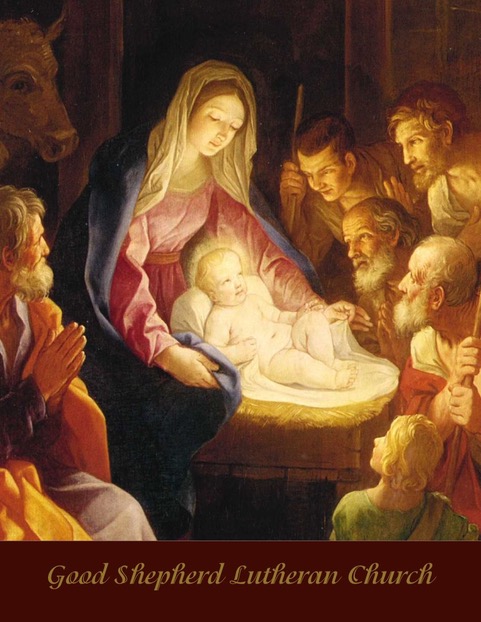
You have heard Jesus often say the phrase, “O ye of little faith,” in the Gospel records. Seldom does He speak of someone having great faith, but that’s exactly what he does when He finally answers this Canaanite woman, a Gentile who clearly belongs outside of God’s holy nation of Israel. Or does she?

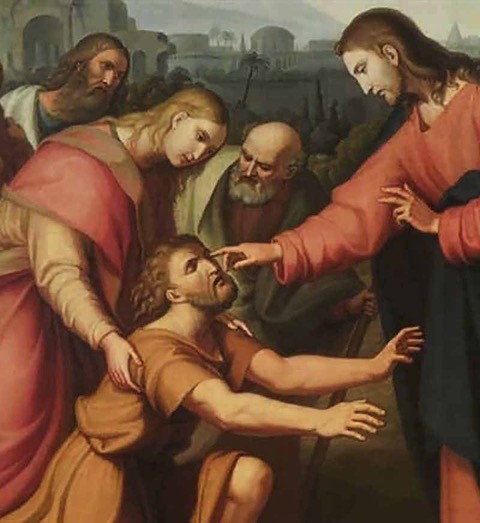
This conversation that the woman has with Jesus is an excellent description of prayer as our Lord Himself has directed for us to pray. We approach our Lord on our knees as it were, begging for His undeserved mercy. We sinners can claim no right to the full portions of His love, however even the table scraps from His holy Table are more than enough to feed us for eternal life. When all our life and our experience seems to be telling us that Jesus is avoiding us or even punishing us by turning His face away, we can still confidently lay claim to His definite promises in His Word, and we can know for certain that He will always hear our prayer and answer as He wills for our own good. Martin Luther wrote in the Catechism, “We are neither worthy of the things for which we pray, nor have we deserved them, but we ask that He would give them all to us by grace.” (Lord’s Prayer, Fifth Petition) That’s what this foreign woman did, and Jesus responded, “O woman! Great is your faith! Be it done as you desire,” and the demon left her daughter at that very hour.

How come she can have it so easy, though? Doesn’t God know that my prayers don’t get answered like that in real life? Is this Bible story meant to tell me that I don’t have great enough faith, because I still have these unresolved problems? You may have friends like Job had, that is, those who surround you, sometimes comforting you, sometimes lending you a listening ear, but at other times they’re trying to diagnose your ordeals as something that’s wrong with you; something you need to do better in your life so that God can bring you the peace that you desire. Then this story of the Canaanite woman is thrown in—see,
you need to keep asking God in prayer and never give up. You need to commit your life to Him more earnestly as a disciple, and not just a casual believer. Your faith needs to be great. You need to believe in the power of prayer from the bottom of your heart. You need to be like Peter and get out of that boat walking on the water!
But such encouragement, however well-meaning it might be, often has the opposite effect, and you could feel driven away from God, despairing of His answer, or any answer at all. You even sing the words, “We should never be discouraged, take it to the Lord in prayer,” but all you see in your mind is that disapproving little finger wagging, no, no; you’re not trusting in Him.

At those moments, you certainly are feeling the full effect of God’s condemning law. You can tell quite clearly that you haven’t measured up to His commandments, that you haven’t fulfilled your daily calling in life, family and society the way He wants you to. Your prayers may have dried up. We may feel anger inside that the Lord has taken His sweet time in getting back to us, but even deeper down we can find a possible reason why we shouldn’t expect anything but trouble, hardship and punishment for our sin. It is that impossible perfect standard of righteousness that puts out the forbidding hand, and calls us what we really are, a miserable dog. Nothing more to do than to get shoved out of God’s presence, head down, tail in between your legs. How spiritually uplifting is that? Who would ever wish for that kind of Christian life?

But it is precisely in those kinds of depths, when you’ve totally given up on anything you’ve got with you, when you’re so tapped out spiritually that you’re too ashamed to talk to any other Christian about it. That’s when the Lord is near, when He’s ready and eager to hear your prayer, ready to bestow great faith in your heart. For that’s when you acknowledge that of yourself you are weak, and in that very weakness, Christ shows you He is strong. This is the proper lesson to learn from the Canaanite widow who dared to approach Jesus. Her persistence with the disciples, and later with Jesus Himself, bore witness not to any self-confidence that she had inside. Rather, her motivation came both from a loved one’s need, namely that of her daughter, and the Word of God that she had heard concerning Christ the Lord, the Son of David. By God-given faith worked within her by the Holy Spirit, she trusted that Word, even more than when she experienced that initial rejection from the Savior’s own mouth.

Jesus immediately recognized His own handiwork when He commented on the Canaanite woman’s great faith. He noted the power of His own death and resurrection that energizes all Christian faith and prayer. In a strange twist that only God can do, it was Jesus within that woman praying unceasingly to Jesus to have mercy on herself and requested healing for her daughter. You can see why Jesus responded with such amazement, because in the midst of her weakness, this woman wielded the very power that He already gave to her!

You should take note of this, too, that is, your confidence in the Lord comes not within yourself, it comes from Christ, who is pleased to dwell within you and pray with you, even when you don’t feel the strength to pray yourself. When you pray, remember it’s Jesus doing the praying, which is obvious when you think about the Lord’s Prayer: it’s not your prayer to keep to yourself, it’s His prayer for you to pray with Him and with one another, and even at those times when you’re praying alone. That’s the way you acquire great faith and live a vibrant life of prayer. If you keep trusting in yourself, and insist it’s your own positive-thinking that will get you through your struggles, then you’ll remain disappointed, because you will still struggle against your sinful flesh with its impure desires. But Christ and His prayer are perfect; it uses God’s own powerful Word, so it accomplishes whatever He says.

When you offer your requests both for yourself and for others, recall Jesus and all His prayer as He made His way closer to the cross. In your weakness and suffering, remember He has gone through it too, and He is with you to bear your burden for you on His shoulders. Admit your sins, confessing them to the Lord, and they’re gone. Be comforted that as a baptized child of God, you have bathed in the cleansing Blood of Christ, and you appear in God’s sight as clean and clothed in white as snow. Whenever you think of Jesus on the Cross, His bitter death and His glorious resurrection, be reminded that all of this and more is your heavenly Father’s gift to you without any condition, except He has commanded you in faith to ask for it, and ask in abundance!

And though your chastened heart, who along with the Canaanite woman sees yourself as no higher in the Lord’s house than a dog, and after considering your own sin, you would be content with only table scraps, you have been promised much more. Yours is instead a lavish feast of God’s forgiveness. You were once an outcast, even worse than a Canaanite, but by Christ’s sacrificial blood you have been brought near to His holy presence as His blessed child and heir of His guaranteed promises. May His unfathomable grace give you great faith, so that you ask for yourself and for your loved ones not the temporary things that your sinful nature wants, but the Holy Spirit and His gifts, which your Father in Heaven knows you need.

In the Name of the Father and of the ✝ Son and of the Holy Spirit.

Purple Altar Parament

Readings:
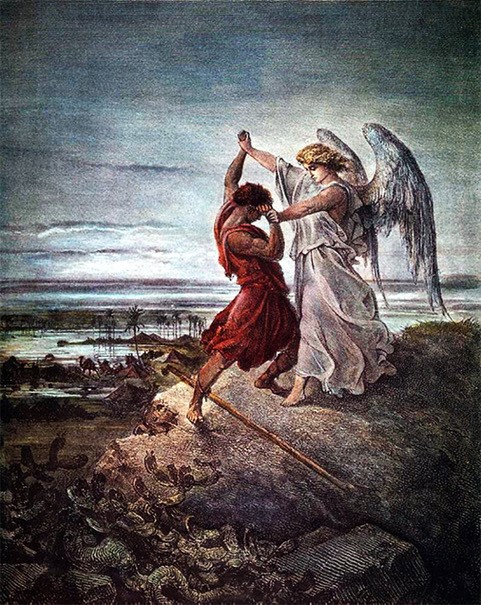
Gen 32:22–32 a Man wrestled with him until the break of day
Psalm 121 I will lift my eyes to the hills
1 Thess. 4:1–7 This is the will of God, your sanctification
or Rom. 5:1–5 having been justified by faith, we have pace with God
Matt. 15:21–28 even the little dogs eat the crumbs which fall from their masters table
No Fear, No Shame

Good Shepherd Lutheran – Yucaipa, California
February 24, 2021 – Midweek – Lent I
✝ ✝ ✝ ✝ ✝ ✝ ✝

Whoever said God was watching us from a distance, didn’t appreciate or take too seriously the fact that the very Son of God came down to earth and was incarnate by the Holy Spirit. God became one of us, one with us, one who went through trials, struggles, disappointments, fears right alongside us. Watching us from a distance was the last thing God wanted to do. So He sent us Jesus, who is our Great High Priest.

What is a Great High Priest? Let’s go through that in reverse order.

First, a priest. God spoke to us in our fallen, sinful world right from the very beginning. He also right from the start selected certain go-betweens to serve as His representatives to all. Adam was the selected priest for Eve and their children. Moses was the designated representative for the wandering Israelites until his brother Aaron became a priest. Pastors are ordained to speak God’s Words and apply them in ongoing pastoral care. You have been consecrated as a priest, too; only your priestly work is specialized in your own vocation with your own set of neighbors that you serve.

God uses His priests to speak His words of Law and Gospel, warning and comforting, discipline and love to all who would hear it. His priests also offer their lives up in service as a sacrifice of sorts that serves to the benefit of those to whom God has given them. You are doing a priestly work when you pray for those who are sick, or for those who need God’s special touch of forgiveness and life in their souls. Jesus is a priest for a very important reason. A human being can only be a representative or substitute for another human being. Jesus has our same flesh and blood as we do, yet He is without sin. That too is a necessity of being a priest—purity. Either the priest has to be cleansed and made pure (that’s true for you or for me), or in the case of Jesus, the priest already is completely pure.

Second, He’s a High Priest. Jesus is not specialized, in a manner of speaking. His priestly work extends generally to all people everywhere. He is above all other representatives that God has selected because He is God Himself. There is not one human being who has ever existed that Jesus has not known their struggles or their cares. Not one person is outside of the love of God extended to mankind through the sacrificial death of Jesus on the cross. As High Priest, true God and true Man, Jesus alone has the right to forgive us and claim us as His very own, because He did all the work to make that forgiveness and redemption happen. Not just made it possible, Jesus accomplished it perfectly for our sake.

And that brings up the Third part, the Great High Priest. Jesus as High Priest accomplished our salvation and on the third day He rose from the dead. He ascended in full divine glory to heaven to announce our heavenly destiny is assured. Our place in the Father’s house is being prepared as we speak. No other high priest will do. Jesus is our Great High Priest. Because of Him we have two huge, monstrous results of sin removed and done away with. Those two obstacles are fear of the devil and shame before God—they’re gone!

Fear is the devil’s only weapon that can attempt to gain traction on us. Our sinful, self-centered human nature fears that God might be hiding something from us. “Did God really say?” was the devil’s attempt to plant fear and doubt in Eve’s and Adam’s mind, as we read this week from Genesis 3. We can easily fear that God doesn’t have a good outcome in mind for us. The suffering we must endure seems like God has turned against us. The devil preys on those fears and we take our sights off of Jesus. But when we turn to Jesus and trust in His work for us as our Great High Priest, that removes our fear of the devil, or the fear that the devil uses to keep us separated from God. He says, “Love casts out fear.” Love is God’s own assurance that He will always be with us. In Christ we have God’s assurance of our forgiveness, renewal of our heart and our certainty renewed in the life of the world to come. With the fear of the devil removed, we have renewed confidence as we trust in God no matter what fearful events may occur in our lives.

Our renewed confidence testifies to another obstacle that has been removed, and that is shame before God’s almighty judgment. We deserve to be shamed with everlasting punishment and separation from God. But Jesus Christ stepped in and endured the entirety of that punishment and that shame. Jesus knew no sin, He was sinless, but He who knew no sin, became sin for us, so that in Christ we might become the righteousness of God. The Father actually punished Jesus as though He were a sinner, in fact, since the sin of the whole world was laid on Jesus’ shoulders, He was punished as though He were THE Sinner. So great was the payment, the atonement, that Jesus offered to the Father as the price for the removal of our shame, that there remains nothing left for us to do in order to be able to stand without that shame or stain of sin clinging to us anymore.

We may feel that shame or iniquity in certain moments of our lives. The devil will try to remind us of sins of our past and attempt to convince us that those sins are too great, or that there’s some catch to the free offer of God’s grace. There’s somehow no way for you to be forgiven, so you may be led to believe. But none of that is true. Jesus is your great high priest. He was the great high priest when He fought the devil’s temptations in the wilderness for you. He is your priest now as you eat and drink the sacrifice of His body and blood in the Sacrament of the Altar. He will remain your priest as He intercedes for you to the Father, bringing to His loving ears your every prayer in His name. Rejoice in Jesus, your great high priest. Because of Him, you have your forgiveness guaranteed. You have no more need to fear the devil. Your shame of sin before God has been removed and you are in His eternal good graces. God does not watch you from a distance. He is right here with you now and always!

In the name of the Father, and of ✝ the Son, and of the Holy Spirit. Amen.

Pr. Stirdivant

Mercy and Truth

Notes

The Lord be with you!
The Latin title for the First Sunday in Lent (borrowed from the first word of the Introit, “When he calls”) is Invocabit. Now has begun our journey with Jesus as He draws nearer to the cross in order to die for our salvation. Before He offers up His life for ours, He allows Himself to endure the attacks and temptation of the devil in the wilderness. Because Jesus withstood the devil with His own very words written in Holy Scripture, we also have His power over the attacks of Satan. Our evil foe has no power over us, as Martin Luther instructed us to pray morning and evening.

Let us pray the collect for Invocabit:
O Lord God, You led Your ancient people through the wilderness and brought them to the promised land. Guide the people of Your Church that following our Savior we may walk through the wilderness of this world toward the glory of the world to come; through Jesus Christ, Your Son, our Lord, who lives and reigns with You and the Holy Spirit, one God, now and forever.
Amen.

Genesis 3:1–21
Satan took the form of a serpent, a creature that God had made, in order to corrupt and curse all creatures, pulling them away from God’s good pleasure. He approached Eve with his first temptation, even though Adam was also with her. Satan lured them both with the God-created goodness of the fruit, combined with the twisted lure for them to be like God. The merciful Father had not withheld every tree from His precious human creatures, but the knowledge of good and evil turned out not to be likeness to God at all, who is only good. Thankfully, along with the curse comes our first pronouncement of the Gospel promise in the Bible: verse 15. Jesus is the “seed of the woman” who will crush the head of the devil, even though He would suffer the enemy’s heel strike on the cross.

2 Corinthians 6:1–10
Satan’s temptations come in many forms. If he cannot lure us with good-looking things, he can attempt to tear us away from God through difficult trials in our life. Yet it is also true that suffering is God’s very own means of holding us closer to Him. We must constantly heed the appeal that the preachers of the Word make to us: be reconciled to God. This is our Lord’s true desire and it can only be fulfilled when we hear His Word and believe it with God-given faith. The faithful workers of God not only speak the Word, but demonstrate it with lives that have been formed in likeness to Christ.

Matthew 4:1–11
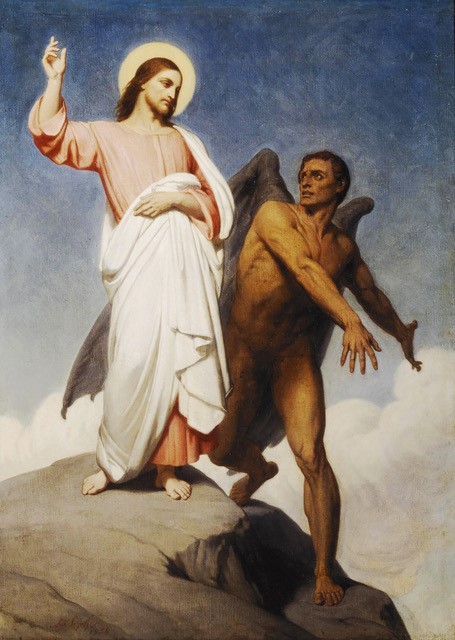
Jesus began His visible ministry on earth with His baptism, but then immediately He went into the wilderness in order to face impending starvation and temptation at the hands of the devil. Three times the adversary attacked Him and three times Jesus responds the same: It is written. Even when the very comforting Psalm 91 is misused as a way to trip Him up, Jesus has an answer from the very Bible that He Himself caused the prophets to write. That same powerful Word of God is our effective weapon against the attacks of Satan in our own life. We are, however, not left to ourselves to try to do battle with Satan on our own, for because Jesus vanquished the Foe on our behalf, we are confident that in Christ we have already prevailed.

Here’s hymn 562, stanza 6:
    We thank You, Christ; new life is ours,
    New light, new hope, new strength, new pow’rs.
    This grace our ev’ry way attend
    Until we reach our journey’s end.

In the name of the Father, and of the Son, and of the Holy Spirit,
Amen.

Pr. Stirdivant

Sermon for the First Sunday in Lent: February 21, 2021 jj
Rev’d Mark B. Stirdivant, Good Shepherd Lutheran Church, Yucaipa, California
✝ sdg ✝

All the Lord’s ways are mercy and truth (Tobit 3:2). That sounds pretty straightforward, easy to believe, right? God does all of that good stuff. I want the good stuff, so I believe in God. That’s a very shallow way to think of faith, but sadly, it is quite popular in our culture. Many Christians, including Lutherans, can get lured into believing some form of the idea of Karma. I know the name “Karma” comes from the Hindu religion, so right away you can perceive that it’s off-base somewhere in its philosophy, but really, all you’re concerned about is some kind of justice that’s gotta be out there in the world. That somehow those bad people are going to get what’s coming to them. That if you do enough good things, that you’ll get your reward eventually. I know that’s a tantalizing thing to believe, and it gives you great mileage in making you feel good when everything in your life seems cruel and unfair. But there are times when even Karma is not going to give you relief. There is no promise from God’s Word that backs up a hope that Karma, or whatever you call it, will settle everything. There is a promise from God’s Word about Jesus, and it is only in Him that we find God’s mercy and truth, yes, and even His justice.

Most Christians are very puzzled by the Gospel report of Jesus being tempted in the wilderness. If He couldn’t sin, then why was He tempted? If our Lord was going to do battle with Satan, then why didn’t He strike him and his minions down with a walloping battle assault? All this fasting He did, suffering, hungering and quoting Scripture words seem so weak, so unassuming. If you tried that, you would be laughed off as defensive and wimpy. What did Jesus do to deserve such disgraceful treatment? The idea of Karma would make no sense here! And wouldn’t it be better for the Lord to bring an end to all suffering, or at least to shield His own children more effectively and absolutely from the assaults and crafts of the devil? We are exposed to all the tricks of the ancient enemy, and it doesn’t make logical sense that we feel left out on our own in this world. But the Lord’s logic exceeds our understanding. His foolishness is wiser than our wisest wisdom. And His ways are not our ways. For all His ways are mercy and truth.

And that is how we must hear today’s Gospel of our Lord’s temptation, His testing. Not as some mythical story of good versus evil. Not as the first skirmish in the great battle between God and the devil. And certainly not as an example for what techniques and weapons we should employ when we fight our own battles, what courage we should muster, and what perseverance is required when we battle the devil, our own sinful flesh, the world’s various temptations it throws at us, our physical infirmities and the demons that torment our heart and mind.

This is a story of Our Lord’s mercy. He gives clear evidence that He has, and that He will, freely engage and beat back the devil for us. We don’t have that assurance whenever we assume that some justice out there in the great big universe is going to come around in our favor someday. Jesus shows that His promise to be for us is not an empty promise. He pointedly enters our fray, and immerses Himself in our misery. He put on your flesh, He fought your battle against the devil and sin. And He proves that He can and has overcome not just some evil forces, but the very devil that taunts and haunts you. He won your victory.

What you have heard today, then, is the beginning of your salvation. For until now in the Church Year, the continuing story since Christmas has all been promise and expectation, pledge and hope. But when the Spirit that came to Jesus at His baptism shoves Him out into the wilderness, when the Father inserts His Son into the middle of the devil’s playing field, plopped him down into Satan’s video game, when the Lord makes Himself vulnerable to demonic and diabolic tricks–then He begins to come through on His promise; then hope becomes real; and then the Word and pledge for your forgiveness and everlasting life comes true.

Yet you still may be tempted to hear this story as history-a true event, of course, but it took place long ago and it has meaning today only because it changed the course of events way back then. But the Lord’s mercy is not mere history. And His ways are not simply past events to set the world straight, or just evidence to prove that He can do it.

When Our Lord enters the wilderness to battle Satan, you must see that the Lord is entering your own wilderness. Not just some deserted place in Judea, but the desolation of your own heart and mind—all that hurts you, all that you have used to afflict others, that is what the Lord enters, makes His own, and suffers. As the Psalms continually pray, the Lord plants Himself squarely in our muck, our slimy pit, our mire and the filth we have made. He sits in the dust and ashes with us. He descends to the lowest part of our personal hell. He wraps Himself in the things that trouble us so deeply that we cannot find the words to confess or explain them. That is our wilderness. And there is Our Lord, in the midst of it, taking on our devils, fighting back our demons.

That is the Lord’s mercy. As you are hearing the Gospel today, that’s what’s going on in your heart to create it new again. I’m not lecturing about Divine blessing coming down mysteriously from on high. No philosophy of Karma coming around and rewarding good and bad as if there were some necessary balance between those two. I don’t give you simple words of comfort, vocal sounds that are psychologically proven to settle the mind and ease the heart. This instead is what you’re getting today, right now: The Lord Jesus becomes your sin, bearing your infirmities and weaknesses, washing them away in your Baptism and Absolution, enduring your grief, living your hell, dying your death. All the Karma that the universe can muster came crashing down on His shoulders, requiring Divine Justice solely from His nail-pierced hands!
And in the midst of that, He says, as the hymn sings:
    Hold fast to Me,
    I am your Rock and Castle;
    Your Ransom I Myself will be,
    For you I strive and wrestle;
    For I am yours and you are Mine,
    And where I am you may remain;
    The Foe shall not divide us.
That is the Lord’s way. And there is the Lord’s mercy for you. Not in some spectacular-looking battle between the forces of good and evil. But Jesus is right there in your wilderness, battling your devils, fighting back your demons, undoing your messes, and holding you so tightly to Himself that hell, death, devil and anything else cannot and will not snatch you from His hand. It looks to us like losing, but really, our Lord, the Word made flesh, quoting the written Word that you have today in your hands, He has won! The Bible does tell you so.

That is how you should hear today’s Gospel. For it is not just another religious story. It is the Lord sending His Son to have mercy on you. It is the Lord’s Word and sure mercies overcoming your greatest fears. It is the Lord placing Himself squarely between you and the things that threaten to undo you. It is the Lord giving you more than what Karma can ever give you—you have His strength where you have no strength. It is the Lord enduring and persevering even though your hopes fade and your faith wavers. Never fear, for all the ways of the Lord are mercy and truth.

And if that is not enough when you are really suffering a trial, remember as well that there are the holy angels who minister not only to Jesus, but He sends them also to serve you. Once, you were alone and without hope – helpless before the threefold enemies of your old sinful nature, this fallen world, and the devil. But now, with all the hosts of God’s kingdom, you too are able to sing with joy the words Martin Luther penned so long ago in celebration of the blessed victory of the Savior for us all:
    “Though devils all the world should fill,
    all eager to devour us,
    we tremble not, we fear no ill,
    they shall not overpower us.
    This world’s prince may still
    scowl fierce as he will.
    He can harm us none, he’s judged; the deed is done;
    one little word can fell him.

    The Word they (our enemies) still shall let remain,
    nor any thanks have for it.
    He’s by our side upon the plain (of our battle)
    with His good gifts and Spirit.
    And take they our life,
    goods, fame, child, and wife,
    though these all be gone, our victory has (still) been won.
    The kingdom ours remaineth.”

In the Name of the Father and of the ✝ Son and of the Holy Spirit.

Readings:
Gen 3:1–21 Has God indeed said, ‘You shall not eat of every tree of the garden?’
or 1 Sam. 17:40–51 he chose for himself five smooth stones from the brook
Psalm 32 I said I will confess my transgressions to the LORD
or Psalm 118:1–13 for He is good! For His mercy endures forever
2 Cor. 6:1–10 now is the acceptable time; behold, now is the day of salvation
or Heb. 4:14–16 we have a great High Priest…let us hold fast our confession.
Matt. 4:1–11 If You are the Son of God…

Sermon for Ash Wednesday: February 14, 2021 jj

Rev’d Mark B. Stirdivant, Good Shepherd Lutheran Church, Yucaipa, California
✝ sdg ✝

Return to the LORD your God!

Sermon for Ash Wednesday

Readings:
Joel 2:12–19 rend your heart and not your garments
or Jonah 3:1–10 the people of Nineveh believed God, proclaimed a fast
Psalm 51:1–19 Purge me with hyssop, and I will be clean
2 Peter 1:2–11 as His divine power has given to us all things that pertain to lie and godliness
Matt. 6:(1–6) 16–21 do not let your left hand know what your right hand is doing

Sermon for Quinquagesima Sunday: February 14, 2021 jj

Rev’d Mark B. Stirdivant, Good Shepherd Lutheran Church, Yucaipa, California
✝ sdg ✝

Sermon

Readings:
1 Sam. 16:1–13 Arise, anoint him; for this is the one!
or Is. 35:3–7 Strengthen the weak hands, and make firm the feeble knees.
Psalm 89:18–29 I have found my servant David
or Psalm 146 Do not put your trust in princes
1 Cor. 13:1–13 … but have not love, I am nothing
Luke 18:31–43 Jesus, Son of David, have mercy on me!

Sermon for Sexagesima Sunday: February 7, 2021 jj

Sower
Sower

Rev’d Mark B. Stirdivant, Good Shepherd Lutheran Church, Yucaipa, California
✝ sdg ✝

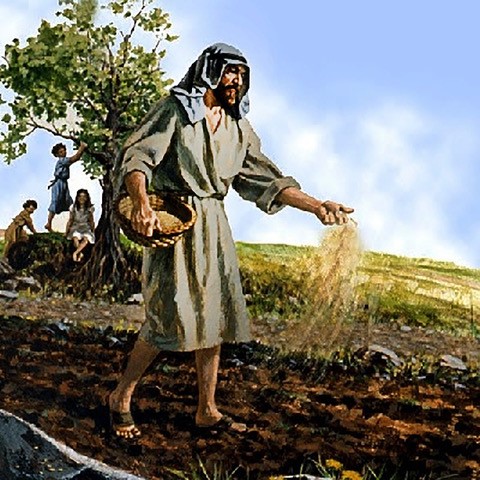
The Word of God is a doer. When most people think of the Word of God, they think of the Bible, a Good Book, an informer to mankind of what God wants us to know. That leads to the popular acronym for the letters in BIBLE: Basic Instructions Before Leaving Earth. I must tell you, as easy as that is to remember and fun as it is to share, the Word of God is much, much more than just instructions. The Word of God is a mighty, active doer, a creator, and even a preserver. If the Word of God were only instructions, then there would be no need to believe in it and put your whole trust in the Word of God. You would just follow the instructions, the seed would be sown in your heart, and the plant would grow—all would be well. And yet, we know that life as a Christian can get more complicated than that, so we need the Word of God to do for us and within us the mighty work that God has given His Word to do.

First, the Word of God is a seed. Even though it looks tiny and insignificant, a seed is a miracle of life. You can have a clump of cells smaller than a poppy seed, but that is still a baby girl that has started to grow in her mother’s womb. The Seed of the Word of God comes to someone who is born a sinner, dead, cold, lifeless in the spiritual sense, and in that barren environment brings to life a forgiven, redeemed, holy believer. This miracle is called faith, and it can only be created by the Word of God.

It was our heavenly Father’s great pleasure to call you out of the spiritual darkness called sin and death and bring you to new life. That was what the Word of God as a seed did in your heart. When you were baptized, and remember baptism is the Word of God joined together with water, when you were baptized not only were your sins and just punishments removed, but you were also made a child of God, a receiver of many precious gifts, forgiveness and eternal life being at the top of the list. This forgiveness was declared upon you in a particular form of the Word of God that is called absolution, and it was paid for by the suffering and death of Jesus Christ on the cross. Your promise of resurrection of the body and life everlasting was guaranteed when Jesus rose from the dead. This forgiveness and life is not given to you just once, but constantly, week after week, as you come to the Divine Service for the Word of God in scripture and sermon and as you eat and drink the Lord’s Body and Blood in Holy Communion. Our Lord constantly plants the seed of His Word in your heart and He intends for it to grow and produce fruits of good works that give Him glory and help the neighbors that God has given into your life.

Secondly, the Word of God not only plants faith in Christ within your heart, but that same Word waters, maintains and grows that faith for the rest of your life unto the life everlasting. Think about that story Jesus told about the sower casting seed over all kinds of soil. He explained the parable immediately afterward, saying these different soils are different people who have differing responses to the same Word. But I would challenge you today to think of those different soils as they occur within your soul. Sure, you may be hearing and meditating on God’s Word now and it produces great fruit in your heart. Your neighbor, your child, your loved one is benefiting from those good works that God has used you as His instrument to perform.

However, there are also times in your life when your soil is of a different quality. Sometimes we become callused to the Word of the Lord; too familiar this great gift and so our fear, love and trust in our heavenly Father doesn’t take deep root. Other times the cares of this passing world distract us from the Word. We get worried and concerned about our world’s political leaders; we get caught up in who said what and who wants to do yet another crazy, yet very predictable act of robbing our freedoms. Satan is constantly active all around us, threatening to choke out the seedling of our faith like a nasty thorny weed that appears unwelcome in the garden. Our nearly year-long pandemic has surely tested our mettle in not a few areas of life, but has it helped or has it hindered your growth in the Word of God?

What can you do when your soil is not as productive as it should be? What is the way that will improve your relationship with your heavenly Father and bring you closer to Him? The answer is the Word of God. And it’s not like those billboards that say, Are you scared? Jesus can help. Of course He can help, but how exactly? What really helps is repentance. What do I mean by repentance? For that you can turn to the catechism: Consider your place in life according to the Ten Commandments. Have you been self-serving, rude, quarrelsome with others? Have you failed to fear, love and trust in God above all things? The sharp, two-edged sword of the Word cuts deeply into you, revealing the sins that you have done, even down to the very thoughts of your heart. Without the powerful doer that is the Word of the Lord, you would be powerless to change your heart and be the fruitful, productive soil that would cause God’s good seed to grow.

And when you realize that God’s Word not only plants your faith in you but also nourishes it when times in your life are not going as well, then you understand the true power of that Word. Not only are you informed about Jesus and the sacrifice He made for you on the cross, but you also are taken up into His resurrection from the dead, forgiven of all your sins, consoled in your mourning heart, strengthened and preserved in the one true faith unto life everlasting. The Word of God does it all for you, beginning and sustaining your life-saving trust in Christ for eternal life. You were dead, but through His Word Jesus called you back to life, breathing His blood-bought forgiveness into you, and then you breathe out the same Jesus-filled forgiveness to your family members and neighbors who have sinned against you. This brings great pleasure to your Creator, for this is exactly how He made you to be and to act in accord with His Will.

The Word of God flows from God to us and back to Him again, as Isaiah sang. It’s just like rain coming down from heaven, watering the earth, flowing together into whatever body of water our Lord has designed to collect that rain as a sort of congregation, if you will, be it a small puddle like our church is or a vast and wide ocean. Then that water of God’s Word is spent in good works and returns to the Lord who gave it in order to complete the cycle that will not be halted until the end of time itself. If anyone can appreciate the precious resource that is rain for our land, it would be we who live in a land often ravaged by drought. Let us also appreciate just as much, yes, even more, the precious Word of God that He allows to rain down upon us, granting us the seed of faith, as well as the nourishment of that faith that leads to the good works of love that we owe to one another.

Next week we will begin the season of Lent on Ash Wednesday, which is not only a six-week preparation for Easter, but also a deliberate exercise of our hearts and bodies in repentance. If our observance of Lent only consists in making promises to modify our diets, cut out meat or sweets or renew whatever New Year’s Resolutions that we broke in the first week of January, then the whole point would be lost. What would truly make Lent a useful practice of repentance for you is, in addition to those outward disciplines and personal training, to focus your attention on the Word of God. Recall its great power to reveal your sins, but also the even greater power to wash those sins away in the flood of forgiveness that streams to you from the pierced side of your Savior Jesus Christ. He has planted His Word in you. He will even use His Word to cultivate that faith He has created in you. He will also bring your life to its completion, His good work that you are in His sight, on the coming Day when the final harvest will be gathered in and the eternal life we’ve been promised is realized in full. May the Word of God be for you from this day forward not only a talker, but a doer. His Holy Spirit has made it so.

In the Name of the Father and of the ✝ Son and of the Holy Spirit.

Readings:
Is. 55:10–13 My Word…shall not return to Me void
Psalm 84 Even the sparrow has found a home
2 Cor. 11:19—12:9 My grace is sufficient
or Heb. 4:9–13 let us be diligent to enter that rest … Word of God…sharper than any two-edged sword
Luke 8:4–15 A sower went out to sow

Epiphany – The Gift of the Christ Child

Magi

Sermon for the Week of the Epiphany of Our Lord: January 3, 2021 jj
Rev’d Mark B. Stirdivant, Good Shepherd Lutheran Church, Yucaipa, California
✝ sdg ✝

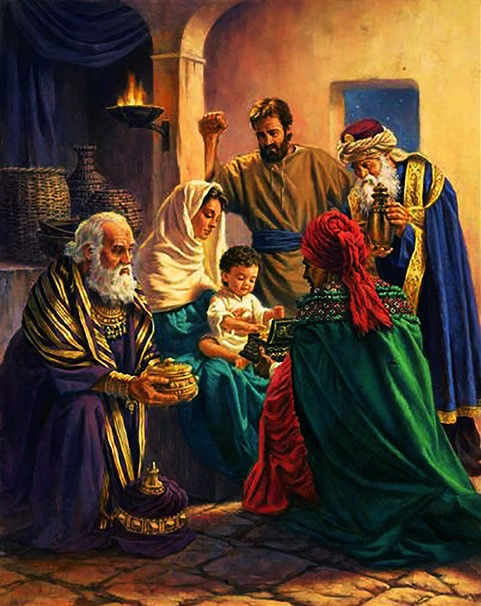
When this week we celebrate our Lord’s Epiphany, it’s almost too easy for us to fix our attention on either the Magi themselves or the gifts they bring, rather than the One who received their gifts. How many of these wise men were there? Were they really kings from Africa, Iran, or China? What was the going rate for the values of gold, frankincense and myrrh on the commodities market? We are curious not only because the Magi and their gifts were unique, exotic and mysterious, but also because that’s where we sinners in our fallen state naturally focus in. What I mean is that when we pay attention to the Magi, the gifts, the sacrifices they make to bring them, or simply, the manner in which they worship the little boy Savior, then that provides us an opportunity to elevate our offering, our stewardship, our sacrifice, and the way we worship Jesus.

But the gold, frankincense and myrrh aren’t really at the heart and center of the Magi’s visit, because our offering, our self-sacrifice and the way we worship, even the way we pray, should never be the heart and center of the Gospel message. What is most important is what Our Lord does and who He is. That God chooses to assume human flesh, bear our sin and be the whole world’s Savior, those things alone ought to elicit from us an offering and sacrifice – a glorious heartfelt worship which matches and exceeds anything the wise men may have brought to Jesus. And it’s not just how we respond to Jesus’ gift of Himself, because ultimately our response, offering and worship mean nothing and get us nowhere. To be sure, these things are good, simply because they are nothing other than the life and love of Jesus lived out through us in a way that simply receives what He chooses to give.

That’s the lesson of the Magi – that the focus must be taken off of them and directed toward Jesus alone. They would agree with John the Baptist: He must increase, we must decrease. The Magi and their gifts remind us that our offering and worship are not an equal this-for-that response to anything, but simply a reflection of what God is doing in and for us. The account of the Magi calls us away from our paltry contributions and our frenzied way of worship, and turns our heads around instead to the Gift of the Christ Child who is at work in us – not in what we do, but in who He is and what He gives and bestows by His Gospel in preaching and the God-given Sacraments. Consider how Herod wanted to worship Jesus – not by receiving from Him, not by exalting the gift He brings, not in the Liturgy of the Gospel, but in a way which he only thinks is good and right. Herod’s selfish worship began when he heard the confession of the Magi. However, instead of drawing him to Christ to receive His gifts, Herod’s heart was hardened so that his false “faith” rested not in the promise of the Gospel, but in what he determined was a threat to his own position and power. And that led not only to Herod’s destruction but also to the needless, heartless massacre of many innocent children.

In contrast, the wise men weren’t concerned at all with their worship or their gifts, but only with God’s grace and kindness. And that grace and kindness of God appeared to them not as an idea, a sensational feeling, or a grand hope of good things to come for the present world. Rather, God’s Love arrived in human flesh, in the Person of the vulnerable poverty-wrapped Child as He lay in the arms of the Virgin Mary. The grace and kindness of God, you see, isn’t an attitude, but a Person. And it’s not just any Person, but the very Son of God come down from heaven to become the sin that you and I are – and to be the Savior you and I could never hope to be for ourselves.

So, the worship of the Magi wasn’t only that they heard that Scriptural Word, but that they took it to heart and received it as the living, Word in the flesh that it truly is. The Magi believed that the promise of God is both resident in the infant Christ, and also given through His human flesh. And so they set out to find Him, not because they were curious, not because they needed to be fully convinced, and not even because they were willing to give up all they had for the sake of this Child. No, the Magi set out to make the long journey to Bethlehem – following the star in the East – so that they might worship God’s epiphany, which is the same as saying His appearance and arrival – His manifestation and incarnation in the Baby, Jesus, God and man in one Person.

And now it’s time to ask, what was their worship? It may have appeared as though their worship was to give gifts – but really, their worship was to receive. The Magi desired nothing more than to take in everything the Baby Jesus offers – everything the Baby Jesus is. Their faith is what led them to follow the star and not to be dissuaded. Their faith led them to receive this Child as He came for them – and for us all – in the flesh and blood of man. May our faith always lead us always in that same direction! It would be much better for us that we would not be dazzled and drawn away by so many other intriguing, but quickly fading forms of worship! Oh, that we could also have the kind of faith that’s satisfied and gratified not with what pleases us, but simply with what Our Lord is pleased to give and plant within us without measure!

By the preaching of this same Gospel which the wise men heard, and by the leading of the same star and light of the Holy Spirit, you and I have been given this true, right-worshipping faith – a faith which pays attention to the shepherding of Our Lord in the Ten Commandments and leads us away from our own sinful lusts and desires, our own self-pleasuring, and our own self-gratifying ways of worship. This is a faith which calls us to the Christ Child, that gathers us with the Magi, with saints and angels around wherever He chooses to be, that enlightens us so that we trust the Gospel promise more than the Law threat, that cradles us within His body, the Church, and unites us with Him in such a tight, close union that with His flesh and blood He makes a home, lives and dwells within us.

And with that faith comes the Life of Christ in you, a life that gifts you not with money, valuables or deeds, but with your whole life and being as a holy, lively and reasonable sacrifice to God. The sacrifice of God in Christ is now being reflected and lived through you as your God-pleasing worship – as the only proper response to the knowledge that in Christ everything in your life is a yes and an amen to the gifts God desires to give you every day. That’s the lesson of the Magi and the proper focus of the Epiphany Feast. May it be so all through the year and for all the days of our lives, until we meet Jesus face-to-face.

In the Name of the Father and of the ✝ Son and of the Holy Spirit.

White Parament

White Parament

Readings:
Isaiah 60:1-6 Arise, shine; For your light has come!
Psalm 24 Who may ascend into the hill of the LORD?
Eph. 3:1–12 that the Gentiles should be fellow heirs
Matt. 2:1–15 wise men from the East came to Jerusalem

The Name Jesus

Christ-Candle is lit.

Notes

The Lord be with you!
Merry Christmas! O Lord, our Lord! How majestic is Your name in all the earth! We have embarked on a twelve-day season that is rich with the joy of God, our Maker and Redeemer, as He came among us in our lowly human flesh. And yet the season is also tinged with the sacrifice of those who loved our Lord to the utmost. Sunday’s readings continue the Christmas mystery, the hidden gift of Jesus with a focused emphasis on His very name, which means the Lord Saves. Jesus is not only who our God is, but He’s also all that our God has done, is doing, and will continue to do unto eternity.

Let us pray the collect for the first Sunday after Christmas:
O God, our Maker and Redeemer, You wonderfully created us and in the incarnation of Your Son yet more wondrously restored our human nature. Grant that we may ever be alive in Him who made Himself to be like us; through Jesus Christ, our Lord, who lives and reigns with You and the Holy Spirit, one God, now and forever.
Amen.

2 Samuel 7:1–16
God’s identity and His activity are fused together into one: that’s His name, His reputation, His promise to the people in whom He is pleased. King David desired to honor God’s name with a house built by hands as a token of praise and thanks. The prophet Nathan would have gone along with it, if he were guided only by his own human wisdom; sure, it’s a noble thing to show honor to God, because by faith we’re confident of His mercy and love toward us. But then God revealed to Nathan, who passed along to David, yet a further blessing that took things to an even greater level. David would not build a house, that is, a structure, for God, as his son Solomon would eventually do. Instead, God would build a House, that is, a whole kingdom, for David. This house, this Zion on a hill, would be the Christian Church, dedicated and founded by David’s greater Son, Jesus. Unlike the earthly house that was eventually destroyed (several times in fact), God’s house in Christ would endure forever.

Galatians 4:1–7
The circumcision and naming of Jesus indicate, among many other things, the profound truth that God placed Himself under His own law. He needed to do this in order to procure our adoption into His grace. We have officially and legitimately joined God’s family, and the benefits of that status for us means we have the right and the privilege to call upon God as our own Father in prayer.

Luke 2:21–40
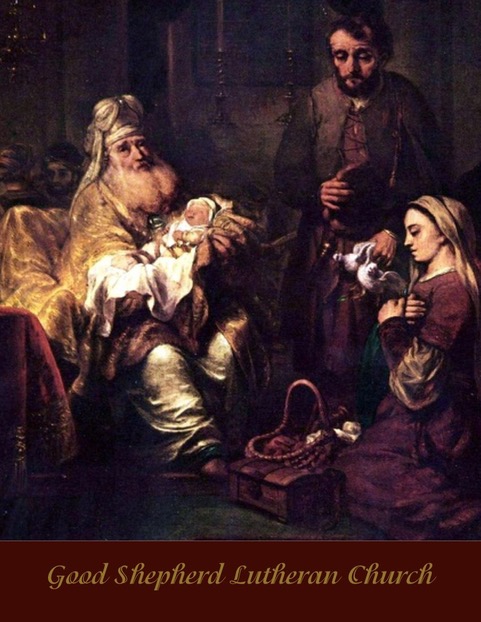
The Christmas Eve Gospel from Luke 2 ended with the shepherds spreading the word about the birth of Jesus. The very next verse continues the Christmas story with the circumcision and naming of Jesus, in accord with God the Father’s plan as it was announced by the Angel Gabriel. The name of Jesus is significant, and it is profound that His circumcision, His first blood sacrifice, accompanies it. How does the Lord save? How does He “Jesus” us? God must shed blood- His own true God and true Man blood. Only now do we fully comprehend what God was up to when He commanded the ritual of circumcision to Abraham so long before. This Gospel is all of one whole verse long on the actual eighth day of the Christmas season: New Year’s Day. Today, we follow it up with another major event in the infant life of our Savior, His presentation in the temple, the ritual purification of Mary, His mother, and the joyful Nunc Dimittis song of Simeon and the praise of the elderly widowed prophetess Anna.

Here’s hymn 358, stanza 13- from Martin Luther’s own Christmas hymn:
    Ah, dearest Jesus, holy Child,
    Prepare a bed, soft, undefiled,
    A quiet chamber set apart
    For You to dwell within my heart.

In the name of the Father, and of the Son, and of the Holy Spirit, Amen.

Pr. Stirdivant

Simeon

Simeon

Sermon for the Sunday after Christmas: December 27, 2020 jj
Rev’d Mark B. Stirdivant, Good Shepherd Lutheran Church, Yucaipa, California
✝ sdg ✝

When Jesus received His name, blood was shed. It was the eighth day that His true God and true baby boy lungs breathed our world’s sinful, polluted air. He was circumcised when He was given His name, and I’ll guarantee you, the Little Lord Jesus—lots of crying He makes! But for Him to receive the name Jesus, the name that the Angel Gabriel announced to Mary nine months prior, that name means God’s Love for us, but for Him, it meant pain and death. The name of Jesus is no mere identifier. It wasn’t used to distinguish Mary’s firstborn from all His other earthly family members, His legal father Joseph, His brothers and sisters. The name Jesus means everything Jesus is and all that He came to do. All the basics of the Christian Faith that we reflect on from the Catechism, namely the Creed, the Ten Commandments, the Lord’s Prayer—those are all summarized for us in one word, the name of Jesus.

Jesus is our Savior and our Salvation. He is our Forgiver as well as the Forgiveness we have received. He is the Host of the Lord’s Supper, and He is our Food that we eat at this Altar. This is Jesus: He’s Christmas, Easter, Pentecost, All Saints’ Day, the Last Judgment, all of it wrapped up for us as yet another gift from our True Love on this the third day of Christmas. When our Lord received the name of Jesus, He abandoned His legal right to firstborn sonship, placed Himself under His own Divine Law, and gave the full rights of adoption to us instead. The phrase, “we might receive the adoption as sons” sounds too iffy in the English translation. The original states it as a certain, unchangeable outcome for us—because Jesus received His name, your name is now child of God forever! The trade-off was made with no trade backs.

The world and its evil master once had slave ownership of you. The darkness that dominated you was deeper than the darkness of the womb where you began your life. The world’s elementary principles, as we read about in our Epistle, were your fundamental truths of life. Truths like: The moment you’re born, you begin dying. There’s never a free lunch. Never trust a stranger. Try to make the most out of life because what you see in this world is all there is. That was your previous taskmaster. That’s what ruled you with disappointment, despair, and the hammer-blow of destruction from the Law of God that demanded your punishment.

Then you said, Save me, O Lord, by Your name! Save me, with Your Jesus. Take my sin, my hurt, my pain, my misgivings about myself, my anxieties about the future, and carry that bloody burden on Your shoulders to the cross for me! I have nowhere else to turn. I have no other name by which I will be saved. I must turn only to Jesus. All His blood, from the circumcision knife in Bethlehem to the soldier’s spear on Calvary, that’s the name of Jesus for me. That’s how I now have the privilege to call out, “Abba Father” to the God who made me and all creatures, who has given me my body and soul, eyes, ears and all my members and still takes care of them. Jesus is my key to all those blessings and more. When I call out the name of Jesus, I possess right at this moment my forgiveness of sins, my resurrection of the body and my life everlasting—everything I was promised and had handed to me when I was baptized.

No wonder Simeon praised God and proclaimed he was ready to die at the moment he took the baby Jesus up in his arms at the Jerusalem temple courtyard. That location was the place God set aside for His name, as He promised long ago to King David in our Old Testament reading. And no wonder the elderly prophetess Anna flitted with exuberant joy from this person to that person, announcing the end of her fasting and the answer to her constant prayer. Her earthly husband had been long gone, but now she bore witness to the greater marriage of Jesus Christ to His Church, a union that will never be separated, this time not even by death. This is the name of Jesus to these saints and also to you. Israel received its Consolation. Jerusalem was redeemed from slavery. The same has happened for you in the name of Jesus.

There are just a few days left on the calendar for the year that, on average, most people I know would like to forget. As you talk about next year with just about anyone, you’ll encounter a whole lot of hope that’s riding on how 2021 will turn out. Where will the power of that hope come from, do you think? Will we just enter the new year with the same sins, diseases, failures and fears of the old year? How will we get the fresh start that we fervently desire? None other than by the name of Jesus. In the name of Jesus, resting confident in His assured pardon, we confess our sins. We admit our wrong doings of thought, word and deed. We abandon our selfish habits with more diligence than when we wash our hands. We silence our hurtful words more often than we put on our masks. If there was anything you knew without a doubt that would protect you from Covid, you would do it. Well, for your spiritual health, which is even more important, call on the name of Jesus, believe that you are saved by His name, for there is your single, absolute guarantee that Satan and this world will not separate you from the love of God.

Thanks to the bloody, salvation-rich name of Jesus, you are not placed under the harsh guardianship of the law anymore. You are now adopted into sonship, with full rights of inheritance that come with the name you’ve been given. You have been made a precious sheep, a lamb of the Good Shepherd’s pasture. The deep darkness, the valley of the shadow of death has forever been brightened for you with Christ the true light of the world. As you emerged from this womb of new birth, you are now governed by new elementary principles, new truths such as, the moment you were drowned and buried in Baptism is the moment when you truly begin living in the life that Jesus came to bring to this world.

The precious gifts of God cannot be bought with money, and they are handed out in His Church for free week after week. In this new life under Jesus’ name, you’ll find the friends who will remain friends even when they don’t have a way to benefit from you in any form. You’ll also find it easy to be that kind of selfless friend to your neighbors whom God has placed in your life. The agonizing, painful, mournful 2020s that we’ll ever come across in this life aren’t worth comparing with the certainties, joy, the confident assurances that God has prepared for you, better than even the best hope for 2021 could ever attain.

Now that the name of Jesus no longer means for Him a painful, bloody execution on the cross, He is glorified with the name at which every knee shall bow and every tongue confess Him as the Lord. As that Day draws ever nearer, He gives His name to you, He places His name on you so that you will receive an undying confident trust in the salvation that He gives to you along with that name. The name of Jesus distinguishes you from the world in which you currently live, a world that wants nothing to do with a Savior from sin, indeed a world that looks with eager expectation and hope toward anyone else but the true Jesus. You’re different, you stand out. You aren’t swayed by the appalling events that tell us the present world is passing away. You have the name of Jesus that far outshines anything this world could regard as good. You have what will last forever.

Today is the commemoration day of John the Evangelist, the one who unveiled himself at the very end of his book as “the disciple whom Jesus loved.” And near the end of his book John summarized his ultimate purpose in writing down what the Holy Spirit gave him to write. He said: “Jesus did many other signs… which are not written in this book; but these are written so that you may believe that Jesus is the Christ, the Son of God, and that by believing you may have life in His name.” Now you know a little more about what it means to “have life in His name.” That it means everything Jesus is, and everything He did, and still does, all out of Love for the world, and that name is yours for your life now, next year, for the rest of your life, and for eternity in the life of the world to come. The name of Jesus is how you know without any doubt that you have that life as your very own.

In the Name of the Father and of the ✝ Son and of the Holy Spirit.

White Parament

White Parament

Readings:
Isaiah 11:1–5 A rod from the stem of Jesse
or
2 Sam. 7:1–16 He shall build a house for My name
Psalm 89:1–8 For who in the heavens can be compared to the LORD?
Gal. 4:1–7 when the fullness of time had come
Luke 2:22–40 Lord, now lettest thou thy servant depart in peace

And The Word Became Flesh

Nativity
Nativity

Sermon for Christmas Day: December 25, 2020 jj
Rev’d Mark B. Stirdivant, Good Shepherd Lutheran Church, Yucaipa, California
✝ sdg ✝

And the Word became flesh and dwelt among us, and we have seen his glory, glory as of the only Son from the Father, full of grace and truth. (John 1:14)

Beloved, do not believe every spirit, but test the spirits to see whether they are from God, for many false prophets have gone out into the world. By this you know the Spirit of God: every spirit that confesses that Jesus Christ has come in the flesh is from God, and every spirit that does not confess Jesus is not from God. (1 John 4:1-3a)

Christmas marks a dividing line between truth and error. There’s something behind all the controversy that erupts each year! God became Man- that in itself is so shocking, so utterly unreasonable and offensive, that it drives people to deny the truth and promote error in its place. Over 2,000 years, do you know what people just can’t take? They cannot handle the truth of Christmas. They cannot stand the idea that the Word, the Logos, the eternal Son of God, had to become flesh, with all that implies with it.

Now we know, Christmas is not merely “cute.” Rather, it is raw reality that deals with the root problem of humanity. It touches on flesh-and-blood sin that brought our God to us up close and personal. That fleshly truth of Christmas may be controversial, but it is also crucial. Your very salvation depends on it! “And the Word became flesh.” No more unfathomable mystery was ever captured in such a simple statement. The apostle John was delving into a true mystery.

He started the Gospel account with: “In the beginning was the Word, and the Word was with God, and the Word was God. He was in the beginning with God.” It’s just like the opening of Genesis: “In the beginning. . . .” He’s saying that there is one called “the Word,” the Logos, who was eternally face-to-face with God and yet who was also God in substance, in who He actually is. This one called the Word was there “in the beginning,” that is, at Creation, which means he himself was not created. He is the Son of God, without beginning or end. “And God said, ‘Let there be. . . .’ And there was. . . .” That was the Word, the Logos, acting in Creation. So John says of him: “All things were made through him, and without him was not anything made that was made.” The Word is true God, from eternity, above all created things.

One event changed the world, and that was: “The Word became flesh.” The one who was true God, from eternity, at a certain point in human history, became also true man. The Word became flesh, became one of us, a flesh-and-blood human being, our brother. How can this be? It simply is. Our mind, our reason, cannot comprehend just how this is possible. But God declares that it is so, and faith receives this truth in quiet humility.

“The Word became flesh.” Why is this absolutely crucial to our salvation? Here’s why. The Word became flesh and dwelt among us, and we have seen his glory, glory as of the only Son from the Father, full of grace and truth.” Salvation depends on it, the one and only way to heaven, and there you have the controversy.

In the Old Testament the Lord God made his dwelling in the middle of the Exodus camp, a tent in the very center, surrounded by the tents of all the twelve tribes. This was the “tent of meeting,” or the Tabernacle. He came there to meet and interact with Moses and the people. That was His tabernacle, His dwelling. He gave His Word from there, protected them, fed them, forgave their sins using the appointed sacrifices. The cloud and pillar of fire led them while they traveled, then God rested at, or inside, the Tabernacle, His dwelling place.

As grand and miraculous as that was in the days of Exodus, John is writing that the appearance of Jesus in the flesh was even greater! His tabernacle of skin and bones, clothing and sandals was where He pitched His tent among us, to save fallen humanity. God’s Son was on a saving mission to pay for mankind’s sin and reclaim us, and he did it by becoming man himself. That’s what the little baby in the manger is all about. That’s what Christmas is all about: The Word became flesh in order to save us.

Why did God have to become man? Because our situation called for it. This is God’s plan, and it’s the only one that works. All of humanity, every one of us, had fallen into the death-trap of sin, ever since our first parents. We have spiritually fallen, and we can’t get up. We cannot save ourselves. Only God is able to do that. But at the same time God’s justice clearly demands: Man had sinned, and man must die. The sins can’t just be ignored. They must be paid for.

And so Christ Jesus—the Word made flesh–Jesus came, as a man, to do the job and fulfill the demands of God’s Law. Jesus, as a man, kept the commandments, to love God and to love neighbor, He kept them perfectly, and he’s the only one who has done that. Jesus is the one righteous man, totally innocent. He alone could take our place. Every person’s place, your place and mine.

As true God, his suffering and death have infinite worth, enough to cover the sins of all humanity. Jesus died as the sacrifice, our substitute, to pay the price our sins deserve. His perfect righteousness is counted as ours. And when Jesus rose from the dead, he showed that his righteousness and his sacrifice have indeed done the job and conquered sin and death. And so we are acquitted, declared not guilty, in God’s court of justice. A righteous man has been found to keep the Law. A man has stepped forward to bear the penalty of the Law against sinners, and that man is Jesus, the God-man, the Son of God come in the flesh to save us. That’s how it had to be. That ought to be enough to make Christmas so beloved.

That is why, though, the genuine Christmas is so hated. There are people who cannot accept the fact that God became man, that the Word became flesh, in order to suffer and die to save us. Why? Well, if I believe that, then it would necessarily say several things about me. It says that I have to admit I need saving, that I am a lost sinner, unable to save myself, and I don’t like to hear that. My natural man, the old Adam, hates that and hides from it, tries to hide from God. To say that it takes the death of the Son of God to pay for my sins…? You mean, I’m not good enough on my own? You mean there’s nothing I can do to merit or earn my salvation? No, I can’t have that. I can’t accept it. You see, the Word became flesh means I have to believe things that I don’t want to believe, or I don’t see the reason to believe.

Human beings want to change the message, to make Jesus one option among many possible faiths that will get you to the same place. Maybe they want themselves to be the gods they follow. You and I in our sinful natures want that. Anything but the Word becoming flesh to save us. Anything but that kind of Christmas.

It was the same even in the first century. The apostle John, by now an old man, the last surviving disciple, unbelievably had to deal with a heresy that rejected Jesus was the Son of God. His epistle, 1 John, repeatedly emphasizes for his hearers the absolute necessity that the Son of God did come in the flesh, and that his blood, shed on the cross as the sacrifice for our sins, is the only thing that will save us. It’s not by our attaining to some superior “knowledge,” so it was called.

A few centuries later, some other heretics called Arians denied that Jesus was truly God’s Son. Following Scripture’s words very closely, the church came up with a way to confess its answer to that challenge, to both affirm the truth and reject that error. Maybe you recognize these words they approved at their meeting concerning Christ: “the only-begotten Son of God, begotten of His Father before all worlds, God of God, Light of Light, very God of very God, begotten, not made, being of one substance with the Father, by whom all things were made. . . .” Yes, the Nicene Creed, at least this part of it, was written to combat the false teaching of Arianism and to affirm the true doctrine of the person of Christ. Who Christ is then goes hand in hand with the work He came to earth to do: “who for us men and for our salvation came down from heaven and was incarnate by the Holy Ghost of the virgin Mary and was made man.”

Still in our day the church needs to test the spirits- to be vigilant to guard this precious truth of Christmas. The official teachings of Latter-Day Saints, Community of Christ and the Jehovah’s Witnesses try to change the person of Christ to fit into their own religious inventions. Even more troublesome than that is any Christian pastor or author who either avoids talking about Jesus or only uses His words as life-coach advice on principles of success, or the Bible is a key to making lots of money. A different gospel is no gospel at all, no matter how popular it may seem.

Can you see why Christmas remains controversial? People don’t want a flesh-and-blood Savior who has to die for them in order to make them acceptable before God. So they’ll change Christmas into a collection of cute little harmless feel-good traditions about Santa and reindeer and hot cocoa and warm family memories. And not that there’s anything wrong with Christmas fun. It’s just that the fun part can’t do what your flesh-and-blood Savior can do.

What can he do? This Jesus, born in a manger–he can save you! He does save you! Even to this day. He grew up and died on the cross for you, to do the job. Now you are forgiven, now you are God’s child too. Celebrate this truth! Rejoice in it! God is with us, to save us, in the person of Christ:
    Veiled in flesh the Godhead see,
    Hail th’ incarnate Deity!
    Pleased as Man with man to dwell;
    Jesus, our Emmanuel!

“And the Word became flesh and dwelt among us, and we have seen his glory, glory as of the only Son from the Father, full of grace and truth.”

In the Name of the Father and of the ✝ Son and of the Holy Spirit.


White Parament

White Parament

Christmas Eve

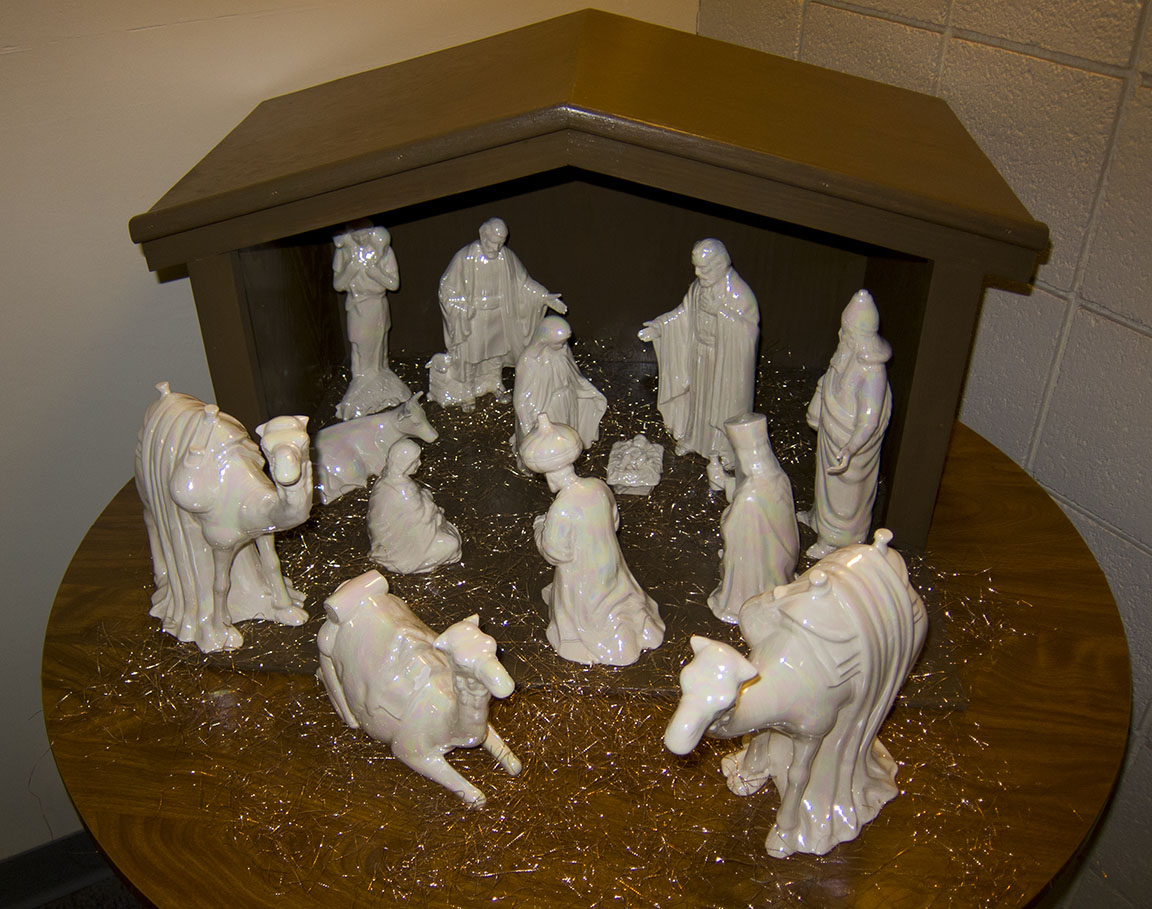
Nativity Scene
Nativity Scene

Sermon for Christmas Eve: December 24, 2020 jj
Rev’d Mark B. Stirdivant, Good Shepherd Lutheran Church, Yucaipa, California
✝ sdg ✝

As the sun set in Eden’s garden on the day that changed the world, Adam and Eve were afraid. God first came to earth perhaps amidst the angels’ heavenly singing and the joyful response of nature praising her Creator. (Job 38:7) But our first parents still had much to fear that day, for they had just rebelled against their Lord. They had eaten from the tree of knowledge of good and evil, counter to the Creator’s explicit warning that on the day they eat that fruit, they would die. God had meant to create so that He would bless the creation; now, due to sin, which has no place whatsoever in His presence, God had to force Himself to curse as He had threatened. Three curses were uttered: the first one was against the evil serpent who deceived Adam and Eve, declaring to Satan that the woman’s Seed would crush his head; the second curse was upon the blessing of childbirth—not to take the blessing away, but to increase its pain and to introduce a desire for the woman to be at odds with the sacrificial-giving authority of her husband. The final curse was upon the ground, reminding Adam, indeed, telling all of humankind that we were responsible for plunging the world into the night of sin.

And so, night did fall on God’s green garden paradise of earth. It was a spiritual night that showed little promise of coming to an end. You thought a pandemic seems endless? Sin afflicting a perfect world is worse! The sunrise and warmth of the heavenly Father’s shining face was veiled in the fresh blackness of evil. Mankind has since that fateful day devised new and even more hideous ways to propagate the curse of sin, making society darker and more devoid of Divine Light than ever before. You could almost see the tear in the eye of the Biblical author of Judges when he wrote those last words of the book, “In those days there was no king in Israel. Everyone did what was right in his own eyes.” (Judges 21:25) God’s people were alone, in the dark, the promise forgotten, the curse remaining. Ever since the sun set in Eden, it has been a spiritual nightfall on the earth, with people even to this very day walking about in their spiritual lives with arms out, crashing, stumbling without regard to the light of God’s Word, destroying one another, as well as themselves.

You may be painfully aware of this curse of darkness yourself. You may have been alienated from the rest of your family. Especially in a year like we all have had, you could have lost your job or your means of supporting yourself has otherwise been cut off or cut too short. You could have ended the school term with a load of guilt over not doing the assignments and all the studying that you should have. Parents turned against children, workers turned against bosses, inner-cities turned against suburbs, and sadly, there’s even church turned against church at times. No amount of worldly “Christmas spirit” can shine enough light into this darkness. No return to so-called normal, no parties, decorated trees, stuffed stockings, holiday cheer, no sanitized donations to the bell-ringers’ buckets, or even night-time visits with three ghosts can reverse the curse.

Our sinful world owns up to no king, everyone does that which is right in his own eyes. Your sinful nature and mine are quite at home in the darkness, yet we’re never content with the sins we have, as we’re always craving after more. And so darkness continues for you, inspiring fear in a heart that was instead created to love. It’s something you can feel deep within, and the curse seems to get stronger, and the only thing you think you can do is ignore it, go about your life, look out for number one, keep yourself safe and healthy (bodily speaking) and deal with all this spiritual stuff later.

That’s what the shepherds were hoping to do. The sun had already long set, and they were settling in for guarding their flocks during the several night watches in which their familiar fields were always getting plunged into disorienting darkness. But it would not be business as usual for these animal-watchmen on this night. Even though it was the middle of the night, they would witness the dawning of another day, a day that would change the whole world’s history yet again. The shocking appearance of the angel shining with the Glory of the Lord not only gave light to their immediate surroundings, brighter than it would be at noon, but that heavenly appearance also shone God’s holy Light into the darkness of this world’s spiritual nightfall.

Just like their ancestors Adam and Eve, the shepherds were afraid on that day that changed the world. The appearance of the angel struck a massive fear into their hearts that the King James Version describes for us as “sore afraid”–you could say they were afflicted with a fear so great that it hurt deep down. But to counter such great fear, the angel messenger greets them with the all-important and often-recurring opening words, Do not be afraid! When the words of God’s messenger say, do not be afraid, then He causes that very thing to happen. Only the powerful Word of God Himself could turn their hearts to hear the Good News. And the Good news is this: Today, on this day above all days, a Savior is born, a Light to shine in your darkness, a Light that will not be overcome by the darkness you and I suffer from this world, and the darkness you and I inflict on this world. Angels sing on earth once again, for God has come to walk among His people in the midst of His creation, this time not merely strolling one evening through the Garden of Eden, but rather walking about in real human flesh. In fact, Jesus has now lived in human flesh as our Lord and Savior for over 2020 years. The incarnation, that is, the coming-in-flesh of Jesus is the good news of great joy that is announced and celebrated by the singing angels. With all of the bad news that assaults us in abundance, He is the Light that our dark world needs.

And so it is also for you, the Good News of great joy is precisely the news of your forgiveness, the news of new life in the midst of death. In a magnificent turn of events, the first curse that was threatened against Satan, the prophecy that Jesus would come to crush his serpent-head, will be fulfilled in the cross. The Baby Boy born at Christmas would on the next great day in history, that being Good Friday, be put to death, with darkness enshrouding the earth, only to arise with the sun on the first Easter morning.

What is amazing about all this is that once the first curse is carried out to completion, the others are set in reverse as well! The second curse upon childbearing brought forth a Savior, born without taint of sin from the Virgin Mary. The curse that was cast on the ground, as far as that curse is found in this world, will be replaced with God’s flowing blessings instead. Joy to the World, indeed!

If you mourn, if you are sore afraid, if you are stricken with any of sin’s painful fallout, you often find it is most difficult to deal with it at the holidays. Yet, even in the midst of deepest darkness, when even the days themselves lack light the most, the true Light of Christ shines the greatest in the Good News of great joy to dispel what afflicts you in your life with pain and fear.

The sign for the shepherds was that they would find a wrapped-up baby in a manger. Notice that the angels did not need to command the shepherds explicitly: “Stop what you’re doing; go to Bethlehem, do not pass ‘Go.'” All they needed to do was reveal to them the sign. For it is the sign alone that gives them the permission, the invitation, and even the inner compulsion, to go find that Christ Child. How could they possibly stay out there in the fields after all this has been told to them? Here is the very simple sign by which you will behold the world’s Savior—wouldn’t you go to the utmost limits to search for that sign? Wouldn’t you make arrangements, even at great cost, virus or not, to visit with Jesus if you had the opportunity? The shepherds came with haste, the Scripture says, teaching us well by their example.

Simple ordinary signs of Jesus the Christ Child will point you to Him tonight. The Holy Body and Blood sitting front-and-center on the altar take the place of the baby lying in the manger. The flesh that was for a while limited by time and space is now placed into the manger of your own hands and fed into your own mouths. May the appearance of this ordinary sign be your encouragement, invitation and inner compulsion to receive the grace of His forgiveness and life. Do not forgo this great joy that is for all people. If you have a friend or family member that is not yet a communicant united with our confession of the true faith as laid out for us in Scripture, I urge you to help that person learn the faith and confess it as their own, so that soon he or she would no longer remain deprived of this wondrous Christmas gift of all gifts.

Refuse the darkness that makes you sore afraid, the darkness that creeps inside your heart, trying to kill your joy and instead be warmly welcomed by our Savior and His Bride, the Church into His marvelous light! Rejoice in His coming again for you to see fully the new day that is about to dawn upon this dark world. Be confident, knowing that the curse that darkens your life and our world has been lifted by our Savior, Christ the Lord. There is no curse now, only blessing. Let your King turn away the sadness, fear and lack of contentment that prey on you. Bask in the warmth of your Heavenly Father’s love, for His face is shining upon you, the face that was revealed to the world first during the night in the smile of a baby boy looking up at His virgin mother.

In the Name of the Father and of the ✝ Son and of the Holy Spirit.

White Parament

White Parament

Readings:
Is. 9:2–7 For unto us a Child is born
Psalm 96 Oh, worship the LORD in the beauty of holiness!
1 John 4:7–16 Beloved, let us love one another
Luke 2:1–19 a decree went out from Caesar Augustus