Category Archives: main

Best-Kept Secret

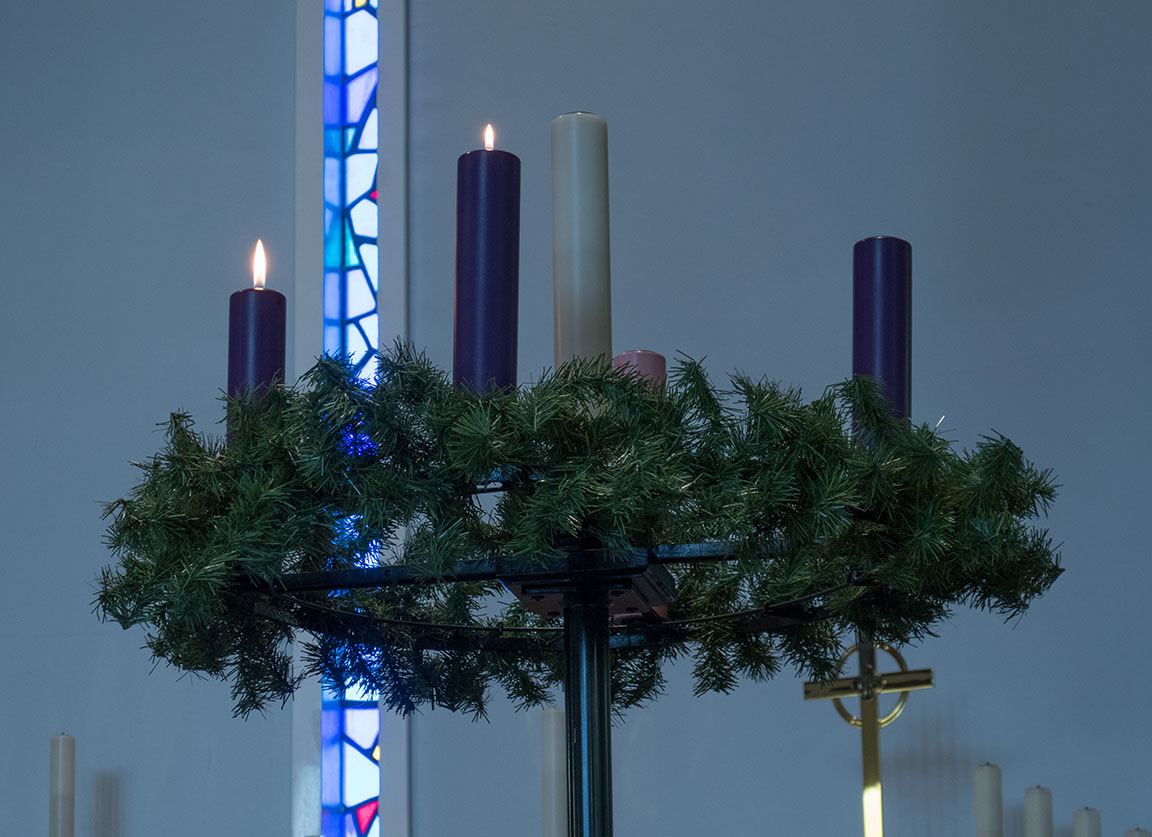
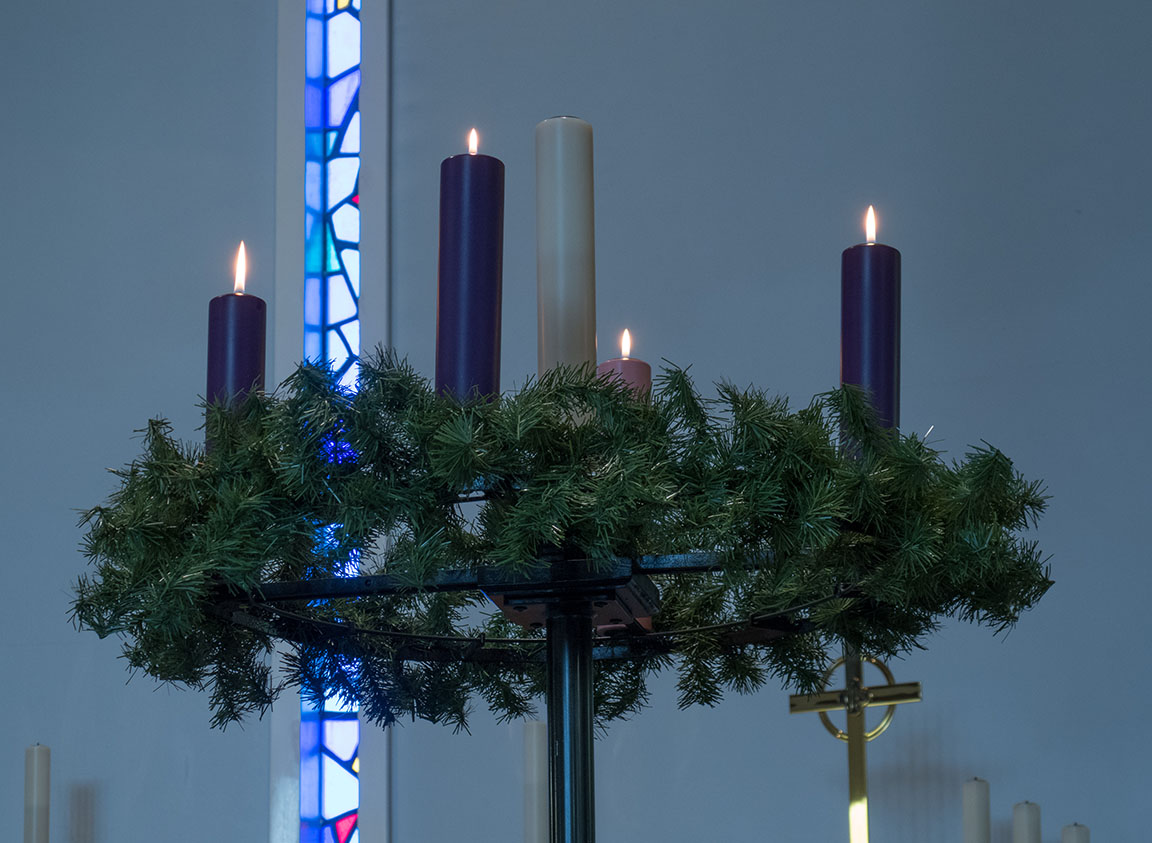
Advent Wreath, 4 candles lit

Advent Wreath, 4 candles lit

Notes

The Lord be with you!
Shower, O heavens, from above, and let the clouds rain down righteousness! This is the Fourth Sunday in Advent, and all four candles on the Advent wreath are lit. Christmas is within days, and we conclude the Advent season with one more message of repentance from John the Baptist. As fall gives way to winter in our area, we see impressive clouds and cold winds, but the rain showers do not seem to follow. God’s rich blessing of righteousness, however, rains down generously exactly as He has promised- Jesus came in our flesh and our sins were washed away in a magnificent cleansing torrent.

Let us pray:
Stir up Your power, O Lord, and come and help us by Your might, that the sins which weigh us down may be quickly lifted by Your grace and mercy; for You live and reign with the Father and the Holy Spirit, one God, now and forever. Amen.

Deuteronomy 18:15–19
Who could have imagined a greater prophet than Moses? He went up the mighty Mount Sinai and talked to God, first through a burning bush, then later through a pillar of cloud, lightning, fire and thunderous voice. The face of Moses glowed so that he needed to wear a veil over his face to dim the brilliance of reflected Divine glory. But as great as Moses was, a greater prophet was promised back when Israel camped for the last time on the Jordan river’s bank. Moses could only see the land from a mountain above and afar, but Jesus, the greater Moses and greater Joshua leads us in through His death on the mountain of Golgotha.

Philippians 4:4–7
When the Lord is at hand, we who are found in Him can do nothing else but rejoice, and if it meets with any doubt in your heart, then it bears repeating: rejoice! With the Lord at hand, that is, God with us (Emmanuel), we have a new attitude toward God and our neighbor. St. Paul’s word for this attitude is translated as “reasonableness”, “moderation”, “gentleness”. It’s the same idea that Peter is getting at when he advises us that “love covers a multitude of sins.” (1 Peter 4:8) It’s an attitude governed by a new perspective we have, knowing that our gracious giver of eternal gifts is here- why are we going to major in the minors when our fellow Christians occasionally irritate us with their unintended shortcomings? Rather than insist on what we think we deserve, rather than dwelling with an anxious heart on what we lack, we let our requests be known to God in prayer, for He has already known and answered us in Christ.

John 1:19–28
John the Baptist caused quite a stir in Jerusalem. A streaming crowd went out to him in the wilderness to hear his preaching of repentance and receive God’s forgiveness through John’s baptism. Many heard about the coming Messiah whom John constantly proclaimed, but there was still confusion, thanks to the hardness of men’s hearts. This ignorance got so severe that Jewish leaders sent some of John’s own closest relatives—the priests and Levites—to ask him directly who he was! If the priests and Levites couldn’t figure out who John was, even though he was the son of Zechariah the priest and Elizabeth, also of the tribe of Levi, then they’re not going to get it when John points out the actual Messiah when His ministry and road to the cross begins.

Here’s hymn 353, stanza 4:
Jesus comes in joy and sorrow,
Shares alike our hopes and fears;
Jesus comes, whate’er befalls us,
Cheers our hearts and dries our tears;
Alleluia! Alleluia!
Comforts us in failing years.

In the name of the Father, and of the Son, and of the Holy Spirit, Amen.

Pr. Stirdivant
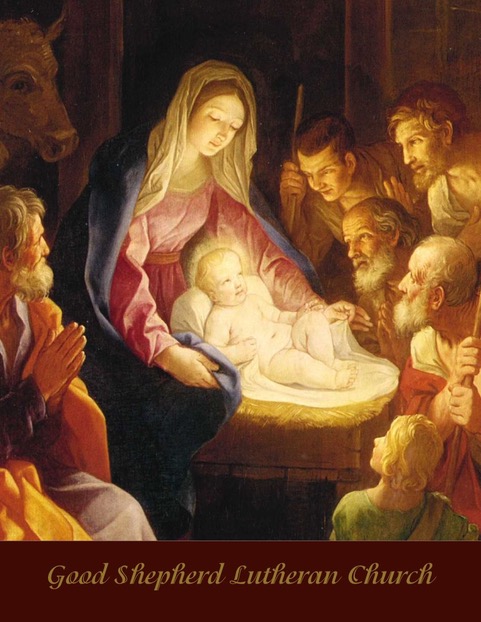
Nativity

Nativity

Sermon for the Fourth Sunday in Advent: December 20, 2020 jj
Rev’d Mark B. Stirdivant, Good Shepherd Lutheran Church, Yucaipa, California
✝ sdg ✝

What’s the best-kept secret that you can think of? Usually you think of a restaurant, a vacation spot, or someplace else where you don’t want a crowd to get in the way of your enjoyment of it. When a good thing gets too popular, then it becomes yet another hassle, and we certainly don’t want any more of those in our life. I ask you, should the Church ever be “our little secret”? Would we ever be right to keep the Gospel of forgiveness to ourselves? Of course not, and yet we do it. We know it’s just as necessary to speak God’s Word to our family and friends, and spread the Gospel, as it is essential to keep that Word pure and in line with the Bible. It remains true that Christ died for all people, and yet we can think of people we know who are not hearing that Good News.

You may have heard about the importance of witnessing, and I would say it’s absolutely important. Faith comes by hearing, so people need to hear the word of salvation in Christ. A so-called silent witness may do some good for your neighbor, and you would be an instrument of God’s blessing in their physical life, but not to the extent that using words would ever be considered as something optional. You can do a whole load of good for someone, and Christmas brings out a wealth of charitable activity both in and out of the church, but don’t fool yourself into thinking that you can get someone into heaven without the Gospel message. In fact, a silent witness, when he has a message to tell, has made himself a false witness when he’s chosen to remain silent. Lord, have mercy on us all, right?

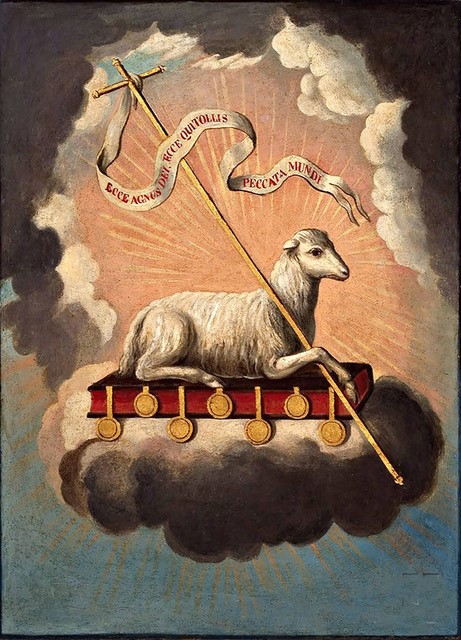
Here comes some help! The greatest witness ever born wasn’t afraid of being labeled as a “Jesus freak!” Christ himself said that John the Baptist was unequaled among all the prophets who came before him. He knew the One whom he served. He leaped with joy at the Lord’s presence, even when he was still in the womb. He was privileged to point to Jesus and declare, “Behold the Lamb of God!” He knew why Jesus had come. Because of this, he could invest his entire existence into preparing for Christ’s coming. Wouldn’t that be nice to throw all the distractions away and put everything into the hands of the Lord? Think of the mundane trivialities that John just shoved aside- what with the Camel’s hair clothes, a leather belt, locusts and wild honey to eat. He had more important things to take up his time and attention.

You have been distracted, you have let the responsibilities of your vocation, as important as they are, get in the way of speaking God’s Word to your neighbor. You have too often been consumed with frivolous and passing things—but you are not without help. In John the Baptist, you have someone who, thankfully, paid close attention to the Savior whom you have sometimes treated like a best-kept secret. John is not the Savior, as his hearers mistakenly thought, because a Savior is not going to whip you into shape and set you straight. John instead was going to prepare you for the Savior, and when He comes, John would point you in His direction! He won’t believe in Jesus for you, but he will connect you with Him through Baptism and the preaching of repentance for the forgiveness of sins. He will also model for you great courage and conviction, because to John, nothing else in this life matters next to Jesus. He must increase, I must decrease. And that’s the way our Advent preparation should be.

We as a struggling, weak-hearted bunch of forgiven sinners, have much to learn from John. He will teach us that there’s more to the kingdom of heaven than meeting a bottom line, of serving the idle whims of men, meeting their so-called “felt needs”, or even to have the perfect, snappy answer to all of their questions. John wasn’t afraid to upset the religious “status quo,” to ruffle a few feathers that needed ruffling, and even make people uncomfortable if they were secure in their sins. And when some really religious people were offended at being washed in the same Jordan River water with filthy Gentiles, prostitutes and tax collectors, then John the Baptist called them what they were—a hypocritical brood of vipers. How’s that for winning friends and influencing people?

How many times have you kept silence out of fear? Was it anxiety that you might upset a delicate family balance? Does your silence testify against you, that you might have missed your chance to bring peace to a lost soul, only because you didn’t want to feel uncomfortable for a short time? I am in the same boat with you—the warning sounds very harsh in my ears, too.

Thanks be to God that we have John, to set our minds on Jesus Christ and His comforting Word of forgiveness. Because if we just heard more encouragement, more rules, more requirements, and more funny stories, we would be lost. You can’t get a sinner whipped into shape. You have to drown the sinner in Baptism. You can’t make a sinner become a good witness. You have to kill the sinner with the Law and let the Lord raise up to life a good witness by the Gospel. John was a good preacher because he knew what he was and who he wasn’t. He wasn’t the Christ, or Elijah, or the great Prophet promised through Moses in Deuteronomy. He refused all high and lofty titles that could have been bestowed upon himself. He was the voice in the wilderness. He may have been a trumpet, but God was the Trumpeter. The note that sounded from John’s mouth was the Lord’s own voice speaking through him. He prepared his baptized and forgiven followers for a Baptism into Christ, that would fill us all with the Holy Spirit. And in joyful acclamation John pointed to Jesus and proclaimed, Behold the Lamb of God, who takes away the sin of the world.

This tune that John played wasn’t elaborate or focus-group-tested. Nothing was there to satisfy the desires of fellow Jews; indeed, his own relatives the priests and Levites couldn’t figure him out. John sounded a single note that continues to ring out loud and clear even now: “Repent. Be completely and permanently changed in your mind, and be turned from yourself to Christ.” That’s all John had to say, and he wouldn’t have cared what you or I or anyone thought about it. Given his perspective as we have it in these Biblical accounts, I’m willing to bet he wouldn’t have doubted that Covid was a bad disease, he just would have said, no matter what thing there is on this earth you fear that could kill you, eternal damnation is infinitely worse than that! He had nothing to lose when he preached, because he wasn’t holding on to anything earthly anyway. But to John, Jesus was everything. And that’s what makes him a great preacher of the Word for you. He calms your guilty heart with real forgiveness, even though he would refuse to sweep your sin under the rug. He gives you joy in Christ, yet it will involve the suffering and death of the cross—but although John did not live to see it, he knew that the precious blood of God’s true Lamb would take away his sin and yours.

Without a mission-minded guilt trip being laid on your heart, and instead with a forgiven, renewed heart freely granted you by the Holy Spirit through your Baptism, your mouths, like John’s will likewise open up with joy on the day when you are freed from anxiety over what other people will think, when you cease to look at yourself, and put your trust instead fully in Jesus. Like John reminds us, you and I are nothing, while Jesus is everything. The One whose sandals John wasn’t worthy to bend down and untie, is the very same One who willingly bent down from His lofty throne in heaven to wash away your sin and lift the burden of your guilt off of your shoulders, including the guilt of your sin of silence. It is gone, and the sinner you are is dead in Baptism. You often ponder the blessings you have been given in Christ, but think also about what Jesus took away from you. Even in a year like 2020 has been, you have nothing to lose that you haven’t already lost in Him. The best vaccine in the world can’t do what Jesus has done already! The worst that could possibly happen to you has already happened to your Savior, who stood in for you. And if others reject what you have to say to them about Christ, then they have really rejected Him, anyway.

Your Christian witness to others doesn’t have to be a burden. It doesn’t have to be a slick advertising program. It is your new life of joy in which you bask in the sunlight of the forgiveness of your sins, and the confidence of life everlasting. The Holy Spirit has moved you to think of and pray for others who are still captive in their sins, still walking about in the darkness, who are yet to see the great light. His Word in your mouth in your daily life and calling will proclaim release for every prisoner of death. You have healing and wholeness in abundance for the brokenhearted—and the holidays are a perfect time to start handing that spiritual wealth out. As John pointed the crowds to Christ the Lamb of God, so you have been anointed in baptism to declare the praises of Him who called you out of darkness into His marvelous light. Yes, it will involve moving you and them out of a certain comfort zone of leaving well-enough alone, but that’s all part of making sure that true Christmas joy does not become the Church’s best-kept secret.

In the Name of the Father and of the ✝ Son and of the Holy Spirit.

blue parament

blue parament

Readings:
Deut. 18:15–19 a Prophet like me from your midst … Him you shall hear
Psalm 111 The works of the LORD are great, studied by all who have pleasure in them
Phil. 4:4–7 Let your gentleness be known to all men
John 1:19–28 this is the testimony of John
or
Luke 1:39–56 Blessed are you among women
The True Comfort

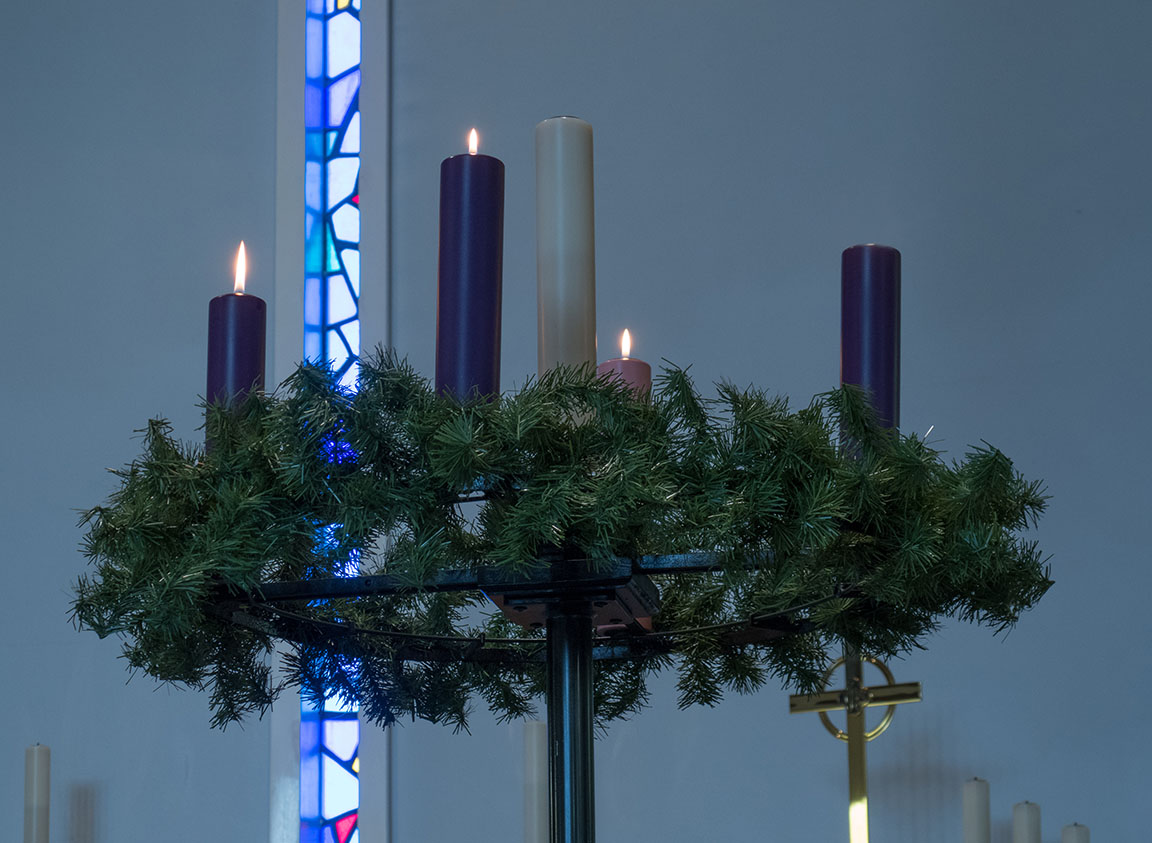
Joy Candle is lit

Joy Candle is lit


Notes

The Lord be with you!
On this Third Sunday in Advent, the theme of waiting gives way to rejoicing. The pink candle is now lit on our Advent wreaths and the mood of repentance and solemn expectation is lightened with a joyful, uplifting theme that exults in what God, our Savior has in store for us. God’s visitation, that is, His gracious entering into our lives, is the only way to lighten the darkness of our hearts.

Let us pray:
Lord Jesus Christ, we implore You to hear our prayers and to lighten the darkness of our hearts by Your gracious visitation; for You live and reign with the Father and the Holy Spirit, one God, now and forever.
Amen.

Isaiah 40:1–8
Last week we heard the prophecy of the arrival of John the Baptist as it was given to Malachi. That was originally uttered four hundred years ahead of its fulfillment. Isaiah also spoke of John as the “voice that cries out in the wilderness” and that was over 700 years before John’s arrival! For all his rough appearance and strange social distance practices, John has not only been given a message of rebuke and repentance, but also he proclaims a Word of God’s comfort for His people. With tenderness in his voice, John’s happy privilege is to announce that double blessing is ours following the full pardon of our sins. The glory of the Lord that all mankind shall see together will bring with Him His Kingdom to which we belong forever.

1 Corinthians 4:1–5
Wouldn’t you like it if evil people who commit their injustices in secret under cover of darkness would finally be exposed and held accountable for their crooked deeds? Paul promises that day will come! The Lord Himself, when He comes in glory to judge the living and the dead, will reveal all the secret purposes of every heart. What is our respite? For we too will be discovered as the sinners that we truly are—but we have received God’s hidden gifts, mysteries, that is, His forgiveness, life and salvation, from those stewards that He has called to hand out those mysteries. You will be commended instead of judged, because thanks to the ministry you have received from Jesus and His servant the pastor, you are forever reconciled to God.

Matthew 11:2–10
John the Baptist ended his life and ministry in prison. He may have been already aware of his inevitable end, but he was more interested in Jesus. He wanted to know if he had successfully prepared for the promised Messiah. Are you the one who is to come? Or are we to wait for another? He rejoiced, even in the dreariness of prison, that Jesus was doing the miraculous things about which he was hearing reports from his former disciples. John himself needed to hear from Jesus that His miracles and teaching do give testimony to the fact that He is the Christ. It’s not always going to be a majestic experience to believe and cling to Jesus as a Christian, but there’s simply nothing better than to have your faith. It will never be disappointed!

Here’s hymn 357, stanza 6:

  &sbsp; O come, Thou Dayspring from on high,

  &sbsp; And cheer us by Thy drawing nigh;

  &sbsp; Disperse the gloomy clouds of night,

  &sbsp; And death’s dark shadows put to flight.

  &sbsp; Rejoice! Rejoice! Emmanuel Shall come to thee, O Israel!

In the name of the Father, and of the Son, and of the Holy Spirit, Amen.

Pr. Stirdivant

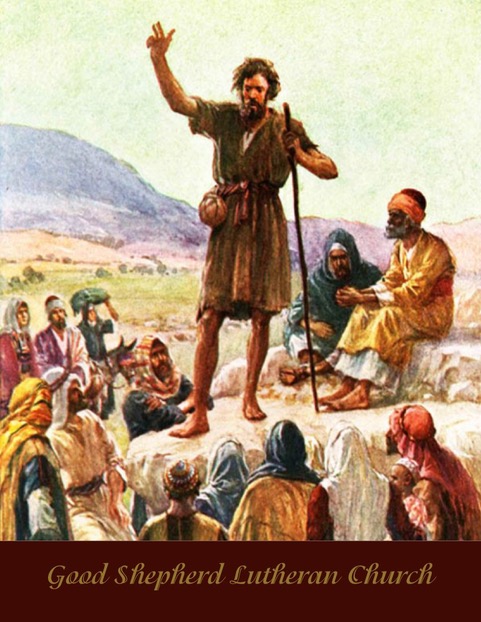
John the Baptist

John the Baptist


Sermon for the Third Sunday in Advent: December 13, 2020 jj
Rev’d Mark B. Stirdivant, Good Shepherd Lutheran Church, Yucaipa, California
✝ sdg ✝

O People of God, fellow-citizens of the heavenly Jerusalem! You need an Advent preacher! In this wilderness of rampant disease and destruction, the morass of there’s no real truth anymore, just people’s personal opinions, you must listen for a clear, pure voice speaking out. You need a preacher who is not afraid to tell you how it really is, no matter how much it might hurt. And considering that we’re all born in sin and every day we battle the desire to serve the self, most often the truth is going to be painful to hear. But someone who stands as a spokesman for God, then decides to change what he says based on some opinion poll, such a preacher is doing you no favors.

What you need is an Advent preacher, a “voice crying out in the wilderness.” You need to listen for the pure words of Law and Gospel for the forgiveness of your sins. The church cannot afford to have a reed that is shaken by the wind, or a man dressed in the soft clothing of worldliness. Instead, you are much better served by a man called by God who preaches the same, unchanging Word, whether he fits your ideal “mold” or not. You must hear from this preacher’s voice the clarion call to “Repent! For the ax is laid at the root of the tree. You haven’t got all the time in the world.” So the preacher you really need this Advent is John the Baptist.

Through this bold man of God, the Lord fed His people with His wholesome Word, even though his own body was sustained by a meager diet of locusts and honey. John’s preaching was really the voice of God Himself, and God’s people of all times and places hear His voice and follow Him, even into the forbidding wilderness. Which is one reason why John is the designated preacher for the season of Advent. His message is the perfect preparation for the coming of Christ in the flesh, whether as the baby of Bethlehem, the mighty Judge at the end of time, or in hidden form under bread and wine at the altar. All sorts of people came to listen to John in his lifetime, and he didn’t care what public opinion was of him. He stayed focused on the Word of God that he was called to preach, and on His Lord Jesus Christ in whom he delighted.

This faithful shepherd in the wilderness preaches “a baptism of repentance,” meaning that he didn’t give a mere religious pep-talk. This preaching does something. It leads people to turn away from their sins and receive God’s forgiveness that is freely given in the waters of Holy Baptism. All who listen to this preaching are pointed to the Lamb of God who takes away the sin of the world. In this way, John preaches to you, too. Repent, be ready to receive Jesus. This is why the season of Advent prepares you for Christmas. The world around you is nothing but wilderness, and your own sinful nature within you is a spiritual wasteland, full of unbelief and despair. The word of God coming from the mouth of John is the food and drink that you need to live. Repent, confess your sins and receive Jesus who comes to you today, and who will come again at the Last Day.

“Comfort, comfort,” God says through His preacher to you, His people. Be comforted, you who mourn. Be comforted, you who are anxious and in need of our Lord’s loving hand. For you cannot deceive yourself into thinking that things will get better all on their own. You cannot imagine that you can pull yourself up, dust yourself off and start all over again. You are attacked daily by the devil’s sharp arrows accusing you of your sins and trying to convince you that God does not care. By yourself you could not withstand such a barrage. But be comforted, God does care for you, and not because you now finally do what God wants you to do, but because He has reached out in mercy to you, poor miserable sinner that you are.

God will comfort you, this you can know for certain. However, be aware that you will not feel comfortable. Remember, it is the Lord’s comfort, not the comfort you expect from this world. You can work and struggle to achieve a comfortable way of life for you and your family. You could plan ahead on everything so that you could get through this year’s stressful and radically different holiday season or you could look for comfort in all sorts of things that you think will make your life and celebrations more fulfilling, but in the end it’s all an illusion. You won’t reach lasting comfort in these things—only God out of His undeserved mercy and love—only He gives you true comfort in His Word.

But consider the comfort that He proclaims to you—it sounds strange falling on human ears. In Isaiah 40, this sermon from the perfect Advent preacher talks about iniquity, the guilt that is left over from sin. It is the sense of God’s judgement hanging over you because He is righteous and holy and you are sinful and unclean. Talking about your sin surely doesn’t give you any comfort. Who wants to be reminded of the wrongs they have done in the past? God’s call to repentance sounds harsh, too. Turn away from your sins, you haven’t lived with the constant attitude that God is first in your life. Too often, other things have taken His place, but your complete trust needs to be in Him alone. At first hearing, the comfort of God doesn’t sound comforting at all.

However, by talking of sin and iniquity and the need to repent, God is constructing a straight, level road in the rocky, forbidding wilderness where you are. The reason why you need to hear and admit that you are by nature sinful and unclean is so that you would be truly comforted with these words: Your sins are forgiven. Your iniquity is pardoned. You are the spiritual inhabitants of the New Jerusalem, our Lord’s heavenly kingdom of peace and you have received from the Lord’s hand double for all your sins. But double what? Double the punishment? No, certainly not. The punishment is already gone—that has been laid upon Jesus and paid in full for you on the cross. Instead, it is double the grace: first, that your sins are taken away and the slate is clean, and second, that Christ joins Himself to you and in God’s sight you are just as holy and righteous as He is. That is what it’s all about: receiving from the Lord’s hand double blessing in exchange for all of your sins.

And so you have found food in the comforting words of God’s forgiveness given to you through Jesus Christ. The Lord is your shepherd; He is feeding you in the wilderness through John the Baptist, just as He fed His people of old. The same baptism of repentance that John preached, the baptism that forgives your sins, this gift of the Holy Spirit is what you can claim for your very own inheritance. This baptism is none other than the Lord’s comfort to them and to you that sins are forgiven and God’s people are rescued from the devil’s wilderness, saved from the deadly snare of unbelief.

Your Lord Jesus gives you real food and drink every time you kneel at this altar and eat His Body and drink His true blood. This is not spiritual “comfort food” or merely a fine reminder that everything will be all right; we’ll somehow get through this. This food brings true comfort, the comfort that comes from sins that are forgiven and a heart that is turned so that you love and trust in God above all things. This is the food that sustains you in the wilderness of life, and prepares you for the coming of your savior. Though you may find yourself at times in a spiritually barren wasteland, attacked by the constant temptations of the devil and plagued with worry and despair, you will not starve, you will not be harmed. The Lord is your shepherd and you shall not want—you shall lack no good thing. You are His sheep, and you are precious to Him because He has washed you in the saving waters of Baptism and made you His own. God is constantly concerned over the health and safety of your soul and body. He will not let go of you. And He will guide you with His Word and promises in the paths of righteousness, through the wilderness of this life, that you may dwell in the house of the Lord forever.

So you see, you are blessed to have John the Baptist as your preacher this Advent. For in him you have a humble servant of God who loves you enough to proclaim to you the truth, even when it hurts. Confess your sins, renounce the devil and all his works and all his ways, for there can be no Christmas joy without Advent repentance. But soon the highway through the wilderness of this sin-stricken world will be complete. And when the glory of the Lord is revealed, and all flesh finally sees it together, you will then fully know the riches of God’s heavenly grace that are your hidden possession right now.

In the Name of the Father and of the ✝ Son and of the Holy Spirit.

blue parament

blue parament


Readings:
Is. 40:1–11 Comfort, yes, comfort My people! …
Psalm 85 Surely His salvation is near to those who fear Him.
1 Cor. 4:1–5 judge nothing before the time, until the Lord comes
Matt. 11:2–11 Are you the Coming One, or do we look for another?

A Long Wait

Notes

Second Week of Advent

Second Week of Advent

Notes

The Lord be with you!
Out of Zion, the perfection of beauty, God shines forth. Our God comes; he does not keep silence! This is the Second Sunday in Advent. Christ is coming soon, but first we must wait. And yet waiting is not an idle task, because with the building expectation of our Lord’s return, there is also an obligation for us to make ready. Since we cannot fulfill that obligation due to our lethargic sinful nature, we rely on God’s gracious work that stirs up our hearts, and gives us the patient endurance and encouragement that we need while we wait.

Let us pray:
Stir up our hearts, O Lord, to make ready the way of Your only-begotten Son, that by His coming we may be enabled to serve You with pure minds; through the same Jesus Christ, our Lord, who lives and reigns with You and the Holy Spirit, one God, now and forever.
Amen.

Malachi 4:1–6
The Prophet Malachi was the last prophet’s voice to be heard in the Old Testament before the long wait leading to the New. There would be four hundred years of waiting as God set the stage for the perfect moment for Jesus to be born. Advent means waiting, as we have been reminded, and yet as we wait, we prepare. We are so diligent about our preparations for Christmas, simply because without our efforts to get ready, our celebrations will not just happen on their own. It’s different with our preparations for Jesus to come again on the Last Day. Malachi has for us three ways to prepare: set aside our self-centered arrogance, remember God’s teaching, and listen to the message of John the Baptist, who came in the power of Elijah in fulfillment of Malachi’s and the Old Testament’s final prophecy.

Romans 15:4–13
What do we need from the Lord while we wait? From God we receive endurance and encouragement, and that is a timely topic for us, not just in Advent or in the crazy year 2020, but as Christians who eagerly await our Savior’s return. He gave us this endurance and encouragement through the teaching of the Scriptures, both Old and New Testaments, which Paul describes here as a key purpose of the Bible, a major reason why it is important to read God’s Word every day. All that the Holy Spirit caused men to write in His Holy Book was written for our use, to receive endurance and encouragement as we await the return of Jesus. Not only to teach us how to do what is right and pleasing to God, but even more to turn our heart to Jesus our Savior, who through His mercy has brought us, Jews and Gentiles alike, into His everlasting kingdom.

Luke 21:25–36
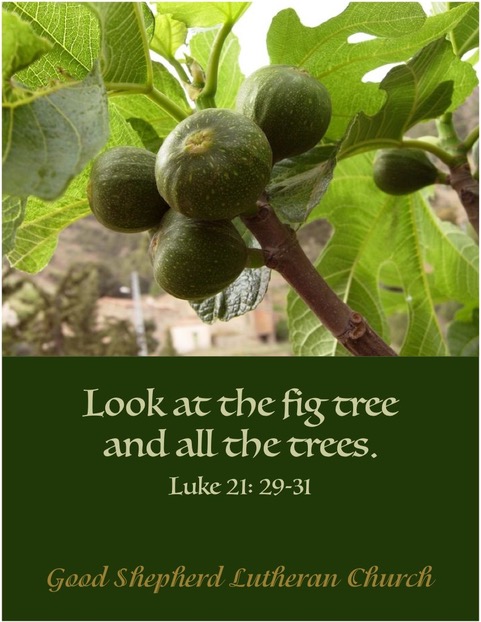
The signs of the end look bleak, think about distress, foreboding, fainting with fear, perplexity and the roaring of the waves of the sea! Yet just as we can tell the signs of the changing seasons, even in a temperate place like Southern California, we can also tell the signs of the end, and that they do not mean for us a bad end. In fact, Jesus says we can finally straighten our bent backs and look upwards with joyful anticipation when everyone else is caught up in the spiritual pandemic of self-centered fears, dissipation, and the cares of this life. The fearful signs, He teaches, are clues to us and all the baptized that our redemption draws near. We don’t have to worry about how we’ll get through the tough parts of these signs, we simply pray and we will receive Divine encouragement and endurance that will carry us through before the glorious day when we appear before the throne of the Son of Man.

Here’s hymn 345, stanza 4:
    So, when next He comes in glory
    And the world is wrapped in fear,
    He will shield us with His mercy
    And with words of love draw near.

In the name of the Father, and of the Son, and of the Holy Spirit, Amen.

Pr. Stirdivant

Fig Tree

Fig Tree


Sermon for the Second Sunday in Advent: December 6, 2020 jj
Rev’d Mark B. Stirdivant, Good Shepherd Lutheran Church, Yucaipa, California
✝ sdg ✝

It’s been a long wait. No, I’m not talking about entering month number nine of a two-week shutdown, I’m talking about Advent. It’s a long wait for Christmas. It’s a long wait for the glorious return of our Lord and King Jesus Christ. When a wait becomes a long wait, naturally the question arises, What should we do while we wait? Yes, we have a Christmas-Corona baby boom nearly underway—that’s one answer. How about our voters’ meeting today– What should we do as a church as we consider what is ahead of us next year and past that? How do we prepare for conditions in a landscape that seems to be unpredictable from now on? We know that we need to do something, but where are the directions we need to follow?

There was a time of waiting during Bible times that we often overlook. It was a long wait. It’s only a flip of a page from the book of Malachi to the Gospel of Matthew, but the time-span is a leap of four hundred years! Four centuries zip by from this morning’s cliffhanger reading in the last chapter of Malachi to the dream of Joseph that identifies a developing fetus in Mary’s womb with the title God With Us. Between those two Biblical events, there was a whole lot that happened—much more than dozens of generations merely sitting on their hands.

God Himself had His hand in the developments of that time between the Old and New Testaments. He orchestrated a massive exile, a forced exodus away from the Promised Land, using the bloodthirsty Assyrians crashing like a wave on the beach, followed by a bigger wave, the Babylonian Empire. The Almighty Creator then used an even bigger conqueror, the Persians, to allow a few to return and rebuild Jerusalem’s temple. This four-hundred-year period actually is known to history scholars as the Second Temple period.

It was a time that God intended and used as a restart, a renewal and restatement of the original promises He originally made to Abraham, but it was still going to look different. The first temple, the one Solomon dedicated and Nebuchadnezzar burned to the ground, was far and away more spectacular than the smaller, humble structure that was erected in its place. Alexander the Great soon swept in and claimed all of the Mediterranean region as well as Persia for the Greeks. Then the Romans took over what they called Palestine, with their roads and governors and crucifixions signifying their absolute dominance. Then the Roman Republic became an Empire, which brings us to Caesar Augustus sending out an executive order to count everybody under his ruling thumb, forcing the entire known world’s population to report to their ancestral hometowns, ready to pay whatever taxes he could dream up.

This was a long time to wait, but there was lots that God got done while the world waited for Jesus to arrive at the first Christmas. By the time the New Testament era began, there were remarkable developments, like the first translation of the Bible into the widest-known language at the time. Or the habit of gathering into Synagogues to hear regular readings of God’s Word and to pray when you’re not visiting the actual temple, which by the way, King Herod started rebuilding into a bigger structure. We have these new groups of people of whom the Old Testament gives little to no background, people like Samaritans, Pharisees and Sadducees; thankfully there’s some help for us to find out about them in the Apocrypha, which is a collection of non-Biblical books whose stories stem from the Second Temple period.

The reason I am pointing all these historical developments out is to highlight how God was very busy at work while the time of waiting was going by. The arrival of Jesus was growing ever closer, but all the separate parts needed to be brought together into the perfect combination so that His arrival truly would bring the salvation of all mankind into world history. The moment was absolutely right when Christ our Lord was born of the virgin Mary. Good Friday was the perfect day when He died to reverse the curse that had ruined this world. Even though we don’t know when it will be, we are nevertheless certain that the moment will be absolutely right also when Jesus comes again in glory to judge both the living and the dead. Our merciful God remains busy at work; even today on a day of rest, He is busy blessing you with His forgiveness, His gifts of salvation, making His baptism promises come true for you as you continue to live in this broken and sin-filled world.

It’s been a long wait for us. And if God is busy doing all of this blessing while we wait, the question remains, what should we do while we wait? For that, we can get some helpful directions from the Old Testament’s final prophet, Malachi. Through his mouth God warns us first to abandon arrogance on one hand, thinking we have our own lives under our control, but on the other hand to stop our anxiety that imagines during difficult episodes in our lives that God has in some way abandoned us. Neither of those are true. We do not stop being a church if our money runs out. Nor are we a better church if we have overflowing resources. We have God’s precious treasure of His Word, the Word that provides us endurance and encouragement. I don’t have to remind you especially this year that endurance and encouragement are essential to have, not only for getting through pandemics, times of fear, distress or dissipation, but we need God’s strong, saving name to be busy at work forgiving and strengthening us until the day Jesus returns.

Secondly, Malachi said to those who waited in his day and to us today, keep diligent in the Lord’s instructions. Read and reflect on the Bible that you read, bearing in mind that the Commandments He wants you to do, He has also done them perfectly for your good, so that now you use what He has commanded to help your neighbor, your family, your church.

Finally, in these very last verses of the Old Testament that look forward to the dawning of the New, we should listen to the message of John the Baptist. He was the one Malachi prophesied would come in the power of Elijah. John gave us the call to repent, stop sitting on our hands, and just like Elijah told those who heard him to abandon their false gods and idols, we must hear today that we need not fall prey to the spiritual pandemic of worldliness, greed and hatred of our neighbor because of one sort of temporary privilege or another. We know better than that, we repent of that temptation, and we take comfort in the forgiveness of sins and the promise of a perfect life everlasting.

Who knows? Maybe just like the long four-hundred-year Second Temple period was a time that God used to restart and renew His Old Testament church, perhaps God is using this time of trial and struggle in our lives and in our congregation as a way to restart and renew us right where we are. When we value what really matters in life, when fathers turn their hearts to their children and children to their fathers, then we realize that God has been very busy giving us all these blessings while we wait. Yes, it’s been a long wait. Yes, we’ve been given something to do as Christians and as a church in this very place, and we’re not left all to ourselves to decide what to do. Most of all, we have been given Divine endurance and encouragement, because God has not planned for us to falter or give up. He has given us Jesus, and everything else with Him that truly lasts. Trust Him, what we’re waiting for, that’s truly going to be worth the wait!

In the Name of the Father and of the ✝ Son and of the Holy Spirit.

blue parament

blue parament


Readings:
Mal. 4:1–6 the Sun of Righteousness shall arise
Psalm 50:1–15 Every beast of the forest is mine
Rom. 15:4–13 written for our learning, that we … might have hope.
Luke 21:25–36 lift up your heads, because your redemption draws near

Salvation is Nearer!

First Week of Advent

First Week of Advent


Notes

The Lord be with you!
To you, O LORD, I lift up my soul. O my God, in you I trust; let me not be put to shame. This is the first Sunday in our new Church year, the first Sunday in Advent. Our lectionary, or readings schedule, sometimes includes special names for certain Sundays. These names often come from the Introit’s opening words. There are parts of the liturgy that remain the same from week to week: Lord, Have Mercy; the Creed; Holy, Holy, Holy are consistent. The Introit and Scripture readings, of course, change each Sunday and give us a theme of the day for us as we hear the sermon to focus on the gifts of our Lord for us. This Sunday’s name is Ad Te Levavi, or To You I lift up, which is the Introit, the opening words unique to this day. As we enter into His presence, we lift up our souls in prayer to Jesus Christ our King who has desired to come in lowliness while at the same time He stirs up His almighty power.

Let us pray:
Stir up Your power, O Lord, and come, that by Your protection we may be rescued from the threatening perils of our sins and saved by Your mighty deliverance; for You live and reign with the Father and the Holy Spirit, one God, now and forever. Amen.

Jeremiah 23:5–8
Jesus was prophesied as the righteous Branch from the kingly tree of David, the true wise ruler greater than Solomon. These several names tell us that He alone can preserve and protect His kingdom, the holy Christian Church. His name is important to remember, because in the Bible, the name is more than a reputation or a label. Jesus’ name is more than any human name. Since He is God in human flesh, Jesus has other Biblical names by which He is called, as here Jeremiah says He shall be called “The Lord is our righteousness.” God’s name is the means by which He works, by which He saves us. Jesus saves us by becoming for us the righteousness by which we are forgiven and accepted into our Lord’s everlasting kingdom.

Romans 13:8–14
Pay your debts. When you promise to pay someone, pay them, and they will respect you. The world may attempt to function on principles like these, but it will all crumble to dust one day. The Christian has a different outlook from the world,
even though Christians still live in the world and fulfill their obligations in what Martin Luther taught as the kingdom of the left hand. Since we also belong to God’s kingdom of the right hand, that is, His spiritual rule of grace and forgiveness that blesses us in the Church, we have a new debt that should be honored far above the ordinary worldly debts we may incur. We are commanded to owe nothing to one another than to love our neighbor, do them no wrong, work with Christ’s love for them now filling our hearts with that same love and serving their needs above our own. And the reason we have that new outlook is clear: our salvation is nearer to us now than when we first believed. Jesus’ coming is ever closer to us each day, thanks be to God!

Matthew 21:1–9
Hosanna! Hoshia-na! Either way you say it, we’re calling out to our parading King Jesus for salvation. Typically we think of the Hosanna of Palm Sunday as our pleading to Jesus to save us right now, as He has promised to do for us. Most pointedly do we sing Hosanna every week in the Sanctus, the Holy Holy Holy sung in the liturgy just before the Sacrament of the Altar is handed out. But think of this also, we know that Jesus would dismount that lowly donkey and within a few days’ time, would ascend the cross. That would be His painful, tortuous throne and His crown would be made of thorns as He received the punishment for sins in our place. Then, with that in mind, we could also pray, Hosanna! Save Jesus, Lord! Vindicate Him for the innocent death that He would die for me! And so Jesus would be raised on the third day, on Easter. He was saved because of His perfect sacrifice, which means He has now given that salvation, that righteous vindication, to us.

Here’s hymn 332, stanza 2:
    Your Zion strews before You Green boughs and fairest palms;
    And I too will adore You With joyous songs and psalms.
    My heart shall bloom forever For You with praises new
    And from Your name shall never Withhold the honor due.

In the name of the Father, and of the Son, and of the Holy Spirit, Amen.

Pr. Stirdivant

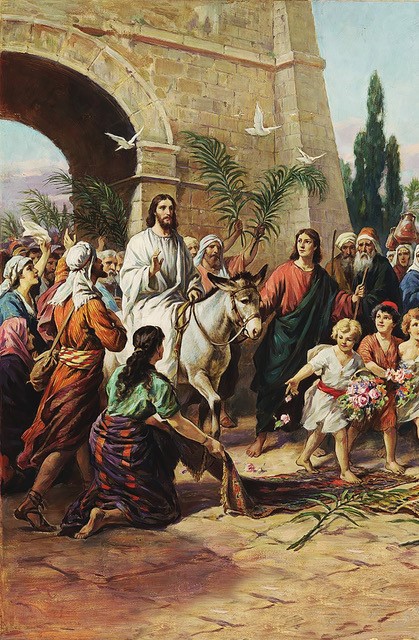
hosanna!

hosanna!


Sermon for the First Sunday in Advent: November 29, 2020 jj
Rev’d Mark B. Stirdivant, Good Shepherd Lutheran Church, Yucaipa, California
✝ sdg ✝

“Come, let us go up to the mountain of the Lord!” Picture ourselves there with the crowd welcoming Jesus on that first Palm Sunday in Jerusalem. Let us make our way in a pilgrimage of faith to Zion, one of the Bible’s many names for the Church who firmly believes and trusts in our Lord and Savior Jesus Christ. Advent has begun and you and I both know that with Thanksgiving now behind us, Christmas is in the air and this Christmas this year can’t seem to come soon enough! But first, while we still have an opportunity to give it our attention, we need to remind ourselves of this important fact: “Salvation is nearer to us now than when we first believed.”

Believe it, O Daughter of Zion! Awake from your sleep, O children of God! This is big news for you! What does it mean that salvation is nearer to you now? It’s not to say that you have to work to make yourself closer to being saved. It’s not that Jesus deceived you into thinking that you were saved, because His perfect and unbreakable promise remains: Whoever believes and is baptized will be saved. No, salvation is nearer to you now, means that the time is getting ever closer and closer to the Day when you will see the salvation that you already have. Faith will be replaced by sight. Trusting only in His Word will soon make room for you to experience that Word of God in utter fullness. Advent is just as much a reminder of Christ’s glorious return as it is a preparation for the celebration of His birth in long-ago Bethlehem.

This is why Advent begins with Palm Sunday. I’ll admit, it doesn’t sound like a very Christmas-y story, but I count as many as eight hymns in our hymnal’s Advent section that refer in some way to Palm Sunday. On the first Palm Sunday in the city of Jerusalem, the crowds gathered to greet the arriving Messiah. The golden setting sun was shining on the face of Jesus as He was riding on that donkey that had never been ridden before, meandering down into the shady valley as He got closer to the base of the high city wall. Then, as the road turns back up the steep hill toward the city gate the cheering crowd lined both sides of the dusty street, threw off their expensive outer garments, leaving on their plain- looking robes that they were wearing underneath. The people held palm branches in their hands, symbols of victory a little bit like the wreath of olive branches that the Greeks used to place with honor on the heads of Olympians and valiant soldiers.

The words of praise from their lips bounced off that imposing Jerusalem city wall: “Hosanna! Blessed be the Son of David! Peace in heaven and glory in the highest! Hosanna, blessed is He who comes in the name of the Lord.” The Prince of Peace entered the reputed City of Peace, fully aware of the Price of Peace, that for your forgiveness and mine to be a reality, His holy Blood must be shed and handed over. The exultant crowd of pilgrims and disciples will disperse and soon another crowd will assemble to shout in a mad rage, “Crucify Him!” As unlikely as it sounds, these events are exactly the way the Lord has chosen to raise up, in the words of Isaiah, the Mountain of the House of the Lord, namely, the Church, so that it will be the highest of all the mountains. How does Jesus execute justice as King of the Jews and thus acquire the name of “The Lord is our Righteousness,” foretold by Jeremiah? He must be lifted high on the cross. As our brand-new church year will unfold for us yet again, we will relive all those moments that make for our own story of Hosanna, of salvation.

But the Palm Sunday that you and I participate in today is not merely a reliving of a past event. It is so much more. “Come let us go up to the mountain of the Lord!” Our spiritual pilgrimage to Zion that we are walking in our hearts this morning is not meant for us to see Jesus die yet again, because that was done once and for all. Instead, we are called together today to receive the gifts earned for us in Christ’s death and resurrection, most especially the forgiveness of sins.

The night of your blindness to the wrongs you have done and the “rights” you have left undone—that night is far gone; the day is at hand. Your lack of love for your neighbor, your quarreling and jealousy, whether spoken or left in the darkness of your thoughts, must now be abandoned! Those who were there that first Palm Sunday took off their fancy overcoats. You instead on this First Sunday in Advent, take off all from this world that covers you, all that you use to make yourself impressive in the eyes of this world, and leave what remains underneath, a simple garment of repentance, a spiritual garment that Jesus has washed white with the forgiveness you received in your baptism.

Let the light of a new day, a fresh start, shine on your face with the blessing that comes with God’s face, His countenance that shines with favor upon you and gives you peace. Though there will be days when you must pass through a time of shadow, the road will be steep, and the walls will be imposing that seem to keep you outside of the borders of God’s love, you will keep the simple prayer “Hosanna” on your lips, for your King will truly save you when you call on Him. You will one Day hold the palm branch of victory, as John’s vision recorded in Revelation 7 shows—see, that’s you, you’re there somewhere in that massive crowd that he saw! That’s the Palm Sunday to end all Palm Sundays!

For now, as St. Paul instructs us, walk properly as in the daytime through this new church year and for the rest of the pilgrimage of your life in Christ. Put on the Lord Jesus Christ, feed your soul with pure spiritual food of all those fruits of love that are pleasing to God, and withdraw all provisions, starve out the sinful flesh that pesters you for self-gratification. You’ll find that it would be better to owe no one anything, other than to love them sincerely, since focusing just on earthly obligations will only distract you from what is truly most important in this spiritual pilgrimage that you are walking in faith this day until the final Day when you see Jesus with your own, resurrected eyes.

Prepare our hearts for Christmas? Yes, we will do that this Advent. Marvel in the prophets’ words over centuries coming true in the womb of the Virgin Mary? Most certainly we shall. But for now, “Come, let us go up to the mountain of the Lord!” Salvation is nearer now than when we first believed, so today let us take hold of that Salvation. Eat and drink that Body and Blood that has already paid the Price of your Peace. Rejoice and praise your true King who comes in the name of the Lord, for blessed is He, indeed!

Let us pray our Hosanna to the Son of David once again: Stir up your power, O Lord, and come to rescue us from the threatening perils of our sins, and save us by Your promised deliverance; for You now live and reign with the Father and the Holy Spirit, one God, now and forever. Amen.

In the Name of the Father and of the ✝ Son and of the Holy Spirit.

blue parament

blue parament

Readings:
Jer. 23:5–8 The LORD our righteousness
Psalm 24 Who may ascend into the hill of the LORD?
Rom. 13:8–14 Owe no one anything except to love one another
Matt. 21:1–9 you will find a donkey tied

The Shepherd

Notes

The Lord be with you!
We are looking forward to a new heaven and a new earth, the home of righteousness.
This is the last Sunday in our current Church Year; next Sunday will begin a new Church Year with the season of Advent, the four Sundays leading up to Christmas. The Church’s Biblical teaching about the end of the world would certainly not be complete without a strong emphasis on the entire goal of our salvation, and that is, in the words of the Creed, the resurrection of the body and the life everlasting.

Let us pray:
Eternal God, merciful Father, You have appointed Your Son as judge of the living and the dead. Enable us to wait for the day of His return with our eyes fixed on the kingdom prepared for Your own from the foundation of the world; through Jesus Christ, our Lord, who lives and reigns with You and the Holy Spirit, one God, now and forever.
Amen.

Ezekiel 34:11–24
The prophet Ezekiel was inspired by the Holy Spirit to describe not just the first, humble coming of Jesus Christ, but also His final, fully-glorious coming as well. As the meek and lowly Savior, Jesus came as God Himself who would shepherd His sheep, those believers who would hear His voice and receive His saving forgiveness of sins for life everlasting. As the mighty Judge who is to come at the end of the world, Jesus will distinguish between believing sheep and unbelieving, hypocrite sheep. Ezekiel presents both these offices and their actions as the righteous activity of God Himself, who is both Savior and Judge. Christ the Shepherd has saved you and the same Christ the Judge will welcome you into His fold for eternity.

1 Corinthians 15:20–28
For more details on the two concluding phrases in the Creed, the resurrection of the body and the life everlasting, there’s no one better place to go in the Bible than this chapter in First Corinthians. When the dead are raised, they follow the lead of Jesus Christ, who Paul was inspired to name as the Firstfruits, guaranteeing that we are to be raised after Him. Adam’s curse brought everlasting death, Jesus’ blessing brought everlasting life. Then, there’s a striking bonus transaction that we are told will happen in the heavenly courtroom of Judgment Day. The risen and glorious Jesus will hand over to the Father the kingdom that He purchased with blood, and in turn the Father will place the Son over all things in subjection to Him. This, like the doctrine of the Trinity itself, is a vast mystery, but the reason for this to be believed is this: “that God may be all in all.” Salvation most emphatically affirms who God is, and can never be set in opposition to what He has revealed to us even now, before the End comes. We always need this comfort, that God has never changed and never will change. No blessing that we have by faith will ever be at risk.

Matthew 25:31–46
Our works appear before God, even when we the believers, signified in this Gospel reading by the sheep, don’t even realize that we have done the good works. That should tell us that our efforts to measure and evaluate our good works will fail. Instead, we should acknowledge that it is Jesus Christ Himself who does the good that we do, since His good is counted in our favor, and cling in faith to Him who saved us by grace. He will take care of the rest.

Here’s hymn 509, stanza 2:
    See the holy city! / There they enter in,
    All by Christ made holy, / Washed from ev’ry sin:
    Thirsty ones, desiring / All He loves to give,
    Come for living water, / Freely drink, and live!

In the name of the Father, and of the Son, and of the Holy Spirit, Amen.

Pr. Stirdivant

New heavens, new earth

New heavens, new earth

Sermon for the Last Sunday in the Church Year: November 22, 2020 jj
Rev’d Mark B. Stirdivant, Good Shepherd Lutheran Church, Yucaipa, California
✝ sdg ✝

“The Lord is my Shepherd, I shall not want. …” By the time of the prophet Ezekiel, those words of King David had already been on the lips of the people of God for at least four hundred years. They would have most likely sung those familiar verses many times in the liturgy of both the temple and the synagogue. The metaphor of shepherd and sheep was certainly not new or foreign to the people of Israel. Even in their faraway land of Babylonian exile many could still recall their former lives of following the flocks and raising the animals that they relied upon for food and religious sacrifice. Today, on the other hand, and especially with our fast-paced, technological lives, you can run into someone who has no idea how a shepherd might lead his sheep to pasture, protect them from danger, or search them out when they run astray. But with a little help, and some of the most familiar words that are found in Scripture—namely, the Twenty-third Psalm—the image can quite easily become greatly comforting—and prophetic of the future at the same time.

However, before Ezekiel can posit the comforting shepherd image for their good, he needs to correct first what had been going wrong among the people of God, the people whom He called the sheep of His pasture. What was going wrong? The Lord had him start with the shepherds, the leaders whom He had placed among them to teach them God’s Word and lead them in the path of His Commandments. They had been given a pastoral task, that is, reveal to them the will of the one, true Shepherd, and keep them diligent in faith as they awaited His prophesied coming in the fullness of time. But instead of preparing the people for Jesus’ arrival, they were taking advantage of these so-called “sheep” for their own benefit. Instead of teaching and preaching God’s Word, they exploited their positions of authority. Rather than humbly leading the people to trust in the promises of the coming Christ, they turned them aside to the favorite gods and idols of their day.

This is not to exempt the sheep from their own guilt, however. The people themselves should have known better, since they have heard God’s Word for themselves. Parents were commanded then, as they are even now, to teach the Commandments, impress them like a seal on their children, to ensure that they would not turn from them to the right nor to the left. But what did these sheep do? They trampled through the pure drinking water with their feet, making it muddy and impossible to drink without getting sick.

What does that mean? It means mixing in falsehoods with the pure truth that gives life straight from God. They made the promise of free forgiveness that is sweet to the believer’s taste, and turned it into a bitter swill of required works that Christians are told to do for themselves, and that leaves a horrible residue of doubt on the conscience. Instead of showing love toward one another and caring for each other’s needs, these sheep preferred to bite and devour at their fellow members of the flock, pushing them away with a selfish shoulder thrust, misusing the horns of their God-given authority and talents that were originally intended to serve and protect instead. Both pastors and people, shepherds and sheep disobeyed the Lord, and they faced a severe judgment, to be rendered from the mouth of the Chief Shepherd Himself at His appearing.

This is the judgment that God’s Law hangs over your head, too. You have resisted the gentle lead of Jesus as you live your day-to-day life. Even if it was only an impure thought in your mind or a little word from your mouth, it still poisons the well for those around you. If you refuse to forgive and assume the worst will always come from your neighbor, then you have become no better yourself. You didn’t have to murder somebody or worship another god—you still stand before the throne guilty in sin. Your heavenly Father means for you to hear about the coming Judgment Day, the magnificent appearance of Christ our King and our Judge, not merely to “scare you into submission,” but to reveal to you how serious He really is about your sin. You must repent, and turn back to the meek voice of Jesus, while He is still available to you as your merciful Savior who sacrificed Himself for you. It’s not that He’s going to change, but the free standing Gospel offer of salvation and the accompanying renewal of forgiveness will one day come to an end. You and I are seldom aware of the great damage that sin causes in our lives, our church, and our families. And when we try our human, imperfect solutions and excuses, our pitiful coping and compensating mechanisms, we make our own lives even worse than they were before.

Look up with great encouragement, however, at Christ your King! Behold the Shepherd who sacrificed Himself on the cross for the sake of you, His sheep. “Behold, I, I myself, will search for my sheep and seek them out.” Before you could even realize for yourself that you were lost, your Lord came to rescue you. “I will bring back the strayed, bind up the injured, strengthen the weak.”

This is quite the dramatic twist, even for Ezekiel, and he was inspired to reveal something more, something beyond all the doom and judgment. “I, (emphasize I) myself, will feed My sheep.” Really? God is going to come and do those shepherd jobs that His appointed representatives refused to do? Yes—He will bring to perfect fulfillment Psalm 23’s little “prophecy:” when God Himself comes into human flesh among us to be our Good Shepherd. This arrival of the Messiah, whom the Lord names here, “My servant David,” will inaugurate a new covenant of peace and a new, secure existence for the human sheep who by faith know the Voice of Jesus and follow Him.

When the time comes for judgment, the Lord reveals to us how that will look. He will take His flock and make distinctions between fat and lean sheep, between those of His people who truly believe, and those who inhibit the faith of the rest. They trample the grass and muddy the drinking water with their feet, but the true shepherds, that is, worthy servants of the Lord, the preachers who have “beautiful feet,” will preach the Gospel of peace.

Yes, judgment will happen, and the fat sheep who are bloated on their own self-righteousness, those who assert their own rules for morality and reject what Jesus says will bring peace on earth, goodwill to men, those imposters will be destroyed. You, however, have no fear for the appearance of Christ the King on Judgment Day—not because you have managed to escape your just judgment, but rather because the Lord, your Shepherd has restored your soul, and led you on the paths of His righteousness.

“For His name’s sake” in the Psalm means that you have received a perfect standing before the throne of God simply and solely because Jesus died and rose to achieve that gift for you. The promised servant David, whom Ezekiel preached to the exiles in Babylon 500 years ahead of time, was actually Jesus, the Son of David, born in David’s hometown Bethlehem, whom we will welcome again in grand procession next week, and one day we will shout Hosanna to our King when He trades in that lowly Palm Sunday donkey for His glorious, fiery chariot. He will usher in the kingdom that He purchased with His blood and rose to triumph in ascension when all became complete.

The entire church year has been laid out for us in a big circle. Today, at the end of the church year, we now see to where Advent, Christmas, Epiphany, Lent, Easter and Pentecost have been leading us all along. The Lord who was always true God and in the fullness of time became true and perfect Man will return again to give that same perfection to you. The excitement and expectation that Advent brings to Christmas is part and parcel of the Christian’s eager anticipation of the glory that has been promised at the end of the world. When wise men from all nations worship the Christ Child with gifts of gold, frankincense and myrrh, they foreshadow a gathering of believers from all nations before the throne of Christ the King. He who once was transfigured on the mountaintop in the sight of His disciples will once again appear bright as the sunlight to bring us to His eternal dwelling place. His suffering, death and resurrection that are revisited every church year at Easter are the precise evidence that acquits us of all wrongdoing before the presence of our mighty Judge. And Pentecost also comes to fulfillment at Christ’s return because the Holy Spirit’s work to spread the faith and make the Church grow will finally reach its completion on the Last Day.

Till that time, listen for your Savior’s voice, the Good Shepherd. He will feed you with His Word, forgive your sins and strengthen you in body and soul to life everlasting. Your King does not rule by forcing you to do things that show honor to Him. He prefers to serve others instead, using your loving service as His means to bring blessing to everyone around you. And when your neighbors hear the Word of your Shepherd, they too shall enjoy together with you the Kingdom of glory that will never end.

In the Name of the Father and of the ✝ Son and of the Holy Spirit.

White Parament

White Parament


Readings:
Ezek. 34:11–16, 20–24 My servant David. He shall feed them and be their shepherd.
Psalm 95:1–7a Let us shout joyfully to the Rock of our salvation.
I Cor. 15:20–28 The last enemy that will be destroyed is death
Matt. 25:31–46 as a shepherd divides his sheep from the goats

Unequal Gifts

Notes

The Lord be with you!
Hear my prayer, O LORD; give ear to my pleas for mercy! In your faithfulness answer me, in your righteousness!
This is the second Sunday after the festival of All Saints’ Day and the End Times or eschatology themes continue with a spotlight on our works and the attention that they are given in the last judgment. Our faith has renewed us in the image of our Savior Jesus, so our works for our neighbor, given to the glory of God also reflect that renewal that has started in us and the faith that will be perfected and completed when He comes again.

Let us pray:
Almighty and ever-living God, You have given exceedingly great and precious promises to those who trust in You. Dispel from us the works of darkness and grant us to live in the light of Your Son, Jesus Christ, that our faith may never be found wanting; through the same Jesus Christ, our Lord, who lives and reigns with You and the Holy Spirit, one God, now and forever.
Amen.

Zephaniah 1:7–16
Can you find Zephaniah in your Bible? He’s one of the minor prophets, so called only because the volume of writing that the Holy Spirit inspired through his pen does not take up as much space as do the likes of Isaiah or Jeremiah, who are two of the major prophets. But don’t let the word minor mislead you—Zephaniah’s message about the coming Day of the Lord is anything but minor! God’s prophet still gives God’s message, however short or long it may be: The Day of the Lord is coming quickly! He will bring the justice that He has promised. He will punish those who are complacent in their hearts and who refuse to receive the forgiveness that He has paid for through the Blood of Christ. In short, Zephaniah reminds us to be ready with faith and joy in the Lord, so that the coming Day will be for us not wrath but salvation instead.

1 Thessalonians 5:1–11
The Apostle Paul acknowledged that the members of the Christian house churches in Thessalonica already knew the basics about the glorious return of Jesus Christ on the Last Day. He and the preachers after him had already taught them what was necessary to know. But Paul also knew that the Thessalonians had others around them, influential people it would seem who conducted their lives in a way that betrayed the fact that they had no regard for Jesus and the Way to everlasting life that He is. How did these others act? They spiritually slept, drunk on the things of darkness of this present world. They felt secure in their worldly existence, saying to one another, there is peace and security. But the children of the Day know better, for they look for true peace and security not in themselves or this world, but to the Lord who has given us the gift of true peace in Christ.

Matthew 25: 14–30
How do our good works figure in the final judgment following our Lord Jesus’ glorious return on the Last Day? Our works do not save us, because the death of Christ and His resurrection on the third day already accomplished that. Instead, our works are outward signs, the fruits of our saving faith. That which He has already given us, we put to use in our lives for the good of our neighbor until the time of our work for the Lord is done. Whether we are given much or little, it is a stewardship to which we are called to be faithful, confident that whatever we have been given will produce the results that are pleasing to God, and the reward will be ours in Jesus Christ.

Here’s hymn 508, stanza 7:
    O Jesus Christ, do not delay, / But hasten our salvation;
    We often tremble on our way / In fear and tribulation.
    O hear and grant our fervent plea: / Come, mighty judge, and set us free
        From death and ev’ry evil.

In the name of the Father, and of the Son, and of the Holy Spirit, Amen.

Pr. Stirdivant

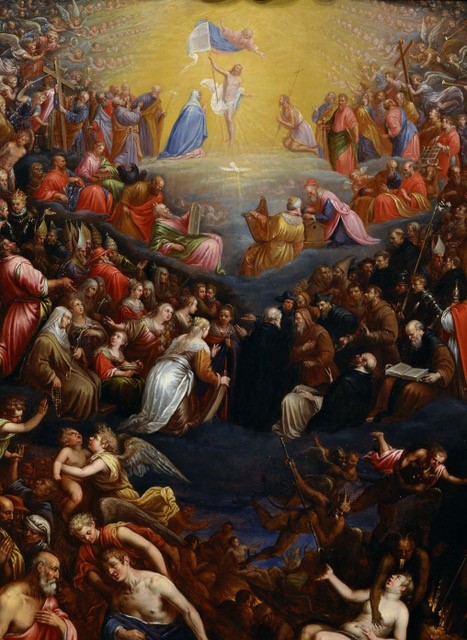
Last Judgment

Last Judgment


Sermon for the Second Sunday after All Saints’ Day: November 15, 2020 jj
Rev’d Mark B. Stirdivant, Good Shepherd Lutheran Church, Yucaipa, California
✝ sdg ✝

Remember when the workers in the vineyard were paid their wages at the end of the day? No matter how long they worked, or how much of the heat of the day they endured, they all received the same coin. That parable meant that no matter how great our differences of abilities and service in God’s kingdom, we’re all granted the same salvation by grace through faith in Christ.

Today’s parable of the talents has a notable difference from that, doesn’t it? Here Jesus teaches from the opposite angle. Here, the master of the household doesn’t give equal shares to his servants. One gets five talents—a huge amount—of money. One gets two and the last gets one. He gives according to their ability. They’re all equally his servants. They’re all equally in the household. But while the master is away, they have different abilities and responsibilities; so the master has different expectations for each one. Our Master, Jesus Christ has ascended into heaven and He’s coming back in glory at the end. As Christians, you are all equally His servants, and equally in the household of God. You are equally forgiven, because the blood of Jesus Christ cleanses you from all your sin. In the meantime, as you await His return, He has different callings and plans for each of you. And because He gives you certain callings and responsibilities, He entrusts you with talents, what you need to get the job done. It’s all part of the plan to keep the world in order and the body of Christ going until the Last Day.

Different people will have different callings for the good of all, by God’s design. This applies to all sorts of things. Some will have more money and others will have less. Some will have more talent and others will have less. God doesn’t make us identical, but He gives us various gifts. Together, we make up the body of Christ.

We sinners take this truth, however, and it discourages us. We sum it up this way: life isn’t fair. Yes, if you must push me to admit it, life isn’t fair, and people are different because God made them that way. This is hardly profound, but it’s part of the parable. Jesus adds this, too: to whom much is given, much will be expected. If God has given you much, then you are a steward of much and you’re called to exercise that stewardship faithfully. If you are blessed with abundant wealth, then it is given to you to use that wealth wisely. If it is abundant talent, then it is given to you to make use of that talent according to God’s will. It’s given to be used within your callings in service to others, and in service to God.

This should be good news. This should all be a great comfort from this parable. For one thing, you’re already in the house—you’re not trying to earn your way in. You’re part of the family of faith, not because of what you’ve done with what you’ve got, but because Jesus has already redeemed you. That’s Good News. God has given you what you need to accomplish what you need to do. This doesn’t always mean that things will go easily according to your plan. Life might be very difficult, as the Lord teaches you to trust in Him, and not in the abilities He’s given you. There will be failures along the way, there will also be times when you learn what you’re not suited for, how God’s gifts to you don’t match up with what you were hoping to do. Frustrating as it can be, it’s part of discovering what God has shaped you to do, and not to do.

What matters is, you belong to the Lord. Until Christ’s return on the Last Day, He has plans for you. And because He has different plans for different people, He gives different talents and gifts to different people. All of this is designed for the good of all, as each uses what he has—and who he is—in service to those around him. Here’s the problem, though. As sinners, we don’t see God’s careful planning and entrusting as wise or good. Instead, we often resent it and we resent God. We, or the people we are trying to impress, are seldom happy with who God has made us to be.

Rather than give thanks for what you are by God’s design, you’ll be tempted to focus on what you aren’t. Dissatisfaction and discontent are two big temptations for the devil. And not only will you be dissatisfied with who you are, but in jealousy you may also resent who God has made others to be.

And when people find something about themselves that they do like, what is the temptation? Self-centered pride. Rather than give thanks to God for the gift and use it in service to others, the big temptation will be to use it in service to yourself, to gather recognition, power, wealth and a sense of superiority.

Or you may not want to use the talents that you have, reasoning that to do so would take too much time or be embarrassing or below your status. Or, another of the devil’s tricky temptations: you’ll be tempted to covet especially what the world glorifies, which may not be at all the greatest gifts for service in the household of faith. Physical beauty and strength are well-known idols. Riches are another attractive god, yet even some who have amassed a great amount of things are not content with them. You and I will also be tempted to covet those showy things every day. All of this is true, and it’s not good. But none of this pride or resentment or jealousy or discontent or coveting is the worst part.

For when you resent who you are, or resent what God has entrusted to you to take care of, you actually accuse God. It’s more serious than a self-esteem problem. You are saying God is messing up in what He has given. By thoughts, words and actions, you say that He isn’t wise, that He doesn’t know what He’s doing, that He’s untrustworthy. That is where discontent leads—to the accusation that God is not to be trusted, that He’s not compassionate like He tells us He is. What next? When a sinner thinks that God is not compassionate, then he concludes that God is a hard master. A sinner isn’t going to want to serve a God who reaps where He didn’t sow. Resenting all that God has done for him, he’ll harden his heart and deny that God has given him anything. That’s what happens to the servant with the one talent in the parable. He’s the only one who thinks the master is a hard man, and so he does nothing with what the master has given him. By failing to use what the master has entrusted to him, he’s effectively saying, “I don’t want to be your servant anymore.”

That is where the devil’s temptations ultimately lead. That’s his goal, to get you to resent God’s gifts for you and others until you say, “This is a hard God. I don’t want to belong to Him.” It would not be God who has become hard, but your heart instead. You would be opting for the outer darkness, for weeping and gnashing of teeth.

So, what’s the solution? It’s not just telling yourself to try to be more thankful and helpful. It’s repentance. Repentance begins with confessing the resentment that your heart feels toward God for what He hasn’t given to you and for what He has given to others. It includes confessing envy, jealousy, coveting, thanklessness and discontent, along with all other sins that would lead you to doubt God’s mercy, to portray Him as a hard master just because He opposes your sinful will.

But then there’s more. When you realize that staying out of His household is not a good idea, then your repentance is met with the Lord’s absolution—you are assured as you are today that you are forgiven for all of these sins all because of what Jesus has done. And here is what Jesus has done for you. For you and for your salvation, He came down from heaven and was incarnate by the Holy Spirit of the Virgin Mary, and was made man. According to His human nature, He became a specific person with a specific appearance—and, says Isaiah, a plain and unremarkable appearance. According to His human nature, He took on weaknesses and frailties of man. He could be weary, hungry, sad…bruised and wounded. But rather than resent those limitations or envy others, He remained without sin, using His humanity fully in service to those around Him—and fully in service to all the world.

That service led Him to the cross. There, He was the object of anger, wrath and resentment. They sought His death by the cruelest of means. He submitted to that—not because He was powerless against them, but because He was there to suffer God’s judgment for sin. For theirs and yours.

Risen from the dead, your Savior comes to you. By His Word and Supper, He continues to forgive you all of your sins, keeping you clothed in His righteousness and strengthened in the one true faith. Because of His cross and His grace, you can be sure of this: it is God who made you to be who you are. It is God who has entrusted you with gifts and abilities for service, and it is God who still preserves you and your stewardship. He uses your strengths and your weaknesses for your good, as well as the good of others. Because of the cross, you can be certain that God works this for your good, and not for evil. Because of the cross, you’re set free from resentment and envy and discontent and the rest of those temptations that would harden your heart toward Him. And when you’re tempted again, you repent again; and His grace is sufficient for you.

Dear friends, rejoice. The Lord has made you who you are for service where He has placed you. Until He comes again, that means there will be inequality in the eyes of man. But what the world calls inequality, unfairness, discrimination, the Lord calls suitability—indeed, He has suited and equipped you for the things He would have you do in service to your neighbor and in service to Him. And while those gifts may be various and unequal in our eyes for service in this world, His grace is the same for all. In other words, no matter what the Lord has entrusted to you for this life—great or small, you can be sure of this: you are a saint in the household, sealed with baptism’s forgiveness.

In the Name of the Father and of the ✝ Son and of the Holy Spirit.

Green Altar Parament

Green Altar Parament


Readings:
Zeph. 1:7–16 Be silent in the presence of the Lord GOD
Psalm 90:1–12 a thousand years in Your sight are like yesterday
1 Thess. 5:1–11 the day of the Lord so comes as a thief in the night
Matt. 25:14–30 to one he gave five talents, to another two, and to another one

Oil for the Lamp

Notes

The Lord be with you!
The Twenty-third Sunday after Pentecost is also the first of the Sundays that follow after the festival of All Saints’ Day. These last few Sundays in the Church Year have readings that focus on some aspect of the Last Things. Since the Greek Word for last is eschaton, the usual theological category for last things is eschatology, or the subject is described as eschatological. To put it simply, the End has many things to consider, like the Last Judgment, the Glorious Return of Jesus, the Resurrection of the Dead, the New Creation, the Life Everlasting, and so on. This season’s teaching gives us a proper viewpoint of what all these Last Things mean for us, since in our day there are many opinions about the Last Things that may attempt to distract us from the one thing we must always treasure, whether the Last Day is tomorrow, or centuries still to come: that One thing is Christ our Savior, who has claimed us as His beloved bride, the Church.

Let us pray:
Lord God, heavenly Father, send forth Your Son to lead home His bride, the Church, that with all the company of the redeemed we may finally enter into His eternal wedding feast; through the same Jesus Christ, our Lord, who lives and reigns with You and the Holy Spirit, one God, now and forever.
Amen.

Amos 5:18–24
Is the coming Day of the Lord a good thing or a bad thing? God’s answer, which Amos gives us here in strong language is, both! For those who despise God’s Word, who think little about sin and forgiveness and eternal things, the Last Day will be a fearful, bitter day of sadness and gloom. For those who are despised by the world, who suffer at the hands of evil persecutors of the truth, those who through their struggles hang on in faith to the divine promises that have been fulfilled in Christ, for them the Last Day will be justice rolling down like waters, and a flood of righteousness whose stream will never fail.

1 Thessalonians 4:13–18
We miss our loved ones terribly. They have fallen asleep in the Lord Jesus and are with Him, so that blessed truth is comforting for us to know that they are with Him and no longer suffering here. But there is something even more comforting than knowing that the saints who have died are in a better place! Even more comforting than that is knowing that we too shall join with them. “We shall always be with the Lord” says our reading. If it should happen that Christ returns and the world ends before our death, we still won’t miss out, for then we shall be caught up in the air to greet our Lord, with the blessed saints rising from their graves to meet Him with us. All of us caught up together, not in a secret rapture but in a majestic parade of triumph with a never-ending joy that is just getting started! That’s truly comforting.

Matthew 25:1–13
“Oh, where are ye, ye virgins wise?” That’s the call from the watchman singing his song from his post at the fateful moment when the Lord returns in glory. We want to be wise, to have oil in our lamps and plenty on hand so that we are ready for Jesus the Bridegroom when He comes. Jesus tells this story to impress upon us the importance of our faith in Him. This is not a lesson on when and how much we should share with others. We cannot believe for others’ sake. If they continue to refuse to believe in Jesus Christ their Savior for themselves, there is little more we can do for them spiritually than pray for them to realize their need to repent. But for us, we need not worry whether we are fully prepared for the Lord’s great Coming, because we hear His Word, we receive His forgiveness, we eat the Supper of His Body and Blood in Holy Communion. These precious gifts that we receive as often as we can, at the times when He comes in a hidden way every week, they are the oil in our lamps, that is, they fully prepare us for the Last Day, when He will come in an impressive and visible way.

Here’s hymn 514, stanza 2:
    There shall we see in glory / Our dear Redeemer’s face;
    The long-awaited story / Of heav’nly joy takes place:
    The patriarchs shall meet us, / The prophets’ holy band;
    Apostles, martyrs greet us / In that celestial land.

In the name of the Father, and of the Son, and of the Holy Spirit, Amen.

Pr. Stirdivant

Jesus Returns

Jesus Returns


Sermon for the First Sunday after All Saints’ Day: November 8, 2020 jj
Rev’d Mark B. Stirdivant, Good Shepherd Lutheran Church, Yucaipa, California
✝ sdg ✝

Saint Gregory many centuries ago read Jesus’ parable about the wise and foolish virgins and then warned his congregation, “You should be very fearful and circumspect about the good things you do.” Of course, he didn’t mean that you should refrain from doing good to everyone, especially to those who are of the household of faith, for that is what St. Paul in fact urges us to do. And surely, it’s not that you should live as you please and so gratify the desires of your sinful flesh. On the contrary, the Apostle clearly instructs us, “Do not use liberty as an opportunity for the flesh, but through love serve one another.” (Gal. 5:13) And finally we are comforted in our doing good for others with these words from Galatians: “Do not grow weary while doing good, for in due season we shall reap if we do not lose heart.”

So even though we have been given some time-tested advice to be careful about the good things we do, we still should not be discouraged from letting our light so shine before men that they may see our good deeds and praise our Father in heaven. The warning, however, stands as Gregory gave it: “You should be very fearful and circumspect (that is, deliberate and mindful) about the good things you do.” Why should you be fearful in doing what is good? The reason is that in doing good you might take comfort in the good that you do. The fear is that you might even take pride in what you do, and then expect to be rewarded somehow because of it. The fear is that you will dwell on those gracious works that the Holy Spirit has produced in you, to the point that you believe in yourself and some inner ability to do what is right. But above all, the greatest fear is that your opinion about the good you do will produce a false confidence within you. That as you approach the Almighty Lord on His judgment throne you may be tempted to present your good works and nice qualities as noble and worthy before the Lord, expecting that He will praise you for what you have done.

Now, if we are to learn nothing else from today’s Gospel, which is the story of the wise and foolish virgins waiting with their lamps for the bridegroom at the wedding feast, if you take nothing else home with you, learn and take to heart that the good you do cannot hold a candle to the brightness of Our Lord’s arrival or to the good that He has accomplished within you. In fact, compared with glory of the Lord and the living Light He is, what you do on your own that looks so good to you is as blackest night. In comparison against Christ’s works, your works that you do in hope for a Divine reward deserve to be thrown away into the darkness.

But you as a baptized child of God are not of the night nor of darkness. Christ has rescued you from the weeping and gnashing of teeth that you deserved. You are all sons of light and sons of the day. That means that Christ works within you, and the good you do is really the good that Christ does. It is pleasing to the Father not because you did it, but because God the Father is pleased with Jesus who is standing in for you, which is really a much better arrangement. So as we follow the direction of God’s Holy Word, may we who are of the day be sober, putting on the breastplate of faith and love, and as a helmet the hope of salvation.

For that is what the wise virgins do in today’s Gospel. Although they do something good and commendable, that is, prepare and wait for the coming guest of honor, they still place no confidence in themselves or in their good deeds. Rather, in their waiting they rely solely on the bridegroom, that is, the Lord Jesus and the good that He has planted within them. That is why they have oil aplenty. And that is why they are wise. Not because they were clever enough to stock up for the future. And not because they were shrewd in their dealings with the foolish virgins, refusing to let them have their extra oil. The point of this story is not supposed to be how nice it is to share with others. This is a matter of faith, not of Christian love. The wise in Christ’s example here are wise because they have the wisdom of the Lord. And with that wisdom, they trust not in what they have done but in what the Lord Jesus has done for them and they’re humbly thankful for what He accomplishes through them.

So whatever good the wise virgins do, they do not call their own good. Rather, the good they do they trace back to the Spirit of Christ who lives within them, since they stand for those who have been baptized into the name of the Father, Son and Holy Spirit. They do not wait for the Bridegroom in this parable with the hope that they will be in the right place at the right time. They await the Bridegroom’s arrival with the expectation that He will make good on the invitation He has already issued. They wait with the confidence that they already share in His joy, even while at the moment they are standing in darkness with only a little lamp light in their hands, and they simply look forward to the full brightness of that joy in the near future.

The foolish, however, are those who hang around hoping to edge in with the others. Their hope is that they will be caught up in the crowd and swept inside with the others. And so these hangers-on pin their hopes not on the Bridegroom and His arrival, but on their own cleverness and their ability to make it happen. For this reason, they do not strain, like the wise, to hear the proclamation of the Lord’s coming. Instead, they chatter away, listening to their own self-motivating speeches, believing that in the end everything will work out for the best all by itself, without the Lord’s mercy making it happen.

I urge you today from this pulpit that you avoid your inner desire to live according to the flesh even while you do good to others and work hard for the betterment of your fellow man. For the desires of the flesh are not finally the debauchery and depravity that is so evident outside our doors. Ultimately, the desire of the flesh is pinning your hopes on anything you say or on the good deeds that you fervently believe will make things better. And the desire of the flesh is not to hear the proclamation of the Bridegroom’s Gospel, but to hear and believe in and rely on the feel-good self-improvement lies of this world.

Romans chapter 8 says, Those who live according to the flesh set their minds on the things of the flesh, but those who live according to the Spirit, set their minds on the things of the Spirit. Therefore, my beloved, I urge you to live according to the Spirit by imitating the faith and constancy and perseverance in hope that the wise virgins exhibit in today’s Gospel. Live not by the dim light of your own good deeds, but live always by the bright light of Christ.

For it is His light, His Spirit, His faith, His righteousness which you received in the waters of Holy Baptism. And it is the lamp oil which He supplies you in the Blessed Sacraments that keeps His light burning within you. And upon the confession of your sins and inner desires, it is His declaration of absolution together with the proclamation of His arrival that enkindles your hope and raises your expectation to be united with your loved ones who have already fallen asleep in Him.

Let this light of Christ illumine the darkness of your heart, even as it illumines the darkness of this world’s night. Let this light, which is Christ dwelling in the Word that you hear and meditate upon at home, the Word planted within you by His Spirit, allow it to kindle in you the fire of love for God and for your neighbor. Let this light, which Our Lord Jesus Himself fuels and tends by His Sacraments, burn ever brighter unto the perfect day. Finally, and with circumspect fear, let this light of Christ so shine before men, that they may see your good works and glorify your Father in heaven.

Then, by God’s grace and grounded in His mercy, shall we behold and rejoice in the day, the hour “when we shall be forever with the Lord, When disappointment, grief and fear are gone, Sorrow forgot, love’s purest joys restored…all safe and blessed we shall meet at last.” Yet at the same time, before our heavenly Bridegroom’s great second coming, we may by His grace meet here as often as we can around His blessed table of the Holy Communion.

In the Name of the Father and of the ✝ Son and of the Holy Spirit.

Green Altar Parament

Green Altar Parament


Readings:
Amos 5:18–24 Let justice run down like water
Psalm 70 Let all those who seek You rejoice and be glad in You
1 Thess. 4:13–18 the Lord Himself will descend from heaven with a shout
Matt. 25:1–13 the kingdom of heaven shall be likened to ten virgins

Sermon for All Saints’ Day: November 1, 2020 jj

Rev’d Mark B. Stirdivant, Good Shepherd Lutheran Church, Yucaipa, California
✝ sdg ✝

Behold the Lamb

Behold the Lamb


Dearly Beloved:
We know that on this earth we do not have an abiding city. You could probably think of the names of several saints whom God has called home to final rest in Him, awaiting the resurrection at the Last Day. At All Saints’ Day one thinks of not only the so-called “heroes” of Christian history, but also those who humbly and quietly believed in our Savior and trusted in His forgiveness. They are here no longer, while you and I are still here on earth. Their suffering is over, their pain is gone. They join with the departed saints of all the times past, the famous as well as the unknown, who lived and breathed only by God’s mercy, who have confessed His name and received His forgiveness for all of their sins. And now they have and enjoy to the fullest what you hope for yourself—they have the final release from this valley of sorrow where we have temporarily taken residence. These saints are truly blessed by our Lord, and we have been blessed because of their witness and their life of faith while they were still here with us.

How easy it is for us, then, to apply to our departed loved ones what Jesus says in these Beatitudes, the opening words of the Sermon on the Mount in Matthew chapter 5: “Blessed are the poor in spirit, for theirs is the kingdom of heaven… Blessed are the meek, for they shall inherit the earth,” and so on. The saints who have died believing in Jesus could be seen wearing white robes and singing the praises of Christ the Lamb of God on the throne of heaven along with the angels, elders, living creatures and everything else in St. John’s vision as recorded in Revelation. But while they were living on earth, Jesus describes these saints down to a “t” when He speaks of who God’s blessed ones are. God’s saints are not the powerful ones, or the self-satisfied, or the successful, nor are they even the ones who always insist they should get a fair deal. They are the meek, those whom the world has called pushovers, submissive, and it wants nothing to do with them. But in the eyes of God, they are truly blessed.

Is this blessing, though, just for the do-gooders? Are there really only a few real saints out there? At first hearing of these Beatitudes out of the mouth of Jesus, you may think that this is the way you have to live in order for God to love you and assure you of His blessing. You have to let the world walk all over you and just turn the other cheek; you have to be the one who is out there making peace instead of creating the fight. In order to be blessed, so it seems, you first have to be nice and merciful to everyone who has ever sinned against you, to say nothing about being absolutely pure in heart. If these are the true, Biblical requirements of being a saint, then as a sinner you are not as sure that you have done enough for God to bless you.

For if you actually receive from God what you deserve, it would certainly not be blessing. God does not bless those who curse, He does not smile upon anyone who despises his neighbor or grumbles about doing their duty. There is no place in the kingdom of heaven for lawbreakers, and our Lord absolutely despises anyone who might think that he has a holy, virtuous, godly life all figured out and that they are better than everyone else. God’s curse, rather than blessing, rests upon all of sinful humankind. It is a curse of death, an eternity of separation from His kingdom, that you and I ought to receive. Who, then, is worthy of God’s blessing? Is there anyone who is truly a saint?

Listen now to the one who speaks the blessing. Is it not Jesus Christ your Lord Himself? He is truly the Blessed One because He is God’s own Son. He was sent from heaven to earth to perfectly obey God’s law and earn God’s blessing for you and all of mankind. A saint is someone completely holy, or sanctified, and that is precisely what Jesus is, down to a “t”: perfect, righteous in every way! And out of love for you, He hungered and thirsted for you to receive the gift of His righteousness. There is nothing you could do to earn such a gift, but He gives it freely when you trust in Him for your salvation. He alone is worthy of God’s blessing, but He wants nothing more than to share that blessing with you!

It is Christ’s greatest desire to become one with His faithful people, the lambs of His flock who hear His voice. He intimately joins Himself to you in the waters of your Baptism—when He made you His own and gave you His Holy Spirit to sanctify you, to make you a saint just like He is. He takes your sins and nails them to Himself on the cross where they were paid-for once and for all. He invites you to become joined together with Him even as you eat His holy, saintly Body and drink His precious Blood. This is what it means to be the Church, the mystical body of Christ, meaning you are in a hidden but real way connected with Him in His death on the cross and in His resurrection from the grave, all right here at this altar.

As you are joined to your savior Jesus, your sins are taken away, and so is the curse of death that plagues you and your loved ones every day of your lives. You are blessed, you are holy, you are saints. God’s salvation, otherwise known as the kingdom of heaven, is yours because you are poor in spirit. That means you say, “No merit of my own I claim, but wholly lean on Jesus’ Name.” God made peace with you, the sons of God, through His Son, and so you now bring His peace to your neighbor even as you pray, “Forgive us our trespasses as we forgive those who trespass against us.” And He speaks His blessing especially for you when you are persecuted and falsely accused on His account, for the same persecution happened to Him. All these Beatitudes that Jesus speaks to you today are not your requirements for getting God’s blessing. Rather, they describe the blessing that you already have because you believe in Him, you were baptized and because you hold on to His promises.

There is something else that happens because you are joined to Jesus. You as God’s saints still here on earth are also united with all His saints “who from their labors rest.” This includes you not only with those whom you remember today, but all people who by the Lord’s merciful hand have finished the race and kept the faith. You may be thinking about them even now, and you miss them. Everywhere else on earth, the chair at the dinner table, the pew at church, the spot in the family photo, these are noticeably empty. But since you and they are all joined to Christ, here as you kneel at the Lord’s Table you are closer to them than you ever were before. You might as well be in heaven right now along with them! Hebrews, chapter 12 tells us we are surrounded by a great cloud of witnesses—this cloud includes the saints who share with us the one true faith, and who on earth modeled for us the faith that trusted not in self but in God alone.

You as God’s saints, still here feebly struggling on earth, and they as God’s saints who now shine in His glory, are together as one Body of Christ, the Church. Together we pray for our Lord to come quickly and rescue us and our dying world. We eagerly await along with them the Great Judgment Day when we all will at last in our resurrected and renewed bodies see our living Lord and Redeemer, even as the Old Testament saint Job cried out while still in the anguish of this world, “I know that my redeemer lives.”

We are gathered here on this day as those who mourn. It’s just a fact of life, a result of the sin that is in the world that we miss our departed loved ones. But remember Jesus also says, “Blessed are those who mourn, for they will be comforted.” Blessed are you on this day for you are God’s saints, not because of anything you have done or earned but because you trust in Christ, who is truly the Blessed One. Let Him comfort you this day while you are still on earth and forever because you are His honored guest at the marriage feast of the Lamb at which all saints in heaven and on earth have dinner together with God.

In the Name of the Father and of the ✝ Son and of the Holy Spirit.

White Parament

White Parament


Readings:
Rev. 7:2–17 I heard the number of those who were sealed … a great multitude which no one could number
Psalm 149 Let the high praises of God be in their mouth
1 John 3:1–3 Behold what manner of love the Father has bestowed on us
Matt. 5:1–12 Blessed are the poor in spirit

The Great Commandment

Notes

The Lord be with you!
The week of the Twenty-first Sunday after Pentecost concludes with the 503rd Anniversary of the Lutheran Reformation, so along with the regular week’s readings we celebrate that milestone this Sunday, then next Sunday will be All Saints Day. Next year, Reformation Day will fall on a Sunday.

Let us pray:
Almighty and gracious Lord, pour out Your Holy Spirit on Your faithful people. Keep us steadfast in Your grace and truth, protect and deliver us in times of temptation, defend us against all enemies, and grant to Your Church Your saving peace; through Jesus Christ, Your Son, our Lord, who lives and reigns with You and the Holy Spirit, one God, now and forever.
Amen.

Leviticus 19:1–2, 15–18
God’s holy people lead a holy life, so this excerpt from Leviticus is a summary of the holiness that is described in the Ten Commandments. But since God’s people fail to lead a perfectly holy life, these laws also describe the life of Jesus the Messiah as He lives in and through His purified saints. We have been remade in the image of the true Holy One, Jesus Christ, and His holiness is what we bear in our relationships both to God (Commandments 1-3) and to our neighbors (Commandments 4-10).

Romans 3:19–28
After we have just heard and read a portion of the Law, it is fitting on this Reformation Sunday that we read that the Law could not bring us justification. Justification is a pronouncement from the throne of Almighty God that our righteous heavenly Father has accepted the payment of Jesus Christ our Savior in our place. For His sake, we have been forgiven and what we have fallen short of the glory of God has been totally made up and more because we have been given faith in Christ for our everlasting life.

Matthew 22:34–46
Today we follow the Gospel reading that continues through the Gospel of Matthew, and in it Jesus Himself poses a question to the religious leaders who were constantly questioning Him. You know the Law, you experts and teachers, but do you know the Christ? You see, they fell into the trap of thinking that the Old Testament was only about God’s laws, but the truth is that the Old Testament also contains the promises of God, and the Law would be misunderstood if it is studied apart from those promises that have been fulfilled in the Messiah, Jesus. They couldn’t speak when Jesus pointed out that the Messiah was at the same time son of David (true man) and also Lord of David (true God). But for you and me, our Lord has opened our lips, so that our mouth may declare His praise.

Here’s hymn 656, stanza 2:
    With might of ours can naught be done,
        Soon were our loss effected;
    But for us fights the valiant One,
        Whom God Himself elected.
    Ask ye, Who is this?
    Jesus Christ it is,
        Of Sabaoth Lord,
        And there’s none other God;
    He holds the field forever.

In the name of the Father, and of the Son, and of the Holy Spirit, Amen.

Pr. Stirdivant

Martin Luther

Martin Luther

Sermon for Reformation Sunday: October 25, 2020 jj
Rev’d Mark B. Stirdivant, Good Shepherd Lutheran Church, Yucaipa, California
✝ sdg ✝

Our Lord responded to the lawyer who was trained in God’s Law, “‘You shall love the LORD your God with all your heart, with all your soul, and with all your mind.’ This is the first and great commandment. And the second is like it: ‘You shall love your neighbor as yourself.'” He then goes on to make this remarkable statement: “On these two commandments depend all the Law and the Prophets” (Mt. 22:37-40).

Jesus was declaring at this critical moment that love of God and love of neighbor are the two greatest commandments. These are the two greatest laws, for indeed they sum up the Ten Commandments. This is the whole thing about God’s Law. It’s all about love. We read in Romans 13:10, “Love does no harm to a neighbor; therefore love is the fulfillment of the Law.” What is the purpose of the Law? It is not to save us, for we can never love enough. The purpose of the Law is to accuse us, to show us our sin (remember learning that it’s like a mirror?). Its purpose is to demonstrate that we in our sinfulness cannot save ourselves, but remain lost and condemned in our efforts. When Jesus commands us to love, He does so to show us how much we can’t love. He’s telling us that we are neither loving nor righteous.

If you want practical examples of this love, look to what Jesus said before He was made man, when He speaks to Moses as recorded in Leviticus 19: “You shall do no injustice in court. You shall not be partial to the poor, nor defer to the great, but in righteousness shall you judge your neighbor.” If you want to love others, you don’t live by emotion or class warfare. You work hard to clarify the issues and make the true judgment, no matter who’s up for discussion. “You shall not go around as a slanderer among your people,” because gossip hurts your neighbor while it inflates your pride that you would know scandalous secrets that may or may not be true. “You shall not hate your brother in your heart,” even if your brother or your neighbor really is a jerk by the way, but you’ll work hard to take care of him anyway. “You shall surely rebuke your neighbor, reason with him frankly, lest you incur sin because of him.” Love doesn’t excuse wrongdoing and pretend it didn’t happen; it calls people to repentance and forgiveness. If the offence concerns a misunderstanding, then letting it go is much worse than a bumpy road leading toward reconciliation. “You shall not take vengeance, nor bear any grudge against the sons of your own people, but you shall love your neighbor as yourself.” Vengeance is selfish, seeking to inflict harm for personal satisfaction. Love works hard for good, even for the wellbeing of one who has done harm to you.

That’s a pretty good list of examples in that reading from Leviticus. That lawyer who questioned Jesus would probably be able to tell you too: love isn’t easy. It’s hard work. But then again, good things don’t come easy in a sinful world; and you have to admit that the more people work hard at love, the better off this world would be. There is a real danger of love growing cold, of Christians failing to love their neighbor as they should. If we stop working hard in our love of neighbor, the neighbor who is in need will suffer while we look only to our own interests. Furthermore, our failure to work hard at love for others is a bad witness to the faith that we confess—for if God is love, how can His people not be loving? Finally, your faith delights to love and do good works for others; this happens by God’s design in you as a new creation. If you hold back your faith from being active in love, then you’re doing your faith great harm.

Dear friends, it is important that we love, for God has commanded us to do so. And sadly, you and I cannot end any day saying that we have truly loved enough. Martin Luther’s evening prayer was written assuming that everyone who prays it will need to say “…and I pray that you would forgive me all my sins where I have done wrong,…” praying those words at the end of every day of your life. Check it for yourself: there’s no footnote in the Catechism giving you a different prayer if you just happened to be perfect that day. There will always be times when we gave into selfishness. There will always be more people who needed love than we were willing or able to give. That’s the harsh truth of God’s Law.

Notice then what happens in the conversation Jesus has with the lawyer and the other Pharisees with him. After they test Him with a question of the Law, Jesus then asks them a question about the Christ, the Messiah who was promised in the Old Testament Law and Prophets. What do you think about the Christ, whose son is he? They were stumped! These scholars were so caught up in parsing out the Law and how to keep it perfectly that they totally excluded the big promise that sums up all of the Bible: Jesus the Savior! Son of God and Son of David both, all in one. They would hear something like what St. Paul said in Romans 3 “The righteousness of God has been revealed,” and they could think no further than those two tablets of stone that Moses took down the holy mountain in his hands.

Without Christ Jesus, true God who came into real human flesh for you, the Law would always and only be pointing out where you’ve gone wrong. That’s what Martin Luther discovered in his moments of terror prior to discovering Christ as the fulfiller of the Law, as the one who died in place of the sinner in order to give His perfect law-keeping righteousness as a free gift to the sinner to make you a saint instead. This is why we celebrate the Reformation every year—if you don’t understand that forgiveness is the point of God’s love toward you, then you’re not going to obtain true and lasting joy and peace. Without forgiveness, there is no good news for you in the Bible. Instead there would only be the condemnation of the Law that all sinners deserve.

This, however, is your Good News, your joy which will not depart this Reformation Day or ever, your hope which will not disappoint: you are not saved by your love and loving, but by God’s love for you. By God’s love, we mean His hard work. We mean His sacrificial service. As in “God so loved the world that He gave His only begotten Son, that whoever believes in Him should not perish but have everlasting life” (John 3:16). As in Jesus’ words to His disciples at the Last Supper, just hours before the nails are driven into His hands: “Greater love has no one than this, than to lay down one’s life for his friends” (John 15:13). That’s the love, that’s the hard work and sacrificial service that has achieved salvation for you.

Love is the fulfillment of the Law. In perfect love for you, Jesus has fulfilled the Law in your place. Look again at those examples of purity in Leviticus 19. Where you have done injustice, He has been perfectly just. Where you have unjustly favored the poor over rich or rich over poor, He has dealt with all men mercifully, regardless of what they have or don’t have. Where you have spread tales and gossip and groundless speculation, He has only spoken the truth. Where you have borne a grudge against others, He sacrificed Himself to save even His accusers. Where you have failed to rebuke your neighbor and call him to repentance, Jesus proclaimed His Law and called all to repentance. He did not take vengeance upon those who hated Him, but prayed from the cross, “Father, forgive them, for they know not what they do.” And they were truly forgiven.

And having perfectly kept all of the commandments, He then suffered God’s judgment for every sin and every lack of love that was committed by all mankind. He laid down His life as the Sacrifice, the propitiation for the sins of the world. He laid down His life out of love for you, to redeem you from sin for eternal life.

Your Savior still works hard in love for you today. He sits at the right hand of God not to rest, but to continue to deliver grace and faith and life to you. In love and service to you at the baptismal font, He declared, “I baptize you. I have kept all the commandments in My life, and so I share that life with you. I have died for your sins, and so I join you to My death so that you don’t have to die for yourself.” In His Holy Absolution, He declares, “I forgive you all of your sins, because I have already borne them to the cross out of My love for you.” And when He invites you to His Supper, He is the host who serves, giving you His body and blood for the forgiveness of sins. That’s why it is called Divine Service, because first and foremost it is the divine Son of God and Son of David who serves us. It is His love that matters, not ours. And because He first loves us, we are then set free to love others.

So as we the Church celebrate yet another year since the Reformation, we gladly and joyfully proclaim Christ and Him crucified, for that is the message of God’s love for your salvation. I can truthfully say that it is a privilege and joy to declare Jesus’ love for you—His love which saves all sinners for eternity. This is, after all, why “all the Law and the Prophets” depend on these commandments of love. All the Law and the Prophets, that is, the whole Bible points to Jesus, your Savior who has justified you by grace as a gift. It all comes down to love, and that’s the kind of love we could truly use more of each day that God gives us life. Happy Reformation!

In the Name of the Father and of the ✝ Son and of the Holy Spirit.

Red Parament

Red Parament

Readings:
Lev. 19:1-2, 15-18 you shall love your neighbor as yourself
Psalm 1 Blessed is the man
Rom. 3:19–28 a man is justified by faith apart from the works of the law
Matth. 22:34-46 which is the great commandment in the law?