Category Archives: main

Sunday, March 29, 2020 Fifth Sunday in Lent

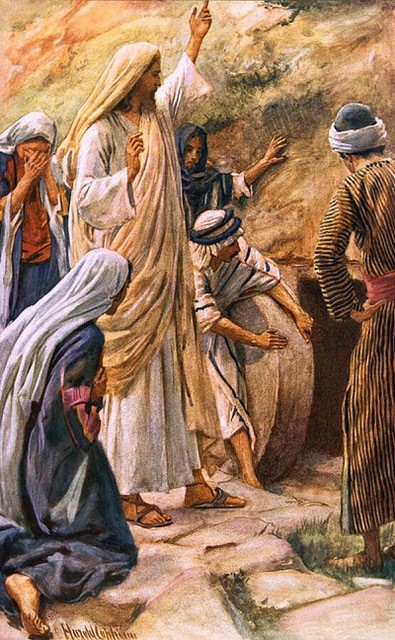
Lazarus Come Out!

Lazarus Come Out!


Pr. Mark Stirdivant:

The Lord be with you! This Sunday, March 29, is the fifth Sunday in Lent. We are a week away from Palm Sunday and Holy Week, even though the pace of life for us these days is quite different from what we’re typically used to. A week away may seem longer than usual!

Let us prepare our hearts for study in God’s Word, using this Sunday’s Collect of the Day, which gives us a helpful theme for our Lenten Resurrection celebration.
Let us pray: Almighty God, by Your great goodness mercifully look upon Your people that we may be governed and preserved evermore in body and soul; through Jesus Christ, Your Son, our Lord, who lives and reigns with You and the Holy Spirit, one God, now and forever. Amen.

The Introit at the beginning of the service is from Psalm 116, and it focuses the Christian mind on hope for life in the face of death. In verse 15 there’s this lovely verse: “Precious in the sight of the Lord is the death of His saints.” God sees the horrible outcome of death through different glasses—glasses tinted with the sacrifice of His Son Jesus Christ! Because of the cross, death is now different. It’s even precious, thanks to what our Good Shepherd has done for us!

The Ezekiel 37 vision is the well-known “dry bones” story. How many of you remember singing about how the leg-bone is connected to the ankle bone? Even though dry bones are raised up, clothed with flesh and given the breath of life, the real resurrection that Ezekiel witnessed in his encounter was the encouraging promise that through all trials and evils of this life, Christ and His eternal kingdom of righteousness by grace reign supreme.

Romans 8:1-11 begins a wonderful comforting chapter of Scripture with a profound exclamation: There is now no condemnation for those who are in Christ Jesus! No condemnation is more than the lack of a bad thing—it’s all the good things, the blessings of God that were earned for us by Christ’s cross payment, that come with it that flood the whole chapter that follows. We are not in the flesh, nor minded toward things of the flesh anymore. Our perspective has been graciously changed (thanks be to God!) to things of the Spirit and eternal life.

John 11 is the story of Jesus raising Lazarus. This is the great miracle leading up to John’s account of Holy Week. Perfect reading for the Fifth Sunday in Lent! The buzz about Lazarus was still buzzing when Jesus was riding the donkey into Jerusalem on Palm Sunday! Martha is a striking character to follow through John chapter 11. Remember the story of Mary and Martha in Luke 10? Martha was distracted with cooking and preparations and took it out on Jesus that Mary wasn’t helping her! Then here she states the beautiful hope in her brother’s resurrection at the last day, to which Jesus responds, “I am the resurrection and the life.” Yet, just as Jesus orders the tomb to be opened, Martha spoke up with the distracted observation, Hey, Jesus, there’s going to be a stink after 4 days of a dead body being in the tomb! That’s just like we are, and Jesus comforts us, too.

As we look forward to God’s promise to be governed and preserved evermore in body and soul, as we prayed at the beginning, we can use this hymn stanza to solidify our confidence in Christ, from hymn 552:

O Christ, who shared our mortal life
And ended death’s long reign,
Who healed the sick and raised the dead
And bore our grief and pain:
We know our years on earth are few,
That death is always near.
Come now to us, O Lord of Life;
Bring hope that conquers fear!

In the name of the Father, and of the Son, and of the Holy Spirit, Amen.

Please feel free to leave a message, a question, a thought, a prayer request. I’d love to hear what you think. Remember to press the pound key when you’re done. God bless you!

Message Center: 641 715-3800     366872#

Readings:
Ezek. 37:1–14 O dry bones hear the word of the LORD!
Psalm 130 If You, LORD should mark iniquities, O LORD, who could stand?
Rom. 8:1–11 there is now no condemnation to those who are in Christ Jesus
John 11:1–53 I am the resurrection and the life.

God’s Gifts

An email from Pastor Stirdivant:

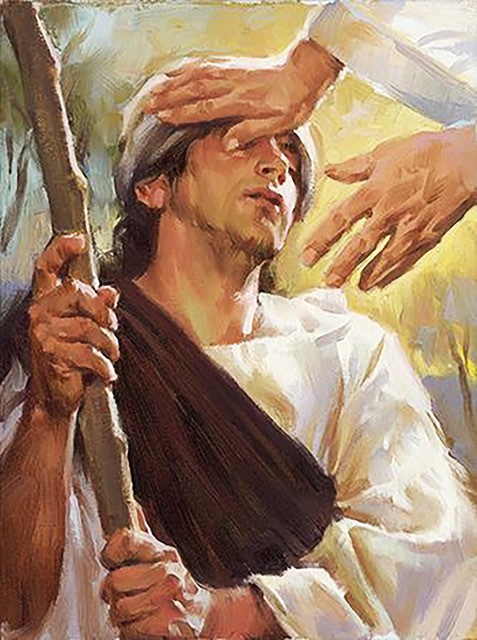
A Man Born Blind

A Man Born Blind

We have beautiful stories to read and reflect upon in our liturgy, and even though I’m not as technically savvy as the other talented pastors I know, I can explore with you God’s gifts for us all in the readings we were set to hear in the coming days, virus or no virus. Feel free to reply all or to me anything you would like to talk about, and if you are interested in having a live event (service/Bible study) together, if possible. My cell phone remains at the ready for you to call me anytime, as always has been my policy. I am not too busy! I will attempt to be in touch with as many of our Good Shepherd’s flock as I can, God helping me. So far, the next Divine Service scheduled is Maundy Thursday, April 9, in case you haven’t heard that announcement yet. We can continue to read God’s Word and pray, because social distancing cannot keep our Savior away from us at any time! He walked in our delicate, disease-prone flesh. He chose to die of sin, of Covid-19, of cancer, of botched surgery, of a car accident, of anything else we humans have died from. Jesus took those diseases and evils voluntarily and willingly, and His death conquered their fearful reign of terror over us. You, dear Christians, have also defeated this hideous enemy that has rocked our world these past few days. Jesus said, Take heart! I have overcome the world. That includes this very worldly pandemic.

This year, the season of Lent has walked us through the Gospel of John. There have been some long Gospel readings, but these stories are intended by the Holy Spirit to be our story, not just the story of Nicodemus, the woman at the well, or next Sunday, the man born blind. We need to place ourselves in the shoes of these people whom Jesus helped one-on-one, for that is what His mission of love is to do–save you for eternal life! One thing this state of emergency can do for us, is to clarify and cut through the noise of day-to-day life (which is quite different these days!) and find new insights that will further enlighten God’s blessed Word to us. Let’s look through the three readings:

Isaiah 42:14-21
Only One can lead the blind out of darkness into light, and that is the God who has created us. Can a blind person say together with Luther, “I believe that God has made me, … and given me my body and soul, eyes, ears and all my members… and still takes care of them”? Of course, we all can, even if we’re deaf, or our other members seem like God doesn’t take care of them anymore. But He does. in the resurrection our bodies will be fully restored. In the mean time, He sent Jesus to absorb all evil and impairment in His human flesh. He sends His holy Word to open our spiritual eyes to see His favor toward us. He opens our ears to hear His forgiveness and our mouths to declare His praise.

Ephesians 5:8-14
Awake, O sleepers! Rise from death, and Christ will shine on you. What a blessed Word that Paul repeated to those who would hear his epistle read out loud in church. But when you read it at home, it is still a powerful Word of light that God is shining also on you and your family, whether you’re together or separated for the time being. Let no one deceive you with empty words…. We will have numerous imposters trying to take advantage of our current condition. We are being warned not to share our personal information with anybody, especially suspected scammers. Let’s also resist the temptation to use this time at home to revel in darkness and self-centeredness. I can tell you from experience, because I am regularly going through everything from stir-craziness to outright dispiritedness. Let’s together say no to the darkness and fix our thoughts on things that are above, and severely limit our exposure to things below, including the non-stop news mania. That is a bad disease to avoid also.

John 9
The entire chapter is worth reading, as it follows up on the young man who was born blind, but then healed by the God in flesh Savior Jesus. Who is blind? Who are the seeing? The answers change midway through the story in a dramatic way. The judgmental law-worshippers condemn the man and his parents for committing a sin that led to the dreadful condition that met this man. Are we tempted to think someone or we ourselves brought calamity upon us? Are we mad at the negligence that didn’t contain this disease when there was a better chance? The more we focus on the law, the more we have to admit that because of our sins we don’t deserve to take the next breath of life in our lungs. Once we realize that, the healing Lord comes to us, helpless and condemned, and recovers our sight with forgiveness and eternal life. We will not perish! We see our Savior, and we know we’ll be okay, even if we’ll go through challenges, famines, pandemics, anything. What matters is that we’re with Jesus now, or He has come to stay with us, to be correct.

Amazing Grace is sometimes an overused hymn, but it does have the well-known line that refers to the miracle of healing for the man born blind. We all once were blind but now we see. Feel free to sing it!

The Epistle is quoted in another hymn we had planned for this Sunday: 697- Awake, O Sleeper, Rise from death and Christ will give you light. … Awake, arise, go forth in faith, and Christ shall give you life.

Feel free to respond to this email to me, to the group, to the Facebook page, wherever you’re reading this. If you want to forward it on to a friend or loved one, please do, as long as you don’t change my words. If you feel I misspoke somewhere, please contact me and we can talk about it. I may need to explain it better or retract any falsehood that missed my poor sinful nature’s attempt to maintain doctrinal integrity. So help me God, for I cannot do it on my own. Neither can you. We’ll receive God’s gifts for beggars together, because that is what we are.

With the Good Shepherd’s love for you all,
Pastor Mark B. Stirdivant
revhollowleg@gmail.com

Sermon for the Third Sunday in Lent: March 15, 2020 jj

Rev’d Mark B. Stirdivant, Good Shepherd Lutheran Church, Yucaipa, California
✝ sdg ✝
Water From The Rock

Water From The Rock

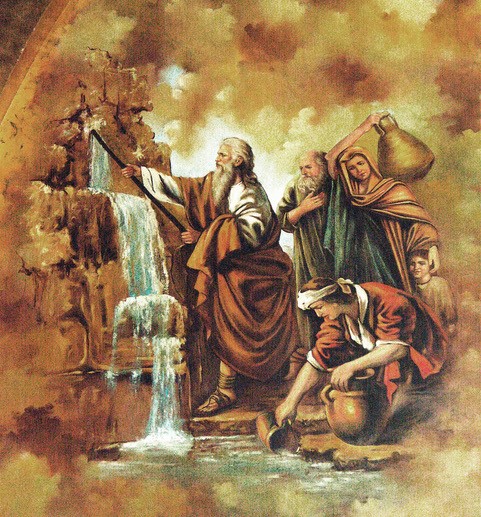
They used to be on TV only late at night or very early in the morning. Now you can see one any time of day. They’re infomercials – advertising video segments that could run from 5 minutes to an hour or more that try to convince you their product is the most amazing thing to come along ever, that it slices and dices and makes you look “years younger” – and that you just can’t live without it. Their producers hope you have a strong enough desire for such grand promises to be true, but you have to wonder how many people who’ve spent their money buying these potions feel as if they received their money’s worth. Most still feel like they’re missing out on something – and wonder, of course, why they aren’t as energetic, enthusiastic or as good looking as those people advertising on TV!

Of course, don’t we all know from experience that much of what’s advertised is seldom what it’s cracked up to be? We really don’t need those things nearly as much as the advertisers claim, right? But having said that, I think it’s safe to say that there is something we each have a very deep need for – even though we don’t admit it for what it is. That’s the thirst we all feel deep down inside our souls for the righteousness and forgiveness of God. The problem, however, is that by nature we’d prefer not to recognize this great need. Often we don’t feel spiritually thirsty, and so God needs to “advertise” that fact to us, you could say, so that we might realize our soul’s desperately dehydrated condition.

That advertisement comes to you today as you hear the Samaritan woman’s thirst for “Living Water” in response to Jesus’ words: “Whoever drinks of this plain, ordinary water will thirst again. But whoever drinks of the water that I shall give him will never thirst again. The water that I give him will become in him a fountain of water springing up into everlasting life.” Now, if like the woman at the well, you think Jesus is speaking of the type of drink that will soothe your physical pain and satisfy your earthly appetite, then you’ve misunderstood the “advertisement.” For this is another type of drink entirely. This drink satisfies the guilt of your sin, absorbs it in fact. It quenches all your worries about God’s wrath and punishment, quells your accusations that the Lord dealt you a bad hand in life, and it refreshes you with the promise of eternal joy and resurrection in Christ our Lord.

As the Samaritan woman would soon learn, this water would completely change her life and make her a child of God. That’s why Jesus had to “advertise” it to her – because she was looking only for something to address her day-to-day needs. She was hoping to get the kind of water necessary for normal drinking, cooking and cleaning – as opposed to the kind of Living Water Christ was offering! But are you any different? Don’t you tend to see your needs only in terms of your own immediate wants and desires? For instance, on many occasions your need for a reliable income might seem more important than your need for forgiveness. A peaceful weekend might seem more precious at times than coming to God’s House and receiving His true peace. Your lunch choice after church and your dinner table at home might look more inviting than the Lord’s Supper. Recreation and leisure time might at times have a higher priority in your life than worship. So, today Jesus is “advertising” to each one of you concerning the need you have for His “Living Water” gifts – for indeed, all of us are spiritually dehydrated, whether we feel it or not.

If you’ve learned anything about surviving summer here in the Desert Southwest, one of the things you’ll be sure to have heard is that you have to drink lots and lots of liquid – even though you might not feel your thirst initially. So, the rule to follow is this: Even though you might not feel thirsty, you have to assume that you are. And that same rule applies to your spiritual thirst. It doesn’t matter how much you think you need God’s forgiveness and righteousness, the truth is, you always need it. Without it you’ll trudge through this life’s desert until finally you collapse and fall headlong into the endless heat of hell’s fiery oven.

Like the woman at the well, you also live in the desert of your sins. Though you may not know it, because of the sin that sticks to your human nature, you are spiritually parched and about to collapse – that is, until God comes to your rescue. First He shows you how thirsty you are when He preaches His Law to you. God’s Law clearly demonstrates and advertises if you will what you’ve done and not done – how you haven’t kept His Commandments, haven’t shown love for either God or your neighbor, but rather hurt them in a way they can feel or behind their backs. The holy Law also reveals the perfect life you haven’t lived – all of which demonstrates beyond any shadow of doubt how dried-out and shriveled-up you are without Jesus.

Then, Christ fills you with His “Living Water” by creating faith in your heart, so that you believe in the promises of the Gospel. In the “Living Water” of Holy Baptism, God has given you new life – and re-hydrated your thirsty soul by the power of the Holy Spirit working through water and the Word – and without this we most certainly would have perished eternally.

As Jesus says in other places, this “Living Water” is no magic potion on TV or a special product that only a chosen few are to receive. Actually it’s something we’re all quite familiar with – it’s the Holy Spirit. And when you pray in the Lord’s Prayer, “Thy Kingdom Come,” the Catechism reminds you that God’s Kingdom comes when Jesus gives you His Holy Spirit. In today’s Gospel, Jesus tells the Samaritan woman that she needs this “Living Water” – because for salvation and eternal life it is absolutely essential. You need the Holy Spirit because, just as your body needs water to live, so likewise your soul needs the Holy Spirit, who connects you to Jesus. It’s impossible to understand God’s Word without the help and aid of the Holy Spirit. The Sacraments can do nothing to create or sustain faith within you without the Spirit’s presence and power that is in God’s Word. The nutrients you need to live a Godly life in response to that faith cannot be channeled into your heart were it not for the work of the Spirit acting as the “Agent” through whom the benefits of these gracious gifts of God are delivered to you.

Consider also how necessary water is for the cleansing of your blood, and for the elimination of harmful wastes. So also then God’s “Living Water” is required in order that your soul might be cleansed and the harmful wastes of your old sinful nature eliminated. Through Baptism you’ve been washed clean of your sin – and by daily remembrance of your Baptism, the Holy Spirit is continually at work – daily ridding you of sin and death. In Baptism your Old Adam has been crucified with Christ, so that the body of sin might be done away with. Christ’s death has become your death, and Christ’s life becomes your life – so that more and more – every day – your life might continue to be molded to the life of our Savior.

Think about how water cools the body and maintains a proper operating temperature. In like manner, the Holy Spirit also cools and comforts you during trials and temptations – even though the devil may be attacking you and trying to destroy your faith. It’s the Holy Spirit who keeps your faith strong during the struggles of sickness, death of loved ones, conflict, doubt, despair and other difficult times. Through all of these the Holy Spirit comforts and cools you by reminding you of the Lord’s power to protect and preserve you in any situation of life. It’s the Spirit who directs you to God’s promises in Christ – and He alone is the Source of all comfort and hope.

Finally, water is what causes you to be able to breathe in the breath of life. Without the right amount of moisture in your lungs, the proper exchange of oxygen can’t take place. Perhaps that’s parallel to how the Holy Spirit works in prayer – since prayer is the “vital breath” of the Christian. In spite of the fact that you don’t always know what to pray for, the Spirit Himself is always interceding for you with groanings that are too deep for words. He makes intercession, a specific request to the Father, for all the saints on earth according to the will of God. Even when you don’t know what you need – you can still be certain that the Holy Spirit is automatically breathing His prayers for you before God’s throne – both to keep your faith alive, and to make your needs known to God.

Without the “Living Water” of the Holy Spirit, your faith would quickly suffocate, your soul would shrivel up and die, there’d be no life in you at all – only eternal death! But the Good News for you this morning is that Christ gives this “Living Water,” freely and abundantly. He does not use a quick-paced voice to rattle off an indiscernible disclaimer, nor does He put conditions on it like some people will tell you. Conditions like, before you receive the Holy Spirit, first you must do something, whether you “surrender your life to Him,” or “empty your spirit,” or “obey Him totally”—things like this force you with the Law to come to God first. But Jesus says: “I am the Alpha and the Omega, I am the Beginning and the End. To him who is thirsty I will give to drink without cost from the spring of the water of life.” Christ has already given you His “Living Water” like a fountain that springs up into everlasting life. It is here before you today to drink deeply, so that in heaven you will finally see and experience what a priceless blessing it really is.

In the Name of the Father and of the ✝ Son and of the Holy Spirit.

Purple Altar Parament

Purple Altar Parament


Readings:
Ex.17:1–7 you shall strike the rock, and water will come out of it
Psalm 95:1–9 Today, if you will hear His voice: Do not harden your hearts
Rom. 5:1–8 while we were yet sinners, Christ died for us.
John 4:5–30, 39–42 the well in Samaria “we ourselves have heard Him and we know that this is indeed the Christ…”

Do Not Fear

Window at Grace Lutheran, Rialto

Window at Grace Lutheran, Rialto

“Let not your hearts be troubled; ye believe in God, believe also in Me.” (John 14:1; read the whole chapter!)

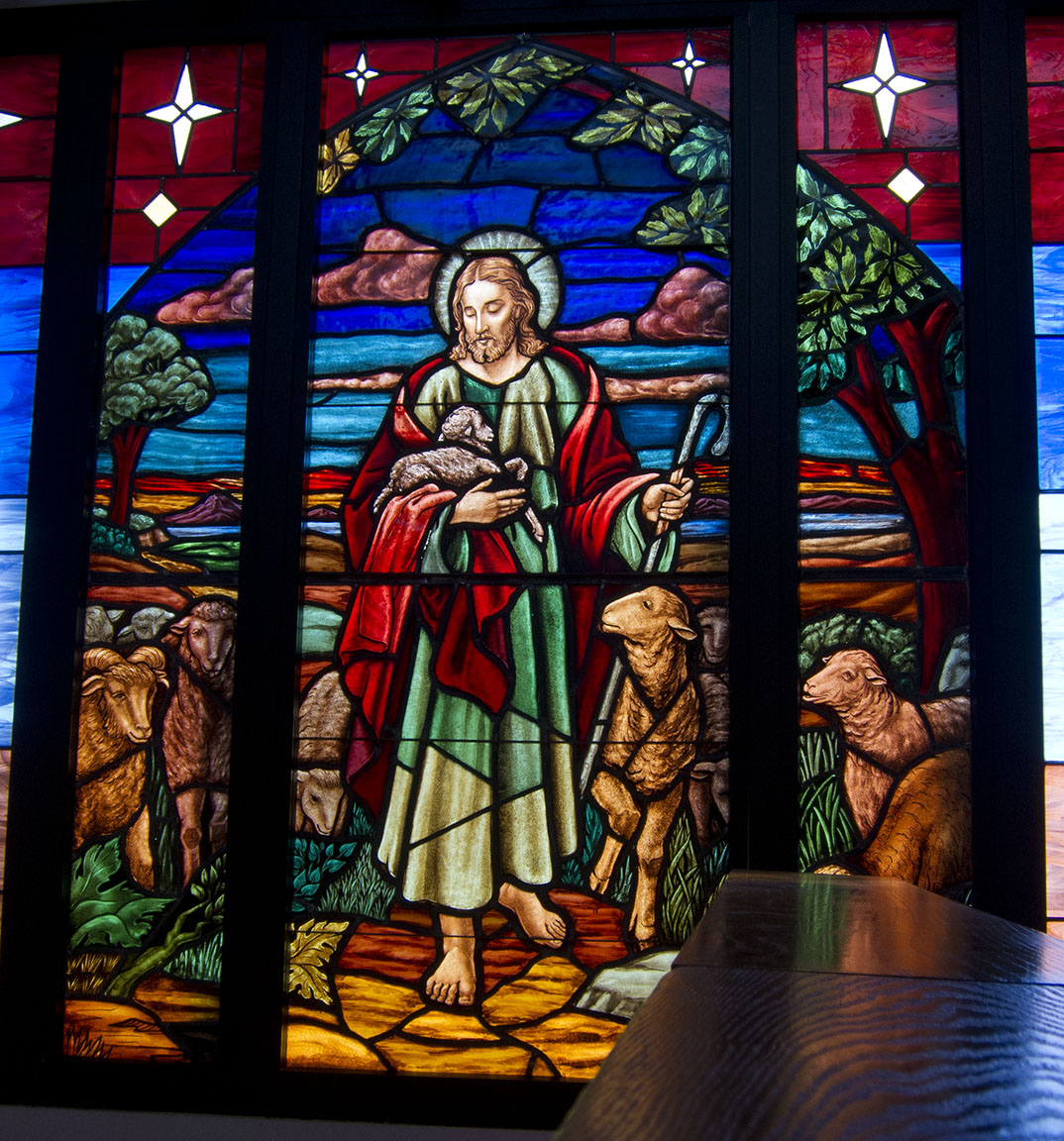
What’s worse? The infamous bat-virus, or the world-wide fear that has gripped the world and dominated our news channels? We in the flock of our Good Shepherd, Jesus, have a message for a world that is wrapped in fear of infection and death—Christ has overcome the world! All evils, including pestilence of various kinds, will come to an end. Our Savior endures forever, and we prevail with Him!

Do we need to be smart? Of course. Do we need to use the reason God gave us and keep in mind the best ways to show love to our neighbor? Absolutely! But fear need not be included in our equation as we address the issues surrounding Coronavirus or the COVID-19 disease that comes from it. There’s one thing to take a health risk seriously, and another to panic as though God has somehow lost control. Over a hundred references in the Bible include the words “Do not fear.” God our Creator (or His messenger) says that in most of the quotations. What God says, that gets done. It’s been that way since day one and He said, “Let there be light.”

The world is looking for salvation from pestilence. We have it! Jesus Christ is our healer and our refuge, and our strength. We’re going to keep having church, because that’s what you do. You pray to your Lord and Savior, who has power over heaven and earth, and you receive His free gifts. Will you be insulated from disease or any other evil? No. But you weren’t promised a bubble to live in on earth, you were promised a vast mansion, living in your Father’s house for eternity!

Whatever you may think about this emergency situation, there is this one thing: Tomorrow, March 15, has been declared a National Day of Prayer. Our president, of whom no one has a neutral opinion whatsoever, has urged us, Christians especially, to pray for our nation. That we shall do. I will include a special prayer in a time of national emergency at the beginning of our Divine Service. I pray you will join us, and join constantly in the only remedy to fear, which is faith that trusts in the blood bought forgiveness and life of our Good Shepherd, Jesus Christ.

The Lord be with you, and Do not fear!

Pastor Mark B. Stirdivant
Pastor, Good Shepherd Lutheran Church

Resources for your consideration:
Missouri Synod President’s encouragement.

Interesting history of Martin Luther’s response to an outbreak of plague in Wittenberg.

Sermon for the Second Sunday in Lent: March 8, 2020 jj

Rev’d Mark B. Stirdivant, Good Shepherd Lutheran Church, Yucaipa, California
✝ sdg ✝

Abraham

Abraham


Abraham must have been hearing things. This idea about having a son in our nineties has to be considered an impossible dream now. So Sarah thought. We have to make our plans and take care of affairs so that more problems won’t arise. We can’t wait for God to act anymore. So she gave Hagar to Abraham, and she conceived for him a son. God helps those who help themselves? Apparently not, according to this story! Hagar’s son Ishmael was not of the promise, but of the law, of bondage to doubt towards God. He and his seed would be the troublers and persecutors of the children of Abraham. He too would father a great and powerful nation, but Abraham and his succeeding generations will learn under the pain of constant strife to lament this decision in which Abraham took matters into his own hands. Middle-Eastern history and current events bear this out through the ages and to this very day.

Then at age ninety-nine and still childless with Sarah, Abraham continued to hope in the Lord. The foolish sign of circumcision was given– Abraham, and his son Ishmael, and all the men of his house, were to go under the circumcision knife by God’s command. Yet again, the unbelievable promise was renewed, “You shall be a father of many nations, and you shall be called Abraham. I will make you exceedingly fruitful. Also I give to you and your descendents after you all the land of Canaan, as an everlasting possession; and I will be their God.” Sarah shall bear to you a son, Isaac, at this set time. A foolish ritual, a promise of nations coming forth from a so-named “father of many” who yet remains childless, and a child from a mother whose age puts her beyond the ability to bear children; and yet the knife cuts, Abraham believes, with perhaps a few questions still in his mind, and Sarah just plain laughs.

Still, the Lord did for Sarah as He had spoken. She conceived and bore Abraham a son in his old age, at the set time which God had appointed. And the promise was made flesh, you could say. Then when eight days were completed for the circumcision of the child, his name was called Isaac, the name given in remembrance of their laughter. Although it took many years to fulfill, the promise came through just as the Lord’s Word had said it would. Even though Abraham stumbled and Sarah laughed, God in His undeserved grace made them the ancestors of all who believe, now including you, and all heirs of eternal life.

With a memorable story like this, you would think that loyal descendants of Abraham would never doubt the Lord’s Word and promise ever again. Not so with Nicodemus! He was much more receptive to Jesus than most of the Jewish council, but still he had his doubts and questions. He met with Jesus by night because of his fear, but he could also be doing his best to protect Jesus also. It seems that he arranged this clandestine meeting while the Lord was in the city of Jerusalem, celebrating the Passover- always a big event on Jesus’ calendar. With the Passover liturgy and message fresh in his head, this thoughtful teacher of Israel may have caught the obvious references to Christ’s own giving up of His life and Nicodemus wanted to talk further with the Lord about His miraculous signs.

But the interview suddenly takes an unexpected turn that throws the learned man off. He wanted Jesus to talk more about how He has fulfilled Scripture, or how it could be that He is the true Son of God like people are saying about Him. It’s like Jesus cut him off at the knees and said the very thing He knew was on that puzzled man’s heart. Nicodemus was still trapped in a system that insisted on following the rules and laws of God in order to gain eternal life. He thought Jesus could help him out of this difficulty. Just like Abraham thought the Lord’s promise would finally come if he were to take Hagar to be his “baby mama” for hire, so Nicodemus reeled back at the demand Jesus put forth: “Unless one is born again he cannot see the kingdom of God.” The only word he could hear is the one that makes it an impossibility—that’s the word “again.” When you say that, you might as well have said to him, you too will have a son when you’re 100 years old!

But the point Jesus was making was centered in the word “born” more so than on the word “again.” When Nicodemus objected to that shocking statement, he immediately thought of biological logistics. He said: “How can a man enter his mother’s womb a second time to be born?” You see? All he’s thinking about is, “again.” Jesus, on the other hand, is talking more about being born, born another way—a spiritual way. This is the way He came to this world to provide for all those who believe on His name, as John wrote: “He gave the right to become children of God, who were born, not of blood nor the will of the flesh nor of the will of man, but [born] of God.” (John 1:12-13) Without that kind of birth, no one is going to enter the kingdom of God.

That kind of birth is called being born of water and the spirit. It’s baptism. It takes the Gospel, plainly stated in John 3:16, and it pours it out into your lap, or actually, on top of your head. Think about it—God loved me and gave me His Son, so if I’m a believer, I will have eternal life. If John 3:16 is learned all by itself, that’s okay, but remember that that single verse by itself does not repeat an important point Jesus made earlier in chapter 3—an unstated link, which is: how do I become a believer? Some Christians would then answer that question, you become a believer once you commit your life for sure to Jesus. Others guess that you need to do certain steps of penance first. The Bible says: be baptized, and the Holy Spirit will give you the faith to believe in the Name of Jesus. Not that obeying God’s command to be baptized earns you any points, it’s rather more like Christ is saying, I’ve got it all done for you. The check is written and the money is guaranteed in the bank. Sign your name, and it’s yours, no strings attached!

Does your heart accept this simple, Gospel truth, despite what your day-to-day painful experience tells you? Then that’s an Abraham faith. Or do you fix your attention instead on some part of what you hear today that just doesn’t make sense, or that in your guilt you think, if I were God, I wouldn’t accept me, not after what I’ve done or how I’ve lived. Maybe your anger at God or someone else solidifies the impression you get that it’s all just too good to be true. That’s a Nicodemus-style skepticism.

You have probably found yourself somewhere in between those two. Nicodemus needed time to digest the precious Gospel Word that he heard late that one night. He got up the courage a little later to question why the Jewish council was not giving Jesus and His teachings the privilege of due process. (John 7:51) By the time the Great Passover sacrifice event happened on Calvary’s hill, Nicodemus was ready to believe and act on that faith. John says in the Gospel that it was Nicodemus who provided the spices to anoint Jesus’ body as He was laid in the tomb of Joseph of Arimathea. (John 19:39) God’s Word may take its time to sink in for you, too. Wait for God to act, like Abraham had to wait patiently in faith. Resist the urge to take things into your own hands. But for today, for now, know this for certain: you have been born of water and the Spirit. You were brought forth, you could say, from the womb of Christ’s Bride and you are assured from His own mouth that you are forgiven, and you are God’s child. Believe it. This is your gift. Let your Nicodemus questions turn aside. Your Abraham faith, shining through your present weakness, will be counted in your Father’s sight as righteousness, full acceptance, Christ’s own perfection counted as yours.

It will still seem foolish. An impossible dream, perhaps. The questions may still come to your mind. Your weakness of the flesh will lead to stumbling. But your faith will endure, because it is not your own, it is God’s gift to you; your heavenly destination rests on His grace. It was not true only for Abraham—you are counted as righteous too. You did not work, you did not commit your life, you simply admitted the truth: I am a sinner, and you rested firm, believing against all hope, in the knowledge that Christ came to save sinners. That means neither your sin, nor anything else you can think of, will ever prevent Divine grace from making you forgiven, pure and whole again, this very day and forever. Blessed are those whose transgressions are forgiven, and whose sins are covered. Blessed is the one against whom the Lord will not count his sin. You shall not perish, but have eternal life.

In the Name of the Father and of the ✝ Son and of the Holy Spirit.

Purple Altar Parament

Purple Altar Parament


Readings:
Gen. 12:1–9 So Abram departed as the LORD had spoken to him
Psalm 121 I will lift up my eyes to the hills
Rom. 4:1–8, 13–17 Abraham believed God and it was accounted to him for righteousness.
John 3:1–17 a man of the Pharisees named Nicodemus … but that the world through Him might be saved.

Sermon for the First Sunday in Lent: March 1, 2020 jj

Rev’d Mark B. Stirdivant, Good Shepherd Lutheran Church, Yucaipa, California
✝ sdg ✝

Temptation

Temptation


All the Lord’s ways are mercy and truth (from Tobit 3:2). That sounds pretty straightforward, easy to believe, right? God does all of that good stuff. I want the good stuff, so I believe in God. That’s a very shallow way to think of faith, but sadly, it is quite popular in our culture. Many Christians, including Lutherans, can get lured into believing some form of the idea of Karma. I know the name “Karma” comes from the Hindu religion, so right away you can perceive that it’s off-base somewhere in its philosophy, but really, all you’re concerned about is some kind of justice that’s gotta be out there in the world. That somehow those bad people are going to get what’s coming to them. That if you do enough good things, that you’ll get your reward eventually. I know that’s a tantalizing thing to believe, and it gives you great mileage in making you feel good when everything in your life seems cruel and unfair. But there are times when even Karma is not going to give you relief. There is no promise from God’s Word that backs up a hope that Karma, or whatever you call it, will settle everything. There is a promise from God’s Word about Jesus, and it is only in Him that we find God’s mercy and truth, yes, and even His justice.

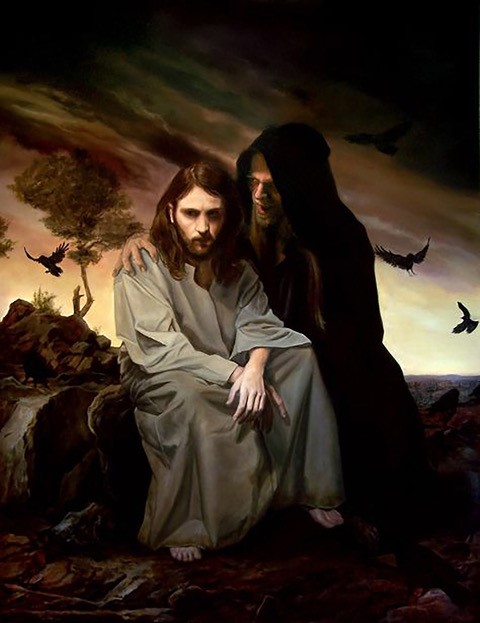
Most Christians are very puzzled by the Gospel report of Jesus being tempted in the wilderness. If He couldn’t sin, then why was He tempted? If our Lord was going to do battle with Satan, then why didn’t He strike him and his minions down with a walloping battle assault? All this fasting He did, suffering, hungering and quoting Scripture words seem so weak, unassuming. If you tried that, you would be laughed off as defensive and wimpy. What did Jesus do to deserve such disgraceful treatment? The idea of Karma would make no sense here! And wouldn’t it be better for the Lord to bring an end to all suffering, or at least to shield His own children more effectively and absolutely from the assaults and crafts of the devil? We are exposed to all the tricks of the ancient enemy, and it doesn’t make logical sense that we feel left out on our own in this world. But the Lord’s logic exceeds our understanding. His foolishness is wiser than our wisest wisdom. And His ways are not our ways. For all His ways are mercy and truth.

And that is how we must hear today’s Gospel of our Lord’s temptation, His testing. Not as some mythical story of good versus evil. Not as the first skirmish in the great battle between God and the devil. And certainly not as an example for what techniques and weapons we should employ when we fight our own battles, what courage we should muster, and what perseverance is required when we battle the devil, our own sinful flesh, the world’s various temptations it throws at us, our physical infirmities and the demons that torment our heart and mind.

This is a story of Our Lord’s mercy. He gives clear evidence that He has, and that He will, freely engage and beat back the devil for us. We don’t have that assurance whenever we assume that some justice out there in the great big universe is going to come around someday. Jesus shows that His promise to be for us is not an empty promise. He pointedly enters our fray, and immerses Himself in our misery. He put on your flesh, He fought your battle against the devil and sin. And He proves that He can and has overcome not just some evil forces, but the very devil that taunts and haunts you. He won your victory.

What you have heard today, then, is the beginning of your salvation. For until now in the Church Year, the continuing story since Christmas has all been promise and expectation, pledge and hope. But when the Spirit that came to Jesus at His baptism shoves Him out into the wilderness, when the Father inserts His Son into the middle of the devil’s playing field, plopped him down into Satan’s video game, when the Lord makes Himself vulnerable to demonic and diabolic tricks–then He begins to come through on His promise; then hope becomes real; and then the Word and pledge for your forgiveness and everlasting life comes true.

Yet you still may be tempted to hear this story as history–a true event, of course, but it took place long ago and it has meaning today only because it changed the course of events way back then. But the Lord’s mercy is not mere history. And His ways are not simply past events to set the world straight, or just evidence to prove that He can do it.

When Our Lord enters the wilderness to battle Satan, you must see that the Lord is entering your own wilderness. Not just some deserted place in Judea, but the desolation of your own heart and mind—all that hurts you, all that you have used to afflict others, that is what the Lord enters, makes His own, and suffers. As the Psalms continually pray, the Lord plants Himself squarely in our muck, our slimy pit, our mire and the filth we have made. He sits in the dust and ashes with us. He descends to the lowest part of our personal hell. He wraps Himself in the things that trouble us so deeply that we cannot find the words to confess or explain them. That is our wilderness. And there is Our Lord, in the midst of it, taking on our devils, fighting back our demons.

That is the Lord’s mercy. As you are hearing the Gospel today, that’s what’s going on in your heart to create it new again. I’m not lecturing about Divine blessing coming down mysteriously from on high. No philosophy of Karma coming around and rewarding good and bad as if there were some necessary balance between those two. I don’t give you simple words of comfort, vocal sounds that are psychologically proven to settle the mind and ease the heart. This is what you’re getting today, right now: The Lord Jesus becomes your sin, bearing your infirmities and weaknesses, washing them away in your Baptism and Absolution, enduring your grief, living your hell, dying your death. All the Karma that the universe can muster came crashing down on His shoulders, requiring Divine Justice solely from His nail-pierced hands!

And in the midst of that, He says, as the hymn sings:
Hold fast to Me,
I am your Rock and Castle;
Your Ransom I Myself will be,
For you I strive and wrestle;
For I am yours and you are Mine,
And where I am you may remain;
The Foe shall not divide us.

That is the Lord’s way. And there is the Lord’s mercy for you. Not in some spectacular-looking battle between the forces of good and evil. But Jesus is right there in your wilderness, battling your devils, fighting back your demons, undoing your messes, and holding you so tightly to Himself that hell, death, devil and anything else cannot and will not snatch you from His hand. It looks to us like losing, but really, our Lord, the Word made flesh, quoting the written Word that you have today in your hands, He has won! The Bible does tell you so.

That is how you should hear today’s Gospel. For it is not just another religious story. It is the Lord sending His Son to have mercy on you. It is the Lord’s Word and sure mercies overcoming your greatest fears. It is the Lord placing Himself squarely between you and the things that threaten to undo you. It is the Lord giving you more than what Karma can ever give you—you have His strength where you have no strength. It is the Lord enduring and persevering even though your hopes fade and your faith wavers. Never fear, for all the ways of the Lord are mercy and truth.

And if that is not enough when you are really suffering a trial, remember that there are also the holy angels who minister not only to Jesus, but He sends them also to serve you. Once, you were alone and without hope – helpless before the threefold enemies of your old sinful nature, this fallen world, and the devil. But now, with all the hosts of God’s kingdom, you too are able to sing with joy the words Martin Luther penned so long ago in celebration of the blessed victory of the Savior for us all:

“Though devils all the world should fill,
all eager to devour us,
we tremble not, we fear no ill,
they shall not overpower us.
This world’s prince may still scowl
fierce as he will.
He can harm us none,
he’s judged; the deed is done;
one little word can fell him.

The Word they (our enemies) still shall let remain,
nor any thanks have for it.
He’s by our side upon the plain (of our battle)
with His good gifts and Spirit.
And take they our life,
goods, fame, child, and wife,
though these all be gone,
our victory has (still) been won.
The kingdom ours remaineth.”

In the Name of the Father and of the ✝ Son and of the Holy Spirit.

Purple Altar Parament

Purple Altar Parament


Readings:
Gen. 3:1–21 Now the serpent was more cunning than any beast of the field
Psalm 32:1–7 Blessed is he whose transgression is forgiven
Rom. 5:12–19 through one Man’s righteous act the free gift came to all men
Matt. 4:1–11 Jesus was led up by the Spirit into the wilderness to be tempted

Sermon for the Transfiguration of Our Lord: February 23, 2020 jj

Rev’d Mark B. Stirdivant, Good Shepherd Lutheran Church, Yucaipa, California
✝ sdg ✝

transfiguration

transfiguration

Peter wrote his second epistle from prison. Not a comfortable nor cushy place. It was a dark, dirty, and lonely place, full of fear, and most times it seemed devoid of all hope. When you sing with the prophet Isaiah, “The people that in darkness sat,” don’t forget about Peter and all the other apostles and prophets who did time unjustly because they proclaimed the One true Savior, Christ Jesus the Son of God. Of course, these pillars of the early church knew that heaven was their true home and soon, perhaps within mere days like it was with Peter, they would be rid of all that pain and persecution and depart to be with Christ, which is better by far, as Paul once said. We all need to be reminded of that perspective every day, even though those painful trials we face will still attack us in this earthly life.

Peter must have had a good amount of time in prison to recall memories of the past. There must have been so much from the three years or so that he was a disciple of Jesus, when he and the other eleven were following Him around and learning so much that the Holy Spirit would later bring to their remembrance. But of all the memories that Peter could possibly recall, he wrote in his last recorded letter about the time when he witnessed the Transfiguration, that is, the time when he and two other disciples with him saw the face of Jesus shine radiant and his clothes turned white as light. Moses and Elijah appeared in heavenly glory with Him and they had a conversation over what Jesus will soon do for the salvation of the entire world.
What a life-changing day that must have been for Peter! Truly astounding, both to his eyes and ears! For Peter not only saw Jesus in full Son-of-God glory, but he also heard the voice of the Father speak from out of the radiant cloud, “This is my beloved Son. With Him I am well pleased.” There could be no way anyone who witnessed that could ever forget it! Do you suppose that glorious memory encouraged Peter when he sat in that prison, that total opposite of the exalted mountaintop which was filled with God’s light? You would think so, but no, Peter himself says there’s something that’s even greater and even more of an assurance than that experience could provide.

Peter was fully aware of what the enemies of the Christian faith were saying. He was aware of the charge out there that all this Jesus stuff was just a cleverly devised myth. Just think of that: not even a generation had passed after Jesus rose from the dead and ascended into heaven, and still there were people spreading the untruth that it had never happened! It’s not just a 20th century idea, and such slanderous bunk has been around long before books and films like the Da Vinci Code were ever hatched in anyone’s brain. Would Peter and the other disciples of Jesus have gone through such agony of persecution if any one of them knew that Jesus was a hoax? Surely somebody would have caved in! He would have been celebrated as the ultimate whistleblower! No, Peter was entirely convinced for himself, yet this loving pastor, a true shepherd of souls, found it necessary to write by the inspiration of the Holy Spirit for the benefit of those in the church, including you so many centuries later, so as to relieve the uneasiness that doubt can bring to your heart.

What would bring that full assurance to you? What would tell you once and for all that you should never give up on being Christian? What would prove conclusively to you or to someone you’ve been talking to that Christ is not a myth? Would it be an experience like Peter had? Just think of the extra confidence that could well up within you if you had a direct contact with your risen Lord and Savior! And while He’s at it, let God appear in awesome majesty to that unbeliever and knock ’em down flat.

Maybe you had a moment in your life when you felt close to God, so much so that you sensed yourself directly in contact with Him. Everything fell into place then, your assurance was high, and your commitment to the Lord was unflappable. Sometimes, God allows such wonderful moments to happen in a person’s life, and there’s nothing wrong at all with that. There are Christians, however, including some Lutherans, who are being taught to believe that they aren’t a Christian, or at least not a fully-developed and sanctified believer, unless they’ve had one of those emotional “mountaintop” experiences. They may be deceived into thinking that their often-manufactured euphoria must endure or even increase, and it must translate into a morally spotless life free of suffering, or else something must be wrong with their faith. Yet an unbiblical demand such as this is one of the surest ways to pull you away from Jesus and it does serious harm to the true faith that the Holy Spirit planted within your heart by your hearing His Word. It also strengthens the skeptics and unbelievers who are always out there collecting whatever so-called evidence that they could find to portray Christians as wild-eyed do-gooders, or plain hypocrites.

That’s why Peter writes what he remembers of the Transfiguration of Jesus on the “holy mountain,” not to boast of his personal experience, but in order to give you what really matters for your day-to-day Christian life. Indeed, he said “we were with Him, we heard the voice, we saw His glory,” all to put the naysayers to silence. But for you, for the believers, there’s something more, and Peter says specifically that you would do well to pay attention to it. Whether you’re literally in a dark, dirty place like prison or not, whether you’re aware of your spiritual darkness of sin or not, take heed of this light because it’s the only true comfort you need. Everything else in this world will at one time or another leave you helpless and lonely. What is it? The Gospel. Who speaks it? Jesus does, for after all, God the Father said, “Listen to Him!”

And your Lord says, I came to earth and I, the glorious Son of God was born in your fallen human flesh. I came, not to hand down to you more rules to follow but to wash your sins away from you. I, Jesus says, I who knew no sin became sin for your sake. I took your heavy burden of guilt and removed it from your shoulders and carried it along with the cross to die for you. I gave my life willingly as your ransom from prison. My light has shined in your darkness, so that you could sing that ancient psalm with confidence, “The Lord is my light and my salvation, whom shall I fear? The Lord is the stronghold of my life, of whom shall I be afraid?”

Listen to Jesus, who not only died, but also rose from the dead, for He who took your sins to the grave with Him, has left your sins there in His empty tomb. Your offense against God remains dead and buried, but you are raised up with your Savior to walk in the newness of life. This renewal is the Holy Spirit’s gift to you, not an achievement that you have to produce for yourself. Think of the Transfiguration story again: what was the mightiest, and most Gospel-filled moment of that event? Was it the blinding light? No, Jesus always had that absolute power with Him, only at the other times when people saw Him, He simply refrained from displaying His full majesty. So was it the sudden appearance of Moses and Elijah in splendor? No, they were always there as part of the whole company of heaven. Was it the voice from God the Father? No, somebody had to step in to stop Peter from talking nonsense.

Instead of all those flashy, knock ’em dead parts of the story, God’s true Gospel power was revealed when it was all over, when the light faded, the prophets hidden from sight, the Father’s voice stopped speaking, and there was no one but Jesus only. And just like Elijah discovered God not in the earthquake, wind or fire, but rather in the still, small whisper, so it was for Peter, James and John on the mount of Transfiguration. Jesus, plain-looking ordinary Jesus, came and touched them and said, “Rise, and have no fear.” That was the truly powerful moment in the story, the moment of forgiveness, of a gentle but sufficient removal of all their fear. You experienced that powerful moment in your life when plain, ordinary water poured over you along with the mighty words of Holy Baptism. God the Father has proclaimed He is well pleased with you.

So Jesus bids you today, do not fear, for He is close to you, even at those times when you don’t feel close to Him. In fact, He is even closer to you now than He was to Moses and his companions who dined with God on that mountain in Exodus. The holy Body and Blood of Jesus Christ is here for you to eat with your own mouth, so that you would be strengthened in the one true faith to life everlasting. Here in Holy Communion you’ve been given your direct contact with God! It’s not a passing experience that you have to recall from memory later, rather it’s the holy food that you need for daily life in this world. You may feel the bumps and bruises of carrying your cross along with Jesus, but His gentle, reassuring touch is always there. And soon the day shall dawn when Christ shall come again. He, the Light-bringer, the bright and shining Morning Star, shall appear to you so that you too will glow bright in His reflection, with the same brilliance as Jesus had in His Transfiguration. For you who once sat in the prison-darkness of sin have seen the great light of God’s forgiveness for your sin and eternal life in resurrected glory awaits for Moses, Elijah, Peter, all the saints, and you as well.

In the Name of the Father and of the ✝ Son and of the Holy Spirit.

White Parament

White Parament


Readings:
Ex. 24:8–18 the glory of the LORD was like a consuming fire
Psalm 2:6–12 You are my Son, Today I have begotten You.
2 Peter 1:16–21 redeemed…with the precious blood of Christ
Matt. 17:1–9 and He was transfigured before them

Sermon for the Sixth Sunday after the Epiphany: February 16, 2020 jj

Rev’d Mark B. Stirdivant, Good Shepherd Lutheran Church, Yucaipa, California
✝ sdg ✝

Ten Commandments

Ten Commandments


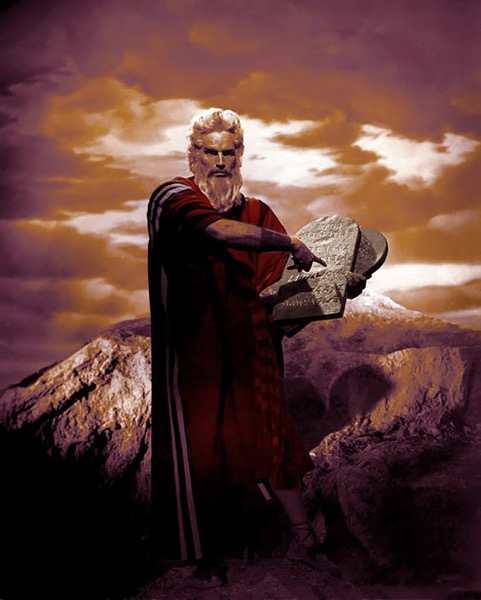
Do you remember a time when you had to undergo a test of maturity? You could probably remember how it happened when you were, perhaps suddenly, forced to abandon the childish, self-centered and feelings-oriented time (some might call them the “good old days”!) and start acting more like a responsible adult. Paul wrote, “When I was a child, I spoke like a child, I thought like a child, I reasoned like a child. When I became a man, I gave up childish ways.” (1 Cor. 13:11) There is usually a moment or a series of events in our life when our maturity has to be tested.

During those times of testing you wonder if you were going to fit into those “big boy” or “big girl” pants, after all. You felt abandoned, betrayed by how easy childhood had made everything look to you. Now that you face it, the situation seems much more difficult. You were going to be much better at parenting than your own parents were, you were absolutely certain of that, until the day your first child was born. Then it was like you had to learn everything all over again! How frustrating that was to start again from square one!

Tests of maturity come throughout our life, and not just in the critical times of adolescence and teen-age. What is even more important are the tests of our spiritual maturity. At these particular times you are confronted with the pressing question that you cannot avoid: will you rely on yourself, on your own powers and resources? Will you revert to the wisdom of this world, and forsake the mind of Christ? Or will you deny yourself, take up your cross of difficulty and shame, and follow Jesus into a way that will be despised by the world, that will lead to your rejection, even by your close friends? Will you (as all the Commandments demand of you) fear, love and trust in God above all things? Or will something else come up and become your miserable substitute god? Will you revert back into spiritual childhood and have to start again your growth in the Lord’s Word?

The Apostle Paul had realized, after being away for a few years, that the congregation of new believers in the Greek city of Corinth was facing a great test of her spiritual maturity. The whole epistle addresses one problem after another that had sprung up in their midst, and he had heard reports from others about them. Right at the beginning of the letter, Paul pointed out a trend that was going to threaten their very existence as a church, and might actually tear them apart. The congregation seemed to be breaking off into teams, or political cliques, and many people were believing that belonging to one of those groups was more important than hearing the Gospel of the forgiveness of sins. Paul was not flattered by the existence of a group that owed allegiance to him: “I follow Paul.” Nor was he incensed that others were enamored by the wonderfully talented speaking ability of his successor pastor: “I follow Apollos.” The Apostle was only concerned that these groups formed in the first place! He wanted it to stop. Be united in the same mind! Follow the Word of the Cross of Jesus Christ! Make your boast in no one else but the Lord.

You are people of the flesh, said Paul to the Corinthians, infants in Christ. You needed milk, not solid food, for you were not ready for it. Something else besides God’s Word and the forgiveness of sins has caught your eye, and you are tempted to stray away from the inheritance of faith and eternal life. You want a prosperous earthly kingdom of some sort, something to prove that you are significant in the opinion of the world. You have therefore lost sight of the true, yet hidden power of Christ crucified and risen from the dead. And when these arguments about allegiance to this or that human being, when all this jealousy and hatred for your fellow forgiven sinners and co-workers in the Lord’s vineyard springs up, the sinful human nature tempts you to behave in a human way, says Paul. When this sort of thing takes over in a church, then it alerts the Apostle that it’s time to get back to the basics and form them in the image of Christ once again.

Not that there’s anything wrong with a return to simple truths, though, as Martin Luther himself said, I take my catechism every day and repeat it word for word, praying it like a child. But this problem in Corinth was more like what James complained about in his epistle, “A man … looks intently at his natural face in a mirror. For he looks at himself and goes away and at once forgets what he was like.” (James 1:24) If you are constantly acting like you are “new” at the Christian life, always slipping on the same sins, incessantly unsure about the love and mercy of Jesus, then you haven’t really believed and retained in your heart the Gospel message. For instance, you have heard all about forgiveness, but you go right ahead anyway and condemn your brothers and sisters in Christ with an angry, bitter heart. In some way, you have determined that they have not deserved your love, so you are not going to give them even the time of day.

That’s the point at which you need to repent, and return to the basics, the milk of simple Law—you have offended God because of your sins against Him and other people—and the Gospel—Jesus has paid the full price for your sins and you are completely forgiven. A more advanced and mature Christian life builds on that simple foundation, of course, but with more years’ experience in it you get a better understanding that God’s forgiveness has set you free from the constant slavery to sin, you are better equipped to head off those sinful urges and temptations, and you rely more on what the Word says, rather than simply what your feelings feel.

Another sign of Christian maturity is how you see the role of your pastor. At first, the Scriptural truth is very easy to grasp: he’s just a mouthpiece of the Lord. He who hears you, hears Me, Jesus said to those first pastors. Yet the Corinthian Christians were dividing up into warring factions, thinking that one preacher gave more blessings than another, when both were preaching the very same Word of God! That completely misses the point! No matter who the pastor is who preaches from this pulpit, you the hearers must train yourselves with proper spiritual maturity to listen for and test the Word that they preach, even though no two styles will ever be identical.

When a plain, ordinary, flawed man whom you don’t always like, nevertheless with the authority given to him by Christ Himself announces to you the forgiveness of your sin in the absolution, then believe the Word. The man is secondary, actually in comparison to the Word, he is nothing. Whether it was Stirdivant, Nava, Wolter or Pledger, it was still the same Word they preached, and God gave the growth, as the Apostle Paul declares. If it pleases Him, and we certainly pray that it does, God will give the growth again. Not because we pray hard enough, not because we deserve it, not because we have finally put all our childish ways behind us for good, but because our Lord promised: My Word that goes out from my mouth… will not return to me void. It will accomplish My purpose for which I sent (the Word out). (Isaiah 55:11)

Let not the slavish, childish ways of being merely human weigh you down. In repentance, give them up and rely completely on your Savior. Embrace the freedom that His Word of forgiveness gives you! As Lent approaches in ten days, witness once again the suffering Lamb of God, Jesus Christ, who went to the cross for you, so that in His forgiveness you would be reunited with your heavenly Father, and in Christ, united also with your fellow forgiven brothers and sisters. Only when sin, anger and resentment are drowned in the Baptismal Water, covered by the Blood of Jesus, can we then work together with God in His mission. We proclaim His truth and share His mercy. We grow in our Christian maturity whenever we face a time of testing and trust in the holy cross of Christ. Without Him, we could never do it, but now that you have heard the peace of the Lord from God’s own chosen mouthpiece, nothing in this world or in Satan’s kingdom will ever be able to stop you!

In the Name of the Father and of the ✝ Son and of the Holy Spirit.

Green Altar Parament

Green Altar Parament


Readings:
Deut. 30:15–20 I have set before you today life and good, death and evil…choose life
Psalm 119:1–8 Blessed are those who keep His testimonies
1 Cor. 3:1–9 I planted, Apollos watered, but God gave the increase.
Matt. 5:21–37 First, be reconciled to your brother, and then come and offer your gift.

Sermon for the Fifth Sunday after the Epiphany: February 9, 2020 jj

Rev’d Mark B. Stirdivant, Good Shepherd Lutheran Church, Yucaipa, California
✝ sdg ✝

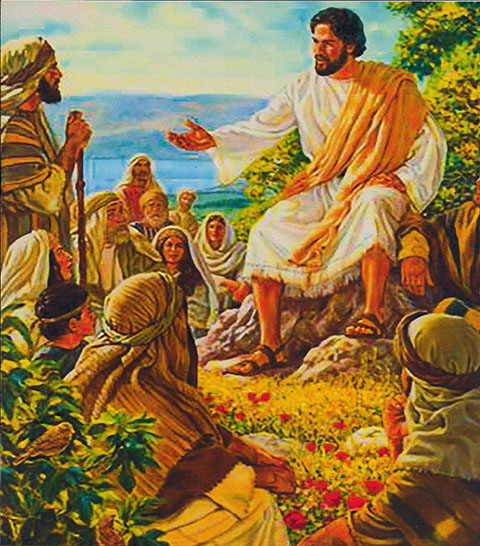
Sermon on the Mount

Sermon on the Mount


Fasting is clearly an individual activity (Jesus Himself said, let no one see what you are doing, Matt. 6), but it is also understood to be done together as a church, in mutual love, as a positive kind of discipline or bodily training for the building up of the whole congregation. Lutherans fasted in years past, but it was not to make God look upon their good works in addition to those of Jesus, nor did they try to connect themselves to Christ on some emotional level. You see, fasting, when tied closely to a Christian’s faith alone in Christ and what He has done for us, is a certainly fine outward training, as Luther says in the Catechism, because it helps the humble believer rely wholly on God’s Word for life now and life eternal.

But the sinful nature was not going to let fasting remain a good and wholesome thing. Satan himself would stop at nothing to corrupt it because he commonly uses even the most salutary-looking church practices to teach his faith-destroying doctrines. How else can a simple exercise in humility become transformed into the height of arrogance? Eventually, as good things like fasting and private confession and absolution were corrupted and simply allowed to die out in church practice, people were led to believe that all religious matters only had to do with your mind, and certain bodily training exercises were regarded as superstitious and anti-intellectual.

Now, to be sure, everything we do must not be left to mindless individual feeling or ritual, but should always be tested according to God’s Word, especially the Ten Commandments, and not by how we feel about it or just because of who said it. The same thing goes for fasting. While Scripture mentions the practice several times and has a lot to say about it, in no way can those Bible passages be taken to command us to do it as a requirement for our salvation, nor as a condemnation for those who do not do it. Romans 14 in fact says about food rituals, “The one who eats, eats in honor of the Lord, since he gives thanks to God, while the one who abstains, abstains in honor of the Lord and gives thanks to God.” Fasting is a fruit, a response of faith, just like good works, and you wouldn’t be Lutheran if you didn’t know that good works are not what get you to heaven, but rather they serve as a sign (one of several, in fact) that the Holy Spirit has given you the one, true, and saving faith, and faith does give heaven to you as a gift.

That is the point that the prophet Isaiah is getting at when he was inspired by the Holy Spirit to address fasting among the people of Israel in our Old Testament reading. They had let their faith grow cold, and then slip away altogether. They became so wrapped up in their everyday lives that God did not matter to them, and they themselves mattered most. They said, however, that they had no sin, and so they were in the very midst of deceiving themselves. God’s people did not honor Him as the only true God, nor did they have any regard for His holy and pure Word that was announced to them by the divinely inspired prophets.

But they fasted! Boy, were they on top of that one! That last time some of them had a massive stomach ache to prove it! Their sackcloth and ashes this year were especially austere; nobody was able to outdo the people of Israel in their exercise of humility. Their news channel even did a story on one woman who fasted so hard that she started seeing visions! Everybody can acknowledge that we’re special, so they would say. All the nations are well aware that we fast and we pray and we humble ourselves—they take notice. So what’s wrong with God, then? Why can’t He see how devout we are? What is it going to take for our Lord and Creator to notice when we need Him? Isaiah quotes these baffled Israelites when they said to God, “Why have we fasted, and you see it not? Why have we humbled ourselves, and you take no knowledge of it?”

Your objections may not be about fasting, but they still sound quite similar, don’t they? I come to church and do what I was trained to do from early on as a believer—I come even on most football game Sundays! I have been involved in many things that help make this church tick. I give a good, regular amount so nobody has the right to get on my back about that! Why doesn’t all that I do count for anything with God? Why is it that He seems so far away so often in my life? Even when I go through a difficult trial, I tell myself that God is with me and His will is best, but frankly, there are lots of times like that when I just don’t believe it, whether I say it or others attempt to comfort me with it. Why are the wicked and godless people of this world doing so much better than I am? I know I’m not perfect, but at least some of this stuff that I do as a Christian has to count.

And so gradually, faith that struggles like this begins to feel isolated, cold, and indifferent. Church and other religious actions reduce down to a mere going through the motions. Church leaders and pastors in this spiritual funk start getting concerned only about the finances and the material prospects of staying afloat and in business, so to speak. God becomes a mere idea, or an intellectual exercise where one can recite the doctrine verbatim and yet the heart receives nothing of the joy that comes from the forgiveness of sins. So this lukewarm faith hides behind empty actions, on the one hand staying focused on oneself, while on the other hand looking for whatever activities or programs that can at least give the appearance of vigorous spiritual activity, just like those Israelites, who feigned their spirituality behind the mask of an empty, faithless brand of fasting.

What was the Lord’s answer to Israel as they continued in this damnable spiritual condition? Let’s be serious, you folks are not really fasting—you have your mind on other matters, on your own pleasure. You fast, making yourselves look so pious and holy, but all you do is quarrel, and fight, and hit with a wicked fist. For us in our situation today, we need look no further than what the Catechism teaches concerning the Third Commandment, Remember the Sabbath day by keeping it holy. That’s not about sitting in a pew, running a committee or activity, nor is it about some detailed evangelism program. Those come in their time, because they’re the results. Rather, this commandment is about holding sacred the preaching of God’s Word, gladly hearing and learning it—and in your sinful human nature, you have not done this. Yes, you are here, you’re hearing God’s Word now, I get that. But this Law is relentless—it condemns me, too, probably crashing down more so on pastors due to our vows to teach and preach the Word.

The Lord’s harsh, condemning word comes to a head in our Old Testament reading when He says these words, “Fasting like yours this day will not make your voice to be heard on high.” Almighty God, is that possible? I’m serious…how close are we here today to that dreadful precipice? That all we do each week and through the week in our daily callings, if they continue with a dead and cold faith, with no regard for one another, that they will become useless, meaningless spiritual activities, and we’ll be closed off from the mercy of our heavenly Father. How soon will this point of no return come upon us in this congregation? This is a serious matter that we face, and our answer to it is not in fasting, nor in any other new and fancy devout works or useful ministries that we can think of, our answer is in Christ and what He has done for us. You can’t do more and more church stuff to get out of it. If you try that way, you will get overwhelmed in guilt and sooner or later entertain the temptation to fall away, whether you decide to stay home, or you simply tune out and just do little more spiritual activity than warm your seat.

But at just the right time, Christ the Lord appeared among us sinners and spoke the comforting Gospel words that our ears had desperately needed: Here I am. He is the one and only answer to our struggling souls’ cry for help. Though you had failed to keep the Commandments, including that Third one, He came as your light breaking forth like the dawn. He attended to all the details of true and perfect worship of the Father, so that you would be accounted as righteous and holy in God’s sight. He was rejected and reviled to remove from your lips the unkind words that you allowed to soil them. Jesus bore all your sins on His shoulders all the way to the cross, so that by His suffering and death He would pay in full for your spiritual healing, that is, for your forgiveness once and for all. He rose from the dead on the third day, so that His all-encompassing glory would be your rear guard—to guide and protect your conscience so that guilt will never overwhelm you.

Isaiah continues the good news in the rest of this chapter: “And the Lord will guide you continually and satisfy your desire in scorched places and make your bones strong; and you shall be like a watered garden, like a spring of water, whose waters do not fail.” That good news did not die out with the ancient Israelite inheritance in the holy land. That forgiveness of sins and life everlasting continue for you to this very day, because Christ is still with you: Here I am! He says. Here I am in the Word you hear today. Here I am in the never-failing waters of Baptism. Here I am, in the bread and wine of the altar, under which I feed you the living heritage of your fathers in the faith- my real and true Body and Blood.

So then, what about fasting? You could so choose to do-or not do- with full freedom, and Lent is coming, after all; it would be a good idea to prepare in body as well as in mind. What about being in church and getting involved in its activities? That could be done too, most of all to hear and learn the Word with a genuine, God-given faith that truly delights in the habitation of the Lord’s house. These resulting good works will fit in nicely with all the other fruits of faith that are also pleasing to the Lord (vv. 6-9). You’re not using these works for the poor and unfortunate to inaugurate your own

version of the glory of God on earth like the social gospel, but you are spreading the mercy of Christ that comes only from the pure Gospel of eternal, heavenly salvation. This way, whether you abstain from food or not, you are still observing the fast that your Lord has chosen for you—that is, to rely on the spiritual nourishment of His pure Word, go in the confidence of sins forgiven, love your neighbor with a sincere heart, and cherish the life together that you have with one another as the Body of Christ, the family of faith.

In the Name of the Father and of the ✝ Son and of the Holy Spirit.

Green Altar Parament

Green Altar Parament


Readings:
Is. 58:3–9a Is this not the fast that I have chosen
Psalm 112:1–9 Unto the upright there arises light in the darkness
1 Cor. 2:1–16 …not to know anything among you except Jesus Christ and Him crucified
Matt. 5:13–20 you are the salt of the earth
Sermon for the Presentation of Our Lord: February 2, 2020 jj

Rev’d Mark B. Stirdivant, Good Shepherd Lutheran Church, Yucaipa, California
✝ sdg ✝

Presentation

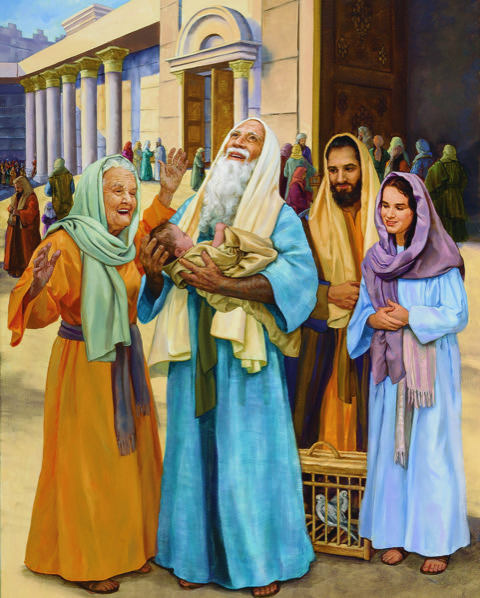
The Presentation of our Lord at the Temple


As the Church travels forward, she always does so facing backward. Not face-first, but back-first, she marches onward toward the Omega, the final goal of her existence. We don’t do this just because we like it better in the years gone by, longing for the good old days, nor should we be afraid of the future, since with God as our Protector, we need not fear any adversary. No, the Church treasures the past because it is only in looking at the past that she beholds her future. The heavenly Jerusalem toward which she journeys, the slain yet living Lamb, the River and Tree of Life, a new and better Eden – these images of our heavenly future are all painted with the colors of what happened to the Church in the past. Without these images, our future looks uncertain, despairing, and void of the Gospel. If there were no history or past to give us our story of ourselves, where we come from, we would feel like utter orphans and waves tossed about like the sea, rather than anchored to the truths that have kept us firmly grounded.

The Old Testament, it turns out, is never quite as old as we think. Consider, for example, the Presentation of our Lord, from Luke chapter 2, which is also part of the Christmas Eve Gospel. Now, back when Moses and the people of Israel exited Egypt, they left that nation that through 10 devastating plagues had been totally transformed into a morgue. Think about it: Every unbloodied door had become the unlocked portal for the Destroyer, the Angel of Death to pass through unhindered at midnight. The first-born sons of Egypt were killed while the first-born sons of Almighty God lived. An eye for an eye, a tooth for a tooth, a son for a son. From that time on, the first-born sons of Israel belonged to their God. They were holy to the Lord, purchased with blood.

And just as the Lord had sacrificed every first-born son in Egypt, so every first-born son in Israel had to be sacrificed to the Lord – though not literally but this time sacrificed through a substitute, and that was the original meaning of “redeeming” the first-born, and “purifying” the mother after childbirth. Just as all Israelites had been redeemed by the blood of the Passover lamb, so all future generations of first-born sons would be redeemed by another ceremony, a one-time sacrifice. When their sons, first-born or not, were 40 days old (for daughters the wait was twice as long), then the mothers of Israel would carry them to the temple, where sacrifices would be offered to purify the mother and redeem the son. Leviticus 12 is where this law is written down for Israel: “She shall bring to the priest at the entrance…a lamb a year old for a burnt offering, and a pigeon or turtledove for a sin offering, and he shall offer it before the LORD and make atonement for her. Then she shall be clean from the flow of her blood. … And if she cannot afford a lamb, then she shall take two turtledoves or two pigeons, (by the way, Luke tells us that Mary and Joseph fall under this category, because in their situation they couldn’t afford a lamb) one (dove or pigeon) for a burnt offering and the other for a sin offering. And the priest shall make atonement for her, and she shall be clean.” Remember, this law is an example of ceremonial law and that the blood of childbirth, similar to the blood of a monthly period, was not considered morally sinful, but only ceremonially unclean and therefore not yet appropriate for worship. Nothing more than that.

And so it came to pass that an Israelite mother named Mary carried her 40-day-old first-born son to the temple. Here, the Mother of Purity Incarnate, and who because her Son was the Son of God, she really needed no sacrifice for purification, yet she offered the sacrifice for purification anyway. And here, the First-born Son, who needed no redemption, who would be our Substitute on the cross, He offered the Old Testament substitute price for redemption anyway. And in so doing, the lips of Moses the law-giver were forever clamped shut, that his legal tongue may accuse you no more. By faith in Christ, God counts His obedience to these ordinances as though you had kept them perfectly in every detail. For the law has been out lawed, out-done, by the One who was under no compulsion to bow to its demands, but still bowed to them anyway that He might shut up the law forever for you.

But there is more, for the First-born of Mary is presented in the Temple not as one who needs redemption, just as He was baptized not because He committed any sin, but He was presented to faithful Simeon and Anna on behalf of all of us as the one who comes to accomplish redemption. He enters the temple to fill it with His greater glory, as Haggai had prophesied (saying, The Lord, whom you seek, shall suddenly come to His temple), but it is a glory whose shimmer and shine are dulled to earthly eyes by the paint of blood, here the blood of birds, later, with His own blood on the Cross. He is the Glory of God’s people, Israel, as Simeon sings in his song, but He is no longer the Cloud of Glory, nor the Angel of Glory, but rather the Crucified of Glory. He will not dwell between the Cherubim and hear “Holy, holy, holy” chanted into His ears, but will dwell between the thieves on Calvary and hear “Crucify him, crucify him” shouted by the crowds. His holy of holies will be an unholy, cursed tree. Almighty God in the flesh will hang naked before the naked eye of man. Normally, when someone sees God, he would immediately die as punishment for transgressing what is Holy. But here, with Jesus nailed on the cross, no one will die but God Himself as the last Substitute. In His sacrifice, this Son of the Lord becomes a son of Egypt that all of you sons of Egypt might become sons of the Lord in Him.

The First-born Son of the Father is made to be your substitute. The tenth and final plague of Egypt falls on His shoulders. An eye for an eye, a tooth for a tooth, a son for a son. The Destroyer, the Angel of Death, is destroyed at the cross. And you? You are spared, you are passed over, for His blood is painted not on your door frame, but now, along with His Holy Body in the Sacrament of the Altar, the blood of the Lamb is on your tongue, painted with the brush of the chalice. Paul calls Christ the First-born among many brethren and Hebrews calls His Body the Church of the First-born. For here is the mystery of God, that packed into the flesh and bones of Jesus are all of you. You are woven into the fabric of His humanity. You are also exalted in Christ into heaven, sitting with Him at the right hand of God the Father almighty.

In this First-born Son of the Father, you are thus also considered First-born sons, whether you are Jew or Greek, slave or free, even male or female. You, as the first-born Son, are presented to the Father on this Holy Lord’s day, Candlemas, the fortieth day of Christmas; you are sacrificed on His cross; and you are raised to undying life in Him, because He is the First-born from the dead. He who was made to be like you in all things now makes you, His brethren, to be like Himself in all things, so that it is no longer you who live but the First-born Son who lives in you. His Father is your Father, His Virgin-Mother is your Virgin-Mother, and in His human nature you are made partakers of His divine nature.

All of these events that happened to Jesus in the past are not to be forgotten, lest we jeopardize our future as the Church awaiting the coming of our Savior. All of these events that happened to Jesus, have now been counted as happening to you. What Jesus earned through His hard Work is your free Christmas gift of forgiveness that lasts way beyond the torn-up paper, the boxed up decorations, the broken toys and returned gifts. He who is presented in the temple, as we heard on this day, bids you walk backward toward your future, having a clear conscience, bearing none of the law’s accusations that you may be feeling in your heart, but rather seeing the Maternal Old Testament pregnant with the Gospel future, visibly showing what is about to come any day now. For in many and various ways God spoke to His people of old by the prophets . . . and now in these last days He has spoken to you by His Son. The Pure one has made you pure, your eyes of faith have seen your Savior, and with a forgiven, clean heart this day, you may with Simeon and Anna depart in peace.

In the Name of the Father and of the ✝ Son and of the Holy Spirit.

White Parament

White Parament


1 Sam. 1:21–28 I have lent him to the LORD
Psalm 84 a day in Your courts is better than a thousand
Heb. 2:14–18 He is able to aid those who are tempted.
Luke 2:22–40 they brought Him to Jerusalem to present Him to the Lord