Category Archives: main

Sermon for the Second Sunday after the Epiphany: January 19, 2020 jj

Rev’d Mark B. Stirdivant, Good Shepherd Lutheran Church, Yucaipa, California
✝ sdg ✝
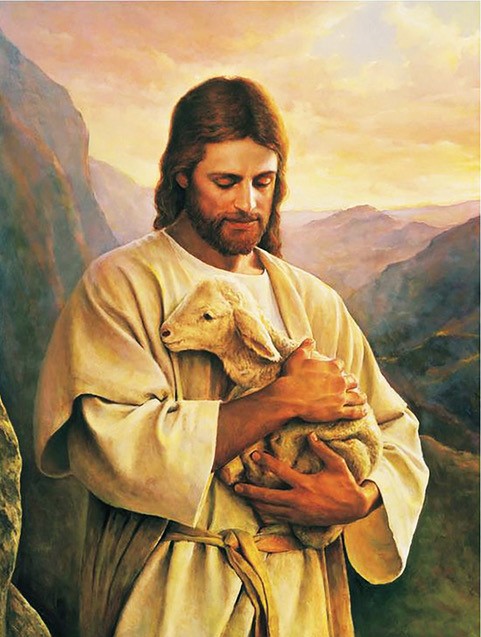
Jesus and lamb

Jesus and lamb


Isaiah wrote so that he virtually sings when he says: The people that walked in darkness have seen a great Light. And those who dwell in the shadow of death, upon them the Light has shined. The disciple John sings in response: “In the beginning was the Word, and the Word was with God and the Word was God. He was in the beginning with God…. And the Word became flesh.” (Jn 1:1-2, 14). We know all that. We heard it all-over-again not long ago at Christmas-time. Jesus is the Word of God, meaning Jesus is God. He came to be where all that flesh is, and lived Himself in that flesh. The Lord God Almighty now stands among us, still in His own human flesh. The One who created the ticking of every second put Himself in time, in history, in a certain place.

And He entered … the way you did: He came as an infinitely small cell, the fullness of the infinite God and the fullness of finite man all in one divinely fertilized ovum. Behold, God has come out from darkness, from behind the Temple veil—and yet you still can’t see Him. Not yet. He remains hidden for a time, for nine months behind the veil of Mary’s flesh—the Child, not yet born, called Holy, the Son of God, Son of the Most High (Luke 1: 31-35). No one could see Him, but God was in His “temple,” dwelling with His people (Jn 1:14). Take your time moving through this great mystery of the Christian faith. God is at work, but in a hidden way. You can’t see Him within His mother there. God being found in appearance as a man—taking the form of a servant (Phil. 2:7-8) … and it begins in the womb. This is God who is so weak! An embryo so fragile that, to say it in the clinical language of bio-technicians: if you took His ‘stem cells,’ it would destroy Him … just as King Herod would try to destroy Him when He was just a little older. Mighty God … guarded by nothing stronger than the flesh and tissue of His mother’s womb. Hidden in the darkness, but He’s coming. You’ve seen pregnant women before; you know all about that. But here is God’s ‘new and unique’ Man for us, His Son, God-in-flesh for us.

A world like ours today, that renders even a two- or three-day old embryo to be an ‘insignificant life’ that must surrender to any human desire to snuff it out, or just to be another unwitting donor who gets to give up his or her life in the latest guess of a premeditated lab experiment, this is a world that if consistent must also say that our Lord Jesus Christ—who for nine months lived the same exact way—is also insignificant. If you think that way about Jesus, then it is too easy to say no to Him and His forgiveness, and then you are without salvation. It is utter darkness without the Truth.

We’ve become accustomed to the strange sound—but the Biblical truth—of saying things like: God was cuddled by His mother Mary; God played in the wood shavings of a Nazareth carpenter’s shop; God learned how to walk. The One who created the heavens and the earth … became flesh, blood and bone like that. Look at any newborn to get a sense of what your God was like, and what He did to save you. The One who has no beginning, sent by the Father, knit together in the darkness of the human womb, born of Mary Virgin Mother. A God who comes so weak, little baby-weak. But that’s precisely how your God works. He has begun this marvelous thing … and to the whole world it looked like nothing worthwhile will come of it.

Now move ahead, three decades later, witness His cousin John publicly worshipping Jesus as the “Lamb of God who takes sin away” (Jn 1:29). That was the same John, the yet unborn baby boy, “leaping for joy” worshipping in the presence of His Creator God (Lk 2:41-44). So John still worships Jesus. Behold! There is Jesus, there goes God, into Jordan-water where John had been preaching “Repent! Heaven is near!” And there the Father puts His emphatic stamp on Baptism forever, as heaven opens and the Holy Spirit descends like a dove (Matt. 3:16-17)—but don’t miss God Himself standing in that middle-eastern river … where the sinners are. Looking just like us. And then the Spirit led Jesus out to the desert to do 40 days of skirmish with Satan. Where Jesus, a true Man, the second Adam, says, “Away from Me, Satan!” and Satan must obey, just like he fled from you at your Baptism.

In just a few minutes we’ve traveled from God’s eternity … to this Epiphany season … to this day … with Jesus. And this is where things are serious. Indeed, John, now that he’s in prison for his preaching—it will go worse for him because of Jesus. But the Lord is into His everyday schedule of fulfilling the words of Isaiah, pulling His flesh out of the Old Testament prophecy. So as the Gospel narrative begins, we know what really is happening behind His weak appearance. Jesus is God … God beginning His ministry… God calling those whom He had in mind, even while they were still in the womb.

Jesus comes here to you today because of the darkness of our world. It is because of the darkness—or what God calls darkness (and you really only know for sure what a thing is when God tells you what it is). As the prophet Isaiah said so long ago: People are sitting, just sitting there in darkness. Suffering, Crying, Mourning in darkness. You have darkness even if you’ve got artificial, Las Vegas neon light to guide all your stumbling. Our culture is “living (if you want to call it that) in the land of the shadow of death” which is to say, they are sitting where death has been and always comes again. Death in you. Death around you. Have you been to a funeral recently? When is yours? Have you driven by a cemetery lately? Not as peaceful-looking if you were to see what’s only six feet below the surface. Or a Planned Parenthood clinic—do you know what’s there? The great Abortion “Law of the Land” is at work. Death as a so-called “temporary” solution is at work. It’s not her body or your body or my body, but after the cross, all bodies have been bought by Jesus. Redeemed. You, and every child conceived and foreknown by God before the foundation of the world (Eph. 1:4), bought with blood, not with silver or gold, or even credit or through a generous health plan.

But still, this is America, and still I am a sinner, and so still, darkness. Maybe it is the long silent darkness of a pressured young mother weeping because she realizes her child will never have a birthday, and she wishes now it was otherwise. Or the sadness of a young Christian man who looks back and cries, “I’m not even the kind of person who would ever think abortion is okay”– a young man who will always be a father to a child that will never sit next to him at a ball game. When darkness and death seemed at the time like a good alternative for a difficult temporary situation—a quick treatment for an “unfortunate” or “unplanned” pregnancy that only God saw in His plan and found fortunate. Honestly, think close to home, like someone in your family—indeed, Christians having abortions in the same number as unbelievers—there is no difference in finding abortion, that is, darkness, an appealing idol, a helpful “cure.” There is darkness all around us, and in us. But how does that person, how do I, get out of that darkness or any other darkness?

I don’t. I can’t claw myself out. Neither can you. There is only the Light that breaks in from the outside, outside us. The Light that dawns. Fulfilling exactly what the prophet Isaiah says. Jesus is the only Light for our darkness. And He brings nothing but mercy.

It’s practically automatic for Christians to say, “Jesus died for the sins of the whole world,” but when it comes to those certain sins—whatever you have in the dark—sins from the past, we torment ourselves as if “that is certainly the only sin that Christ won’t forgive and can’t forgive”: my abortion, my letting an abortion happen, my adultery, my divorce, my silence, my lies, or whatever my evil day was, or still is. But God will have none of that. He says this: “The people who walked in darkness … have seen a great Light. Those who dwelt in the shadow land of death—upon them a Light has shined.” Isaiah can’t say enough about it, this bright Light who shatters darkness. It is Jesus. Forgiveness. My sin and yours, undone.

What is it like? The yoke, the burden crushing you has been broken off. The Law you have not kept, always coming up behind you and requiring even more that you cannot do, has now been kept. The club of the three slave-drivers sin and death and the devil has been shattered over God’s knee. For God has a face, He has a knee, everything flesh and blood. It is Jesus for you, shattering the yoke of the Law by wearing it Himself, and breaking the rod that beats your back by letting it beat Him in your place. Satan did his worst, but Christ arose as the Victor. It was a strange-looking victory, because it looked like defeat. Just as strange are the gifts: also hidden in plain, ordinary things. A simple thing like water that washes you spiritually clean and unites you with Jesus. Ordinary bread and wine that feed you in an immortal, you could even say, a healing feast. And in place of the death and darkness in your life, you have light and the only true and everlasting life.

It’s not just for yourself. It has pleased God for Him who has formed you in your mother’s womb, to give you to one another, to help each other, and not to think of yourself, which always was the way of darkness. Mary’s body does not belong to her after all. Her womb and every mother’s womb is the Holy Spirit’s workshop—where God knits together for you a body that still belongs to Him for you to take care of for now, and He promises you your glorious, heavenly body in which you will live with God the Father forever. What a marvelous work He does in darkness: in the darkness of Mary’s womb, in the darkness of every mother’s womb, and even still for those who are yet “sitting in darkness”: Jesus, He remains the great Light.

In the Name of the Father and of the ✝ Son and of the Holy Spirit.

Green Altar Parament

Green Altar Parament


Readings:
Is. 9:1–4 The people who walked in darkness have seen a great light
Is. 49:1–7 The LORD has called Me from the womb
Psalm 40:1–11 Sacrifice and offering You did not desire
1 Cor. 1:1–9 God is faithful, by whom you were called
John 1:29–42a Behold the Lamb of God!

Sermon for the First Sunday after the Epiphany: January 12, 2020 jj

Rev’d Mark B. Stirdivant, Good Shepherd Lutheran Church, Yucaipa, California
✝ sdg ✝

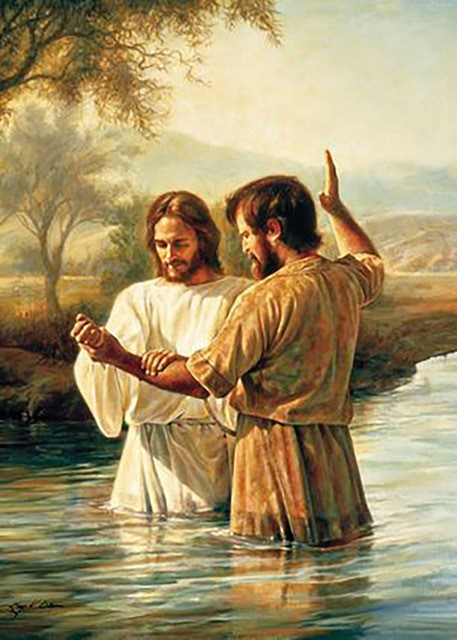
Baptism of Jesus

Baptism of Jesus


Christian Baptism often is an event that, for most of us, is remembered only as some point in the distant past. And so, I’m afraid, it can also be too easily forgotten. The Word of God and the Holy Supper – on the other hand – they are continually being placed before us. Through these events we’re reminded constantly of the many blessings that God showers down upon us. But our Baptisms have to be brought to light over and over again. We have to set our minds on remembering them. That’s why – in Luther’s Small Catechism – it’s suggested that, as a Christian, you begin each day by making the sign of the cross over yourself as a remembrance of the name of the Father, Son and Holy Spirit, the name that was placed on you at Baptism. You would not want to lose sight of the importance of what happened on that day when God first called you to be His own.

And what are you supposed to remember about your Baptism? Is it the faithfulness of your parents, who – in obedience to God’s Word – brought you as an infant to receive this Water of Life? Or, if you weren’t Baptized as an infant, how about that moment when, as a believing adult, God placed the desire in you to be Baptized? More to the point, God wants you to remember that real water was applied, that His Holy Word was invoked, and that – in that very moment – the Holy Spirit worked an amazing transformation by transferring you from this kingdom of darkness and death into the kingdom of His beloved Son. For this is precisely how your heavenly Father gave you life where before there was nothing in your life but death – it’s how He granted you faith where before there was nothing but unbelief. And most especially, it’s how, when all is said and done, your conversion is a miracle wrought straight from the hand of God Himself.

It’s important to remember these things because we live in a world where many people – even Christians – still deny that God’s Holy Spirit does anything through Baptism to grant faith. They are downright adamant about this, much more than you or I ever get excited over the truth, I’m afraid, and so they are constantly winning people over to their way of thinking. What do they teach? Instead of Baptism being God’s gift to man, that in the system of decision-theology, it’s the other way around – nothing more than a public act of the Christian’s obedience and promise to God.

Wouldn’t that mean that all Jesus did for you wasn’t enough? How easy it is then to forget or deny what God has truly done in and through Baptism. Perhaps it’s because Baptism defies the cardinal rule that for something to make sense it first has to check out according to human reason and visible measurement. For the reality is that – to the eye, at least – Baptism doesn’t appear to be much of anything – even though Scripture teaches the contrary. Hear what Dr. Luther had to say regarding Baptism when he wrote: “What God institutes and commands cannot be in vain, but must be a most precious thing – even if in appearance it seems to be of less value than common straw or stubble.”

You would receive the most comfort and gain the most understanding of your own Baptism if you would look at it through the Baptism of Jesus. Even though you were brought to God with nothing – through simple water and His Word God imparted to you everything needful, namely, His forgiveness, His Spirit, and His good pleasure toward you. Matthew informs us that John tried to prevent Him, saying, “I need to be Baptized by You, and You’re coming to me?” John perhaps was utterly amazed that Jesus – this sinless Son of God – this One who knew no sin – should through repentance, seek Baptism and forgiveness from his hand! And yet, it’s precisely in the fact that Jesus came seeking John’s dispensing of forgiveness, that God now holds out an incredible comfort for you. Jesus said, “It is necessary for us to fulfill all righteousness.” That means that there’s no sin you’ve ever committed – or ever will commit – that He hasn’t already soaked up in His own body.

Jesus came to John as the one and only “Sinner” in the world because Baptism is for sinners. And so, just as John once poured the cleansing water of Holy Baptism upon the Son of God our Savior, so also in the very same way – when those blessed waters were first poured out over you at your Baptism – a cleansing took place as the merit of Jesus, all he lived and died and rose from the dead for – these precious gifts were miraculously and fully imparted to you. We have just begun the season of Epiphany, and we should recall that Epiphany marks the opening of the Christmas gift for the whole world. This week, the Baptism of Jesus fits very neatly with that theme because at your Baptism, that’s when the Lord’s precious Christmas gift of eternal life was opened specifically for you. It wasn’t when you made any kind of commitment to Him.

Another thing you need to note about Jesus’ Baptism is how He received the gift of the Holy Spirit – how, as He came up out of the water; the heavens were opened and “He saw the Spirit of God descending like a dove and coming to rest upon Him.” Does it strike you as strange that the very Son of God would have to receive the Holy Spirit? Certainly Jesus hadn’t come into this world without the Holy Spirit. And yet here in Christ’s Baptism we see God granting Him this Spirit in a very special way. But that’s how it was with your Baptism, too. Heaven was also similarly parted, and God reached down to touch you as His child – as He bestowed on you His Holy Spirit in a hidden way and put in your heart a saving faith that looks to the cross alone for salvation and life. Yet sadly, because we can’t see these things happening, we’re tempted to believe there’s nothing to them at all – even though God’s Word teaches very clearly that they are very, very real, indeed. You see, in Baptism God adopted you as His child – He made you to be a new creation who abhors sin – and He brought you from this world of death into His world of eternal life.

The final thing I want you to notice about Jesus’ Baptism is how – when the Spirit had descended on Him – the Father pronounced His great pleasure, saying directly to Jesus, “You are My beloved Son, with you I am well pleased.” Of course, Jesus had never done anything to displease the Father. Even as He wrestled in the Garden with having to drink from the cup of suffering for us, Jesus remained constantly obedient to His Father’s will. His entire life was a life of perfection – and in that, the Father was well pleased with Him. And this is where you really get to test your understanding of this Gospel and the blessings you’ve received in and through Baptism.

The test comes by way of a question. And that question – a “yes” or “no” question – is this: “Is God pleased with you?” Now, I suspect that when you hear such a question, the first thing that happens is the Law immediately kicks in and you begin to think, “Well, I should do this – but I don’t. And I shouldn’t do that – but I do! So really, how could God be pleased with me? It’s impossible to know!” It’s then that you need to hear the Gospel – this one of Jesus’ Baptism – of the Father’s words spoken at that Baptism – and of the fact that everything Jesus did here in this life He did in your place. And because of that fact, you are compelled by the Gospel to acknowledge that God is also therefore pleased with you. The truth of the matter is this – if God is pleased with His Son, He’s also pleased with those who’ve been Baptized into the name of His Son.

What great and glorious news that is! As members of Christ’s body, the Church, you are all together considered to be God’s beloved Son, and He declares that He is well-pleased! There’s no treasure on earth worth more than knowing that your heavenly Father is pleased with you. His pleasure isn’t something injected into you and you have to make your Christian life grow before He says that He’s pleased—that’s the Law again—rather, you have it in full as God’s gift, but of course along with that sure forgiveness your holy life will simply continue and grow by His grace for the rest of your life. Therefore, so that you might always be reminded of that fact and live in the realization of it – perhaps you might consider starting in your own life the ancient practice of making the sign of the cross over yourself – as the Catechism teaches – so that you would be daily reminded of your Baptism when you pray, and remember the blessings God freely imparted to you – that you might be reminded whose child you are – and of His good pleasure guaranteed to you in Christ.

A story is told about how – when paying a visit on one of his dear friends – Luther found him in a very depressed state of mind. When asked the reason for his sorrow, Luther’s friend responded that he hadn’t been able to determine what it was that had made him so sad. So Luther said these simple words to him. He said: “Don’t you know you’ve been Baptized?” By those words, his friend would later say, he was comforted more than if he’d heard an entire sermon. Well, that is a fitting summary for you to take home with you today: “Don’t you know you’ve been Baptized?” What appears on the surface to be of less value than straw or stubble has been intended by God to be for you a great source of comfort – even though it’s a treasure you cannot even see. Give thanks to God that in Baptism He has cleansed you from all your sin – He’s given you His Holy Spirit – He’s made you a new creation in Christ – and that He has shined His face upon you in the assurance that He is, indeed, as pleased with you as He is with His own dear Son.

In the Name of the Father and of the ✝ Son and of the Holy Spirit.

White Parament

White Parament


Readings:
Is. 42:1–9 A bruised reed He will not break
Psalm 29 Give unto the LORD the glory due to His name
Rom. 6:1–11 How shall we who died to sin live any longer in it?
Matt. 3:13–17 Jesus…at the Jordan to be baptized

Sermon for the Sunday after Christmas: December 29, 2019 jj

Rev’d Mark B. Stirdivant, Good Shepherd Lutheran Church, Yucaipa, California
✝ sdg ✝

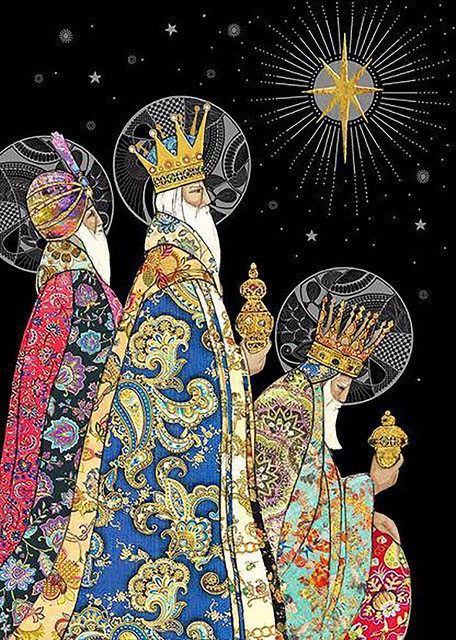
Magi

Magi


We have had a joyous, happy holiday. These past few days we have been celebrating the “good news of great joy,” that to us is born a Savior, who is Christ the Lord. With the angels who give glory to God in the highest, with the shepherds who return glorifying and praising God, with the wise men who rejoice exceedingly with great joy, we too join in the joy of Christmas. We cannot totally get rid of all the negative, unpleasant things that go on in our lives, but at least for a few days, can’t we just block them out?

Now, on the Sunday after Christmas, the Church Year calendar gives us the account of what’s called “The Slaughter of the Holy Innocents.” Now if there is any other event in the Bible that could be more of an antithesis to an upbeat, cheerful holiday mood, I don’t know what it is. Herod’s murder of defenseless children of Bethlehem is a singularly horrifying and tragic story. Yet it comes hard on the heels of Christmas, and is right there in Matthew chapter 2. What saves the story for us, though, is what can really be called “The One That Got Away.”

King Herod heard of a newly born king of the Jews from the wise men, the Magi who suddenly had paid him a visit. This is not the news that a desperate despot wants to hear. “Another king of the Jews? What about me? Where would that leave me? I’m the only king around here. I’m not going to have some little upstart challenging me for my throne.” But Herod is a sly fellow. He’s not going to come right out and tell the wise men all this. That would scare them off. No, Herod wants the wise men to lead him right to the little king. His advisors find out from the prophecies that the Messiah would be born in Bethlehem, but he wants to know the exact location and the exact child. So he sends them to Bethlehem on the pretense that he wants them to report back to him so he too can go and worship.

Of course it’s a lie. Herod doesn’t want to worship the newborn king, he wants to wipe him out! But the wise men are warned in a dream not to go back to Herod. So Herod gets stood up by the wise men; they don’t come back. He still doesn’t know which of the baby boys in Bethlehem is the one to eliminate. So just to make sure he gets the right one, Herod orders the death of all of them–all the baby boys in Bethlehem and its vicinity, up to two years old.

Herod the Great was a brutal, murderous ruler, insanely jealous and protective of his power, suspicious to the point of paranoia. Ancient history records other occasions when he had potential rivals to his throne, whether real or imagined, ruthlessly killed. He even murdered members of his own family when he thought it served his own interests. So for Herod to order the deaths of maybe up to 20 baby boys in a small town–if he thought that doing so would be a sure way to get rid of a new “king of the Jews”–this was nothing out of character for him.

The soldiers are dispatched. The dirty deed is done.

This is a crime so unspeakable and heinous, the details are hard to contemplate, much less to describe. What kind of a monster could do such a thing? What is as senseless and tragic as the violent death of innocent children? What grief as profound as that of parents mourning the death of their little ones? Try to imagine the sorrow of those mothers in Bethlehem: “A voice was heard in Ramah, weeping and loud lamentation, Rachel weeping for her children; she refused to be comforted, because they are no more.”

Is there any comfort for these mothers of Bethlehem? There is, and it’s all because of “the One that got away,” the one baby Boy who escaped the slaughter of the innocents. Joseph is warned in a dream to take Mary and baby Jesus and flee the country. The little, innocent Messiah is safely on his way to Egypt. God is not going to have the infant Savior cut down before he can get started.

You know, God had done this sort of thing once before, saving an infant savior. Many centuries earlier there was another evil ruler who wanted to kill a bunch of Israelite baby boys. But the Lord had a little baby deliverer that he wanted to keep alive. Moses was his name. So that time the one that got away was baby Moses. This time it’s Jesus. That time the baby was already living in Egypt. This time the baby goes to Egypt, in order to escape. Moses had a great mission in front of him: to lead the people of Israel out of bondage in Egypt. Jesus had an even greater mission in front of him: to lead people of all nations out of bondage to sin and death and the power of the devil. That’s why baby Jesus needed to flee from Herod and escape to Egypt.

It was necessary for baby Jesus to live, in order for him to grow up and fulfill his saving mission. Jesus had to live so he could later die, at the right time and in the right place. Some thirty years later, Jesus would stand before another Herod–Herod the Great’s son, Herod Antipas–and before a governor named Pontius Pilate, and at that time and in that place, Jesus would suffer and he would die. His death at the hands of evil men would redeem us from the power of death and deliver us from all evil. So the Christ of Christmas had to live, in order that the Christ of Calvary could die, for your sake and mine.

That’s the crucial connection between the joy of Christmas and the somber tragedy of the Holy Innocents. Any celebration of Christmas that can function only on a surface level of sweet, syrupy sentimentality, a Christmas that cannot come to grips with the harsh reality of death and suffering and evil in the world–that kind of a Christmas is not worthy of the name. But the true Christmas, the real Christian Christmas, does speak a word of lasting comfort to those who are suffering, to those who are struggling with the unanswered, and unanswerable, questions of life—and death. Maybe you are one of those today who can benefit from this comfort found hidden in the story.

Is there any comfort for people suffering from tragedy and loss? Is there any comfort for young mothers who lose their children? Is there comfort for you, when you lose a loved one or are losing one to advancing age or debilitation? For you, when you come face to face with your own mortality? Yes, there is comfort for them and for you! It is all because of the One, the Savior that got away! Christ Jesus, by winning forgiveness for all our sins has taken the sting out of death. It still is going to hurt, you will continue to miss that person or still endure physical suffering yourself. But the big hurt, the big death–death under the wrath of God–that has been accomplished. Jesus took that death for us and so took the sting out of death.

Christ’s absolutely “holy, precious blood” and his totally “innocent suffering and death” mean that now we who are connected to Christ are accepted by God as true “holy innocents,” holy before God and innocent of all the guilt that the Law says we had deserved. Those who belong to Christ will “live under him in his kingdom and serve him in everlasting righteousness, innocence, and blessedness.” So the question then becomes: How do we get connected to Christ? The baby boys of Bethlehem–they were connected, for they were sons of the house of Israel. They had received in their bodies the sign of the covenant which God had given to Israel, namely, circumcision. And so they shared in the hope of Israel, the promised Messiah, who would deliver God’s people from sin and death.

How about us? How do we get connected to Christ? We are connected to him in Holy Baptism. In baptism, we participate in the death of Christ. Paul says in Romans 6 that “all of us who are baptized into Christ Jesus are baptized into his death.” So the big death for each of us has already occurred. The death we deserve for our sins, Christ has already suffered. And we participate in that death by way of baptism. Now the only death left for us is the one that leads to life–everlasting life with our Lord and Savior, where there will be no more pain, no more suffering or sorrow, no more tears and weeping.

There is the source of comfort–and even joy–for all who are surrounded and set upon by the sorrows of this life, this vale of tears. There is the comfort for the mothers of Bethlehem and the mourners worshiping on Avenue E. All who are connected to Christ have already died and now are joined to the life of Jesus. His is life that is truly holy and innocent, life with God, life forever. Now that life is yours. Here in this place.

And so Christmas, which is still going, by the way, is not a time for artificially trying to block out unpleasant thoughts and put on a fake, happy face. No, Christmas is to be celebrated especially in view of all the tragedy and suffering we experience in life. Because Christmas is when Christ came into the world, and that makes all the difference. For the Christ of Christmas is also the Christ of Calvary. That’s why Jesus had to be “the One that got away”—so that he could go to the cross for you. And connected to him, we have a comfort and a hope and a joy that all the Herods of this world cannot destroy.

In the Name of the Father and of the ✝ Son and of the Holy Spirit.

White Parament

White Parament


Readings:
Is. 63:7–14 You lead your people to make Yourself a glorious name.
Psalm 111 The works of LORD are great
Gal. 4:4–7 when the fullness of time had come, God sent forth His Son
Matt. 2:13–23 take the young Child and His mother, flee to Egypt

Sermon for the Fourth Sunday in Advent: December 22, 2019 jj

Rev’d Mark B. Stirdivant, Good Shepherd Lutheran Church, Yucaipa, California
✝ sdg ✝

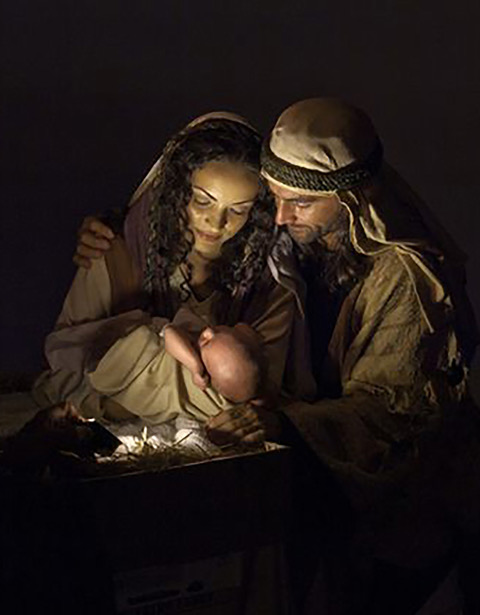
Nativity

Nativity


Reading the signs can either save you or sink you. The sign says your freeway exit is coming up. Signs are telling you not to skip that appointment with your doctor. We rely a lot on signs, for good reason. But signs that don’t help us or confuse us even more keep us from going where we need to go, and we could find ourselves in a lot of trouble.

God’s work among us is shown in signs. His signs are given for the comfort and the personal assurance of all those who believe in Him. Yet for those who are evildoers, faithless and opposed to God, His signs are signs of wrath and condemnation. They know who they are because they are without excuse; their father the devil stands condemned by the decree of Almighty God, as seen already in Genesis chapter three, where the offended Creator says: I will put enmity between thee and the woman, and between thy seed and her seed. He shall crush thy head, and thou shalt crush His heel. To us, this statement means victory, relief from oppression, that Christ the Seed of the woman shall conquer over sin, death and the devil. But to the prince of darkness it means destruction, and he will not stand for that.

Thus it is with King Ahaz, in our reading from the prophet Isaiah in the Old Testament. This man, though he was a King of Judah and a descendant of the faithful King David, Ahaz is still just a political opportunist who is hearing this prophecy from God. Does he hear a voice from heaven, or from somewhere within himself? No, Ahaz hears God’s word speaking from the mouth of Isaiah, God’s chosen preacher.

With utmost patience, God is offering yet again to give a sign to this wicked king for the sake of the believers in his kingdom, as well as his righteous father, David. All of creation, from the highest heights to the lowest depths is in the control of the Holy Trinity, Father, Son and Holy Spirit. It was his idea to reach out to Ahaz! Any sign would have been possible to give lasting comfort and peace to young Ahaz. This was his first year as king, and already he was caught up in a war with two northern nemeses: namely Syria, and the broken off tribes of Israel. He could have used a divine sign for comfort, but instead Ahaz chose to discard the sign and he mocked Almighty God in rash unbelief. What good can a sign do for you if you refuse to believe what it says? The king even had the nerve to tell God that He was off-base! There’s ironic snark in his response: “Far be it from me to test God, I will not ask!”

You see, Ahaz was not suddenly going to be a pious and reverent man. He only had one thing on his mind and that was to secure and solidify his political power. Nothing got in the way of his ambition—not even his family, many of whom were killed at his orders for the sake of personal convenience.

You could say that King Ahaz and King Herod, who ruled at the time of Jesus’ birth, have many things in common. Although Herod was basically a puppet king of the Roman Empire, he still went to great lengths to keep what power he had. He, too, would kill his own family, or even murder every innocent two-year-old in Bethlehem to keep sitting on his throne.

So, for Ahaz, Isaiah’s prophecy of the Virgin’s Son, Immanuel, was not a comfort but a judgment from God against him. He heard the verdict on behalf of the whole family line of kings descended from David. Desolation would soon come to the people of Judah and Ahaz would be judged. Because he lacked faith in God, Ahaz failed to read the Sign. The Sign. The promised Messiah was not going to be yet another political king, but “…of the increase of His government and peace there will be no end.”

So it was with Ahaz, it was the same for Herod. When Isaiah’s prophetic words about Immanuel were fulfilled, when the baby boy Jesus was born of the Virgin Mary and laid in the manger, King Herod trembled for his feeble, earthly throne. Both kings, Ahaz and Herod, received this blessed Gospel word with fear and trembling—they would be ever hearing, but never perceiving, just like the Pharisees hearing Jesus, but refusing to take His parables to heart. Even then, Ahaz has this one distinct difference from Herod—he was the ancestor of the very Messiah that he rejected! So the sign did not bring good news to him.

However, to repentant sinners, to you and to me, God’s work through signs, through this sign of Immanuel, Jesus, God with Us, the baby in the manger means great comfort. And comfort not just for us today looking back at Christmas as just a past event, but this is comfort for people of all times, for this time, for what you and I have to face in this evil world every day. All the faithful people since Adam and Eve who looked for the Messiah to crush the serpent’s head and save us from our sins—this sign says He is now right here!

God wants all to be saved and to come to the knowledge of the truth, the one Truth who came into our human flesh, wrapped up in swaddling clothes and was laid in a manger on the night He was born. This Immanuel, He is God’s Gospel-sign for us today and always. Jesus Christ is true God, the Son of the Father, who came down from heaven to be God-with-us, to be one of us.

When God gives signs, He also hides Himself in those signs. Why does God have to hide Himself? Because no sinful human being may see God the Holy One and live. We would be condemned and lost forever if we were to approach God’s presence unforgiven. That was the reason why Adam and Eve had to be banished from the garden. Their punishment for their sin would have been permanent if they had remained in God’s holy, unveiled presence. Our sins merit that same exact punishment—God is not accessible to us because we are unholy.

But an amazing thing happens when God hides Himself. When God hides Himself, He is actually making Himself accessible to us! God the Father reveals Himself to us as Our Father because He is the Father of the only-begotten Son, Jesus Christ. Christmas, then, embraces and celebrates the gift that God the Father gave for the life of the world: He gave Immanuel, God Himself is here with us, hidden and lowly.

Immanuel is more than just a fancy name. It’s a phrase—God with us. The name reveals the two natures of Christ, He is true God and He is true man: God with us. It’s the whole theme of Christmas and even of our whole life in communion with God as the holy Christian Church. Jesus is God in human flesh, which we say in the creed as Incarnate. The Father’s purpose for sending His Son to live and ultimately to die in our human flesh was “for us and for our salvation.” God incarnate, though, wasn’t just a one-time historical event; our reason for celebration this December 25th is not only that Jesus is one year older this year. That may be true, since He still has a real human nature, but more importantly, Christmas tells us how we come to know God, and especially how we come to know that God actually loves us, that He chose to reveal Himself to us. In the flesh of Jesus Christ, this is God who came to us, and that’s why He gave us this sign.

Coming in the flesh wasn’t all He did. Immanuel is hidden also in another sign, a suffering man on the cross, a spectacle of foolishness, a stumbling block that unbelievers refuse to accept. Our own sinful natures inside us, they tempt us to ignore Him, to prefer other ways to have contact with God. Still, God comes back to us with His signs. He won’t give up on us. He won’t give up on you. He is ever patient, never wanting the sinner to die but to repent, say I am a sinner, and receive His absolution.

The forgiveness of our sins was won when Jesus died on the cross, and eternal life was proclaimed when Christ rose from the dead. That very same forgiveness and life is given here in the Divine Service, and here God gives more signs. He hides himself in the signs we have as our treasures here under this roof. His Holy Word that you read in the Bible and hear in the sermon, Baptism and Holy Communion—these are God’s signs and He reveals Himself to us in them just as at the same time He hides Himself in them. We who once belonged to the devil and were worthy of nothing from God except condemnation, have by God’s own signs been transferred from the kingdom of darkness into the kingdom of light. Whatever our hardship that we may face, He gives us the grace in the forgiveness and life that we receive here to endure that hardship because now, with these signs, He lives in us—Immanuel, God with us!

Jesus Christ, Son of the Father, Son of the Virgin, this Jesus is revealed in the flesh in order to forgive you, and that forgiveness is what the Church gladly proclaims until Jesus returns in glory at the end of the world. We sing His praises as we join in the song that the angels sang to the shepherds in their fields: Glory be to God on high, and on earth peace, good will toward men. We pray with all believers for Our Lord Jesus to do as we prayed in the Collect of the Day today: “Stir up Your power, O Lord, and come among us.” And He does it! And He will do it again, as we look forward with the whole Church to that Day when God will no longer hide Himself in signs but then we as His forgiven people, will meet Him face-to-face.

Thanks be to God that He has given us all of His signs to save us. This Christmas, the risen Immanuel invites you to behold God’s great Sign. Receive forgiveness through the signs He has instituted to deliver that forgiveness to you. Bring your hopes and fears of all the years. They will be met in the baby boy of Bethlehem, the Incarnate Son of God our Immanuel.

In the Name of the Father and of the ✝ Son and of the Holy Spirit.

blue parament

blue parament


Readings:
Is. 7:10–17 a sign: Behold, the virgin shall conceive and bear a Son, and shall call His name Immanuel.
Psalm 24 Who may ascend to the hill of the LORD?
Rom. 1:1–7 Through Him we have received grace and apostleship
Matt. 1:18–25 the birth of Jesus Christ was as follows

Sermon for the Third Sunday in Advent: December 15, 2019 jj

Rev’d Mark B. Stirdivant, Good Shepherd Lutheran Church, Yucaipa, California
✝ sdg ✝

What has bowed your head down, recently? It seems that especially during Advent, people have their heads bowed down more than at other times of the year. They could be just watching their step, because with less than a moment’s notice, you could find yourself flat on the ground, and Christmas is no fun when you’re spending it in the hospital. Maybe you have your head down right now as you are examining your list of countless things to do and to prepare before that holiday comes in a week’s time, ready or not. Perhaps that particular bell-ringer at the store entrance has a knack for locking in too-direct of a gaze and you just don’t want to make eye contact when you’ve got a busy schedule and no spare change… best to look down!

Do you perhaps have your head down in a different way, because you feel beaten, defeated with tension in your family, hurt because someone sinned against you and won’t admit it? Or maybe you want to clear the air and admit your fault with someone whom you hurt with your words and they refuse to forgive? Our heads ought to be down, at least in a spiritual sense, because we must daily repent of our sins against God and against all our various neighbors in our lives.

You know our world has its head down—you can tell the signs of that are all around us. The difference, however, is that our world’s head is down not in repentance but in self-worship. Those whom we see in this world who reject our only Lord and Savior, are instead worshiping the only deity that they hold most dear—themselves. Their heads are down only because they would rather stare in absolute wonder at their own belly-button! It’s all about my life, my needs, my body, my political party, my set of values, my wants. You are tempted to have your head down in that way, also, as am I.

You know what happens, though, when someone walks around too long with their head down all the time. It could lead to a funny bump on the head when she walks into a pole, or a quite frightful and deadly thing when he gets run over in the street. You are unaware of what is vitally important when you are not alert, and there is no way for you to tell what is right there in front of you. The more you stay bent down, the harder it is for you to get yourself straightened up again. I’m always getting told not to slouch over; I guess I’m not very easy to train in the fine art of good posture.

There was someone else who had his head down. Once again, we are talking about the designated preacher for the season of Advent, John the Baptist. This time, the Gospel records a moment once he had been thrown into prison, somewhere near the Dead Sea, we think, and he sent some loyal disciples of his to ask Jesus a question. It is quite a shocking question, considering that it came to Jesus from the courageous John the Baptist. After all, he was the one who pointed our Lord out and said, Behold the Lamb of God, who takes away the sin of the world! Whether he was discouraged, and had his head down in that nasty dungeon, or his disciples were concerned, and John wanted to send them, heads down in their own disappointment, straight to the source to get the final word from Christ Himself, both would be answered in the same way. Jesus gave the perfect response to raise any head that might be bowed down with pain, repentance, sin, and sorrow.

Lift up your heads! So says the Psalm, and a few Advent hymns sing it, as well. Yes, there is a time to bow down in repentance and to sacrifice your personal desires and the world’s self-worship that entices you. However, there is also a time to lift up your heads, to straighten up and see your salvation coming ever nearer. We already heard that when you witness the many frightful signs of the end of the world, those are actually the indicators that your Savior is about to rescue you. What Jesus says to John’s disciples will raise up their—and John’s own—heads. Are you the promised Messiah, the Christ? Or should we be looking for another? Should we keep our heads down and ignore our vain hopes that God is going to fulfill His Word right here in front of us? It is getting tougher, from our human perspective, to believe that Jesus will help us in our day. The world is just getting worse and life as a committed Christian believer and family and within the blessing of a Christian marriage seems impossible. Our heads are down because we feel alone.

Lift up your heads! Look with eyes of faith that trust in the mighty works of our Lord Jesus Christ. Receive the everlasting joy upon your heads, as Isaiah predicted. He who healed the sick, cleansed the lepers, raised the dead, gave sight to the blind and hearing to the deaf—He it is who has come into your midst right here this very day. You have heard His Word of forgiveness before, and you have it as your very own gift once again today. You couldn’t lift up your own head, for all of the sin, pain and death that had kept it down. But He raises up your head, since He bowed down His own head in death on the cross for your forgiveness and eternal life. He gave up His Spirit in utter agony and shame so that you would breathe in the blessings of your lasting inheritance in His kingdom. He lifted up His head again to new physical life on the third day so that resurrection for your physical body would be certain. Your weak knees will be strengthened, as Isaiah sings, you of anxious heart– “Be strong” in the strength of the Lord and not in your own strength. You are now known as the ransomed ones, belonging to the Lord forever. He has come through for you to restore what sin and its curse had taken away. Your head is raised up with confident faith, since the Blood of Christ your Savior was shed on the cross to pay for your release, and to ease all of your hurt.

Rejoice, so we hear on this Third Sunday in Advent, and we light the pink candle on our Advent wreath. And you know that this is more than simply to put out an effort to “remember the reason for the Season,” as important as that is. A happy stream of mere thoughts on how I can bring peace on earth, would not do that much good for John the Baptist, locked up in prison. They don’t seem to last that long for you or me, either. You need the flesh and blood forgiveness that Jesus gives you today. That’s the only joy that lasts. You are here for the mighty works of God that happen in front of your face, and give you a reason truly to rejoice. No one else, including yourself, can replace the joy that Christ our Lord came to bring, and we look forward with repentant joy to that Great Day when our heads will be lifted up in everlasting glory, never to be bowed down in sorrow again.

In the Name of the Father and of the ✝ Son and of the Holy Spirit.

blue parament

blue parament

Readings:
Is. 35:1–10 Strengthen the weak hands, and make firm the feeble knees…the ransomed of the LORD shall return
Psalm 146 do not put your trust in princes
James 5:7–11 be patient, brethren, until the coming of the Lord.
Matt. 11:2–15 Go and tell John the things which you hear and see

Sermon for the Second Sunday in Advent: December 8, 2019 jj

Rev’d Mark B. Stirdivant, Good Shepherd Lutheran Church, Yucaipa, California
✝ sdg ✝

No shepherd would choose to lead his flock of sheep into a barren wilderness. That is because at least a good and faithful shepherd is continually concerned about their health and safety. They are his sheep, they are precious to him, and he would not for all the world want anything to happen to them. If sheep were ever led into the desert, it would be almost certain that they would starve to death. Even if they were able to get by on the sparse wilderness plants for their food, then their lives could be claimed by the heat of the sun, or they might fall prey to wild animals and robbers lurking in the wasteland. If you were going to feed sheep, you wouldn’t want to do it in the wilderness.

The Bible attaches a deeper, spiritual meaning to the wilderness. It is the place where the devil lives, the place of sin and of temptation. We’re talking about a place that is obviously not the land of milk and honey. People who live out there include the man who was possessed by several demons, and he was clearly a menace to peace-loving society. After Jesus was baptized, He was sent starving into the wilderness so that He would do battle against Satan himself. It is the exact opposite of the Garden of Eden. Instead of the tree of life and streams coming up from the ground, it is a tree-less place of dryness and death. It stands as a reminder not of God’s rich goodness, but rather of what sin and unbelief has brought into the beautiful world that God created. The desert was where God’s people, led by Moses, wandered for 40 years because of their unbelief against God, and if they could have taken the direct route instead, they would have gotten to Canaan in less than two weeks! The wilderness is a harsh reminder of sin and rebellion against God. You would be hard-pressed to find God’s children living for very long apart from His Word in the wilderness.

Yet God, like the psalms say, is the Shepherd of Israel, even as the Lord is your shepherd, and to the amazement of all, God decided to place a shepherd to do His work of preparation in none other than the wilderness, of all places. Our readings from God’s Holy Word today tell us this shepherd is the famous prophet John the Baptist, and his title Baptist simply means “one who baptizes.” Everyone seems to think that the strange thing about John is his wardrobe and diet. Yes, he wore camel-hair clothes and ate locusts and wild honey, that’s the vivid picture we have of him. Yet the prophet Isaiah, who lived 6 centuries before, and the holy Gospel itself both tell us that John was, above all things, a “voice crying out in the wilderness.” Through this eccentric man, God was feeding His sheep in the desert with His Word. John’s preaching was actually the voice of God Himself, and God’s people of all times and places hear His voice and follow Him, even, strange enough to say, into the wilderness.

This faithful shepherd in the wilderness preaches “a baptism of repentance,” not a religious sounding speech, but real preaching dripping wet with forgiveness. This preaching of his really does something. It leads people to turn away from their sins and receive God’s forgiveness that is freely given in the waters of Holy Baptism. All who listen to this preaching are pointed to the Lamb of God who takes away the sin of the world. John preaches to you, too. Repent, be ready to receive Jesus. This is why the season of Advent prepares you for Christmas. The world around you is nothing but wilderness, and your own sinful nature within you is likewise a spiritual wasteland, full of unbelief and despair inside. If you let that sin within you have its way, and we often do, then you also deserve John’s rebuke, “You brood of vipers. You must repent!” Because the word of God coming from the mouth of John is the food and drink of forgiveness and salvation that you need to live in the wilderness of this world, the desert of your struggle against sin. And so, repent, confess your sins and receive Jesus who comes to you today, and who will come again at the Last Day.

Remember, John does not only have bad things to say. Isaiah informs you that this preacher in the wilderness has a wonderful Gospel word for you: “Comfort, comfort, ye My people” God says through His appointed servant. Be comforted, you who mourn. Be comforted, you who are anxious and in need of our Lord’s loving hand. For you cannot deceive yourself into thinking that things will get better all on their own. You cannot imagine that you can pull yourself up, dust yourself off and start all over again. You are attacked daily by the devil’s sharp arrows accusing you of your sins and trying to convince you that God does not care. By yourself you could not withstand such a barrage. Be comforted, God does care for you, and not because you now finally do what God wants you to do, but because He has reached out in mercy to you, poor miserable sinner that you are.

God will comfort you, this you can know for certain. However, be aware that you will not in this earthly wilderness of life feel comfortable. Remember, it is the Lord’s comfort, not the comfort you expect from this world; Jesus the Prince of Peace, brings a true peace that the world despises and cannot give you. You can work and struggle to achieve a comfortable way of life for you and your family. You could plan ahead on everything so that you could get through this hectic holiday season or you could look for comfort in all sorts of things that you think will make your life more fulfilling, but in the end it’s all an illusion. You won’t reach lasting comfort in these things—only God out of His undeserved mercy and love—only He gives you true comfort in His Word.

But consider the comfort that He proclaims to you—it sounds strange falling on human ears. He talks about iniquity, that’s the guilt that accompanies or is left over from sin. It is the sense of God’s judgment hanging over you, it produces that nagging heaviness in your heart because the Almighty Lord is righteous and holy and you are sinful and unclean. Talking about your sin surely doesn’t give you any comfort. Who wants to be reminded of the wrongs they have done in the past? God’s call to repentance sounds harsh, too. Turn away from your sins, you haven’t lived with the constant attitude that God is first in your life. Too often, other things have taken His place, but your complete trust needs to be in Him alone. At first hearing, the comfort of God doesn’t sound comforting at all.

In all this talk of sin and iniquity and the need to repent, God is making a straight, level road in the rocky, forbidding wilderness where you are. The reason why you need to hear and admit that you are by nature sinful and unclean is so that you would be truly comforted with these words: Your sins are forgiven. Your iniquity is pardoned. You are the spiritual inhabitants of the New Jerusalem, the holy mountain where this poetic scene comes true: the animals that once ate each other up for dinner now lie down together, the lion and the lamb, leopard and goat, all of them eating plants just like they did in Eden. No one will harm or destroy; the earth will be full of the knowledge of the Lord. Believe me, there is no government around that will be able to make this world perfect like that. But then again, they don’t have to. You have the promise from Jesus, the shoot that sprouted from the stump of Jesse, father of King David, ancestor of your Lord and Savior Jesus Christ. That image means that although the glorious tree God had planted was cut down because of sin and the sheep rejecting their shepherd, the merciful Father’s promise will still spring up like a shoot or sucker from a stump. And that promise came true when Jesus came to this earth and was planted in the womb of the Virgin Mary to be born as the sacrifice for your forgiveness, and to be your King for all ages.

And so you have found food in the comforting words of God’s forgiveness given to you through Jesus Christ. The Lord is your shepherd; he is feeding you in the wilderness, just as He fed His people of old. The same baptism of repentance that John preached, the baptism that forgives your sins, this is what you can claim for your very own inheritance. This baptism is none other than the Lord’s comfort to you that sins are forgiven and you as God’s people are rescued from the devil’s wilderness, saved from the deadly snare of unbelief.

Your Lord Jesus gives you real food and drink every time you kneel at this altar and eat His Body and drink His true blood. This is not spiritual “comfort food” or merely a fine reminder that everything will be all right. This food brings true comfort, the comfort that comes from sins that are forgiven and a heart that is turned so that you love and trust in God above all things. This is the food that sustains you in the wilderness, and prepares you for the coming of your Savior. Though you may find yourself at times in a spiritually barren wasteland, attacked by the constant temptations of the devil and plagued with worry and despair, you will not starve, you will not be harmed. The Lord is your shepherd and you shall not want—you shall lack no good thing. You are His sheep, and you are precious to Him because He has washed you in the saving waters of Baptism and made you His own. God is constantly concerned over the health and safety of your soul and body. He will not let go of you. And He will guide you with His Word and promises in the paths of righteousness, through the wilderness of this life, that you may dwell in the house of the Lord forever.

In the Name of the Father and of the ✝ Son and of the Holy Spirit.

blue parament

blue parament


Readings:
Is. 11:1–10 A Rod from the stem of Jesse … the wolf will dwell with the lamb
Psalm 72:1–7 He will bring justice to the poor of the people
Rom. 15:4–13 whatever things were written before were written for our learning
Matt. 3:1–12 the voice of one crying in the wilderness

Sermon for the First Sunday in Advent: December 1, 2019 jj

Rev’d Mark B. Stirdivant, Good Shepherd Lutheran Church, Yucaipa, California
✝ sdg ✝

“Come, let us go up to the mountain of the Lord!” Let us make our way in a pilgrimage of faith to Zion, one of the Bible’s many names for the Church who firmly believes and trusts in our Lord and Savior Jesus Christ. Advent has begun and you and I both know that Christmas is in the air all around us, but first, while we still have an opportunity to give it our attention, we need to remind ourselves of this important fact: “Salvation is nearer to us now than when we first believed.” Believe it, O Daughter of Zion! Awake from your sleep, O children of God! This is big news for you! What does it mean that salvation is nearer to you now? It’s not to say that you have to work to make yourself closer to being saved. It’s not that Jesus deceived you into thinking that you were saved, because His perfect and unbreakable promise remains: Whoever believes and is baptized will be saved. No, salvation is nearer to you now, means that the time is getting ever closer and closer to the Day when you will see the salvation that you already have. Faith will be replaced by sight. Trusting only in His Word will soon make room for you to experience that Word of God in utter fullness. Advent is just as much a reminder of Christ’s glorious return as it is a preparation for the celebration of His birth in long-ago Bethlehem.

This is why Advent begins with Palm Sunday. I’ll admit, it doesn’t sound like a very Christmas-y story, but I count as many as eight hymns in our hymnal’s Advent section that refer in some way to Palm Sunday. On the first Palm Sunday in the city of Jerusalem, the crowds gathered to greet the arriving Messiah. The golden setting sun was shining on the face of Jesus as He was riding on that donkey that had never been ridden before, meandering down into the shady valley as He got closer to the base of the city wall. Then, as the road turns back up the steep hill toward the city gate the cheering crowd lined both sides of the dusty street, threw off their expensive outer garments, leaving on their plain- looking robes that they were wearing underneath. The people held palm branches in their hands, symbols of victory a little bit like the wreath of olive branches that the Greeks used to place with honor on the heads of Olympians and valiant soldiers.

The words of praise from their lips bounced off that imposing Jerusalem city wall: “Hosanna! Blessed be the Son of David! Peace in heaven and glory in the highest! Hosanna, blessed is He who comes in the name of the Lord.” The Prince of Peace entered the reputed City of Peace, fully aware of the Price of Peace, that for your forgiveness and mine to be a reality, His holy Blood must be shed and handed over. The exultant crowd of pilgrims and disciples will disperse and soon another crowd will assemble to shout in a mad rage, “Crucify Him!” As unlikely as it sounds, these events are exactly the way the Lord has chosen to raise up, in the words of Isaiah, the Mountain of the House of the Lord, namely, the Church, so that it will be the highest of all the mountains. Before swords can be reshaped into farm implements, and spears used for tree and vine trimming, Christ the Savior must be lifted high on the cross. As our brand-new church year will unfold for us yet again, we will relive all those moments that make for our own story of salvation.

But the Palm Sunday that you and I participate in today is not merely a reliving of a past event. It is so much more. “Come let us go up to the mountain of the Lord!” Our spiritual pilgrimage to Zion that we are walking in our hearts this morning is not meant for us to see Jesus die yet again, because that was done once and for all. Instead, we are called together today to receive the fruits of that holy Cross, most especially the forgiveness of sins.

The night of your blindness to the wrongs you have done and the “rights” you have left undone—that night is far gone; the day is at hand. Your lack of love for your neighbor, your quarreling and jealousy, whether spoken or left in the darkness of your thoughts, must now be abandoned! Those who were there that first Palm Sunday took off their fancy overcoats. You instead on this First Sunday in Advent, take off all from this world that covers you, all that you use to make yourself impressive in the eyes of this world, and leave what remains underneath, a simple garment of repentance, a spiritual garment that Jesus has washed white with the forgiveness you received in your baptism.

Let the light of a new day, a fresh start, shine on your face with the blessing that comes with God’s face, His countenance that shines with favor upon you and gives you peace. Though there will be days when you must pass through a time of shadow, the road will be steep, and the walls will seem imposing that seem to keep you outside of the borders of God’s love, you will keep the simple prayer “Hosanna” on your lips, for your King will truly save you when you call on Him. You will one Day hold the palm branch of victory, as John’s vision in Revelation 7 shows—see, that’s you, you’re there somewhere in that massive crowd that he saw! That’s the Palm Sunday to end all Palm Sundays!

For now, as St. Paul instructs us, walk properly as in the daytime through this new church year and for the rest of the pilgrimage of your life in Christ. Put on the Lord Jesus Christ, feed your soul with pure spiritual food of all those fruits of love that are pleasing to God, and withdraw all provisions, starve out the sinful flesh that pesters you for self-gratification. You’ll find that it would be better to owe no one anything, other than to love them sincerely, since focusing just on earthly obligations will only distract you from what is truly most important in this spiritual pilgrimage that you are walking in faith this day until the Day you see Jesus with your own, resurrected eyes.

Prepare our hearts for Christmas? Yes, we will do that this Advent. Marvel in the prophets’ words over centuries coming true in the womb of the Virgin Mary? Most certainly we shall. But for now, “Come, let us go up to the mountain of the Lord!” Salvation is nearer now than when we first believed, so today let us take hold of that Salvation. Eat and drink that Body and Blood that has already paid the Price of your Peace. Rejoice and praise your true King who comes in the name of the Lord, for blessed is He, indeed!

Let us pray our Hosanna to the Son of David once again: Stir up your power, O Lord, and come to rescue us from the threatening perils of our sins, and save us by Your promised deliverance; for You now live and reign with the Father and the Holy Spirit, one God, now and forever. Amen.

In the Name of the Father and of the ✝ Son and of the Holy Spirit.

blue parament

blue parament


Readings:
Is. 2:1–5 They shall beat their swords into plowshares
Psalm 122 Pray for the peace of Jerusalem
Rom. 13:8–14 he who loves another has fulfilled the law
Matt. 21:1–11 your King is coming to you … sitting on a donkey
Matt. 24:36–44 as the days of Noah were, so also will the coming of the Son of Man be

Sermon for the Last Sunday in the Church Year: November 24, 2019 jj

Rev’d Mark B. Stirdivant, Good Shepherd Lutheran Church, Yucaipa, California
✝ sdg ✝

Yes, in fact you did hear a few moments ago a reading from the Evangelist Luke’s account of the crucifixion of our Lord Jesus Christ. Yes, Easter is still quite a ways away. Today is the Last Sunday in the current Church Year. Next week, Advent begins, giving us four Sundays of spiritual preparation for the celebration of the Holy Incarnation of our Lord and Savior Jesus Christ. At the end of the Church Year, the main topics that we hear about are the End of the World, the Last Judgment, and the Life Everlasting. Sometimes the title Christ the King is appropriate for this day, in order to emphasize the Savior’s status as King over His threefold kingdom of Power, kingdom of Grace and kingdom of Glory. For centuries, men have complained that our King is slow in His coming, but St. Peter reminds us, writing from the dreariness of his prison cell, that the Lord is not slow to fulfill His promise, He is patient toward His Church, and when the Lord’s final Day comes, it will come like a thief in the night. (2 Peter 3)

If anyone could teach us Christians a little more patience, it would be an apostle of the Lord locked up in chains waiting for his inevitable execution in Rome. His perspective, and those of all the other Christian martyrs both of ancient times and those who up to this very day have put their lives at risk for the sake of Jesus, should make us reflect on what really matters for the congregation of saints living now in these End Times. But for Peter, as well as for all the apostles and other followers of Jesus, it wasn’t only that they suffered themselves. Sure, going through that experience certainly would change you psychologically. But what really mattered is that these witnesses saw or heard firsthand what you and I only read and hear about in our yearly services in the church year. They witnessed the crucifixion of our Lord and Savior Jesus Christ, done once and for all in ancient Jerusalem about nineteen hundred eighty years ago.

It was this holy Crucifixion that serves as a window for us into the End Times. A little bit of the future, a preview of the destruction of this sinful world that we see portrayed in symbols by the Apostle John in Revelation, this is what broke into the contemporary world in the days of Pontius Pilate. The Almighty, absolute Judge of all the earth was displayed whipped and thorn-crowned to a bloodthirsty crowd as an innocent man, yet sentenced to the most severe torture and death ever devised by man or by demon. As our Lord was driven along the Way of Sorrows to Calvary’s hill, the eyewitness Evangelists dutifully copied down and documented every step of Christ, since every step He took was for the world’s salvation. He comforted the weeping women with the same Word that comforts His holy church today, the church who weeps in repentance for sin but faithfully follows Christ who bore that sin. Because Jesus made that march to the cross on that hideous day, we have the privilege to look forward in faith to His joyous procession in which He will return on the Last Day. As you hear this holy, Biblical account of the crucifixion this very day, the Holy Spirit strengthens you and prepares you not only for the Lord’s Supper in this life, but for the eternal feast that we will share with all the saints in the life of the world to come.

And when the world’s Savior was raised up on that cross, fulfilling Moses’ raising the serpent in the wilderness back in the days of the Exodus, that’s when Final Judgment truly was executed. If we were to be precise in our legal terms, the Last Judgment, as it is described for us in God’s Word, is really part of the sentencing phase. The Verdict was already handed down: Jesus the Holy Son of God—guilty of death; you the poor, miserable sinner—innocent because of His substitution in your place. You were the one who hurt or harmed your neighbor in thought, word or deed. Jesus was the one lashed and scorned in shame, hung on a tree. You were the one who disappointed your family. He was the lonely one who cried out in extreme anguish to His Father, “Why have you forsaken Me?” You committed the crime and found yourself imprisoned. But He served your time in full so that you would be set free. You who hear the Good News now have this release from bondage handed right to you. At this Communion Rail, salvation is placed square into your mouth in that same Body and Blood that was given and shed for your forgiveness. The outcome of eternal life is your birthright now, though you must wait until the End to experience it in full. And Christian patience and perseverance will be tried in these latter days, but the promise of life, the final outcome of the End Times that started on the Cross, that time will come suddenly like a thief.

And speaking of a thief, recall the Almighty Judge’s first pronouncement, from the bench, as it were, was over His own bloody shoulder to the repentant thief who pleaded to the King of all Kings for His remembrance. May the reply ring in every dying sinner’s ear from now till the end of time: “Today, you will be with Me in Paradise.” For you, the sinner, are in the place of that blessed criminal. You were transferred from the punishment you deserved in the domain of darkness to the Son’s kingdom of everlasting light, the Paradise that the world’s parents Adam and Eve had lost in the beginning. It wasn’t enough for your heavenly Father just to forgive your sins. You weren’t merely brought back up to neutral. You have been declared holy by God’s abundant, undeserved grace. You are His child and heir. You have joined the faithful cloud of witnesses, some of them your own loved ones whom you dearly miss. Eden’s flaming sword now gives way to you, for the Tree of Life is now your personal property. I really do mean to say “now” you are in heaven for you are with the Lord by faith in Him, even though for now you suffer and struggle with sin. But be assured of your Savior’s victory over sin and death, because you triumphed with Him and soon, when the End finally comes, you will see that Paradise for which your heart yearns in faith. For Jesus, having enthroned Himself in His kingdom on the cross, has remembered you to this very day in your Baptism.

So even though this is the end of the Church’s liturgical year, and Lent is still all of 13 weeks away, (you don’t have anything to do until then, right?) take a look at the End Times through the eyes of St. Peter and all the others who were witnesses of Jesus’ crucifixion. Recall that the Holy Judgment to end all judgments was rendered on that cross and your forgiveness was paid in God’s own human Blood.

And finally, revel in the abundant grace that is bestowed on you in addition to your forgiveness. For it is by that same grace and Divine Promise that you enter Paradise with Christ your King. Be not dismayed by His apparent delay in return, but rejoice that all His blessings are yours now. And by God’s grace alone, you may believe it with all your heart.

In the Name of the Father and of the ✝ Son and of the Holy Spirit.

White Parament

White Parament


Readings:
Mal. 3:13–18 you shall again discern between the righteous and the wicked
Psalm 46 There is a river
Col. 1:13–20 the image of the invisible God, the firstborn over all creation
Luke 23:27–43 today, you will be with Me in Paradise

Sermon for the Third Sunday after All Saints’ Day: November 17, 2019 jj

Rev’d Mark B. Stirdivant, Good Shepherd Lutheran Church, Yucaipa, California
✝ sdg ✝

What comforting signs God has in mind for you who are living in these end-times! But they look pretty scary at the same time. Judgment Day is near, as Jesus promises, and along with it come the signs: armies laying siege, people fleeing Jerusalem, great distress on the earth, wrath against this people, signs in sun and moon and stars, distress of nations from the sea and the waves, people fainting in fear and with foreboding of what is coming on the world. Sounds like an apocalyptic thriller movie, or a news release out of the Middle East! And these are the signs with which Jesus wants to encourage you?! Listen again to what He says: “Now when these things begin to take place, straighten up and raise your heads, because your redemption is drawing near.”

But why is it so important for today, to know so much about what will happen in the future? What use can you make of these “highway signs” while you are so intent on the present-day road that you and yours are traveling in life? It would seem to be enough these days to juggle school, home and work schedules, run to endless meetings and get-togethers, handle the occasional crises that come up, keep up on your e-mails and phone calls. Then, if all that weren’t enough, you add a few big holidays coming up, with shopping, cooking, traveling and cleaning that’ll make you crazy. Anyway, the point is clear: it’s so easy to get engulfed in cares and concerns of the present, that you lose sight of the goal of our precious Christian faith, that is, our eternal salvation.

That’s why these signs are so scary-looking. That’s probably why the Bible says only a few things about what the full glory of heaven will be like. It’s all designed, quite intentionally, to shake you out of the present-day worries and needs and fleeting pleasures. You have fallen for the strangle-hold of the here-and-now. The people were amazed at those massive temple stones. In the very same way, you are enthralled by anything that steals your attention from Jesus and His glorious coming. The passing, temporary things of this life remain the most important to you, even though you’re objecting even now, thinking: I’ve got my priorities straight, I’m doing my part. And although you can give one testimonial after another about how God has blessed you in your life, showing everyone else how thankful you are to Him, your Lord still knows your heart. He sees when you begrudge the difficult times that you’re facing. You cave in to your secret weaknesses because that’s so much easier than to remain strong. He has created in you a clean heart, and you don’t waste a moment getting it dirty again with sinful thoughts, words and deeds.

Of course, it is easier for a Christian to think of the heavenly things when there is very little to hope for on this earth. That explains the stories of death-bed conversions or renewals of faith. It brings to life what Jesus says— that it is easier for a camel to go through the eye of a needle than for a rich man to enter the kingdom of God. The more faith that you have invested in the things of this world and the here-and-now, the less faith you have to put in the resurrection of the dead and the life of the world to come.

If your earthly life were in danger every day, like it is right now for many believers around the world (I’m thinking especially about those Christians who face persecution at the hands of Muslim governments and armies); if you were in their situation, then you would be bowed down, crushed to the ground in despair since you cannot count on any blessings that you can see. And yet that moment, when you give up on everything you hope for in this life, that’s an opportunity for the Lord to raise your head in true hope of your redemption, that is, your heavenly rescue that is just around the corner.

So you who live in the comfortable, freedom-loving United States of America, although you may just be getting by in a state like ours, yet you still have food and shelter and a few of what you call the “necessary comforts,” you who may even have some of the nice things that money or plastic can buy: what hope is there for you? You are not persecuted, you are not homeless, or suffering a complete lack of adequate medical care (at least not yet!). Sorry if I’m making it sound like a bad thing, but you may not have anything going on in your life so utterly drastic that it’s automatically built-in to force you to appreciate the true, heavenly joy that is already hidden in the forgiving word of God, the everyday water in the baptismal font, the common bread and wine that is seen upon this table. It can be bad because many other desires of your heart can get in the way. And even though you are often tempted to look for that heavenly joy in emotionally touching and entertaining worldly things, the gift remains yours without anything you have to do for it. This free gift also means that you are completely transformed by the grace of God that was given to you in your Baptism. He sets you at war against your own sinful human nature, but it is a war that He will win for you.

Because the decisive victory in that battle wasn’t your decision to follow Jesus. It wasn’t when you stood up in public and confessed the Christian faith, as exhilarating as that may have felt. If you only had to rely on the strength of your faith or those emotional mountain-top experiences, then you’ll be left with nothing when those things fade during difficult times. No, the decisive victory in the war you face every day was already won for you when Jesus suffered for your sins and died on the cross to give you eternal life. That remains the only hope you have, whether you are barely getting by, or living on Easy Street. And in the end, especially at the end of this temporary world, that is all that matters to you. For that humble Savior who died unjustly under the Divine curse, is the same Son of Man who is risen from the dead, lives and reigns to all eternity, and will return soon in a cloud with power and great glory.

So, when terrifying events take place, when suffering and hardship come along for no good reason, even if you are treated shamefully because of the Lord in whom you believe, straighten up, Jesus says, and raise your heads. Listen attentively to the precious, powerful words of eternal life that are entering your ears. Thank the Lord for washing you clean in Baptism. Kneel with all the others at this table who have publicly confessed total agreement with each other, and with the saints whom we cannot see but who are safe in the Lord’s care, then open your mouth to eat and drink the holy Body and Blood of Christ given and shed for you.

These gifts are all the preparation you need for those scary-looking end-times. In fact, these gifts bring you the good parts of the end of the world that you are looking forward to as your inheritance. You just get it in a hidden form for now. Though chaos and violence against the Christian faith boils all around you, the Lord still brings you through. These sacramental signs in which your Jesus hides Himself are not as fearful as the other signs of the end of the world, but they are definitely more important, because they connect you to Jesus, the true source of comfort that your soul needs. Since you the Church have the Father’s promise that your name is written in His book, be sure to encourage one another as you see the great Day approaching, and as you are filled with the Lord’s heavenly gifts, you too shall stand firm to the end and be saved.

In the Name of the Father and of the ✝ Son and of the Holy Spirit.

Green Altar Parament

Green Altar Parament


The Readings:
Mal. 4:1–6 The Sun of Righteousness shall arise with healing in His wings
Psalm 98 Let the sea roar, and all its fullness, The world and those who dwell in it
2 Thess. 3:1–13 that they work in quietness and eat their own bread.
Luke 21:5–36 then they shall see the Son of Man coming in a cloud with power and great glory

Sermon for the Second Sunday after All Saints’ Day: November 10, 2019 jj

Rev’d Mark B. Stirdivant, Good Shepherd Lutheran Church, Yucaipa, California
✝ sdg ✝

The Sadducees said there was no resurrection, and that’s why Jesus paid attention to them, and answered their silly, make-believe marriage question. He didn’t criticize their political crony-ism, which was utterly corrupt. He didn’t chide them for hoarding their wealth and neglecting the poor, which many of them did. He didn’t even call them out for their rejection of the prophets who came after Moses. They said there was no resurrection, and Jesus wanted to make sure He addressed that, so that their Greek, New-Age style teachings would not remove the Gospel’s comforting words from the hearts of the people who truly believed in Him.

They said that death should be thought of as a good thing, a separation of a pure soul from a vile, earthly body. A resurrection that joined a soul back with its body on the Last Day, they falsely ridiculed as repulsive. God’s Word teaches that body and soul were created good together and that their separation was the result of sin and death. In this context of ancient Jerusalem, just like what happens today, evil was called good, and the good creation of God—a human body—was degraded and treated like trash. I know that Christians today have varying opinions on this, but historically speaking, you must admit, the practice of cremation did not originate from any Christian teaching, but rather it came from an idea similar to what the Sadducees held, that the body was worthless at death and worthy of nothing but to be tossed aside when you’re done with it. God says altogether different things about the human body that He specially designed and gave to you and blessed as it was to be the temple of the Holy Spirit.

Now that we are in the portion of the church year that follows All Saints’ Day, and the themes of the Church that emphasize the events that will take place at the End of the world, we do well to follow what Jesus is saying about the resurrection of the body, too. He knew that the ludicrous question that the Sadducees asked Him about a widow marrying seven brothers was only meant to trap Him. We today have lots of strange questions thrown at us as traps—including certain questions about marriage and using bathrooms that nobody ever thought about as a problem even 5 years ago. With regard to those Sadducees, Jesus knew He wasn’t going to change their mind, but He was, and He always is, eager to proclaim His comforting truth to you, so that you remain convinced of the truth that you have come to know and love and claim as your very own, that is, the truth of the resurrection of your body when the life of the world to come finally arrives with His glorious return.

Our Lord reminds you that you live in two distinct ages. Jesus spoke of, on the one hand, “sons of this age” and “sons of God,” even “sons of the resurrection” on the other hand. It’s like you are standing on a cosmic threshold, with a foot in one world and the other foot in a different world. This is what it’s like for you now, but sooner or later, it will become different for all of us. For now, you have relationships and obligations and contracts, and discerning what in your life is temporary and what is eternal can at times be quite confusing and complicated. But Jesus helps you sort it all out.

There was one situation, you might recall, in which Jesus had to ask a man, “Who made Me an arbiter over your dispute with your brother?” Jesus the Son of the Most High God possessed every right to weigh in as Judge on whatever decision was made, however, He had already handed over the authority to some other human judge, while He was going to stay focused on His salvation mission. In the verses just before this Gospel reading from Luke 20, Jesus gave the well-known advice, “Give to Caesar what is Caesar’s, and to God what is God’s.” Marriage is a truly blessed gift, but the contract parts of it are limited only to this life. God made male and female, and no amount of surgery or personal self-feelings can remove that from each of our identities. As valuable as these Biblical teachings are about the things that belong to this world, don’t allow these debates to stray your focus from the matters that impact eternal life.

Sure, you have concerns related to this age—I’m not here to dispute that, nor am I saying that you would be betraying your Lord if you were paying attention to earthly things like your work, school, family, community, and friends. In fact, God is pleased that you tend to your vocations that He has given you in these areas. The Amish are only one well-known example of people who approached daily earthly life with the same mistake in judgment that the Sadducees made about the physical body, thinking all of it was evil and needs to be avoided. Jehovah’s Witnesses think the same about celebrating birthdays and holidays. They don’t. Martin Luther as a monk at one time thought that he was entering a holy life vocation in order to avoid all that worldly sin, but later reflected that he had been deceived by a lie.

The Lutheran Christian, guided only by the truth of Scripture alone and confident of salvation by grace alone, has the privilege and also the burden, of remembering that your baptism has placed you into another age, one that lasts forever and will not fade away with this world. You have been born into the age of the resurrection even though for a while you have remained a part of the age in which the earthly, temporary things still take place. Jesus later spoke about your situation as being in the world, but not being of the world. What counts for eternity is worthy of greater attention than what is before you day to day, although for now the day to day is not totally excluded. All Saints’ Day on the Church calendar can be useful to remind us how important this age of the resurrection is for us, since we don’t always experience the death of a loved one or a national tragedy like 9/11, yet even when these things do happen, we automatically turn to the only strength that can pull us through, and that is the strength of God’s promise that we belong to Him now, and not to this temporary, passing away world.

Your loved ones whom you don’t see anymore are already fully part of that inheritance of the resurrection, and so are you. Jesus said He and His heavenly Father, together with the Holy Spirit are together the God of the living, not of the dead. I AM the God of Abraham, Isaac, and Jacob, simultaneously at the same time as He is the God of Moses, King David, Mary and Joseph, St. Paul, Martin Luther, David Stirdivant, Paul Hall, Bill Saulnier, Dean Hickox, and Clara Riedel. He is, and He remains, their God, even though they died. It doesn’t matter how they were buried. Their sins, just like yours, don’t hold them back from any spiritual blessing, because forgiveness has conquered over sin. They aren’t married or given in marriage anymore, but something greater than that has remained for them, a permanent, eternal relationship with Christ and membership in His everlasting kingdom. The resurrection that awaits them, and you, and all of God’s saints, that resurrection at the last Day will only confirm that which is already true. Though you don’t see them anymore, they are with you, especially since the whole company of heaven fills this place every time the Divine Service with Holy Communion takes place.

How can we deny such a great blessing to those we know should be here in Church with us? How can you allow your cares for the earthly life dominate over this higher, greater gift that is the age of the resurrection that you so treasure? You must confess that it is all too easy to worry more about something temporary, to want your friends to like you, to get distraught over how our country is changing, to wonder when it will be more difficult or too costly to operate as a church as we’re used to. You aren’t like those people questioning Jesus, trying to trap Him with unbelief, but you are staring at things of this life that can cause great fear at times, and you wonder if everything really is going to be all right.

But do not fear! The crucified and risen Lord Jesus has had mercy on you. He takes your sins and shortcomings and weaknesses that died with Him on that cross and instead He creates in you a new heart. He made you worthy to attain to the age of the hope of the resurrection for your body. He gives the Word of life that each day converts your sinful heart and strengthens your soul. You were not worthy of God’s grace, yet He has chosen to make you worthy for the sake of Christ.

You truly live in Him, just as Jesus said, while for the time being you participate in the world with your neighbors whom you love and serve. He is your living God and, my friends in Christ Jesus, you are heirs of the promise of the resurrection, heirs along with all those Christians of the past who died in faith, of your loved ones who fell asleep in Jesus and the souls who await the resurrection of their bodies so that as complete persons, body and soul, we all will enjoy the presence of our gracious and living God forever. This is a real promise—not a fantasy or a vain dream that is meant only to make you feel better—Jesus said the Lord your God is the God of the living and not the dead. He will give you the victory. The Sadducees said, there was no resurrection. No, there is a resurrection, Jesus proved it by rising from the dead Himself and thanks to Him, that resurrection is yours!

In the Name of the Father and of the ✝ Son and of the Holy Spirit.

Green Altar Parament

Green Altar Parament


Readings:
Ex. 3:1–15 the bush was burning with fire, but the bush was not consumed.
Psalm 148 Praise the LORD from the heavens
2 Thess. 2:1–8, 13–17 the truth, to which He called you by our gospel
Luke 20:27-40 not the God of the dead but of the living